

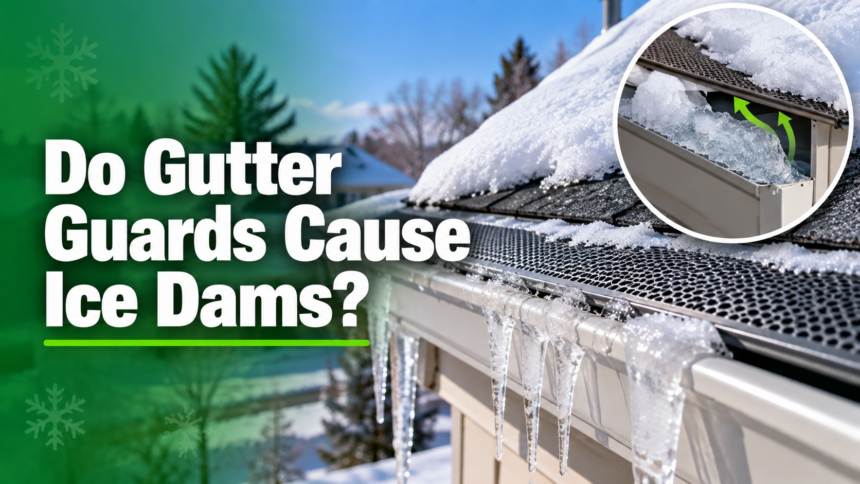
When the temperature drops and snow starts piling up on your roof, a lot of homeowners start worrying about one thing: ice dams. These thick ridges of ice that form along your roofline can cause serious damage, from leaking ceilings to ruined insulation. And if you’ve recently installed gutter guards, or you’re thinking about it, you might be asking yourself a very reasonable question: do gutter guards cause ice dams?
It’s a fair concern. After all, gutter guards sit right at the edge of your roof, exactly where ice dams tend to form. But here’s the short version of the answer before we go any further: gutter guards don’t directly cause ice dams. The real causes lie deeper in your home’s structure, mainly in how heat escapes from your attic. That said, gutter guards can play a supporting role in how bad an ice dam situation gets, especially if they’re the wrong type or poorly maintained.
In this guide, we’ll walk through everything you need to know in plain, easy-to-understand language. We’ll cover what ice dams actually are, what really causes them, how gutter guards work, and where the confusion between the two comes from. By the end, you’ll have a clear, practical understanding of how to protect your home all winter long.
What Are Ice Dams?
An ice dam is a ridge of solid ice that forms at the edge of your roof, usually right above the gutter line. It happens when melting snow flows down your roof and then refreezes once it reaches the colder overhang near the edge. Over time, this ice buildup creates a literal dam. Water from newly melting snow gets trapped behind it instead of draining off the roof.
This trapped water doesn’t just sit there harmlessly. It can back up under your shingles, seep into your roof decking, and eventually make its way into your attic or even your ceiling. The results can include water stains, mold growth, damaged insulation, and in severe cases, structural damage to your roof.
Ice dams are most common in regions that experience heavy snowfall combined with fluctuating temperatures, where partial melting and refreezing cycles repeat throughout the winter season. Homes with certain roof designs, poor insulation, or inadequate ventilation are especially prone to this problem.
What Causes Ice Dams? (The Real Culprits)
To really understand whether gutter guards play a role, it helps to know what actually triggers ice dam formation in the first place. The process almost always comes down to uneven roof temperatures, and here’s a breakdown of the main contributing factors.
Heat loss from attic or living space. Warm air from inside your home naturally rises. If your attic isn’t properly sealed, this heat escapes upward and warms the underside of your roof. This causes the snow directly above your living space to melt, even while the air outside stays freezing.
Poor attic insulation. Insulation is meant to keep the heat from your living areas where it belongs, inside the home. When insulation is thin, damaged, or improperly installed, heat leaks into the attic space and warms the roof deck unevenly, setting the stage for melting and refreezing cycles.
Inadequate attic ventilation. Ventilation helps keep your attic at a temperature closer to the outdoor air. Without proper airflow, warm pockets can develop in your attic, which then transfer heat to specific sections of your roof, creating the temperature imbalance that ice dams need to form.
Uneven roof temperatures. This is the mechanism at the heart of every ice dam. The upper part of your roof, warmed slightly by heat loss from below, melts snow. That water runs down toward the eaves, which stay cold because they extend beyond the heated interior of the house. There, it refreezes and builds into a dam.
Role of climate and weather patterns. Regions with cold winters, frequent snowfall, and temperature swings between day and night are especially prone to ice dams. Even homes with decent insulation can experience ice dams during unusually harsh winters if snow accumulation is heavy and temperatures fluctuate often.
As you can see, none of these root causes have anything to do with gutter guards. They’re all tied to how your home retains and loses heat.
What Are Gutter Guards? A Quick Overview
Gutter guards are covers or inserts installed over your gutters to prevent leaves, twigs, and other debris from clogging them up. Instead of scooping out soggy leaves every fall, homeowners install these guards so that water can flow through while debris stays on top or gets deflected away.
There are several common types of gutter guards, each with a different design and approach:
| Type of Gutter Guard | How It Works | Best For |
|---|---|---|
| Mesh Guards | Fine metal or plastic mesh screens block debris while letting water pass through small holes | Areas with light to moderate leaf debris |
| Screen Guards | Larger perforated screens sit over the gutter opening | General debris protection, easy installation |
| Foam Guards | Porous foam inserts fill the gutter, letting water soak through while blocking leaves | Small yards with minimal large debris |
| Reverse-Curve (Surface Tension) Guards | Solid covers use water’s surface tension to pull it into the gutter while debris slides off the curved edge | Heavy debris areas, higher-end installations |
| Brush Guards | Bristled inserts sit inside the gutter, trapping debris on top while water flows underneath | Budget-friendly, moderate debris control |
The main purpose behind all of these designs is simple: reduce the frequency of gutter cleaning and prevent clogs that lead to overflowing water, sagging gutters, or water damage to your home’s exterior.
Do Gutter Guards Actually Cause Ice Dams? (Direct Answer)
Now let’s tackle the core question directly: do gutter guards cause ice dams? The straightforward answer is no, not directly. Gutter guards don’t generate heat, they don’t affect your attic insulation, and they don’t change how warm air escapes from your living space. Since those are the actual mechanisms behind ice dam formation, gutter guards simply aren’t part of the equation in a causal sense.
However, there’s an important nuance here that’s worth understanding. While gutter guards don’t cause ice dams, they can indirectly contribute to related problems under certain conditions.
Trapping snow and ice on top of the guards. Some gutter guard designs, especially those with small mesh openings, can allow snow to sit on top of the guard instead of falling through. If this snow melts slightly and then refreezes, it can form small ice buildups directly on the guard surface.
Blocking meltwater flow if clogged or frozen. If a gutter guard becomes iced over or clogged with frozen debris, meltwater running off the roof may not be able to drain properly into the gutter system. This can cause water to pool near the roof edge, which may worsen the effects of an ice dam that’s already forming due to attic heat loss.
Reduced airflow in certain guard designs. Some solid-cover gutter guards can slightly reduce airflow around the gutter and eave area. In rare cases, this might contribute to a marginally colder or more insulated microenvironment right at the roof edge, though this effect is generally minor compared to the influence of attic insulation and ventilation.
Roofing professionals and home improvement experts generally agree that ice dams are overwhelmingly caused by heat escaping from the home rather than by gutter accessories. Gutter guards are more of a secondary factor that can slightly amplify existing problems rather than an independent cause.
How Gutter Guards Can Help Prevent Ice Dam Damage?
Interestingly, gutter guards aren’t just a potential minor complication. In many cases, they can actually help reduce ice dam related damage when chosen and installed correctly.
Keeping gutters debris-free so water channels properly. When gutters are clogged with leaves and debris, water has nowhere to go except to pool and freeze. Gutter guards help maintain clear channels so that whatever meltwater does make it into the gutter system can flow away from the house instead of building up.
Reducing ice buildup from clogged leaves and debris. Wet leaves and organic debris hold moisture, which freezes solid in cold weather. A gutter clogged with this kind of debris is more likely to develop ice blockages early in the season. Guards reduce this specific risk by keeping the debris out in the first place.
Best guard types for cold climates. Reverse-curve guards and wide-mesh guards tend to perform better in snowy climates because they’re less likely to trap fine ice particles or get fully blocked by frozen slush, compared to tightly woven micro-mesh designs.
Which Gutter Guards Are Worse for Ice Dams?
Not all gutter guards are created equal when it comes to winter performance. Some designs are more prone to complications during freezing conditions.
Guards with very small holes are more susceptible to ice clogging, since fine mesh can trap slush and freeze solid more easily than wider openings. Guards that sit flat and allow snow to accumulate directly on their surface can also create small ice pockets that add weight and moisture buildup right at the roofline. Additionally, poorly installed guards, regardless of type, can disrupt the natural pitch and flow of water off the roof, leading to inefficient drainage during thaw cycles.
How to Prevent Ice Dams Regardless of Gutter Guards?
Since the real causes of ice dams live inside your attic and roof structure, prevention efforts should focus there rather than on your gutter system alone.
- Improve attic insulation. Adding or upgrading insulation helps keep warm air where it belongs, reducing the heat transfer that melts roof snow unevenly.
- Ensure proper attic ventilation. A well-ventilated attic stays closer to outdoor temperatures, which minimizes the warm spots that trigger melting near the roof ridge.
- Seal air leaks between living space and attic. Gaps around light fixtures, exhaust fans, and attic hatches let warm air sneak upward. Sealing these leaks reduces unwanted heat transfer significantly.
- Install heat cables or heat tape. These electrical cables run along the roof edge and gutters to melt ice before it can accumulate into a dam, though they do add to your energy bill and require proper installation.
- Roof raking after snowfall. Using a roof rake to remove excess snow after storms reduces the total volume of snow available to melt and refreeze at the eaves.
- Professional ice dam removal. For dams that have already formed, professionals can safely remove ice using steam equipment, which avoids the roof damage that comes from chipping or using sharp tools.
Choosing the Right Gutter Guard for Winter Climates
If you live somewhere with harsh winters, it’s worth choosing a gutter guard designed with cold weather in mind. Look for guards with wider openings that resist clogging from slush and ice, along with designs that are rated or specifically marketed for snow and ice performance. Reverse-curve guards tend to shed snow more effectively than flat mesh designs.
On the other hand, avoid extremely fine micro-mesh guards in heavy snow regions, as these are more prone to surface icing. Also be cautious with any guard that isn’t installed with the correct pitch, since even a well-designed guard can underperform if it’s not set up to match your roof’s natural water flow.
Proper installation matters just as much as the product itself. A qualified installer will account for your roof’s slope, local climate, and gutter size to make sure the guard performs well even during winter thaw cycles.
Maintenance Tips: Gutter Guards in Winter
Even the best gutter guards benefit from a bit of seasonal attention. Before winter sets in, it helps to inspect your gutters and guards for any existing debris that might have built up during autumn. Clearing this out ahead of the first freeze reduces the chance of early-season ice blockages.
Throughout winter, keep an eye out for signs of trouble such as visible ice buildup on top of the guards, water stains appearing on exterior walls near the roofline, or icicles forming in unusual clusters. These can be early indicators that water isn’t draining as it should.
If you notice significant ice accumulation, sagging gutters, or signs of water intrusion inside your home, it’s time to call a professional. Roofing and gutter specialists can assess whether the issue stems from your attic insulation, ventilation, or the gutter system itself, and recommend the right fix.
Common Myths About Gutter Guards and Ice Dams
There’s a lot of misinformation floating around on this topic, so let’s clear up a few common misconceptions.
Myth: Gutter guards eliminate the need for maintenance. While guards reduce how often you need to clean your gutters, they don’t eliminate maintenance entirely. Occasional inspection and cleaning are still necessary, especially before winter.
Myth: All gutter guards perform the same in winter. As covered earlier, different designs handle snow and ice very differently. Fine mesh guards behave quite differently from reverse-curve or wide-mesh designs during freezing weather.
Myth: Ice dams only happen without gutter guards. This one is particularly misleading. Ice dams form due to attic heat loss and roof temperature imbalances, not because of the presence or absence of gutter guards. Homes with and without guards can both experience ice dams if their insulation and ventilation aren’t up to par.
FAQs
Do gutter guards make ice dams worse? Generally, no. Gutter guards don’t create the heat imbalance that causes ice dams. However, certain guard types can trap snow or ice on their surface, which may slightly worsen drainage issues if the guard becomes blocked.
Can I install gutter guards in winter? It’s possible, but installation is often easier and more effective in mild weather. Installing guards on an already snow or ice covered roof can be more difficult and may not allow for a perfectly accurate fit.
What’s the best way to prevent ice dams? Improving attic insulation and ventilation is the most effective long-term solution, since these address the root cause of uneven roof temperatures.
Do heated gutter guards work? Heated gutter guards, which incorporate heat cables into the guard system, can help melt ice directly at the gutter line. They can be a useful supplemental tool, though they work best alongside proper attic insulation rather than as a standalone fix.
Are gutter guards worth it in snowy climates? Yes, when the right type is chosen and properly installed. They help keep gutters clear of debris that could otherwise contribute to clogging and ice buildup, even though they aren’t the primary defense against ice dams.
Conclusion
So, do gutter guards cause ice dams? Based on everything we’ve covered, the answer is clear: gutter guards are not the root cause of ice dams. That responsibility falls mainly on attic heat loss, poor insulation, and inadequate ventilation, all of which create the uneven roof temperatures that lead to melting and refreezing cycles at your roof’s edge.
That said, gutter guards aren’t entirely disconnected from the issue either. The wrong type of guard, or one that’s poorly maintained, can trap snow and ice or block proper drainage, which may make an already forming ice dam situation slightly worse. Choosing the right guard for your climate and keeping it well maintained can help you avoid these secondary complications altogether.
If you want to genuinely protect your home from ice dams this winter, focus your efforts on improving attic insulation, ensuring proper ventilation, and sealing air leaks between your living space and attic. Consider pairing these efforts with a quality gutter guard suited to snowy conditions, and don’t hesitate to call in a professional if you notice signs of ice buildup or water damage. A little preventive care now can save you from costly repairs when the snow starts to melt.
Related Articles
Can you lay Hardwood Floors Over Tile? Complete Guide
Ceiling Refinishing: Complete Guide to Methods, Costs & Best Results
How to Open a Locked Garage Door: A Complete Step-by-Step Guide