
A blank wall has a strange way of making an entire room feel unfinished, even when everything else is decorated perfectly. Whether it’s a large stretch of space in your living room, an awkward gap in a hallway, or the wall behind your bed, an empty surface tends to draw the eye — and not in a good way. Learning how to fill a blank wall isn’t just about hanging a picture and calling it done. It’s about understanding your space, your style, and your budget so the final result feels intentional rather than random.
This guide walks through everything you need to know, from measuring your wall correctly to choosing between art, shelving, lighting, or textured finishes. By the end, you’ll have a clear plan for turning any empty wall into a feature you’re proud of.
Assess Your Wall Before You Start
Before buying anything, take a few minutes to actually study the wall you’re working with. This step gets skipped often, and it’s usually the reason a finished wall looks slightly “off.”
Start by measuring the height and width of the wall. This tells you how large your art or decor should be — a tiny frame on a huge wall will look lost, while an oversized piece on a small wall can feel overwhelming. As a general rule, decor should cover roughly 60–75% of the available wall space for a balanced look.
Next, think about the wall’s purpose. A living room wall behind a sofa has different needs than a stairway wall or a bedroom accent wall. Consider the lighting in the room too — walls with strong natural light can handle bolder colors and reflective finishes like mirrors, while dimmer spaces might benefit from added lighting fixtures. Finally, take stock of nearby furniture, since anything you add to the wall should feel connected to what’s already in the room, not floating on its own.
Choose Your Style Direction
Once you understand the wall itself, decide on a style direction so your choices stay consistent. This doesn’t mean everything needs to match perfectly, but having a general theme in mind makes decisions much easier later on.
| Style | Best For | Typical Elements |
|---|---|---|
| Minimalist | Small spaces, modern homes | One large art piece, neutral tones, negative space |
| Maximalist / Gallery | Living rooms, hallways | Mixed frames, layered art, bold colors |
| Modern | Contemporary interiors | Clean lines, metallics, abstract art |
| Boho / Eclectic | Bedrooms, reading nooks | Macrame, tapestries, warm textures |
| Traditional | Formal living/dining rooms | Framed paintings, symmetry, classic mirrors |
| Rustic / Farmhouse | Kitchens, entryways | Wood accents, wrought iron, vintage signs |
Picking a lane early helps you avoid a wall that looks like a collection of random purchases rather than a cohesive design choice.
Art and Wall Decor Options
Art is the most obvious answer when people wonder how to fill a blank wall, and for good reason — it’s flexible, expressive, and available at nearly every price point.
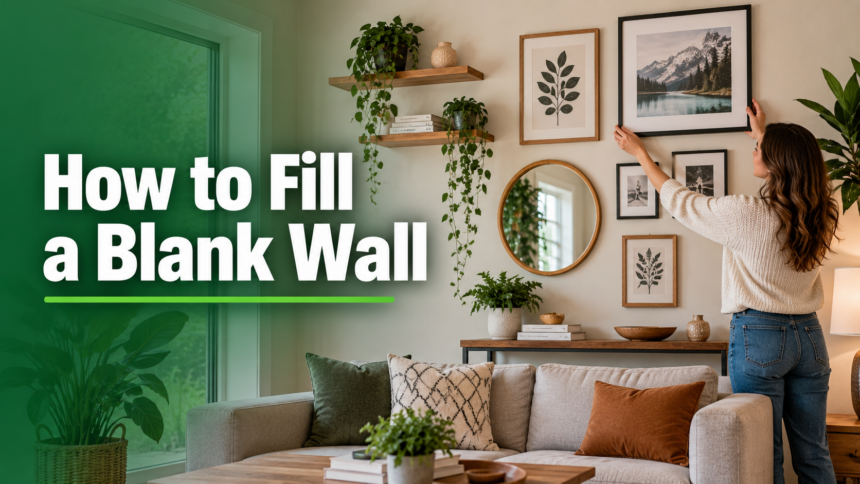
A single statement piece works well when you want a clean, uncomplicated look. A large painting, framed print, or poster placed at eye level can anchor an entire room without much extra effort. On the other hand, a gallery wall is ideal if you enjoy variety. This involves grouping multiple frames of different sizes, styles, and even mediums — photos, illustrations, and small paintings can all coexist if there’s a unifying color palette or frame finish.
If traditional framed art doesn’t appeal to you, textiles are worth exploring. Tapestries and fabric wall hangings add warmth and softness, especially in bedrooms or reading corners. Similarly, macrame and woven wall art bring texture without needing frames or glass, making them a lightweight and often budget-friendly option. For a more sculptural look, metal or wood wall art adds dimension and shadow play, which can be especially striking under the right lighting.
Functional Wall Fillers
Not every solution needs to be purely decorative. In fact, some of the best answers to how to fill a blank wall also solve a storage or organization problem at the same time.
Floating shelves are a favorite for this reason. They give you a place to display books, plants, or small decor items while keeping the floor clear. Wall-mounted storage units serve a similar purpose in offices or entryways, offering both function and visual interest. In kitchens, craft rooms, or garages, a pegboard can be both practical and decorative, especially when tools or utensils are arranged thoughtfully.
Wall clocks remain a classic choice because they add personality while serving an everyday purpose. And mirrors deserve special mention — beyond their obvious function, they visually expand a room, bounce light around, and work in nearly every design style, from round minimalist mirrors to ornate vintage frames.
Lighting as Decor
Lighting is often overlooked as a wall-filling solution, yet it can completely transform how a space feels. Wall sconces add a soft, ambient glow and work particularly well flanking a bed, mirror, or piece of art. String lights or fairy lights, once considered purely seasonal, have become a popular year-round choice for bedrooms and casual spaces, adding warmth without much cost.
For a more modern approach, LED art panels combine light and design into a single piece, often with customizable colors or patterns. If you already have artwork you love but feel it’s not getting enough attention, a picture light mounted just above the frame can make it feel like a gallery-worthy display.
Textural and Surface Treatments
Sometimes the best way to fill a blank wall isn’t to hang something on it at all, but to change the surface itself. Accent wallpaper is one of the most popular options here, offering endless patterns and textures that can make a single wall the focal point of a room without needing additional decor.
Textured paint techniques, like Venetian plaster or color blocking, create depth and interest through the finish alone. For a more architectural feel, wood paneling or wainscoting adds a timeless, upscale look, especially in dining rooms or entryways. If you’re renting or want a quicker fix, peel-and-stick tiles or panels offer similar visual impact without the commitment of permanent changes.
Plants and Greenery
Bringing nature indoors is an increasingly popular way to fill empty wall space, especially in homes with limited floor room. Wall-mounted planters allow you to grow herbs, succulents, or trailing plants vertically, turning a blank wall into a living feature.
Hanging plants in macrame holders or simple pots add movement and softness, particularly effective near windows with good light. For larger spaces, a vertical garden can become a dramatic centerpiece, though it does require more maintenance. If you love the look but not the upkeep, faux greenery walls have become realistic enough to offer the same visual benefit with none of the watering.
Personal and Sentimental Displays
Some of the most meaningful walls are the ones filled with personal history rather than store-bought decor. A family photo wall, arranged in frames of similar tone or finish, instantly makes a space feel warm and lived-in.
Travel memorabilia — think framed maps, ticket stubs, or postcards — can turn a blank wall into a visual journal of places you’ve been. Parents often use a dedicated space to rotate kids’ artwork, which keeps the display fresh and celebrates creativity. Framed letters, meaningful quotes, or milestone markers (like a child’s height chart or a wedding date) also add a layer of personality that generic art simply can’t replicate.
Room-Specific Ideas
Different rooms call for different approaches when figuring out how to fill a blank wall.
In the living room, large art pieces or gallery walls above the sofa work well, along with floating shelves for books and decor. In the bedroom, the wall behind the headboard is prime real estate for a tapestry, symmetrical sconces, or a soft textured accent wall.
Hallways and staircases benefit from a running gallery wall or a series of matching frames that guide the eye upward or along the path. A home office wall is a great spot for functional decor like pegboards, corkboards, or motivational prints, while kitchen and dining walls often suit open shelving, wall-mounted racks, or a single bold piece of art near the table.
Layout and Arrangement Tips
Getting the layout right is often what separates a polished wall from a cluttered one. For gallery walls, you can choose between a grid layout, which uses even spacing and matching frame sizes for a clean, structured look, or an organic layout, which mixes sizes and shapes for a more relaxed, collected-over-time feel.
A few practical rules make a big difference. Hang art so the center sits at roughly eye level, generally around 57 to 60 inches from the floor. Leave 2 to 3 inches of spacing between frames in a gallery arrangement so it doesn’t feel cramped. Balance visual weight by spreading larger pieces evenly rather than clustering them on one side. Before committing to nail holes, trace your frames onto painter’s tape and stick them to the wall to preview spacing and adjust as needed.
Budget-Friendly and DIY Ideas
Filling a wall doesn’t have to be expensive. Free or low-cost printables can be downloaded and framed for a fraction of the cost of original art. Thrifted frames and mirrors, especially when given a fresh coat of paint, often look just as good as new ones. If you enjoy hands-on projects, DIY painted canvases or abstract art pieces add a personal touch while keeping costs low.
For renters, there are plenty of no-hole solutions available, including adhesive hooks, tension rods for hanging textiles, and removable wallpaper. These options let you fully personalize a space without risking your security deposit.
Common Mistakes to Avoid
Even with good intentions, a few common mistakes can undermine an otherwise great wall design. Hanging art too high is one of the most frequent issues — always aim for eye level rather than close to the ceiling. Overcrowding a wall, or going too minimal on a large surface, can throw off the balance, so it helps to step back and assess proportion before finalizing anything. Mismatched frame styles can also create visual chaos; sticking to one or two finishes (like all black or all natural wood) keeps a gallery wall looking curated rather than accidental.
Conclusion
There’s no single right answer to how to fill a blank wall — the best solution depends on your room, your style, and how much time or budget you want to invest. Mixing functional elements like shelving or lighting with decorative touches like art, plants, or textiles usually creates the most balanced and inviting result. If you’re unsure where to start, begin small: add one piece, live with it for a few days, and build from there. Walls, like most design projects, come together best in layers.
Related Articles
How Much Is a Plumber Per Hour? Full Pricing Guide 2026
Why Does My Ceiling Fan Click? Causes & Fixes
Do Flat Sloped Roofs Perform Better Than a Gable Roof? Full Guide