

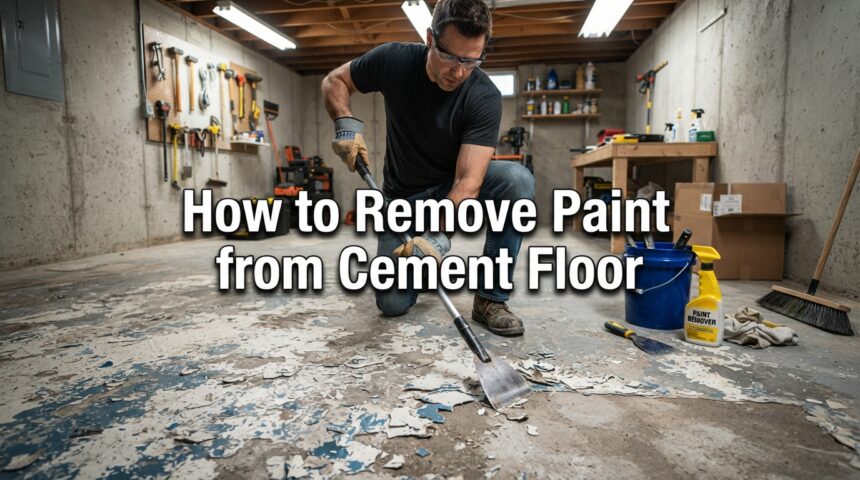
Paint spills on a cement floor are common, whether they happen in a garage, basement, or outdoor patio. Learning how to remove paint from cement floor does not require professional help, since most stains can be treated using household tools and a few store-bought products.
The right method depends on the type of paint, how old the stain is, and how large the affected area happens to be. Fresh spills usually come off with warm water and soap, while dried or old paint often needs a stripper, heat, or light grinding. This guide walks through every practical method in simple steps so the floor looks clean again without damaging the concrete underneath.
Understanding Paint Types on Cement Floors
Before starting any removal process, it helps to know which type of paint is sitting on the floor. This decides which product or tool will actually work without wasting time or damaging the surface.
Latex or Water-Based Paint
Latex paint is the easiest type to deal with because it dissolves in water when it has not fully cured. A mix of warm water and mild soap is usually enough to loosen it. Even dried latex paint responds well to scrubbing once it has been softened with a wet cloth.
Oil-Based Paint
Oil-based paint bonds more tightly with concrete and does not respond to plain water. It needs a chemical stripper or mineral spirits to break down the film. This type usually takes longer to remove and may require repeated applications.
Epoxy or Spray Paint
Epoxy coatings and spray paint create a hard, almost plastic-like layer on the floor. These often need mechanical methods such as grinding or sanding, since chemical removers may not fully penetrate the coating. Patience is needed here, as scraping alone rarely works.
Safety Precautions Before You Start
Removing paint involves scraping tools, strong chemicals, and sometimes machinery, so basic safety steps protect both the person doing the work and the surrounding area. Skipping this stage can lead to skin irritation or breathing problems.
Protective Gear
Wearing rubber gloves, safety goggles, and a dust mask or respirator is necessary when handling chemical strippers or dust from grinding. Long sleeves and closed shoes also help avoid skin contact with drips or splashes. This gear should stay on for the entire duration of the task, not just during chemical application.
Ventilation and Airflow
Working in a closed garage or basement without airflow allows fumes to build up quickly, especially with oil-based strippers. Opening doors and windows, or using a fan to push air outside, reduces the risk of dizziness or headaches. Good ventilation should be arranged before opening any chemical container.
Safe Disposal of Waste
Paint scrapings and used chemical rags should never be thrown directly into regular household trash, since some strippers are classified as hazardous waste. Local waste management guidelines usually specify a drop-off point or sealed bag method for such material. Checking these rules beforehand avoids fines or environmental harm.
Tools and Materials Needed
Having the right tools ready before starting saves time and prevents the paint from drying further while searching for equipment. Most items are affordable and available at hardware stores.
| Category | Items Needed |
| Manual Tools | Paint scraper, wire brush, putty knife, stiff-bristle broom |
| Chemical Products | Paint stripper, mineral spirits, TSP (trisodium phosphate), citrus-based remover |
| Equipment | Pressure washer, heat gun, concrete grinder or sander |
| Cleaning Supplies | Buckets, mop, clean rags, plastic sheeting for covering nearby areas |
Preparation Before Starting the Removal Process
A short preparation phase makes the actual paint removal smoother and reduces mess. This step is often skipped, but it prevents damage to nearby walls or furniture.
Clearing and Covering the Area
Moving furniture, vehicles, or stored items away from the work zone gives enough space to move tools freely. Covering nearby walls or baseboards with plastic sheeting protects them from chemical splashes or dust. This small step saves cleanup time later.
Testing on a Small Patch
Applying the chosen stripper or cleaner on a small, hidden section of the floor first confirms it will not discolor or damage the concrete. Waiting fifteen minutes on this test patch shows how the surface reacts. This is especially important on sealed or polished concrete floors.
Methods to Remove Paint from Cement Floor
There are several proven ways to remove paint from cement floor surfaces, and choosing the right one depends on the paint type and how stubborn the stain is. Each method below explains the process step by step.
Scraping for Loose or Peeling Paint
When paint is already flaking or loose, a scraper or putty knife held at a low angle can lift it off without any chemicals. Working in small sections and applying steady pressure prevents gouging the concrete surface. This method works best on older paint that has started cracking on its own.
Chemical Paint Stripper Method
A chemical stripper is spread evenly over the painted area and left to sit for the time mentioned on its label, usually between fifteen and thirty minutes. Once the paint softens and bubbles, a scraper removes it in long, even strokes. The area is then rinsed with water to clear away leftover residue and neutralize the chemical.
Hot Water and Soap Method
For fresh or light water-based paint stains, a mix of hot water and dish soap applied with a scrub brush is often enough. The paint should be left to soak for a few minutes before scrubbing in circular motions. This method is gentle and safe for daily household use without needing strong chemicals.
Pressure Washing Method
A pressure washer works well on larger outdoor areas such as patios or driveways where paint has partially peeled. Holding the nozzle at a slight angle and moving steadily across the surface lifts paint without needing manual scrubbing. Care should be taken to avoid pointing the pressure directly at joints or cracks, which can worsen surface damage.
Heat Gun Method
Applying gentle, even heat with a heat gun softens old or oil-based paint, making it easier to scrape off in strips. The gun should be kept moving constantly to avoid scorching the concrete or creating harmful fumes. This method works well indoors when paired with proper ventilation.
Mechanical Grinding or Sanding Method
For paint that has bonded deeply, such as epoxy or multiple old layers, a concrete grinder or sander physically removes the top layer of the floor. This method creates fine dust, so a dust extraction attachment or wet grinding technique keeps the air cleaner. Renting this equipment for a day is usually more practical than buying it for a single project.
Removing Stubborn Stains and Leftover Residue
Even after the main paint layer is gone, faint stains or a slight film often remain on the concrete. This stage focuses on getting the floor back to its original look.
Using TSP or Degreaser Solutions
A TSP solution mixed with warm water cuts through greasy residue and faint paint marks left after scraping. Scrubbing with a stiff brush in a circular motion lifts this last layer effectively. Rinsing thoroughly afterward prevents the chemical from drying into a white residue.
Repeated Scrubbing for Deep Stains
Some stains need more than one round of scrubbing, especially if the paint had soaked into porous or unsealed concrete. Allowing the floor to dry between attempts shows whether the stain has actually lifted or just appears lighter when wet. Patience here avoids using excessive chemicals in one sitting.
Rinsing, Drying and Sealing the Floor
Once the paint and residue are gone, the floor needs a final rinse and enough drying time before it is used again or treated further.
Final Rinse and Dry Time
A thorough rinse with clean water washes away any leftover chemical or dust from the previous steps. The floor should be left to air dry completely, which can take several hours depending on humidity and airflow. Walking on a damp floor can trap dirt back into the surface.
Sealing or Repainting the Floor
Applying a concrete sealer after the floor is fully dry protects it from future stains and makes cleaning easier going forward. Those planning to repaint can do so once the sealer has cured, following the paint manufacturer’s drying guidelines. This final step extends the life of the work already done.
Common Mistakes to Avoid
A few repeated mistakes can slow down the process or damage the floor permanently, so being aware of them beforehand helps.
| Mistake | Why It Causes Problems |
| Skipping ventilation | Leads to fume buildup and health discomfort |
| Using the wrong stripper | Latex removers do not work on oil-based paint |
| Ignoring the patch test | Risk of discoloring sealed or polished concrete |
| Rushing the dwell time | Paint does not soften fully, making scraping harder |
| Using metal tools aggressively | Can scratch or gouge the concrete surface |
Tips for Different Floor Types
Not every cement floor behaves the same way, so adjusting the approach based on the floor’s condition improves results.
Sealed or Polished Concrete
Sealed floors need milder chemicals since strong strippers can eat through the protective coating along with the paint. A gentler approach, such as hot water soaking followed by light scraping, usually protects the seal better.
Garage and Basement Floors
These areas often have oil stains mixed with paint, so a degreaser step before paint removal makes the process smoother. Extra ventilation is also important since these spaces are usually enclosed.
Outdoor Patios and Driveways
Outdoor surfaces can handle pressure washing more easily since there is open airflow and no indoor furniture at risk. Weather conditions, such as avoiding direct sun during chemical application, also affect how well the product works.
Frequently Asked Questions
Can vinegar remove paint from a cement floor?
Vinegar can help loosen very light, fresh water-based paint spots, but it is not strong enough for old or oil-based paint.
How long does the entire process usually take?
Small stains can be cleared within an hour, while larger or older paint layers may take a full day including drying time.
Is it safe to use chemical strippers indoors?
Yes, as long as the space has proper ventilation and protective gear is worn throughout the process.
Will grinding damage the concrete underneath?
Light grinding is generally safe when done evenly, but pressing too hard in one spot can create uneven patches on the surface.
Conclusion
Removing paint from a cement floor becomes manageable once the paint type and floor condition are properly identified. Simple methods like hot water scrubbing work for fresh spills, while stubborn or old paint may need strippers, heat, or grinding. Following safety steps and finishing with a proper rinse and seal keeps the floor looking clean and protected for a long time.
Related Articles
Complete Guide to Roof Ventilation for Metal Roofs: Types, Benefits, Installation & Maintenance
How to Winterize Your Garden Complete guide 2026
Can You Line Your Garage in Plywood?
How Do You Remove Smoke Stains From Walls? Complete Step-by-Step Guide
Why Does My Bathroom Smell Like Sewage? Causes, Fixes & Prevention Tips