

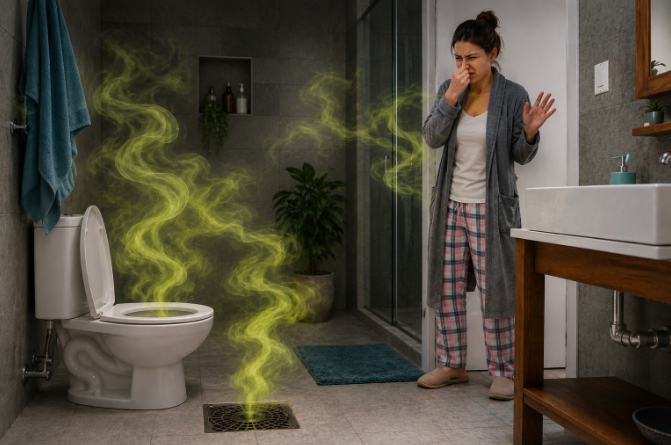
A bathroom that smells like sewage can make your home feel uncomfortable and unpleasant. This bad odor is usually a sign that something in the plumbing system is not working properly. In many cases, the problem can be caused by dry drain traps, clogged pipes, blocked vents, or hidden leaks.
The good news is that some sewage smells can be fixed with simple cleaning and maintenance. In this article, we will discuss the most common reasons behind sewage odors, how to get rid of the smell, and when it is the right time to call a professional plumber.
Why Does My Bathroom Smell Like Sewage?
A sewage smell in the bathroom is usually a sign of a plumbing or drainage problem somewhere in the system. Some issues are simple to fix, while others may require professional repair. Below are the most common causes of sewage odors in bathrooms and how they affect your home.
Dry P-Trap
The P-trap is the curved pipe under sinks, showers, and floor drains that holds water to block sewer gases. If the drain is not used for a long time, the water inside the trap can dry out. Once the trap becomes empty, bad sewage smells can easily enter the bathroom through the drain opening.
Clogged Drain
Bathroom drains often collect hair, soap scum, toothpaste, and other debris over time. This buildup can trap bacteria and create a strong unpleasant odor similar to sewage. A clogged drain may also slow water flow and increase the smell as waste sits inside the pipe.
Broken Toilet Seal
A toilet is sealed to the floor with a wax ring that prevents sewer gases from escaping. If this seal becomes cracked, loose, or worn out, sewage odors can leak from the base of the toilet. In some cases, you may also notice water leaking around the toilet area.
Blocked Vent Pipe
Plumbing systems use vent pipes to release sewer gases safely outside the home. When the vent pipe becomes blocked by dirt, leaves, or debris, gases cannot escape properly. This pressure buildup can force unpleasant sewage smells back into the bathroom drains.
Sewer Line Damage
Cracked, broken, or damaged sewer lines can release sewage odors inside or outside the home. Tree roots, old pipes, or ground movement are common causes of sewer line damage. This problem may also lead to slow drains, backups, and water damage if ignored.
Bacteria Buildup
Bacteria and mold can grow inside sink overflows, drains, and wet bathroom areas. As bacteria feed on waste and moisture, they can produce foul smells that resemble sewage. Regular cleaning is important to prevent buildup and keep the bathroom smelling fresh.
Leaking Pipes
Leaking pipes behind walls, under sinks, or beneath the floor can create constant moisture problems. This damp environment may lead to mold growth and unpleasant odors that smell similar to sewage. Small leaks can become bigger plumbing issues if they are not repaired quickly.
Common Signs Your Bathroom Odor Is Coming From the Sewer System
Certain warning signs can indicate that the bad smell in your bathroom is connected to the sewer system rather than simple dirt or moisture. Recognizing these signs early can help you fix the problem before it becomes more serious.
Rotten Egg or Sulfur Smell
A strong rotten egg or sulfur smell is one of the most common signs of sewer gas in the bathroom. This odor is usually caused by hydrogen sulfide gas coming from drains or damaged plumbing. If the smell stays for a long time, it may point to a deeper sewer or ventilation issue.
Smell Gets Worse After Running Water
If the odor becomes stronger after using the sink, shower, or toilet, there may be a drainage or venting problem. Running water can push trapped sewer gases back through the pipes and drains. This often happens when vents are blocked or drains are partially clogged.
Gurgling Drains or Bubbling Toilet
Gurgling sounds from drains or bubbling water in the toilet can be a sign of trapped air in the plumbing system. This usually happens when sewer lines or vent pipes are blocked. The pressure imbalance can allow sewer gases to escape into the bathroom.
Slow Draining Sink or Shower
A sink or shower that drains slowly may indicate buildup or blockage inside the pipes. When wastewater cannot flow properly, unpleasant odors can develop in the drain system. Slow drainage combined with a sewage smell often points to a clog deeper in the plumbing line.
Odor Appears After Rain
Sewage smells that appear after heavy rain can be linked to sewer line cracks or drainage problems outside the home. Rainwater may overload damaged sewer systems and force sewer gases back into the bathroom. This issue is more common in older plumbing systems or homes with underground pipe damage.
Smell Comes and Goes Randomly
A sewage odor that appears sometimes and disappears later may be caused by a dry P-trap, blocked vent, or hidden leak. Changes in temperature, water use, or air pressure can affect how sewer gases move through the plumbing system. Even if the smell is temporary, the problem should still be inspected.
Bathroom Smells Like Sewage but No Visible Leak — Why?
Sometimes a bathroom can smell like sewage even when there is no visible water leak or plumbing damage. In many cases, the problem is hidden behind walls, under floors, or inside the drainage system where it cannot be seen easily.
Hidden Pipe Cracks
- Small cracks in drain or sewer pipes can release sewer gases without causing noticeable water leaks.
- These hidden cracks are often located behind walls, under floors, or beneath the foundation.
- Over time, the smell may become stronger, especially in humid or closed bathroom spaces.
Sewer Gas Escaping Behind Walls
- Loose pipe connections or damaged seals inside the wall can allow sewer gas to escape slowly.
- The odor may travel through wall openings, cabinets, or vents before reaching the bathroom.
- This problem is difficult to detect without a professional plumbing inspection.
Evaporated Water Barrier
- Drains rely on water inside the P-trap to block sewer gases from entering the home.
- If a bathroom drain is rarely used, the water barrier can evaporate completely.
- Once the trap dries out, sewage odors can rise through the drain even without a leak.
Faulty Ventilation System
- Poor bathroom ventilation can trap moisture and unpleasant odors inside the room.
- A blocked or damaged plumbing vent may also force sewer gases back through drains.
- Bad airflow often makes sewage smells linger longer and feel stronger in the bathroom.
Why Does My Bathroom Smell Like Sewage After a Shower?
If your bathroom smells like sewage after a shower, the problem is often caused by a dry P-trap or bacteria buildup inside the drain. The P-trap is a curved pipe beneath the shower drain that holds water to block sewer gases from entering your bathroom.
When the trap dries out or does not hold enough water, sewer odors can rise through the drain. In other cases, hair, soap scum, and biofilm buildup inside the pipes create unpleasant smells that become stronger when hot shower water and steam pass through the drain.
The heat and moisture can push trapped sewer gases into the bathroom air, making the odor more noticeable after showering.
How to Find the Exact Source of the Sewage Smell?

A sewage smell in the bathroom can come from different plumbing areas, so finding the exact source is important before fixing the issue. Below are the most common places you should inspect to identify where the bad odor is coming from.
Check the Sink Drain
Smell near the sink drain to see if the odor is stronger there. Hair, soap buildup, bacteria, or a dry P-trap inside the drain can create sewage-like smells. Running hot water and cleaning the drain may help identify if the sink is the source.
Inspect the Toilet Base
Check around the bottom of the toilet for bad odors or moisture. A damaged wax ring or loose toilet seal can allow sewer gases to escape from the base. If the toilet rocks slightly when touched, the seal may already be broken.
Smell Near the Shower Drain
Shower drains can collect hair, soap scum, and bacteria over time. A dry drain trap or clogged pipe may also cause sewage odors to come through the shower area. The smell often becomes stronger after running hot water.
Listen for Gurgling Sounds
Gurgling noises from drains or toilets may indicate trapped air or blocked vent pipes. These sounds happen when the plumbing system cannot release air properly. Sewer gas odors often appear along with these plumbing noises.
Check for Water Leaks
Look under sinks, around toilets, and near walls for signs of moisture or water damage. Hidden leaks can create mold, bacteria growth, and sewer-like smells inside the bathroom. Even small leaks may produce strong odors over time.
Inspect Roof Vent Pipes
Plumbing vent pipes on the roof help release sewer gases safely outside the home. Leaves, dirt, or bird nests can block these vents and force odors back into the bathroom. If multiple drains smell bad, the vent system may need inspection.
How to Get Rid of Sewage Smell in the Bathroom?
Getting rid of sewage smell in the bathroom starts with finding and fixing the source of the odor. Below are some effective ways to remove bad smells and keep your bathroom fresh and clean.
Run Water in Unused Drains
Unused drains can dry out over time and allow sewer gases to enter the bathroom. Running water for a few seconds helps refill the P-trap and blocks bad odors from coming back through the drain. This is a simple fix for bathrooms that are not used regularly.
Clean the Drain Naturally
Natural drain cleaning methods can help remove bacteria, buildup, and unpleasant smells without using harsh chemicals. Regular cleaning also keeps water flowing properly and reduces future odor problems.
Baking Soda and Vinegar Method
Pour baking soda into the drain followed by white vinegar and let the mixture sit for about 15–20 minutes. This reaction helps break down grime, soap scum, and odor-causing bacteria inside the pipe. Flush the drain with hot water to clean out the loosened debris.
Remove Hair and Debris
Hair, soap residue, and dirt trapped inside drains can create strong sewage-like smells. Removing this buildup with a drain tool or cleaner can improve drainage and eliminate bad odors. Regular maintenance also helps prevent future clogs.
Replace the Toilet Wax Ring
A damaged toilet wax ring can allow sewer gas to leak from the base of the toilet. Replacing the old seal helps stop unpleasant odors and prevents water leaks around the toilet area. This repair is important if the toilet feels loose or smells near the base.
Unclog the Vent Pipe
Blocked vent pipes can trap sewer gases inside the plumbing system and force smells back into the bathroom. Leaves, bird nests, and debris are common causes of vent blockages. Cleaning the vent pipe restores proper airflow and helps remove sewer odors.
Repair Leaking Pipes
Leaking pipes behind walls or under sinks can create moisture, mold, and unpleasant smells. Fixing damaged or loose plumbing pipes removes hidden odor sources and prevents water damage. Even small leaks should be repaired as soon as possible.
Schedule Professional Drain Cleaning
Professional drain cleaning can remove deep clogs, sludge, and bacteria buildup that household cleaners cannot reach. Plumbers use specialized tools to fully clean the drainage system and improve pipe flow. Regular professional cleaning can help prevent recurring sewage smells.
How to Prevent Sewage Smells in Your Bathroom?

Preventing sewage smells is easier than dealing with major plumbing problems later. Regular cleaning, proper drain care, and routine maintenance can help keep your bathroom fresh and odor-free.
Flush Unused Drains Regularly
Unused drains can dry out and allow sewer gases to enter the bathroom through empty P-traps. Running water in sinks, showers, and floor drains every few weeks helps maintain the water barrier. This simple habit can prevent many odor problems in rarely used bathrooms.
Keep Drains Clean
Bathroom drains collect hair, soap scum, toothpaste, and bacteria over time. Regular cleaning helps prevent buildup that can create unpleasant sewage-like smells. Using hot water or natural cleaners can keep drains fresh and flowing properly.
Avoid Pouring Grease or Debris Down Drains
Grease, dirt, and heavy debris can stick inside pipes and create stubborn clogs. These blockages may trap bacteria and produce foul odors in the bathroom. Proper waste disposal helps protect the plumbing system and reduce drainage issues.
Schedule Routine Plumbing Inspections
Regular plumbing inspections can help detect hidden leaks, damaged pipes, or vent problems before they become serious. Professional plumbers can identify small issues that may cause sewage smells later. Preventive maintenance can also extend the life of your plumbing system.
Use Drain Covers
Drain covers help catch hair, soap pieces, and debris before they enter the pipes. This reduces the risk of clogs and bacteria buildup inside bathroom drains. Cleaning the drain cover regularly also helps maintain proper water flow.
Fix Leaks Immediately
Even small leaks can create moisture problems, mold growth, and unpleasant odors over time. Repairing leaks quickly helps prevent hidden plumbing damage and keeps the bathroom dry. Fast repairs can also reduce the risk of expensive future plumbing issues.
When Should You Call a Professional Plumber?
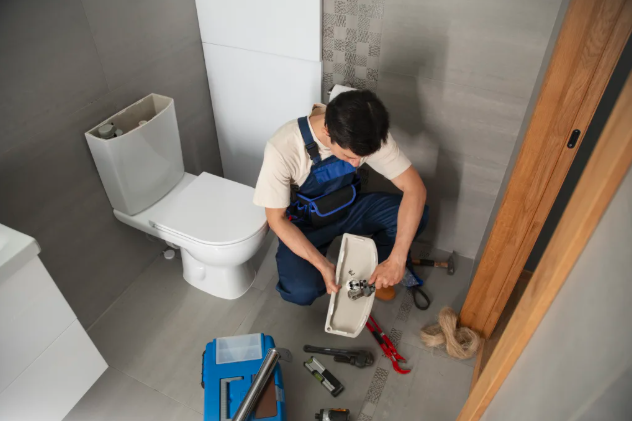
Some sewage smell problems can be solved with basic cleaning and maintenance, but certain warning signs should not be ignored. Below are common situations where calling a professional plumber is the safest and most effective solution.
- Persistent Sewer Odors – If the sewage smell keeps returning even after cleaning the bathroom and drains, there may be a hidden plumbing or sewer line issue that needs professional inspection.
- Multiple Drains Smell Bad – When sinks, showers, and toilets in different parts of the house all produce bad odors, the problem may be connected to the main sewer system.
- Water Backup Problems – Water backing up into drains, tubs, or toilets is a serious sign of blockage in the plumbing or sewer line that should be fixed immediately.
- Signs of Sewer Line Damage – Slow drains, gurgling sounds, wet spots, or strong outdoor sewer smells may indicate cracked or damaged sewer pipes underground.
- Mold or Water Damage Appears – Damp walls, peeling paint, mold growth, or water stains can point to hidden leaks that may also be causing sewage odors inside the bathroom.
Conclusion:
A bathroom that smells like sewage is often a sign of plumbing, drainage, or ventilation problems that should not be ignored. Issues like dry P-traps, clogged drains, damaged seals, or sewer line problems can all cause unpleasant odors inside the home.
Regular cleaning, proper maintenance, and early inspections can help prevent these smells from becoming serious plumbing issues. If the odor continues or gets worse, contacting a professional plumber is the best way to find and fix the problem safely.
FAQs
Why does my bathroom smell worse after rain?
Heavy rain can overload sewer systems or expose hidden plumbing leaks, causing sewer gases to enter your bathroom more easily. Moisture and humidity can also make existing drain odors smell stronger.
How do plumbers detect sewer gas leaks?
Plumbers usually use smoke tests, sewer cameras, or pressure tests to find hidden leaks in pipes and vent systems. These tools help locate cracks or damaged plumbing areas quickly.
How much does it cost to fix sewer smell problems?
The cost depends on the cause of the smell. Simple fixes like drain cleaning may cost less, while sewer line repairs or pipe replacements can be more expensive.
Why does my sink smell even after cleaning it?
The odor may be coming from bacteria buildup, a dirty overflow drain, or a dry P-trap beneath the sink. Hidden clogs deeper inside the pipe can also cause persistent smells.
Should I worry about sewer gas in my house?
Yes, persistent sewer gas smells should not be ignored because they may indicate plumbing problems or gas leaks. Long-term exposure can sometimes cause headaches, nausea, or breathing irritation.
Related Articles
Dolomite Countertops: A Marble-Like Stone with Practical Strength
How to Measure Windows for Curtains (Step-by-Step Guide)
How Long Do Vinyl Windows Last? A Complete Guide
Can You Paint Roof Shingles? Pros, Cons, and Best Practices
Best Primer for Painting Kitchen Cabinets – Complete Easy Guide for Smooth & Durable Cabinets