
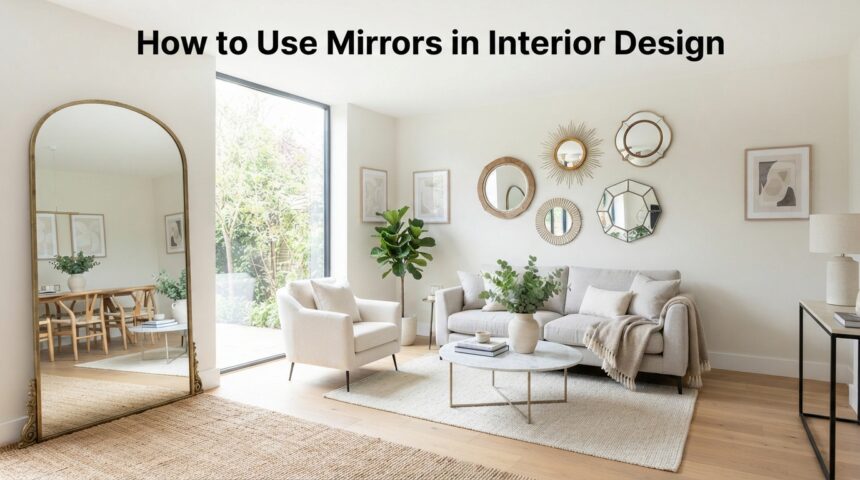
Learning how to use mirrors in interior design starts with one simple idea: a mirror repeats whatever it faces. Place it opposite a window and it doubles the daylight, and hang it across from an attractive feature and it doubles that beauty too.
Choose a size that suits the wall, hang it near eye level, and keep clutter out of its reflection. Follow these steps and almost any room will feel brighter, larger, and more finished. This guide explains how to choose, place, style, hang, and care for mirrors throughout your home.
Why Mirrors Matter in Interior Design
Mirrors do two jobs at once. They help you check your appearance, and they work as decor that adds depth to flat walls.
Unlike a renovation, a mirror costs little, needs no builder, and can be moved whenever you change your mind. That flexibility is why designers use mirrors in nearly every style of home, from minimalist flats to traditional houses.
How Mirrors Work in a Room
A mirror reflects light, colour, and objects, which creates the illusion of a second space behind the wall. When it catches daylight or lamplight, it bounces that glow deeper into the room.
What appears in the reflection matters as much as the mirror itself, so check what it will show before you hang it. A window, plant, or chandelier looks lovely doubled, while a pile of laundry does not.
How to Choose the Right Mirror
The right mirror balances size, shape, and finish with the room around it. Consider these three points before you buy.
Size
Small mirrors suit grouped displays and tight spots, while large mirrors create statement walls. Above a sofa or console table, aim for about two-thirds to three-quarters of the furniture’s width. A mirror that is too small looks lost and wastes the wall.
Shape
Round and oval mirrors soften rooms full of straight lines and boxy furniture. Rectangular and arched shapes feel classic and suit most spaces. Sunburst or irregular shapes work best as a single bold focal point.
Frame and Quality
Wood, black metal, brass, rattan, or no frame at all can each set a different mood, so match the frame to other finishes nearby. Choose clear, distortion-free glass with a sturdy backing. Safety-backed mirrors are a wise choice in family homes.
Where to Place Mirrors in Each Room
Every room has a spot where a mirror works hardest. Use the guidance below to find it.
Entryway and Hallway
Hang a mirror above a console table to brighten a dark entry and give everyone a last-look spot before leaving. In a narrow hallway, a tall or wide mirror makes the walls feel further apart. This simple change often makes the biggest difference to first impressions.
Living Room
Place a large mirror above the sofa, mantel, or sideboard, or lean a floor mirror in a corner. Putting it opposite or beside a window spreads daylight across the whole room. It also gives the space a polished, layered look.
Dining Room
A mirror behind the table or above a buffet makes the room feel more spacious. It also doubles the glow of a chandelier or candles during dinner. The result is a warmer, more inviting atmosphere for guests.
Bedroom
A full-length mirror on a wall or door adds function, while smaller mirrors above a dresser add charm. Keep the reflection calm and uncluttered for a restful feel. If reflections bother you at night, avoid pointing a mirror straight at the bed.
Bathroom
Size the mirror to suit the vanity and light it from both sides to avoid shadows on the face. Round or oval shapes soften the hard lines of tile and fixtures. Choose moisture-resistant frames so edges stay in good condition.
Kitchen and Home Office
In a kitchen, use a small decorative mirror on a blank wall away from grease and splatter. In a home office, a mirror adds depth and light to a work zone. Position it so it does not reflect glare onto your screen.
Using Mirrors in Small Spaces
Small rooms gain the most from mirrors because reflection creates visual depth where floor space is limited. Try these approaches:
- Use one large mirror instead of several tiny ones, so the wall looks calm and window-like.
- Lean an oversized floor mirror against the wall to save time on hanging.
- Choose tall, vertical mirrors to make ceilings appear higher.
- Add mirrored side tables or cabinets in studios, where every piece must earn its place.
Using Mirrors to Add Light
In dark or north-facing rooms, a mirror can act like a second window, spreading whatever light exists across the space. Windowless corners and hallways benefit especially, since even a small amount of lamplight is multiplied. Pair a mirror with a wall sconce, table lamp, or candles to increase the glow after sunset. Light frames and clear glass keep the effect bright rather than heavy.
Creative Mirror Ideas
Mirrors do not have to hang alone above a table. These ideas add personality while keeping the room balanced:
- Build a gallery wall from mirrors of different shapes and sizes.
- Set a mirror behind open shelving or a bar cart to make displays sparkle.
- Replace closet doors with mirrored panels to lighten a heavy wall.
- Use window-style multi-pane mirrors for an architectural look.
- Add antique or smoked mirror accents for a vintage, moody touch.
- Place a mirrored tray on a coffee table for subtle shine.
Styling Mirrors With Other Decor
Treat a mirror like artwork and style it as part of a vignette. Pair it with a console table, a lamp, and a plant so it feels connected to the furniture beneath it. Repeat one metal finish, such as brass or black, across the frame, lighting, and hardware for a cohesive look. Balance the shine of glass with softer textures like wood, linen, or stone, so the room does not feel cold.
How to Hang and Secure Mirrors
A well-hung mirror looks better and stays safer. Get these basics right before you lift the mirror onto the wall.
Height
Center the mirror at about eye level, roughly 57 to 60 inches from the floor. Over furniture, leave a few inches of space so the two pieces read as a pair. Hanging too high is the most common error and makes the mirror feel disconnected.
Wall Fixing
Locate wall studs and use heavy-duty hooks or anchors rated above the mirror’s weight. Large or heavy mirrors are better fixed to studs than to plain plasterboard. For very large pieces, consider hiring a professional.
Floor Mirror Safety
Lean floor mirrors at a stable angle on a non-slip surface. Use an anti-tip strap or wall bracket, especially in homes with children or pets. This small step prevents accidents and protects the glass.
Mirror Placement Mistakes to Avoid
Even a beautiful mirror can look wrong in the wrong spot. Watch for these problems:
- Reflecting clutter, a bare wall, or an unattractive fixture.
- Choosing a mirror too small for the wall or furniture.
- Placing two mirrors so they face each other and create a busy, overwhelming effect.
- Filling one room with too many mirrors.
- Ignoring direct sunlight, which can cause glare or heat on surfaces.
Caring for and Cleaning Mirrors
Clean mirrors with a soft microfibre cloth and a glass cleaner or a mix of water and white vinegar. Spray the cloth rather than the glass, so liquid does not seep behind the edges and damage the backing. Wipe in an even pattern to avoid streaks, and dust frames regularly. Antique mirrors need gentler care, so use only a slightly damp cloth.
Mirror Ideas by Decor Style
Matching the mirror to your decor style keeps the look intentional. The table below offers quick guidance.
| Decor Style | Best Mirror Choice | Why It Works |
| Modern and minimalist | Frameless or thin black frame | Keeps lines clean and simple |
| Scandinavian | Round mirror with light wood frame | Adds softness and warmth |
| Traditional | Ornate gold or carved frame | Suits formal, classic furniture |
| Farmhouse and rustic | Reclaimed wood or distressed finish | Adds texture and character |
| Industrial | Black metal or grid-style mirror | Echoes steel and brick details |
| Boho | Rattan or woven organic shape | Brings natural, relaxed charm |
| Glam and Art Deco | Sunburst or geometric mirror | Creates drama and sparkle |
Budget-Friendly Ways to Use Mirrors
Great mirror styling does not require a large budget. Thrift stores and flea markets often stock solid vintage mirrors, and a coat of paint or a new frame can refresh them completely. Simple DIY frames made from wood trim or rope add custom character at low cost. One well-placed mirror often delivers more impact than several rushed purchases.
Frequently Asked Questions
Can mirrors really make a room look bigger?
Yes. By reflecting light and views, a mirror creates the illusion of extra depth. The effect is strongest when the mirror is large and faces a window or an attractive feature.
How high should I hang a mirror?
Center it at about 57 to 60 inches from the floor, which is average eye level. Over furniture, hang it a few inches above the surface so the pieces feel connected.
Is it okay to place a mirror in a bedroom?
Yes, as long as it suits your comfort. A wall or wardrobe mirror works well, while a mirror facing the bed directly can feel unsettling to some people.
Which mirror shape is best for small spaces?
Tall rectangular or arched mirrors add height, and round mirrors soften tight corners. Choose one large mirror over many small ones for the calmest effect.
Conclusion
Knowing how to use mirrors in interior design comes down to size, placement, and reflection. Choose a mirror that fits the wall, hang it at eye level, and point it toward light or something beautiful. Start with a single well-chosen piece, and add more only when the room truly needs it.
Related Articles
Can You Grout Over Grout? Full Guide & Expert Tips
How to Clean Stainless Cooktop: Easy Steps for a Spotless Finish
How Long Does It Take for Silicone Sealant to Dry?