

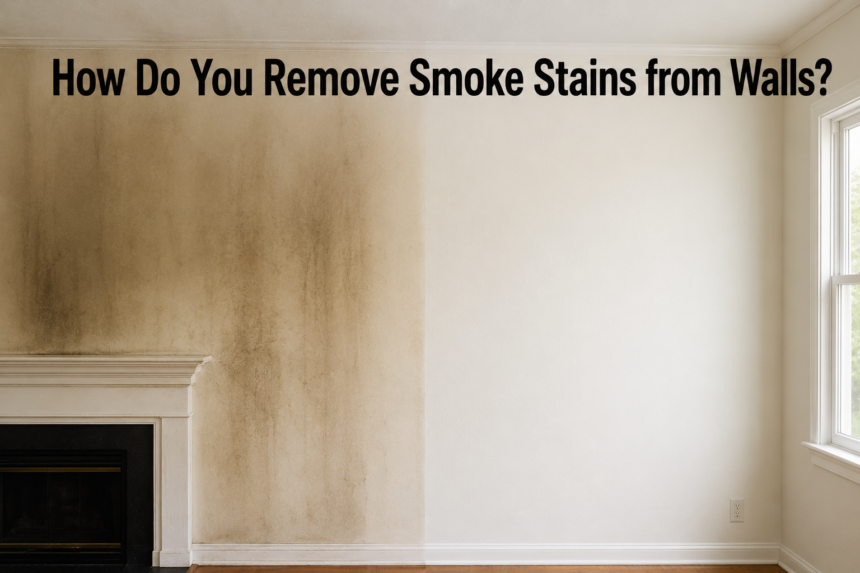
If you’ve ever walked into a room and noticed dull, yellowish-brown streaks creeping across your once-clean walls, you already know how frustrating smoke stains can be. Whether they come from cooking, candles, a fireplace, cigarettes, or even a small kitchen fire, smoke residue has a way of settling into paint and wallpaper and making a room look tired and neglected.
So how do you remove smoke stains from walls without ruining the paint underneath? The good news is that with the right approach, most smoke stains can be cleaned using simple household items and a bit of patience.
Cleaning smoke stains isn’t just about appearances. Soot and smoke particles can carry a lingering odor, and if left untreated for too long, they can seep deeper into the wall surface, making the stain permanent and much harder to cover, even with fresh paint. Addressing the problem early keeps your home looking fresh and prevents costly repainting down the road.
Understanding Smoke Stains
Types of Smoke Residue
Not all smoke stains are the same, and knowing which type you’re dealing with changes your cleaning approach. Dry soot, which usually comes from candles or minor kitchen mishaps, sits on the surface as a powdery black or gray film.
Oily or wet smoke residue, on the other hand, often results from house fires or long-term cigarette exposure, and it tends to be sticky, yellow-brown, and much more stubborn to remove.
Why Smoke Stains Are Tricky to Clean
The biggest mistake people make is grabbing a wet cloth and scrubbing right away. Water can actually cause soot particles to smear across the wall, spreading the stain and pushing it deeper into the paint. That’s why dry cleaning methods always come before any wet cleaning steps.
Common Surfaces Affected
Smoke stains can appear on painted drywall, wallpaper, textured or popcorn ceilings, and even brick or stone accent walls. Each surface reacts differently to cleaning products, so it’s worth identifying your wall type before starting.
Safety Precautions Before You Start
Before diving into the cleaning process, take a few minutes to prepare the space properly. Skipping this step can lead to irritated lungs, damaged flooring, or a bigger mess than you started with.
- Ventilate the room by opening windows and doors, or running a fan, so soot particles and cleaning fumes don’t linger in the air.
- Wear protective gear, including rubber gloves, a dust mask, and safety glasses, especially if you’re dealing with a larger stained area.
- Protect your floors and furniture with old sheets or drop cloths, since soot can easily fall and smear onto surfaces below.
Tools and Materials You’ll Need
Having everything ready before you begin makes the whole process faster and far less frustrating. Below is a simple breakdown of what you’ll need.
| Category | Items |
|---|---|
| Dry Cleaning Tools | Vacuum with brush attachment, soot sponge (chemical sponge), soft-bristle brush |
| Wet Cleaning Supplies | Dish soap, white vinegar, baking soda, warm water, trisodium phosphate (TSP) |
| Extras | Microfiber cloths, bucket, magic eraser, stain-blocking primer, paintbrush or roller |
Most of these items are inexpensive and can be found at a local hardware or grocery store, which makes this a budget-friendly weekend project.
Step-by-Step Cleaning Process
Here is the tried-and-true method for how do you remove smoke stains from walls effectively, without smearing or damaging the paint.
- Vacuum loose soot first. Use a vacuum with a soft brush attachment to gently lift away any loose particles before they get pressed further into the wall.
- Dry-clean with a soot sponge. Wipe the stained area in straight, one-directional strokes. Flip the sponge to a clean side frequently, since a dirty sponge will just redistribute the soot.
- Test a hidden area first. Dab a small amount of your chosen cleaning solution on an inconspicuous spot to make sure it won’t damage or discolor the paint.
- Prepare a cleaning solution. Mix warm water with a few drops of dish soap, or combine ½ cup of white vinegar with a gallon of water for a stronger degreasing effect.
- Wipe from top to bottom. Working downward prevents dirty water from dripping onto already-cleaned sections and creating new streaks.
- Rinse and dry the wall. Go over the area with a clean, damp cloth to remove soap residue, then pat dry with a towel to avoid water spots.
- Repeat for stubborn spots. Some heavier stains may need two or three passes, so don’t be discouraged if the first attempt doesn’t fully lift the mark.
Natural and DIY Cleaning Solutions
If you’d rather avoid harsh chemicals, several natural options work surprisingly well on smoke stains.
A simple vinegar and water solution cuts through grease and neutralizes odor at the same time, making it a favorite for kitchen walls. A baking soda paste, made by mixing baking soda with a small amount of water until it forms a thick consistency, can be gently rubbed onto tougher spots and left for a few minutes before wiping away.
Plain dish soap diluted in warm water handles most everyday soot without any risk to standard paint finishes. For more severe, long-term staining, a trisodium phosphate (TSP) solution offers a heavy-duty degreasing power, though it should always be used with gloves and proper ventilation since it’s a stronger chemical cleaner.
Dealing with Different Wall Types
Not every wall responds to cleaning the same way, so it helps to adjust your technique based on the surface.
Painted walls generally hold up well to the vinegar or dish soap method, as long as you avoid excessive scrubbing that could strip the finish.
Wallpaper requires extra caution, since moisture can cause peeling or bubbling; a barely damp cloth and gentle dabbing motion works best here.
Textured or popcorn walls trap soot in their grooves, so a vacuum with a brush attachment followed by a soft dry sponge usually works better than heavy wiping.
Brick or stone walls can typically tolerate a stronger scrubbing brush and a baking soda paste, since these materials are more durable than painted drywall.
When Stains Won’t Come Off?
Sometimes, no matter how much elbow grease you put in, a stain simply won’t lift completely. This usually means the smoke has soaked past the top layer of paint.
Signs You Need a Stain-Blocking Primer
If the mark keeps reappearing after cleaning, or if you can still smell smoke even after wiping the wall down, it’s a strong signal that the residue has penetrated the paint layer.
How to Prime and Repaint
In this case, apply a stain-blocking primer, such as a shellac-based or oil-based product, over the affected area. Let it dry fully according to the label instructions, then repaint with your matching wall color. This step prevents the old stain from “bleeding through” the new paint over time.
When to Call a Professional
For extensive fire damage, widespread soot coverage, or walls that still carry a strong smoky odor after multiple cleaning attempts, it may be worth calling a professional cleaning or restoration service, especially if the damage resulted from an actual house fire.
Preventing Future Smoke Stains
Once your walls are clean, a little maintenance goes a long way in keeping them that way.
- Use proper ventilation, such as exhaust fans, while cooking to reduce airborne grease and smoke.
- Wipe down walls near stoves, fireplaces, and candles on a regular basis before soot has a chance to build up.
- Run an air purifier in rooms where smoke exposure is common.
- Keep fireplaces and candles well-maintained, and consider using a fireplace screen to reduce soot escaping into the room.
Common Mistakes to Avoid
A few simple missteps can turn an easy cleaning job into a bigger headache. Avoid using water before doing a dry cleaning pass, since this tends to smear the stain rather than lift it. Don’t scrub too aggressively, as this can damage paint and spread soot further.
Always test your cleaning solution in a hidden spot first to avoid unexpected discoloration. And never skip ventilation, both for your safety and for helping the room air out during the cleaning process.
Conclusion
So, how do you remove smoke stains from walls? The process comes down to a few key principles: start dry, test before you clean, use a gentle degreasing solution, and always work from top to bottom.
Whether you’re dealing with light soot from a candle or heavier residue from years of cigarette smoke, these steps will help restore your walls without damaging the paint. Acting quickly, using the right tools, and following a careful cleaning order will save you time, money, and the hassle of a full repaint.
FAQs
Can I use bleach on smoke stains? Bleach isn’t generally recommended for painted walls, as it can discolor or weaken the paint finish. Vinegar, dish soap, or TSP solutions are safer and just as effective.
How do I get rid of the smoke smell, not just the stain? Along with cleaning the surface, ventilate the room thoroughly, use an air purifier, and consider wiping walls with a vinegar solution, which naturally helps neutralize lingering odors.
Will smoke stains always need repainting? Not always. Light to moderate stains often come out with a thorough cleaning. However, deep or long-term staining usually requires a stain-blocking primer and a fresh coat of paint.
How long does it take to clean smoke-stained walls? For a small, lightly stained area, the process can take as little as 30 minutes. Larger or heavily soot-covered walls may take a few hours, especially if multiple cleaning passes are needed.
Related Articles
How to Replace a Roof Vent: Guide 2026
How to Measure Windows for Curtains (Step-by-Step Guide)
How to Clean Faux Suede Furniture Without Ruining It?
What Cabinets Go Well With Kitchen Tile Floor: Complete Guide 2026