

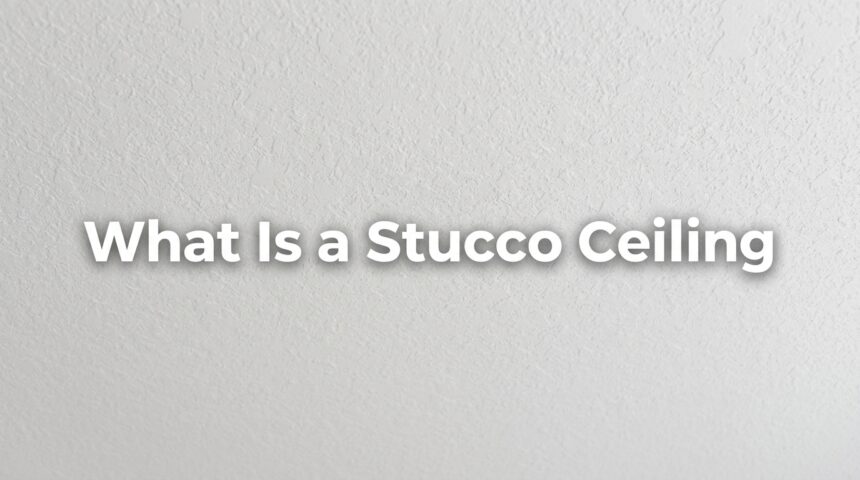
A stucco ceiling is a type of ceiling finish created by applying a plaster-like mixture of cement, sand, lime, and water directly onto the ceiling surface. This mixture is spread by hand or sprayed on, and then textured or smoothed before it fully dries.
People often ask what is a stucco ceiling because it looks quite different from a plain painted ceiling, and its texture can range from bumpy and rough to smooth and polished depending on the technique used. Stucco ceilings have been used for many decades because they hide surface flaws, add texture, and give a home a distinct character that flat ceilings simply cannot offer.
What Exactly Is Stucco?
Stucco is a building material made mainly from cement, sand, lime, and water, mixed into a thick paste. It is applied wet to walls or ceilings and hardens into a durable, textured surface once it dries.
Basic Ingredients of Stucco
Traditional stucco is made by combining Portland cement, fine sand, lime, and water in specific ratios. Lime is added to improve workability and flexibility, while sand gives the mixture body and texture. Some modern versions also include synthetic binders to improve strength and reduce cracking over time.
Stucco vs Plaster
Stucco and plaster are often confused because both are wet-applied finishes, but they are not the same. Plaster is usually gypsum-based and used mostly indoors, while stucco is cement-based and traditionally designed to withstand outdoor exposure as well. When applied to ceilings, stucco tends to be more rigid and long-lasting compared to standard interior plaster.
Stucco vs Drywall Texture
Drywall texture is created using a thin joint compound applied over drywall panels, whereas stucco is a thicker, cement-based coating applied directly to the surface.
Drywall texture is lighter and easier to repair, while stucco offers a heavier, more permanent finish with better durability against wear and impact.
Types of Stucco Ceilings
Stucco ceilings are not all identical; several distinct styles exist depending on the tools and techniques used during application. Each type creates a different visual effect and suits different interior styles.
Popcorn or Acoustic Ceiling
This is one of the most recognizable stucco ceiling types, featuring a bumpy, spray-applied texture that became extremely popular in homes built between the 1950s and 1980s. It was widely used because it helped dampen sound and hide uneven ceiling surfaces without requiring extensive finishing work.
Smooth Stucco Ceiling
A smooth stucco ceiling offers a flat, polished appearance that is achieved by carefully troweling the stucco mixture until it forms an even surface. This style is popular in modern homes where a clean, minimalist look is preferred over heavy texture.
Skip Trowel Texture
Skip trowel texture is created by dragging a trowel lightly across the stucco surface, leaving behind irregular, hand-applied marks. This technique gives ceilings a rustic, artisanal appearance that works well in Mediterranean or farmhouse-style interiors.
Knockdown Texture
Knockdown texture starts with stucco applied in random peaks, which are then flattened slightly using a trowel before the mixture fully sets. The result is a subtle, mottled texture that is less bumpy than popcorn ceilings but still adds visual interest.
Venetian or Decorative Stucco
Venetian stucco is a refined, often glossy decorative finish achieved through multiple thin layers applied and polished by hand. It is generally chosen for accent ceilings or feature areas where a luxurious, high-end appearance is desired.
Materials Used in Stucco Ceilings
Different stucco formulations are used depending on the desired finish, budget, and application method. Choosing the right material affects both the ceiling’s appearance and its long-term durability.
Traditional Cement-Based Stucco
This is the classic formulation using cement, sand, and lime, known for its strength and long lifespan. It is commonly used in older homes and remains a reliable option for ceilings that need extra durability.
Gypsum-Based Compounds
Gypsum-based stucco alternatives are lighter and easier to apply indoors, making them a common choice for residential ceiling texturing. They dry faster than cement-based stucco but are generally less resistant to moisture.
Acrylic and Synthetic Stucco
Acrylic-based stucco products are more flexible and resistant to cracking compared to traditional cement mixtures. These are often used in renovation projects where reduced weight and easier application are priorities.
How Stucco Ceilings Are Applied
Applying a stucco ceiling involves several careful steps to ensure the finish is even, durable, and free from cracks. The process requires proper preparation, correct mixing, and skilled application techniques.
Surface Preparation
Before applying stucco, the ceiling surface must be cleaned, repaired, and sometimes primed to help the mixture adhere properly. Any existing loose material or old paint is usually removed to prevent bonding issues later.
Application Techniques
Stucco can be applied using a spray gun for even, large-area coverage, or by hand-troweling for more controlled, textured results. The choice of technique largely depends on the desired final look, whether that is a rough popcorn finish or a smooth decorative surface.
Drying and Curing Time
Once applied, stucco needs adequate time to cure properly, which can range from a few hours to several days depending on thickness and humidity levels. Rushing this stage often leads to cracking or an uneven finish once fully dried.
Benefits of Stucco Ceilings
Stucco ceilings offer several practical and aesthetic advantages that have kept them popular across different architectural styles. These benefits explain why many homeowners continue to choose stucco over simpler flat finishes.
| Benefit | Description |
| Sound Dampening | Textured surfaces absorb sound better than flat, smooth ceilings |
| Hides Imperfections | Covers minor cracks, uneven areas, and construction flaws |
| Fire Resistance | Cement-based stucco offers some natural resistance to fire |
| Aesthetic Appeal | Adds texture and character not achievable with flat paint |
| Durability | Withstands wear better than many lightweight finishes |
Drawbacks and Common Issues
Despite its benefits, stucco ceilings also come with certain limitations that are worth considering before installation. Being aware of these issues helps homeowners make a more informed decision.
Cleaning and Dust Accumulation
Textured stucco surfaces, especially popcorn ceilings, tend to trap dust more easily than smooth finishes. Cleaning them requires gentle techniques since scrubbing too hard can damage the texture.
Asbestos Concerns in Older Homes
Many popcorn stucco ceilings installed before the 1980s contained asbestos fibers for added fire resistance. Homeowners renovating older properties are generally advised to have the ceiling tested before any sanding or removal work begins.
Repair Difficulty
Repairing a small section of a textured stucco ceiling can be tricky, as matching the existing texture exactly is often difficult. This sometimes results in visible patch marks unless the repair is done by an experienced professional.
Stucco Ceiling vs Other Ceiling Finishes
Comparing stucco with other common ceiling finishes helps clarify why some homeowners choose it over alternatives. Each option has its own strengths depending on style preference and functional needs.
Stucco vs Flat Paint Ceiling
A flat painted ceiling offers a clean, simple look with minimal texture, while stucco introduces depth and character through its rough or patterned surface. Painted ceilings are generally easier to clean and repair compared to textured stucco.
Stucco vs Tin or PVC Ceiling Panels
Tin and PVC panels offer a decorative, patterned look without the mess of wet application, unlike stucco which requires on-site mixing and troweling. However, stucco tends to offer better sound absorption than rigid panel materials.
Maintenance and Cleaning Tips
Proper maintenance helps stucco ceilings stay in good condition for many years without losing their appearance. Simple, consistent care can prevent the need for costly repairs later.
Regular dusting with a soft brush attachment helps prevent buildup without damaging the texture. Stains should be addressed gently using a barely damp cloth rather than heavy scrubbing, since excess moisture can weaken the stucco bond. Repainting is possible but should be done with a roller designed for textured surfaces to maintain even coverage across all the bumps and grooves.
How to Remove or Update a Stucco Ceiling
Many homeowners choose to update outdated stucco ceilings to match more modern interior trends. This process requires patience and, in older homes, some safety precautions.
Scraping and Skim-Coating
Removing popcorn texture typically involves lightly wetting the surface and scraping it away, followed by skim-coating with a thin layer of joint compound for a smooth finish. This method works well when the ceiling is asbestos-free and structurally sound.
Covering with New Material
Instead of removing old stucco, some homeowners choose to cover it entirely with new drywall or ceiling panels. This approach avoids the mess of scraping while still achieving a completely updated look.
Cost Considerations
The cost of stucco ceiling work varies significantly based on whether it involves new installation, repair, or removal. Labor costs also depend heavily on regional rates and the complexity of the existing ceiling condition.
Installing a new stucco ceiling is generally more affordable than removing an old one, especially when asbestos testing and specialized handling are required. Hiring a professional is usually recommended for both installation and removal, since improper handling can lead to uneven texture or safety risks in older homes.
Is a Stucco Ceiling Right for You?
A stucco ceiling suits homeowners who want added texture, sound dampening, and a distinct architectural character in their interiors. It works particularly well in Mediterranean, Spanish, or farmhouse-style homes where decorative texture complements the overall design.
However, those who prefer a minimalist, easy-to-clean interior may find flat or lightly textured ceilings more practical. Older homes with existing popcorn stucco should also be evaluated carefully before any renovation work begins, due to potential asbestos content.
Conclusion
Understanding what is a stucco ceiling makes it easier to decide whether this classic finish fits your home’s style and practical needs.
From popcorn texture to smooth decorative stucco, each type offers a unique balance of aesthetics, durability, and sound control worth considering during renovation planning.
FAQs
What is a stucco ceiling made of?
It is typically made from cement, sand, lime, and water, sometimes with gypsum or acrylic additives for indoor use.
Are stucco ceilings outdated?
Popcorn-style stucco ceilings are less common in modern homes, though smooth and decorative stucco finishes remain popular in certain architectural styles.
Is it safe to remove an old stucco ceiling myself?
Older stucco ceilings should be tested for asbestos before any DIY removal, since improper handling can release harmful fibers into the air.
Can a stucco ceiling be painted?
Yes, stucco ceilings can be repainted using a roller suited for textured surfaces to ensure even coverage across the pattern.
Related Articles
Lamp Floor Arc: A Complete Guide 2026
Why Does My Shower Squeal? Complete Guide to Causes and Fixes
Complete Guide to Roof Ventilation for Metal Roofs: Types, Benefits, Installation & Maintenance
How to Open Garage Door With Broken Spring
How to Program a Garage Door Opener? Step-by-Step Guide for All Brands