
A broken garage door spring is one of the most common household problems, and it usually happens without warning. The door suddenly feels extremely heavy, refuses to move, or gets stuck halfway. If you are searching for how to open garage door with broken spring, the good news is that it can be done safely at home with the right precautions.
However, since the spring is responsible for balancing the entire weight of the door, this task requires patience, an extra pair of hands, and a calm approach rather than force. This guide walks you through every stage of the process in simple language, from understanding why the spring failed to opening the door manually without hurting yourself or damaging the mechanism further.
Understanding Garage Door Springs and Why They Matter
Garage door springs carry almost the entire weight of the door, which is why a single broken coil changes everything about how the door behaves. Knowing how these springs work makes the manual opening process much easier to understand.
What Garage Door Springs Do
The spring acts as a counterbalance system, storing tension when the door closes and releasing it gently when the door opens.
This is what allows even a heavy wooden or steel door to lift with minimal effort. Once the spring breaks, that stored tension disappears, leaving the full weight of the door to be lifted manually or by the motor alone.
Torsion Springs vs Extension Springs
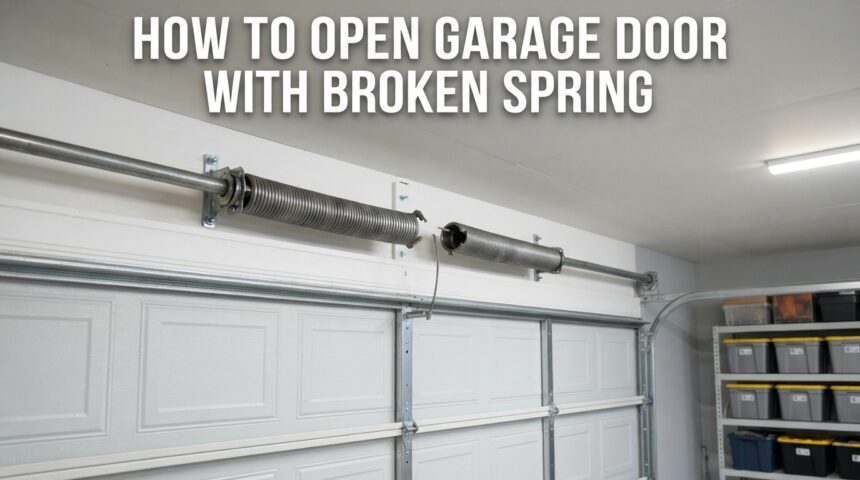
Torsion springs sit horizontally above the door on a metal shaft and twist to create tension, while extension springs run along the upper tracks and stretch to store energy.
Torsion springs are generally considered safer and more durable, but both types can snap suddenly due to age or wear. Identifying which type your garage has helps you understand how much force will be needed to lift the door manually.
Common Signs a Spring Has Broken
A loud bang from the garage, a door that won’t budge with the opener, or a visible gap in the coiled metal are the clearest signs of a broken spring.
Some doors may also appear lopsided or uneven when partially opened. Recognizing these symptoms early prevents further strain on the opener motor and the door panels themselves.
Safety Precautions Before You Begin
Before attempting any manual movement, safety must come first because a spring-less door is essentially unsupported dead weight. A few precautions can prevent serious injuries during the process.
What Not to Do When the Spring Breaks
Never try to force the door open using the electric opener, since this can burn out the motor or snap the drive gear under the extra load.
Avoid touching the broken spring, cables, or pulleys directly, as leftover tension can cause sudden movement. Keeping children and pets away from the garage until the door is secured is equally important.
Safety Gear You Should Use
Wearing thick work gloves protects your hands from sharp metal edges and pinch points along the tracks. Safety glasses are useful in case any rust, dust, or small metal fragments fall while the door is being lifted. Closed-toe shoes with a good grip also reduce the risk of slipping while supporting the door’s weight.
How to Open Garage Door With Broken Spring — Step by Step
Once safety measures are in place, opening the door manually involves disconnecting the automatic system and lifting the door with steady, even force. Each step below should be followed in order for the best results.
Step 1: Disconnect the Automatic Opener
Locate the red emergency release cord hanging from the trolley on the ceiling rail and pull it firmly downward. This detaches the door from the motorized opener, allowing it to move freely by hand. Skipping this step can damage the opener since the motor is not designed to lift a door without spring support.
Step 2: Get a Helper and Lift Evenly
A broken-spring door can weigh well over a hundred kilograms, so lifting it alone is not recommended. Stand on opposite sides of the door with a helper and lift slowly at the same pace to keep the door level. Sudden or uneven lifting increases the chance of the door jamming inside the track.
Step 3: Secure the Door in the Open Position
Once the door is partially or fully open, place locking pliers or a C-clamp on the track just below the bottom roller on each side. This prevents the door from sliding back down while you are working underneath it or moving a vehicle. Never rely on your hands or body weight alone to hold the door open.
Tools That Make the Process Easier
Having the right tools nearby before you begin saves time and reduces the physical strain of lifting the door manually. The table below summarizes what each tool is used for during this process.
| Tool | Purpose |
| Locking pliers or C-clamps | Secure the door on the track once it is open |
| Work gloves | Protect hands from sharp edges and pinch points |
| Flashlight | Inspect the spring, cables, and rollers for damage |
| Winding bars | Used only by professionals during spring replacement |
DIY Spring Replacement vs Hiring a Professional
Once the door is open, many homeowners wonder whether they should replace the spring themselves or call a technician. Both options come with different levels of risk, cost, and time investment.
Risks of Replacing the Spring Yourself
Torsion springs in particular are under extremely high tension, and improper handling with the wrong tools can cause serious injury.
Without proper winding bars and experience, even a small mistake during installation can cause the spring to release suddenly. This is why most manufacturers and safety experts recommend professional replacement rather than a DIY attempt.
When You Should Call a Professional
If the spring cannot be replaced safely within a short time, or if you notice damage to the cables, pulleys, or drums along with the broken spring, it is best to call a technician immediately.
Professionals also carry the correct spring size and tension rating for your specific door, which reduces the chance of repeat failure. Most repairs are completed within one to two hours by an experienced technician.
Preventing Future Spring Breakage
Regular attention to the garage door system can significantly reduce the chances of facing a broken spring again in the future. A little maintenance goes a long way in extending the life of the springs.
Simple Maintenance Tips
Lubricating the springs, rollers, and hinges every few months reduces friction and prevents premature wear.
Visually inspecting the spring for rust, gaps, or stretching once a month helps catch problems before they become emergencies. Keeping the tracks clean and free of debris also allows the door to move smoothly, reducing unnecessary stress on the spring.
Understanding Spring Lifespan
Most garage door springs are rated for around ten thousand open-and-close cycles, which typically translates to seven to nine years of average household use.
Doors that open and close multiple times a day will naturally wear out their springs faster. Replacing both springs at the same time, even if only one has broken, is often recommended since the second one is usually close to failure as well.
Frequently Asked Questions
Can I drive my car out if the garage door is stuck closed?
Yes, once the door is manually lifted and secured with clamps, there is enough clearance to move a vehicle out safely.
Is it dangerous to leave a broken spring unrepaired for a few days?
It is not immediately dangerous if the door is kept closed and undisturbed, but repeated manual lifting increases the risk of injury and further damage.
How long does a professional spring replacement usually take?
Most technicians complete a standard spring replacement within one to two hours, depending on the door type and spring system.
Can one spring break while the other stays fine?
Yes, this happens often since both springs may not wear out at exactly the same rate, though replacing both together is generally advised.
Conclusion
Knowing how to open garage door with broken spring safely can save you from unnecessary stress during an unexpected breakdown.
By disconnecting the opener, lifting the door with a helper, and securing it properly on the track, you can regain access to your garage without causing further damage. For the actual spring replacement, however, calling a trained professional remains the safest long-term solution.
Related Articles
How to Maintain a Roof in Harsh Weather Conditions Complete guide 2026
Why Is My Basement Flooding: Complete guide 2026
How High Should a Toilet Flange Be? Complete Height & Installation Guide
How to Open a Locked Garage Door: A Complete Step-by-Step Guide
Are Nail Pops in Ceiling Dangerous? Full Guide With Causes & Fixes