

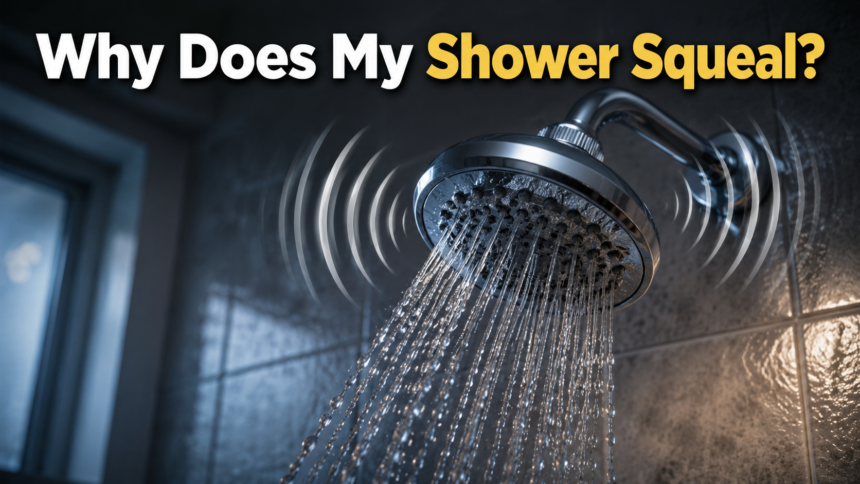
A squealing shower is one of those small household annoyances that can turn a relaxing morning routine into an irritating one. If you have ever asked yourself why does my shower squeal the moment you turn the handle, you are not alone, since this is a very common plumbing complaint in homes of all ages.
The good news is that this noise is rarely a sign of a dangerous problem, and in most cases it comes down to worn parts, water pressure issues, or mineral buildup inside your fixtures. This guide walks you through every possible cause in simple language, along with practical fixes you can try yourself before calling a professional.
What Causes a Squealing Shower?
Before jumping into fixes, it helps to understand the basic reason behind the noise. In almost every case, a squealing shower happens because water is being forced through a narrow or partially blocked opening, which causes vibration and that high-pitched sound.
Think of it the same way a whistle works, where air is pushed through a tiny gap and creates sound because of the pressure change. Inside your shower valve or showerhead, the same principle applies to water. When something inside the fixture is worn, loose, blocked, or not fully open, the flow of water becomes uneven, and this uneven flow vibrates against nearby parts, producing the squeal you hear.
Common Causes of Shower Squealing
There are several reasons your shower might be making this noise, and identifying the right one makes the fix much easier. Below are the most frequent culprits homeowners run into.
Worn or Damaged Cartridge or Washer
Inside most single-handle shower faucets is a small part called a cartridge, and older two-handle faucets use a rubber washer instead. Over time, constant use causes these parts to wear down or become coated with mineral deposits, which stops them from sealing smoothly.
When water pushes past this rough or damaged surface, it creates vibration that comes out as a squeal, and this is by far the most common reason people search for why does my shower squeal.
Partially Closed Shut-Off Valve
Every shower has a shut-off valve, usually located behind an access panel or in the basement, that controls water supply to that fixture. If this valve is not fully opened, water gets forced through a smaller gap than it should, and this restriction creates a whistling or squealing sound as pressure builds against the narrow opening.
High Water Pressure
Homes with unusually high water pressure often experience noisy plumbing, including squealing showers. When water moves through pipes and fixtures faster than they are designed to handle, it creates turbulence and vibration inside the pipework, and this turbulence is what produces the squealing sound you notice when the shower is running.
Mineral and Sediment Buildup
If you live in an area with hard water, minerals like calcium and lime can build up inside your showerhead or valve over months and years. This buildup narrows the pathway water travels through, and just like a partially closed valve, this narrower gap causes vibration and squealing as water tries to force its way past the blockage.
Loose Pipes or Fittings
Sometimes the noise is not coming from inside the valve at all, but from a loose connection somewhere in the pipe system. Pipes that are not properly secured to the wall or floor can vibrate when water rushes through them, and depending on the material and fitting type, this vibration often comes out sounding like a squeal or a rattle.
Faulty or Old Showerhead
Showerheads naturally wear out over time, especially the internal rubber seals and nozzles that control water flow and pattern. When these parts degrade, water no longer flows evenly through the showerhead, and this uneven distribution can cause the same kind of vibration and squealing found in worn cartridges.
How to Diagnose the Exact Cause?
Before attempting any fix, it is worth spending a few minutes figuring out exactly where the noise is coming from, since this saves time and prevents unnecessary part replacements. Turn the shower on and listen closely to whether the sound is coming from the wall, the handle, or the showerhead itself.
Next, check if the squeal happens only at certain water pressures, such as when the handle is turned partway versus fully open, since this often points toward the cartridge or valve. It also helps to test other faucets in the house, because if every fixture squeals, the issue is more likely related to water pressure or the main shut-off valve rather than a single worn part.
The table below summarizes how to match what you hear with the likely cause, making it easier to know where to start.
| Symptom Observed | Likely Cause |
| Squeal only when handle is partly turned | Worn cartridge or washer |
| Squeal in every faucet in the house | High water pressure or main valve issue |
| Squeal fades after running water a while | Mineral buildup in showerhead |
| Rattling sound along the wall or floor | Loose pipes or fittings |
| Sound changes when showerhead is removed | Faulty showerhead |
DIY Fixes You Can Try at Home
Many causes of a squealing shower can be fixed without hiring a plumber, as long as you are comfortable with basic tools and a bit of patience. Start with the simplest solutions first, since these often solve the problem without needing to replace any parts.
Begin by checking all visible connections around the showerhead and arm, tightening any that feel loose using a wrench wrapped in cloth to avoid scratching the fixture. If the noise continues, remove the showerhead and soak it in a mixture of white vinegar and water for about thirty minutes to dissolve mineral deposits, then scrub gently with an old toothbrush before reattaching it.
Next, locate your shut-off valve and make sure it is turned fully open, since even a slightly closed valve can cause the whistling sound many homeowners report.
If these steps do not resolve the issue, the cartridge is likely the culprit and will need replacing. This involves turning off the water supply, removing the faucet handle, taking out the old cartridge, and installing a new one that matches your faucet brand and model, which is usually available at any hardware store.
For homes with consistently high water pressure, installing a pressure-reducing valve on the main water line can prevent squealing across all fixtures, not just the shower.
When to Call a Plumber?
While most squealing shower problems are simple to fix, there are situations where professional help is the safer choice. If you have already tried cleaning the showerhead, tightening connections, and checking the shut-off valve without success, the issue may be deeper inside the wall or connected to older pipe materials that are prone to corrosion.
Homes with galvanized steel pipes, for example, often develop internal rust that narrows the pipe diameter over time, and this type of problem cannot be fixed with simple part replacement. Additionally, if the squealing is accompanied by banging noises, leaks, or a noticeable drop in water pressure throughout the house, it is best to have a licensed plumber inspect the system before the issue worsens.
How to Prevent Squealing in the Future?
Once you have fixed the current squeal, a little regular maintenance goes a long way in keeping it from coming back. Cleaning your showerhead every few months helps prevent mineral buildup, especially if you live in a hard water area, and installing a water softener can reduce this buildup across your entire plumbing system.
It is also worth checking cartridges and washers every couple of years, since replacing them proactively is far easier than dealing with a sudden squeal or leak later on. Finally, keeping an eye on your home’s water pressure with a simple pressure gauge, available cheaply at most hardware stores, can help you catch pressure issues before they cause noise or damage to your fixtures.
Frequently Asked Questions
Is a squealing shower dangerous?
No, a squealing shower is usually just annoying rather than dangerous, though it can sometimes point to high water pressure that may stress pipes over time if left unaddressed.
Why does it only squeal sometimes?
Intermittent squealing often happens when the noise depends on how far the handle is turned or how much mineral buildup has accumulated, since both factors can change slightly with each use.
Can low water pressure also cause squealing?
Low pressure itself rarely causes squealing, but a partially closed valve that is restricting flow can create both low pressure and a squealing sound at the same time.
How much does it cost to fix?
Simple fixes like cleaning a showerhead or tightening a connection cost nothing beyond your time, while a cartridge replacement usually costs between fifteen and fifty dollars for the part, with professional plumber visits typically ranging higher depending on your location.
Conclusion
A squealing shower is a common issue with straightforward explanations, ranging from worn cartridges and mineral buildup to high water pressure and loose fittings.
By working through the simple diagnostic steps and DIY fixes covered in this guide, most homeowners can solve the problem within an afternoon without needing to call a plumber.
If the noise persists after trying these solutions, reaching out to a professional ensures the underlying issue is properly identified and fixed before it leads to bigger plumbing problems down the line.
Related Articles
How to Remove Toilet Flapper: Easy Step-by-Step Guide (2026)
How Long Does a Bathroom Remodel Take? Complete guide 2026
How Wide Is Steel Roofing? Complete Panel Width Guide
How to Store Furniture in a Storage Unit: Complete Guide 2026
How to Remove Paint from Concrete: Complete Guide 2026