

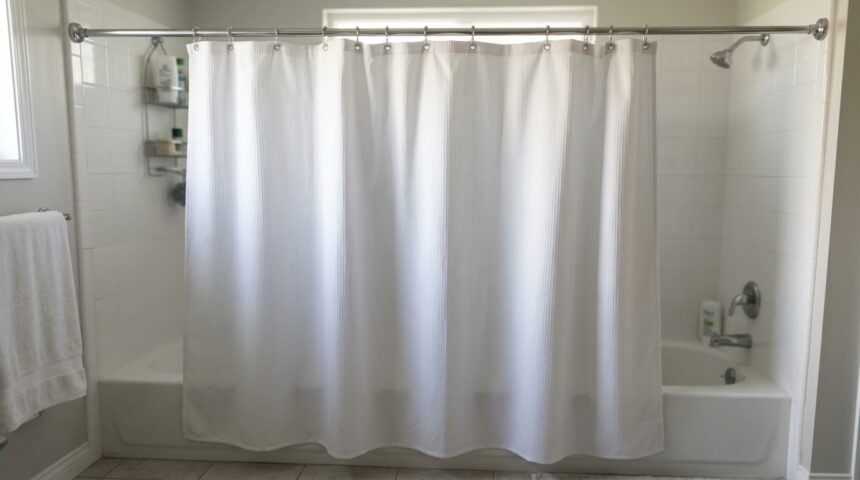
When it comes to bathroom setup, most people focus on tiles, lighting, or fixtures — but the shower curtain is one detail that quietly affects both the functionality and the overall look of your space. Getting the standard shower curtain size right means no water splashing onto the floor, no mold buildup from excess fabric dragging on the ground, and a bathroom that actually looks put together.
Whether you are replacing an old curtain or setting up a new bathroom entirely, understanding the correct dimensions before you buy will save you a lot of frustration.
What Is the Standard Shower Curtain Size?
The standard shower curtain size that fits the majority of bathrooms is 72 inches wide by 72 inches long. This square format works well for most conventional bathtub-shower combinations and is the most widely available size in stores and online. However, depending on your specific shower setup, you may also come across 70 x 70 inches or 70 x 72 inches as common alternatives.
All three of these fall under the “standard” category and are designed with the average bathtub width of 58 to 60 inches in mind — manufacturers typically add around 12 extra inches of fabric to allow for proper folds and complete coverage when the curtain is pulled shut.
Why Does the Standard Size Work for Most Bathrooms?
The 72 x 72 inch size has become the default because it covers a standard tub opening without excess pooling on the floor or leaving gaps at the sides. It hangs at a safe and practical height, provides enough overlap to prevent water leakage, and is available in virtually every material, color, and pattern imaginable.
If your bathroom falls within typical residential dimensions, this size will likely work without any adjustment needed.
When the Standard Size Is Not Enough
Not every bathroom follows a standard layout. Walk-in showers, freestanding tubs, tall ceilings, and narrow stall showers all require different curtain dimensions.
In these cases, sticking with the standard size can either leave gaps that allow water to escape or result in extra-long fabric that sits on the floor and becomes a breeding ground for mold. Knowing your specific shower type is the first step to picking the right curtain.
All Shower Curtain Sizes at a Glance
Here is a quick reference table of the most common shower curtain dimensions available on the market:
| Shower Type | Recommended Curtain Size (Width x Length) |
| Standard bathtub shower | 70 x 70 in, 70 x 72 in, or 72 x 72 in |
| Extra-tall shower | 70 x 84 in or 72 x 84 in |
| Extra-wide shower | 108 x 72 in or 144 x 72 in |
| Shower stall | 54 x 78 in |
| Curved rod shower | 72 x 72 in or wider (up to 108 in) |
| Walk-in shower | 54 x 72 in or 54 x 78 in |
This table gives you a starting point, but the most reliable approach is always to measure your own space before making a purchase.
How to Measure for a Shower Curtain
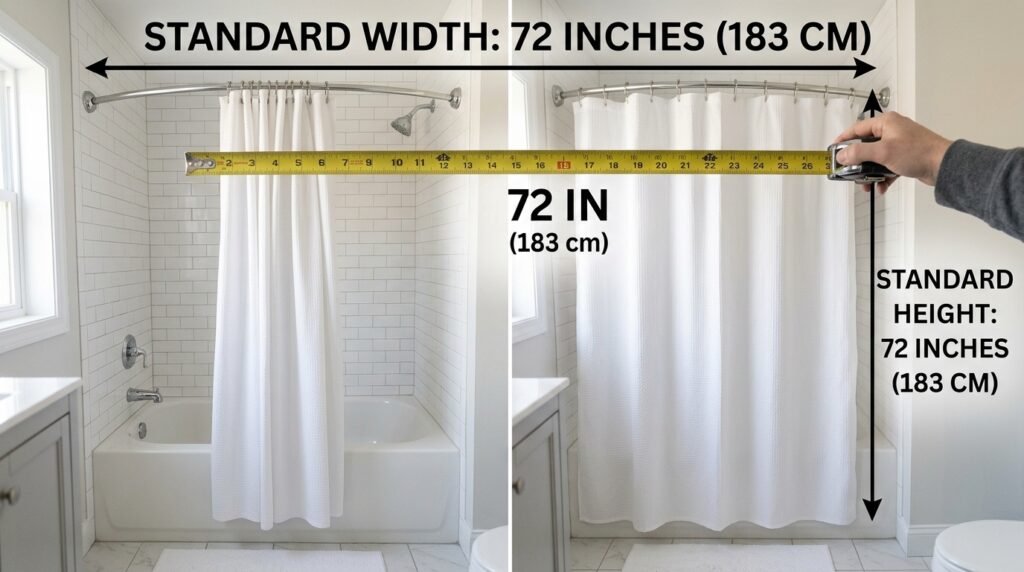
Taking accurate measurements before you shop is essential. A curtain that is slightly off in either direction can cause real problems — too long and it traps moisture, too short and your floor gets wet every time you shower.
Measuring the Width
Measure the full width of your shower opening from wall to wall, or from one end of the tub to the other. Once you have that number, add at least 12 inches to it.
This extra fabric is not just decorative — it ensures the curtain hangs with natural folds that provide complete coverage and prevent water from sneaking through the sides. For example, if your shower opening measures 58 inches, you should be looking for a curtain that is at least 70 inches wide.
Measuring the Length
Measure from the floor up to the point where your curtain rod is installed, or where you plan to install it. From that total height measurement, subtract 2 inches to ensure the curtain does not touch the floor. A curtain that drags on the bathroom floor holds moisture, develops mildew, and becomes a tripping hazard — especially for children.
The goal is for the bottom hem to hover just above the floor, keeping things clean and safe.
Accounting for Curtain Hooks and Rings
Many people forget to factor in the height added by shower rings or hooks. If your rod uses standard hooks, they can add 1 to 3 inches to the overall hanging length. Measure the hook size and include it in your calculation so the curtain does not end up longer than intended.
Types of Shower Curtains by Size
Once you understand the dimensions, it helps to know which curtain type corresponds to your specific bathroom setup.
Extra-Long Shower Curtains
Extra-long shower curtains typically measure 70 x 84 inches or 72 x 84 inches. These are designed for bathrooms with higher-than-average ceilings or for homeowners who want a dramatic, floor-to-ceiling aesthetic. Installing the rod higher up on the wall and using an extra-long curtain can make a small bathroom feel much taller and more spacious.
Extra-Wide Shower Curtains
Extra-wide curtains come in widths of 108 inches or even 144 inches and are typically used with curved shower rods or in bathrooms that have unusually wide shower openings. A curved rod extends outward into the shower space, creating more room inside — but because it is longer than a straight rod, a standard-width curtain will not provide enough fabric to cover the full span without gaps.
Stall Shower Curtains
A shower stall curtain measures approximately 54 x 78 inches, making it narrower than the standard size to fit the smaller opening of a standalone shower stall. The length is slightly longer because there is no bathtub base to act as a barrier, meaning the curtain itself is the primary defense against water splashing onto the floor.
Choosing the Right Shower Curtain: Key Factors
Beyond size, a few other factors play an important role in choosing the right curtain for your bathroom.
1. Material: Vinyl curtains are moisture-resistant and require no liner, making them a low-maintenance option. Cotton curtains offer a cleaner, more elegant look but need a separate liner. Microfiber sits in the middle — it repels water reasonably well and is machine washable, but may require more frequent cleaning than vinyl.
2. Liner vs. No Liner: If your curtain is made from a fabric material like cotton or linen, you will need a separate waterproof liner to hang inside the tub. Without it, the fabric absorbs moisture and develops mold quickly. Vinyl and some hookless curtains come with built-in liners.
3. Rod Type: The type of rod you have — straight, curved, or tension — affects which curtain width you need. Always check your rod length before purchasing a curtain.
4. Ceiling Height: Taller ceilings call for a longer curtain, both for practical coverage and for visual balance. A standard 72-inch curtain hung beneath a 10-foot ceiling can look out of proportion and may not prevent water from splashing over the top.
Where to Install the Shower Curtain Rod
The standard recommended height to install a shower curtain rod is between 75 and 77 inches from the floor. This height allows a standard 72-inch curtain to hang at the right level — not touching the floor, but close enough to prevent water from escaping underneath. If you are using an extra-long curtain, you will need to install the rod higher, around 84 to 86 inches from the floor, depending on the curtain length.
Before drilling permanent brackets, use a tension rod first to test and adjust the height. Once you find the ideal position, mark both walls, use a level to ensure it is straight, and then install the permanent brackets.
FAQs About Standard Shower Curtain Sizes
Should a shower curtain touch the floor?
No. A shower curtain should hang approximately 2 inches above the floor. Curtains that touch or drag on the floor trap moisture and develop mold quickly, and they also create a tripping hazard.
What size shower curtain do I need for a walk-in shower?
For most walk-in showers, a curtain measuring 54 x 72 inches or 54 x 78 inches works well. If your walk-in is wider than average, you may need an extra-wide option.
Can I use a standard shower curtain on a curved rod?
A standard 72 x 72 curtain can technically fit a curved rod, but because the rod creates a wider arc, you may find the curtain does not provide full coverage. A curtain that is 72 to 108 inches wide is generally a better fit for curved rods.
How often should I replace my shower curtain?
Most manufacturers recommend replacing your shower curtain every six months. However, if you notice visible mildew, staining, or torn edges before that, it is time for a replacement regardless of how long it has been up.
Conclusion
Choosing the right shower curtain comes down to three things: knowing your shower type, taking accurate measurements, and selecting the appropriate size from the options available. The standard shower curtain size of 72 x 72 inches covers most situations, but bathrooms with stalls, curved rods, tall ceilings, or wide openings require a different approach.
Always measure your space before shopping, add 12 inches to your width measurement for proper coverage, and keep the curtain hanging at least 2 inches above the floor. Getting these details right ensures your bathroom stays dry, looks clean, and functions exactly as it should.
Related Articles
How Long Does It Take to Do a Bathroom Renovation? Timelines, Phases & What to Expect
How to Hang a Rug on the Wall: Step-by-Step Methods for Every Rug Type
How to Repaint Kitchen Cabinets: Complete DIY Guide with Costs, Tips & Mistakes to Avoid
How to Hang a Rug on the Wall: Step-by-Step Methods for Every Rug Type
How Long Does It Take to Do a Bathroom Renovation? Timelines, Phases & What to Expect