
A basement floor drainage system is one of the most important components for protecting a home from water damage, flooding, mold growth, and foundation issues. Basements are naturally located below ground level, making them vulnerable to water intrusion from rainfall, groundwater pressure, plumbing leaks, and poor exterior drainage.
A properly designed basement floor drainage system collects excess water and directs it away from the basement before it can cause structural damage. Whether you are building a new home or upgrading an existing basement, understanding how drainage systems work can help you make better decisions and maintain a dry, healthy living space.
What Is a Basement Floor Drainage System?
A basement floor drainage system is designed to collect and remove water that enters or accumulates in a basement. Different drainage components work together to prevent standing water and moisture-related problems.
Purpose of a Basement Floor Drainage System
The primary purpose of a drainage system is to keep water away from the basement floor and foundation. Water can enter through foundation walls, floor cracks, window wells, or excessive groundwater pressure around the home.
A well-functioning drainage system helps maintain a dry basement environment while reducing the risk of mold growth, unpleasant odors, and structural deterioration. It also protects valuable belongings stored in the basement.
How the System Works
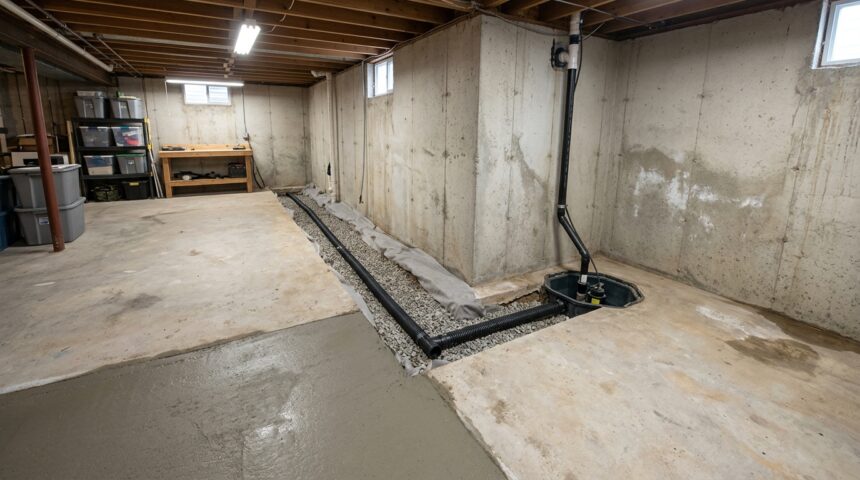
Most basement floor drainage systems collect water through drains, channels, or perforated pipes installed beneath or around the basement floor. The collected water is then directed toward a sump pit or drainage outlet.
Once the water reaches the collection point, it is pumped or naturally drained away from the home. This process prevents water accumulation and minimizes pressure against the foundation.
Main Components of a Basement Floor Drainage System
Several key components work together to ensure efficient water management inside and around the basement.
Floor Drain
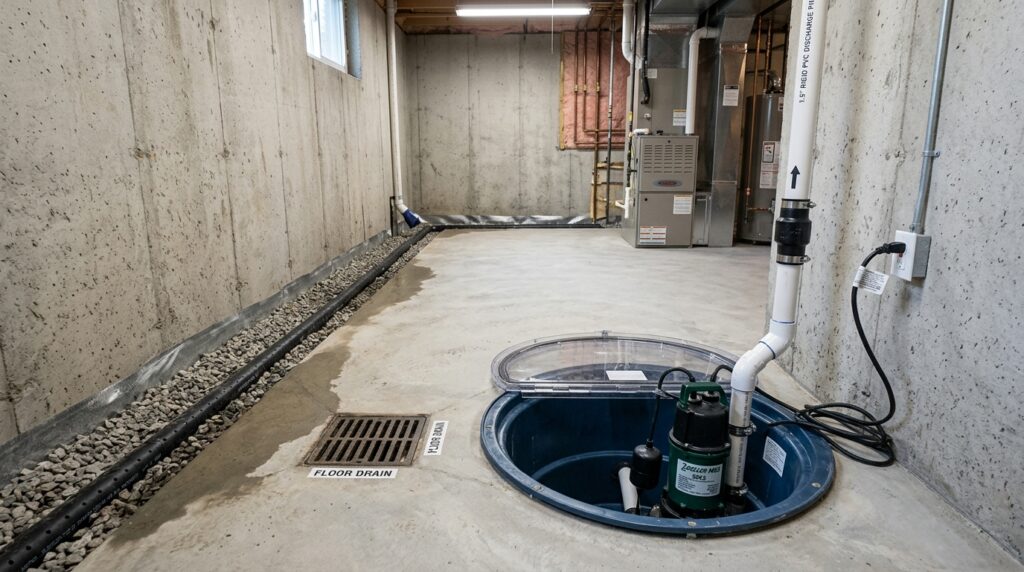
A floor drain is typically installed at the lowest point of the basement floor. It collects water from the surface and directs it into the drainage network.
Floor drains are especially useful in utility rooms, laundry areas, and unfinished basements where accidental water spills may occur.
Drain Tile System
Drain tile systems consist of perforated pipes installed around the foundation. These pipes collect groundwater and channel it toward a designated discharge location.
Despite the name, modern drain tiles are usually made from durable plastic materials rather than traditional clay tiles.
Sump Pit and Sump Pump
A sump pit serves as the collection basin for excess groundwater. When water reaches a certain level, the sump pump automatically activates and pumps the water away from the property.
This component is particularly important in areas with high water tables or frequent rainfall.
Gravel Layer
A gravel layer surrounding drainage pipes improves water flow and filtration. It allows water to move efficiently toward the drainage system while reducing the chance of pipe blockage.
Gravel also helps distribute groundwater pressure more evenly around the foundation.
Types of Basement Floor Drainage Systems
Different drainage solutions are available depending on the basement’s design, water issues, and budget.
Interior Drainage System
An interior drainage system is installed beneath the basement floor along the perimeter walls. It captures water entering through foundation walls or floor joints.
Many homeowners prefer interior systems because they can be installed without extensive excavation around the home.
Exterior Drainage System
Exterior drainage systems are installed outside the foundation walls. They intercept groundwater before it reaches the basement structure.
Although installation can be more expensive, exterior systems often provide comprehensive long-term protection against water intrusion.
Surface Drainage System
Surface drainage systems collect water from the basement floor itself. These systems are useful for handling spills, appliance leaks, and minor flooding events.
They are commonly used alongside other drainage methods for complete water management.
Benefits of Installing a Basement Floor Drainage System
A reliable drainage system offers several advantages beyond simple water removal.
Prevents Flooding
One of the biggest benefits is flood prevention. By directing water away from the basement, the system significantly reduces the risk of costly flood damage.
Even during heavy storms, a properly functioning drainage system can help keep the basement dry.
Protects the Foundation
Excess water around a foundation creates hydrostatic pressure that can lead to cracks and structural movement. Drainage systems reduce this pressure and protect the building’s stability.
Long-term foundation protection can save homeowners thousands of dollars in repair costs.
Reduces Mold and Mildew
Moisture creates ideal conditions for mold and mildew growth. Effective drainage lowers humidity levels and limits the moisture needed for fungal development.
A drier basement also contributes to better indoor air quality.
Increases Property Value
Homes with well-maintained waterproofing and drainage systems are often more attractive to potential buyers.
A dry basement demonstrates proper property maintenance and can improve resale value.
Common Basement Drainage Problems
Even the best drainage systems can experience issues over time. Recognizing these problems early can prevent larger repairs.
Clogged Drains
Dirt, debris, and sediment can accumulate inside drainage pipes, restricting water flow. Regular inspection and cleaning help prevent clogs.
Ignoring clogged drains may lead to basement flooding during heavy rainfall.
Sump Pump Failure
Power outages, mechanical failures, or worn-out components can cause sump pumps to stop working.
Installing a battery backup system can provide additional protection during emergencies.
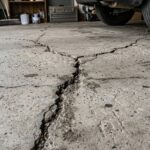
Foundation Cracks
Cracks in basement walls and floors allow water to enter the structure. These openings should be sealed promptly to prevent ongoing moisture issues.
Professional evaluation may be necessary for significant structural cracks.
Basement Floor Drainage System Installation Process
Installation procedures vary depending on the type of drainage system being used. However, most projects follow a similar process.
Inspection and Assessment
Professionals first inspect the basement to identify water sources, drainage challenges, and foundation conditions.
This assessment helps determine the most effective drainage solution.
Excavation and Preparation
For interior systems, a section of the basement floor may be removed around the perimeter. Exterior systems require excavation around the foundation.
Proper preparation ensures that drainage components can be installed correctly.
Pipe and Drain Installation
Drainage pipes, gravel, and collection channels are placed according to the design plan. Each component is positioned to maximize water flow.
Careful installation helps prevent future performance issues.
Testing and Final Inspection
After installation, the system is tested to verify proper operation. Water flow, pump performance, and drainage efficiency are thoroughly checked.
Final inspections ensure that the system meets required standards.
Maintenance Tips for Basement Floor Drainage Systems
Routine maintenance helps extend the lifespan of a drainage system and ensures reliable performance.
| Maintenance Task | Recommended Frequency |
| Inspect floor drains | Every 3 months |
| Clean drain openings | Every 3 months |
| Test sump pump | Every 6 months |
| Check discharge line | Every 6 months |
| Professional inspection | Once per year |
Regular maintenance allows homeowners to identify minor issues before they become major problems.
Basement Floor Drainage System Cost Factors
The cost of a basement floor drainage system depends on several factors.
| Factor | Impact on Cost |
| Basement size | Larger areas require more materials |
| Drainage type | Exterior systems often cost more |
| Sump pump installation | Adds equipment expenses |
| Foundation condition | Repairs may increase costs |
| Labor requirements | Complex installations cost more |
Obtaining multiple professional estimates can help homeowners find the best solution within their budget.
How to Choose the Right Basement Floor Drainage System
Selecting the right system requires evaluating your basement’s specific conditions. Homes with recurring groundwater problems may benefit from a combination of interior drainage, exterior waterproofing, and a sump pump.
The local climate, soil type, foundation design, and history of water intrusion should all be considered before making a final decision. Consulting a drainage specialist can help ensure the most effective protection.
FAQs
How long does a basement floor drainage system last?
Most drainage systems can last 20 to 50 years when properly installed and maintained.
Does every basement need a drainage system?
While not every basement experiences flooding, a drainage system provides valuable protection against future water problems.
Can a basement drainage system stop mold growth?
It helps reduce moisture levels significantly, which lowers the risk of mold and mildew development.
How often should a sump pump be tested?
A sump pump should generally be tested at least twice a year to ensure proper operation.
Is interior or exterior drainage better?
Both options have advantages. The best choice depends on the home’s water issues, budget, and foundation conditions.
Conclusion
A basement floor drainage system is an essential investment for protecting a home from water damage, mold growth, and foundation problems. By collecting and redirecting excess water, these systems help maintain a dry, safe, and healthy basement environment. Whether you choose an interior, exterior, or combined drainage solution, proper installation and regular maintenance are key to long-term performance and peace of mind.
Related Articles
Can You Paint Vinyl Cladding? Prep and Paint Like a Pro
How Long Do Vinyl Windows Last? A Complete Guide
How to Program a Garage Door Opener? Step-by-Step Guide for All Brands
Window with J-Channel: A Complete Homeowner’s Guide
Metal Roof Overhang: A Complete Guide to Designing Effective Overhangs