

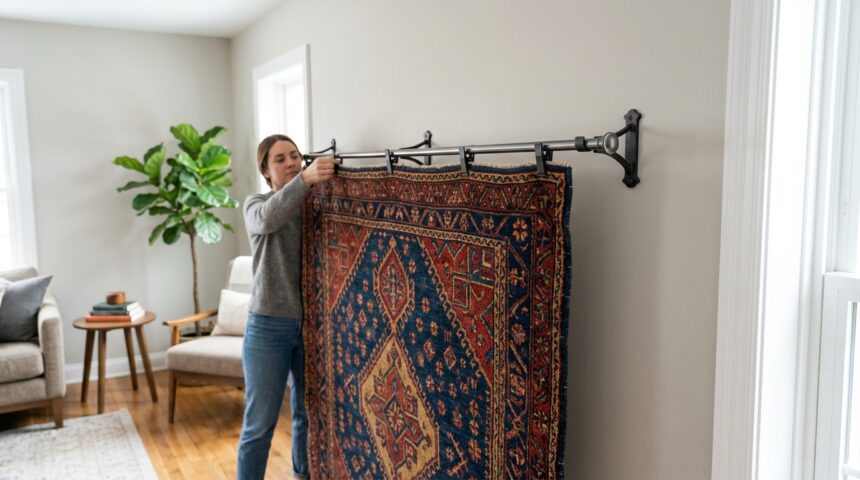
A rug hanging on the wall can turn a plain room into something that feels personal and finished, while also softening sound and adding warmth that flat artwork simply can’t match. Knowing how to hang a rug on the wall the right way matters just as much as picking the rug itself, since the wrong method can leave permanent holes or a sagging, lopsided display.
This guide breaks the process down by rug weight and value so you can pick the method that actually suits the piece you own.
What Do You Need to Hang a Rug on the Wall?
Most of the supplies for hanging a wall rug are cheap, and the exact list depends on which method you end up choosing. Gathering everything below before you start means you won’t be left mid-project searching for a missing tool.
| Item | Why It’s Useful |
| Tape measure and pencil | Measures the rug and marks where it should sit on the wall |
| Spirit level | Keeps the top edge of the rug perfectly straight |
| Stud finder | Locates solid wood framing for heavier rugs and mounting boards |
| Drill, screws, and wall anchors | Fixes brackets, rods, or battens securely to the wall |
| Heavy-duty hook-and-loop strips (Velcro) | Holds lightweight rugs flat against the wall without sewing damage |
| Strong needle and cotton or carpet thread | Attaches fabric backing or fastener strips to the rug’s edge |
| Muslin or cotton backing fabric | Sits between the rug and any fastener to protect delicate fibres |
| Curtain rod or wooden dowel | Slides through a fabric sleeve to support medium-weight rugs |
| Rug clamps rated for textiles | Grips heavier rugs evenly along a mounted rail |
| Wooden batten board | Spreads the weight of large or precious rugs across a wide surface |
Having even half of this list ready in advance makes the actual mounting step go far faster.
How Do You Prepare a Rug and Wall Before Hanging?
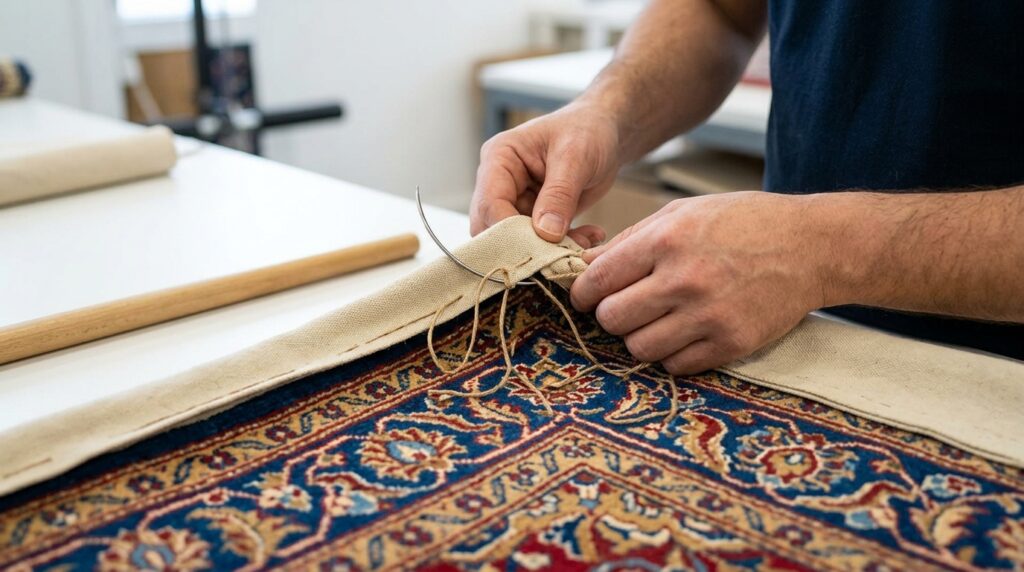
A little preparation now avoids a crooked or damaged display later, so it’s worth taking the time before any fastener touches the rug.
Lay the rug flat for 1–2 days to remove curls, using heavy books on stubborn edges if needed. Clean the rug before hanging, especially if it has been in storage.
Check your wall type (stud, plasterboard, or masonry) and locate solid anchor points for secure mounting. Finally, measure the rug and mark a level pencil line for the top edge, leaving enough space around it for a balanced display.
How to Hang a Rug on the Wall Based on Its Weight
The method that works best really comes down to how heavy and valuable the rug is: light rugs can simply be sewn or stuck to heavy-duty Velcro, medium rugs do well with a curtain rod and fabric sleeve, and heavy or valuable rugs need rug clamps or a wooden board to spread the load evenly. Each option is explained below.
Velcro Method for Lightweight Rugs
Sew the soft loop side of a wide, heavy-duty Velcro strip onto a length of muslin, then hand-stitch that muslin along the back top edge of the rug so the adhesive never touches the fibres directly. Staple or screw the rough hook side of the Velcro onto a thin wooden strip, then mount that strip level on the wall using your pencil line as a guide.
Press the rug firmly against the mounted strip, and it will sit flat, evenly supported, and easy to remove later for cleaning.
Curtain Rod and Fabric Sleeve for Medium-Weight Rugs
Sew a fabric sleeve, sometimes called a casing, along the entire back top edge of the rug, sizing it so a curtain rod or wooden dowel slides through comfortably. Keep the stitching line perfectly straight even if the rug’s actual top edge is slightly uneven, since a crooked sleeve will make the whole rug hang off-balance.
Mount sturdy brackets into the wall at your marked height, slide the rod into the brackets, and the rug’s weight will distribute evenly across the entire rod rather than pulling on just a few points.
Rug Clamps for Heavy or Valuable Rugs
Mount a solid rod or rail to the wall at your chosen height, making sure it’s anchored into studs rather than drywall alone. Space a set of rug clamps evenly along the top edge of the rug, roughly every 50 to 60 centimetres, so the grip is spread out instead of concentrated in the middle.
Attach each clamp to the rail and check that the rug hangs level, since uneven clamp tension can slowly pull a valuable rug out of shape over time.
Wooden Batten Board for Oversized or Very Heavy Rugs
Cut a flat wooden board to match the rug’s width and attach a backing strip of sturdy fabric to it, then sew or staple the rug’s top edge securely to that backing. Screw the finished board directly into wall studs so the entire weight of the rug rests against a rigid, evenly supported surface rather than a few isolated points.
This method works particularly well for thick, heavy, or antique rugs that would otherwise sag or stretch on lighter hardware.
What Other Ways Can You Hang a Rug on the Wall?
Beyond the main weight-based methods, a few extra tricks suit specific situations rather than full-sized rug displays. Small or delicate rugs can be float-mounted inside a frame, which protects the fibres behind glass while still showing off the pattern.
A spring tension rod works well inside a window recess or narrow alcove where a rug needs to sit without any drilling at all, and inexpensive tack strips, similar to the ones used for floor carpet, offer a budget option for decorative rugs that don’t carry much monetary value.
None of these alternatives suits fine, antique, or expensive textiles as well as Velcro, rods, clamps, or a batten board do.
What Mistakes Should You Avoid When Hanging a Rug on the Wall?

A handful of avoidable mistakes account for most rugs that end up sagging, tearing, or losing value after they go up on the wall.
- Driving nails, tacks, or staples straight through the rug itself, which stresses the fibres every time the rug shifts.
- Glueing a rug directly to the wall, since this can damage both the wall surface and the rug backing beyond repair.
- Ignoring the wall type and skipping the stud finder, especially for anything heavier than a light decorative piece.
- Overtightening clamps or fasteners, which concentrates pressure on small areas instead of spreading it evenly.
- Hanging the rug with no breathing space around the edges, which makes the display feel cramped against the wall.
How Do You Care for a Rug After Hanging It on the Wall?
A wall-mounted rug needs far less upkeep than one on the floor, but a little routine care keeps it looking sharp for years. Vacuum it gently on a low suction setting every week or two, using a brush attachment rather than a beater bar that could pull at the fibres.
Keep the rug out of direct sunlight where possible, since prolonged exposure fades colour unevenly, and consider rotating or taking it down once or twice a year so dust doesn’t settle permanently into one side.
Frequently Asked Questions
Can you hang a rug on the wall without using nails?
Yes, methods like Velcro, curtain rods, and rug clamps all avoid putting nails or tacks directly through the rug. These options also tend to be reversible, so the rug can come down later without leaving lasting marks.
What is the best way to hang a heavy or valuable rug?
Rug clamps or a wooden batten board are the safest choices for heavy or valuable pieces, since both spread the weight evenly across a wide area. Always anchor the rail or board into wall studs rather than drywall alone for extra security.
How do you stop a wall rug from sagging in the middle?
Even weight distribution is the key, so use multiple clamps, a full-width rod, or a batten board instead of just a couple of fixing points. Checking the rug periodically and adjusting tension early prevents small sags from becoming permanent stretching.
How often should a wall-mounted rug be cleaned?
A light weekly vacuum is enough for most rugs, with a deeper professional clean every year or two depending on dust levels in the room. Valuable or antique rugs benefit from professional cleaning rather than home methods.
Conclusion
Once you match the hanging method to the rug’s weight, how to hang a rug on the wall stops being a guessing game and becomes a simple weekend project. Light rugs do well with Velcro, medium pieces suit a curtain rod and sleeve, and heavy or valuable rugs deserve the extra support of clamps or a batten board.
Prepare the rug and wall properly first, and the finished display will stay level, secure, and good-looking for years to come.
Related Articles
How to Repaint Kitchen Cabinets: Complete DIY Guide with Costs, Tips & Mistakes to Avoid
Wood Filler for Hardwood Floors: Your Complete Guide
How to Get Urine Smell Out of Bathroom: Complete Guide
Can You Paint Vinyl Cladding? Prep and Paint Like a Pro
Roofing Maintenance for Extreme Temperatures : Complete Guide