
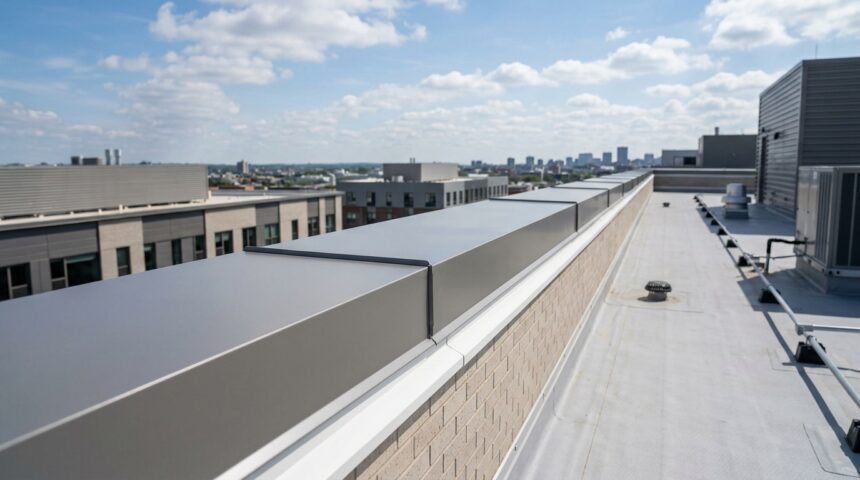
Roof coping is a protective cap installed along the top of parapet walls and roof edges to stop water from working its way into the building below. It is a small-looking component, but it carries a big share of the responsibility for keeping a flat or low-slope roof dry over the years.
This guide breaks down what roof coping does, the materials it comes in, what it costs, and how to tell when yours has worn out.
What Is Roof Coping?
Roof coping is the finished cap that sits on top of a parapet wall, sealing the spot where the roof membrane meets the vertical wall surface.
Without it, that joint is left exposed to rain, wind, and temperature swings, which is exactly where leaks tend to begin.
How Coping Functions on a Roof
Coping works by physically blocking water from sitting on top of an exposed wall and seeping down into the masonry or membrane underneath it. Most coping is installed with a slight outward slope, so instead of letting moisture pool on a flat surface, it pushes rain and melting snow toward the drainage system.
Over years of exposure, this small design detail prevents the kind of slow, hidden water damage that eventually shows up as cracked walls, soft framing, or stains on an interior ceiling.
Why Parapet Walls Specifically Need It
Parapet walls are the short walls that rise above the main roofline on flat-roofed and commercial-style buildings, and their flat tops make them especially vulnerable to standing water. Because there is no slope to shed rain naturally, the top edge of a parapet wall takes on constant exposure to sun, ice, and precipitation.
Coping caps that vulnerable surface so the wall itself, along with the roofing membrane tucked beneath it, stays shielded from direct weathering.
Common Roof Coping Materials
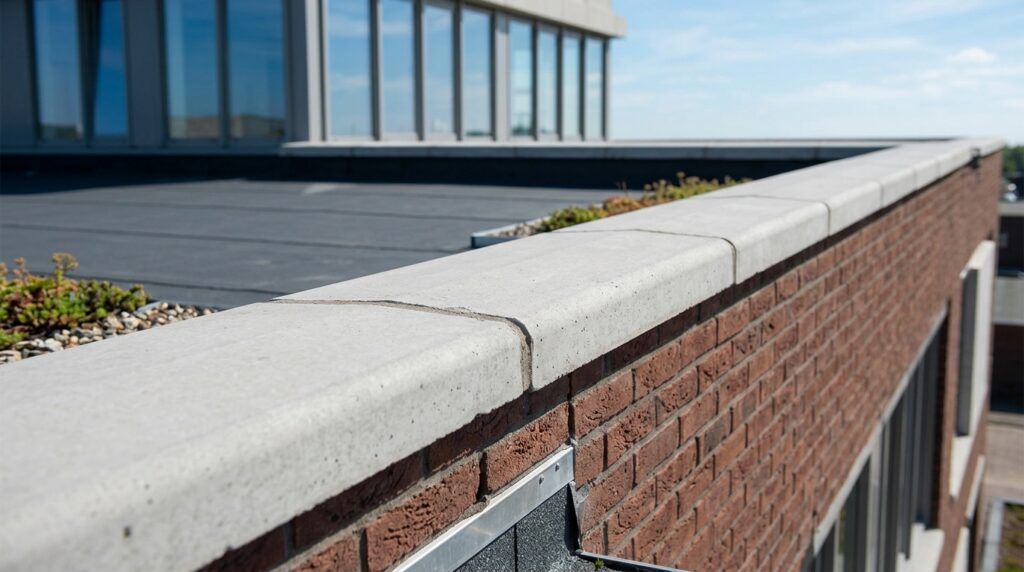
The material chosen for coping affects how long it lasts, how much upkeep it needs, and how much the project costs upfront. Each option below fits a different combination of climate, building type, and budget.
Metal Coping
Metal coping, usually fabricated from galvanized steel or copper, is the option most contractors lean toward for long-term performance. It stands up well to harsh weather and, when installed correctly, can last for decades alongside the rest of the roofing system.
The main trade-off is a higher purchase price compared to other materials, and lower-grade steel can eventually rust if its protective coating breaks down.
Aluminum Coping
Aluminum is a lighter-weight option that naturally resists rust, which makes it a strong choice in humid or coastal regions where salt air speeds up corrosion on other metals. It typically costs less than copper or heavier steel while still holding up to ongoing weather exposure.
The one drawback worth noting is that aluminum dents more easily under impact, although a few cosmetic dents rarely interfere with how well it keeps water out.
Stone and Concrete Coping
Stone and concrete coping give a building a heavier, more traditional appearance and can last for many years once properly installed.
Because these materials are considerably heavier than metal, the wall structure underneath needs to be strong enough to support that extra weight. When repairs are eventually needed, they tend to take more time and cost more than swapping out a section of metal or composite coping.
PVC and Composite Coping
PVC and composite coping have become popular on roofs that already use TPO membrane, since both materials are designed to integrate with one another during installation. These options tend to be more budget-friendly than metal or stone while still offering dependable protection for a flat or low-slope roof.
They are generally a sensible pick for homeowners who want solid performance without paying for premium materials.
Material Comparison at a Glance
| Material | Best Suited For | Durability | Maintenance Needs |
| Metal (steel/copper) | Long-term, all-weather protection | High | Low |
| Aluminum | Humid or coastal climates | Moderate to High | Low |
| Stone/Concrete | Masonry buildings, traditional look | High | Moderate |
| PVC/Composite | Budget-conscious flat roofs with TPO | Moderate | Low |
Benefits of Installing Roof Coping
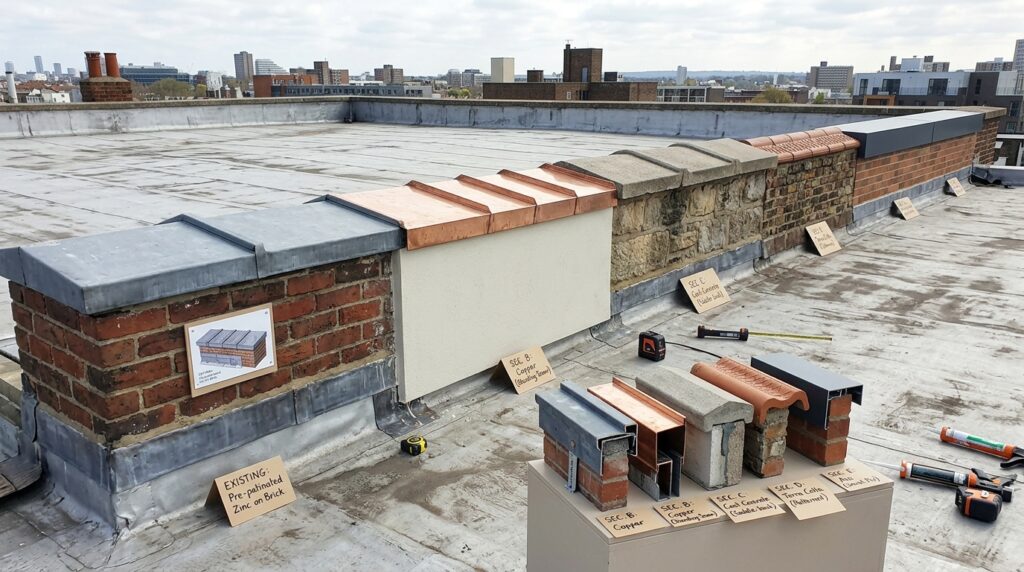
Roof coping might look like a minor finishing touch, but it plays an outsized role in protecting the rest of the roof and the structure beneath it.
Stopping Water Before It Gets In
A gap of even a quarter inch along an unprotected wall top is enough for water to start working its way inside. Once that moisture reaches wood framing or insulation, it can quietly cause damage for months before any visible sign, like a ceiling stain, finally appears indoors.
Shielding Walls From Ongoing Weather Exposure
Parapet walls left without coping are directly exposed to rain, snow, UV rays, and the freeze-thaw cycles that crack masonry and concrete over time.
Coping acts as a buffer that absorbs this constant weathering, so the wall and the roofing membrane underneath are spared from the brunt of it.
Helping Water Drain the Way It Should
Coping installed with a proper slope channels rainwater and melted snow toward gutters or drains instead of letting it collect on a flat surface.
Standing water is one of the fastest ways to wear down a flat roof, so directing it away efficiently adds real years to the roof’s service life.
Extending the Overall Lifespan of the Roof
Coping is a relatively modest investment when measured against the cost of repairing water-damaged framing, insulation, or interior walls.
By keeping moisture out of the most exposed parts of the structure, it helps the roofing system reach closer to its full expected lifespan rather than failing early.
Where Coping Is Typically Installed
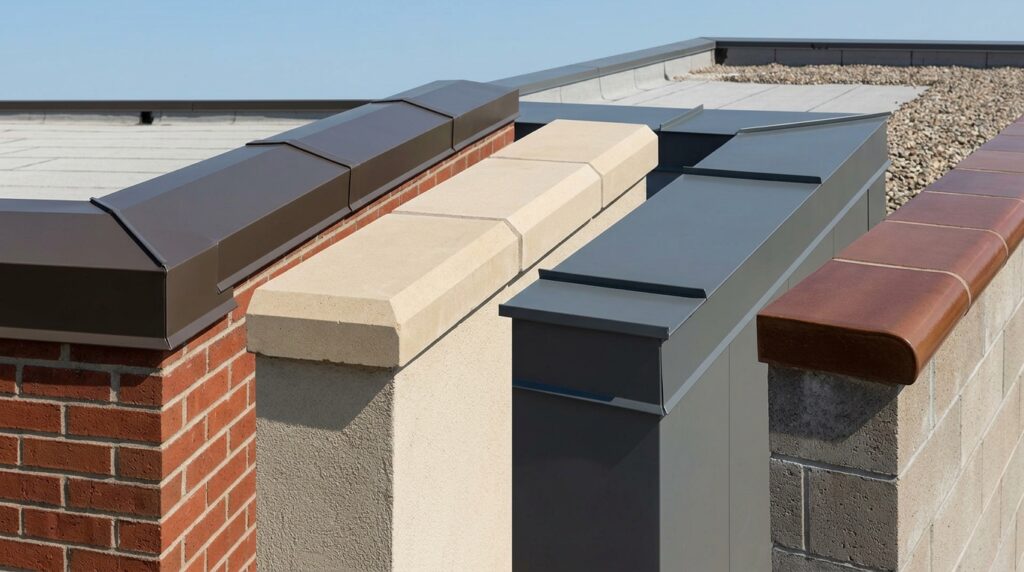
Knowing where coping is used on a roof makes it easier to recognize during an inspection and to ask informed questions when getting quotes.
Parapet Wall Tops
The most common use of coping is capping the top of a parapet wall, creating a sealed, finished edge that prevents water from soaking into the masonry or membrane just below it.
This is the application most homeowners and building owners will encounter.
Flat Roof Edges
Along the full perimeter of a flat roof, coping seals the line where the roofing membrane meets the vertical wall.
This is one of the most leak-prone areas on any flat roof, so a continuous, properly sealed strip of coping along the edge matters more than it might appear.
Transitions Between Roof Sections
Anywhere a roof surface meets a vertical wall, such as where a lower roof section butts up against a taller adjoining wall, needs the same kind of protection.
Coping covers these transition points so water cannot exploit the seam between two different roof levels.
Choosing the Right Coping for Your Roof
Picking coping involves weighing more than just price, since the wrong material can shorten the lifespan of an otherwise solid roofing system.
Match the Material to the Roofing System
Some coping materials are simply built to pair with specific roofing membranes; PVC coping, for example, integrates naturally with TPO roofs, while metal coping works across nearly any roof type.
It is worth asking a roofer directly which material is compatible with the existing system before settling on one.
Account for Local Climate Conditions
Climate has a real effect on how long different coping materials last. Humid or coastal areas tend to favor rust-resistant choices like aluminum or PVC, while colder regions benefit from materials that withstand repeated freeze-thaw cycles without cracking, such as quality metal or composite options.
Factor in Long-Term Upkeep
Some coping materials demand more attention over time than others. Metal may eventually need resealing or repainting, and stone or concrete can require occasional repair to mortar joints, while aluminum and PVC are largely maintenance-free once installed.
It helps to think honestly about how much upkeep is realistic before choosing.
Roof Coping vs. Flashing vs. Drip Edge
These three terms get mixed up often because all three exist to keep water out, but each one handles a different job on the roof.
Roof coping caps the horizontal top of a parapet wall or roof edge, acting like a lid. Flashing is made up of thin metal pieces installed at joints and transitions, working alongside coping to redirect water away from vulnerable seams.
Drip edge, by contrast, runs along sloped roof edges and channels water directly into gutters, which is a different function from either coping or flashing. All three work together as a system, but understanding which one does what makes it easier to know exactly what a roofer is referring to during an inspection or quote.
Signs Your Roof Coping Needs Replacing
Spotting coping problems early can prevent a small fix from turning into a major, expensive repair.
Rust or Corrosion on Metal Coping
Visible rust spots or corrosion are a sign that water has likely already started finding weak points in the surface.
Light surface rust may only call for cleaning and resealing, but once corrosion runs deep, replacement is usually the more sensible route.
Gaps or Sections Pulling Away
Wind pressure and repeated thermal expansion can gradually pull coping away from the wall it sits on. Even a small gap is enough to let water in, so any loosened or separated section should be addressed before it turns into an active leak.
Interior Water Stains Near the Roofline
Discoloration, peeling paint, or damp patches on ceilings or walls near the roof edge often trace back to coping that has failed somewhere along the line.
When these signs show up indoors, it is worth having both the coping and the surrounding flashing checked together.
Cracking or Warping in the Coping Material
Stone, concrete, and plastic coping can crack from age, weather exposure, or gradual settling of the structure, while warped metal coping loses its ability to properly shed water.
Either issue means the coping is no longer doing its job and typically points toward replacement rather than a quick patch.
How Much Roof Coping Costs
Coping costs shift depending on several factors, so there is no single flat number that applies to every roof.
What Drives Material Costs
The material chosen is the single biggest factor affecting price. PVC and aluminum generally cost less per linear foot than copper or natural stone, metal coping tends to land in the middle of the price range, and custom stone or copper installations sit at the higher end.
A roofer can give a precise estimate once they know the roof’s dimensions and the material being considered.
What Drives Labor and Installation Costs
Complicated roof shapes, hard-to-access sections, and multi-story buildings all add to labor time and overall cost. If old coping has to be removed before new material goes in, that adds another layer of expense on top of installation.
Simple, single-story rooflines with straightforward shapes are the most cost-effective to work on.
Why Quotes Vary From One Contractor to Another
Some contractors fold coping costs into the total price of a roof replacement, while others list it separately as its own line item, which can make comparing quotes confusing.
Asking for an itemized breakdown of materials, labor, and removal costs from each contractor makes it far easier to compare offers fairly and spot anything that looks out of place.
Questions Worth Asking Before Installation
Asking the right questions upfront helps separate a knowledgeable contractor from one who is simply trying to close a sale quickly.
Which Material Do You Recommend and Why
A roofer who knows their craft will explain, in plain terms, why a particular material fits the specific roof, climate, and budget being discussed. Vague or generic answers are usually a sign to keep asking questions or get a second opinion.
Is Coping Already Included in the Roofing Quote
Some contractors bundle coping into the full roof replacement price, while others bill it as an extra. Getting this clarified upfront, along with a written line-item breakdown, prevents unpleasant surprises once the final invoice arrives.
What Does the Warranty Actually Cover
Coping installation usually falls under a workmanship warranty, but the length of coverage and what it includes can differ from one contractor to the next.
It is worth asking directly how long the warranty lasts and whether both materials and labor are covered if something goes wrong down the line.
Frequently Asked Questions
Can homeowners install roof coping themselves?
It is technically possible for very small, simple jobs, but most coping work involves precise sloping, sealing, and fastening that is easy to get wrong without experience, so hiring a professional is the safer route for most roofs.
Does roof coping need regular maintenance?
Maintenance needs depend on the material; metal may need occasional resealing, stone or concrete may need mortar repairs over time, while aluminum and PVC require very little upkeep once properly installed.
How long does roof coping typically last?
Quality metal coping can last as long as the roof itself when installed correctly, often several decades, while PVC and composite options generally hold up well for fifteen to twenty-five years depending on climate and care.
Does homeowners insurance cover roof coping replacement?
Coverage depends on the cause of damage and the specific policy; sudden damage from a storm is more likely to be covered than gradual wear from age, so it is worth checking directly with the insurance provider.
Final Thoughts
Roof coping may be one of the smaller-looking components on a roof, but it carries an outsized role in keeping water out of parapet walls and roof edges. Choosing the right material for the local climate, watching for early warning signs like rust or gaps, and getting clear, itemized quotes before installation all go a long way toward avoiding costly repairs later.
A small amount of attention to this detail now tends to save a much larger expense down the road.
Related Articles
Best Primer for Painting Kitchen Cabinets – Complete Easy Guide for Smooth & Durable Cabinets
How to Repaint Kitchen Cabinets: Complete DIY Guide with Costs, Tips & Mistakes to Avoid
How to Make Saltillo Floors Shine Again Expert Tips & Professional Solution
How Long Does It Take to Do a Bathroom Renovation? Timelines, Phases & What to Expect
How Do You Hang Wall Cabinets? A Complete Step-by-Step Guide