

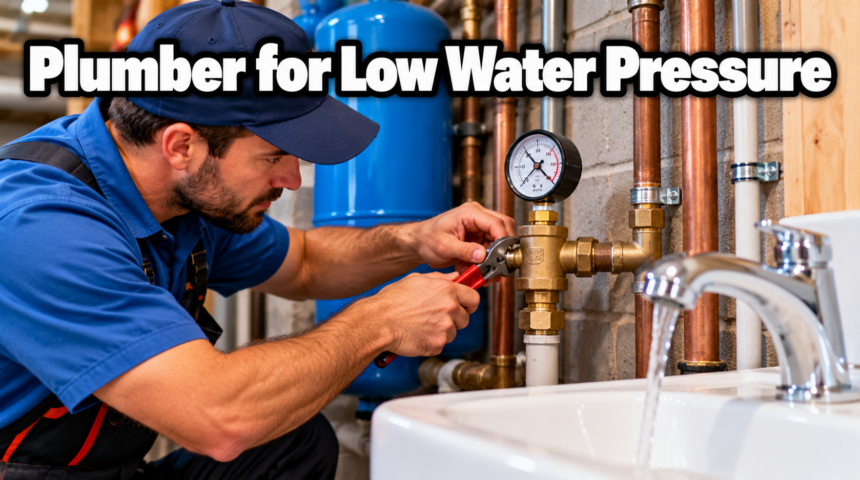
Call a plumber for low water pressure when the weak flow hits your whole house, when it drops suddenly, or when it sticks around after you clean the faucets and open the valves. A plumber can measure your pressure, find the real cause, and fix it, whether that is a worn out regulator, a hidden leak, or old pipes clogged with rust. The good news is that plenty of cases have a simple cause you can check yourself in a few minutes first, so you may not need to pay anyone at all.
What counts as low water pressure?
Normal home water pressure sits between 40 and 80 psi (pounds per square inch), and most homes feel best around 50 to 60 psi. Anything under 40 psi counts as low, and once you drop under 30 psi you will notice weak showers, slow filling tubs, and appliances that seem to take forever.
You do not have to guess at the number. A water pressure gauge costs about 10 dollars and screws straight onto any outdoor hose tap or your washing machine faucet. Turn off every tap inside the house, attach a basic water pressure gauge, open that tap fully, and read the dial. One reading tells you whether you have a true pressure problem or just one slow fixture.
If the gauge reads fine but a single tap still trickles, the trouble is that fixture, not your supply. If the whole gauge reads low, the problem is bigger and usually worth a plumber’s time.
Aim for that 50 to 60 psi band. Pressure can also run too high, and a reading over 80 psi is its own problem, because it strains pipes, joints, and appliances until something leaks. High pressure is usually a sign the regulator needs adjusting or replacing, the same part that fails the other way and leaves you low.
If you are on a private well
Homes on a well do not have a city pressure regulator. Instead a pump pushes water into a pressure tank, and a pressure switch turns the pump on and off, usually to hold 40 to 60 psi. If your well water runs weak, the common culprits are a switch set too low, a waterlogged tank, or a tired pump. These are still jobs for a plumber or well technician, but the parts they check are different, so say up front that you are on a well.
A well technician can test the tank’s air charge and the switch settings first, both quick checks that often bring pressure back without any new parts.
One slow faucet or the whole house?
This is the first thing to pin down, because it splits the cheap fixes from the costly ones. Walk around and open the kitchen tap, both bathroom sinks, the shower, and an outside tap, one after another, and notice which ones run strong.
If only one spot is weak, the cause is local to that fixture: a clogged aerator, a gummed up showerhead, or a valve under that sink turned part way off. You can almost always sort out a single slow faucet yourself for the price of a new aerator.
If every tap is weak at the same time, the cause sits upstream of all of them: the main shutoff, the pressure regulator, the incoming supply, or corroded pipes feeding the house. Whole-house weakness is the version that usually earns a call to a plumber.
What causes low water pressure?
Low pressure almost always traces to one of a handful of causes. Some you can clear yourself in minutes. Others need a plumber and a few hours.
- Clogged aerators and showerheads. Minerals and grit collect in the small screen at the tip of a faucet or inside a showerhead and choke the flow. This hits one fixture at a time.
- A partly closed valve. The main shutoff where water enters your home, or a small valve under a sink, can get knocked part way closed and starve everything downstream.
- A failed pressure regulator. Many homes have a pressure reducing valve near the main line that keeps high city pressure from damaging the pipes. When it wears out, pressure can swing too high or sag too low across the whole house.
- Corroded or clogged pipes. Older galvanized steel pipes rust from the inside, and the opening slowly narrows over the years until barely any water gets through.
- A hidden leak. Water escaping from a cracked joint or loose pipe never reaches your taps, so pressure falls and your bill often climbs at the same time.
- Your water supplier. A main break, repair work, or heavy use in the neighborhood can drop pressure for a while, through no fault of your own plumbing.
- Too many taps at once. Running a shower, the dishwasher, and the laundry together simply splits the water you have, so each one feels weak.
A quick rule sorts most of these out. If only one tap is weak, look at that fixture. If every tap is weak, look at the regulator, the main valve, the pipes, or the supply.
Checks to try before you call
Work through these in order. Each one is safe to do yourself, and about half the time one of them solves the problem.
- Test one fixture against another. Turn on a few taps around the house. If most run fine and one is weak, you have a fixture problem, not a whole-house one.
- Clean the aerator. Unscrew the tip of the slow faucet, rinse the screen, and soak it in white vinegar for an hour to dissolve the chalky buildup. For a showerhead, soak the whole head in vinegar overnight.
- Check your main shutoff valve. Find where the water line enters your home, often near the meter or the water heater, and make sure the valve is fully open. A lever should sit in line with the pipe, and a round wheel should be turned all the way counterclockwise.
- Look for a leak. Turn everything off, then watch your water meter. If it keeps ticking, water is going somewhere it should not. Damp spots, the sound of running water, or a jump in your bill point the same way.
- Measure the pressure. Use the gauge test from above. A reading under 40 psi across the whole house confirms a real supply or pipe problem.
Read the result the simple way. If a fix along the way restored the flow, you are done. If every check passed and the gauge still reads low, the cause is inside your walls or at the regulator, and that is a plumber’s job.
Tip: write down your gauge reading and which taps are weak before you call. Those two details help a plumber quote the job and often shorten the visit.
When to call a plumber
Call a plumber for low water pressure when any of these are true:
- The whole house has weak flow and your own checks did not fix it.
- Pressure dropped suddenly, with no local supply work going on.
- Your gauge reads under 40 psi.
- You suspect a leak, see damp spots, or your bill jumped for no reason.
- Your home still has old galvanized pipes, which usually means corrosion inside.
- Only your hot water is weak, which points to the water heater or its shutoff valve.
A sudden, whole-house drop is the one to act on fastest. It can signal a burst pipe or a failing regulator, and both get worse and more expensive the longer they sit.
If you rent, the landlord usually arranges and pays for a plumber, so report whole-house low pressure to them first rather than booking the visit yourself.
What a plumber actually does
A plumber starts by measuring your pressure at the main and at a few fixtures, which shows whether the loss is everywhere or in one branch. From there the fix depends on what the test reveals.
To narrow it down, they isolate the system step by step. They read the pressure right at the main to see what the house is being fed, then compare it to a reading at a far tap to spot loss along the way. They may shut off one branch at a time to find the section that drops, and test the water heater on its own if only the hot side is weak. A quick magnet check tells them whether your pipes are galvanized steel, which corrodes shut, or copper, which does not.
If the regulator has failed, they replace it and set it to a safe level, usually around 50 to 60 psi. If a valve is corroded or stuck, they free it or swap it out. If the problem is a leak, they trace the line and repair the pipe. If old galvanized lines have rusted nearly shut, they will recommend replacing that section, or in bad cases repiping the house with copper or PEX.
A good plumber rules out the cheap fixes first, so you are not paying for a new regulator when a vinegar soak would have done it. Ask them to show you the pressure reading before and after the work, so you can see for yourself that the job actually fixed the flow.
How much does it cost?
Cost depends entirely on the cause, which is why the gauge test matters so much. Most plumbers charge a service call fee plus an hourly rate of about 75 to 200 dollars, so a simple diagnosis and cleaning stays cheap, while major pipe work runs into the thousands.
| Fix | Typical cost | What it solves |
| Clean or replace an aerator or showerhead | $10 to $50 (often DIY) | One weak fixture |
| Open or replace a shutoff valve | $75 to $250 | Restricted flow at the main or a fixture |
| Replace a pressure regulator | $200 to $700 (about $400 average) | Whole-house pressure that is too low or swinging |
| Find and repair a leak | $300 to $1,500 | Pressure lost to a hidden leak |
| Repipe part or all of the house | $1,500 to $15,000 | Corroded galvanized pipes |
A worn pressure regulator is the most common paid repair for low pressure, and at roughly $400 on average it is far cheaper than living with weak showers or risking pipe damage from pressure that swings high. Your final price shifts with your region and with how easy your plumbing is to reach.
Two things drive the bill more than anything else: how hard the cause is to reach, and whether parts need replacing. A regulator mounted in an open basement is a quick swap, while one buried in a wall or under a slab takes longer and costs more. For anything past a simple cleaning, get two quotes, and ask each plumber to confirm the cause with a gauge reading before they start replacing parts.
How to keep pressure from dropping again
A little upkeep prevents most repeats. Check your pressure twice a year with the gauge so you catch a slow decline early. Clean your aerators and showerheads a couple of times a year, especially in a hard water area. If your home still runs on galvanized pipes, plan to replace them before they fail, since the corrosion only gets worse. And if your regulator is more than 10 to 15 years old, have it checked during any other plumbing visit, because they tend to wear out quietly.
It also pays to know where your main shutoff valve is and that it turns freely, so the next pressure problem is quicker to check and faster to fix.
Conclusion
Low water pressure usually traces to something small, a clogged aerator, a half-closed valve, or a worn regulator, so start with the free checks and a 10 dollar gauge. Call a plumber when the whole house runs weak, the pressure reads under 40 psi, or you suspect a leak or old corroded pipes. A good result is a steady 50 to 60 psi at every tap, and most repairs cost far less than the daily hassle of a weak flow.
Frequently asked questions
Can low water pressure fix itself?
Sometimes. If the cause is your water supplier doing repair work or heavy neighborhood use, pressure usually returns on its own within a few hours. If it stays low past that, something in your own plumbing needs attention.
Is low water pressure an emergency?
Usually not, but a sudden whole-house drop can mean a burst pipe or a failed regulator, which wastes water and can cause damage. Treat a sudden drop, damp spots, or the sound of running water as urgent and call the same day.
How do I know if my pressure regulator is bad?
A failing regulator makes pressure too low, too high, or swinging between the two across the whole house. Measure with a gauge. A reading far off 50 to 60 psi, or one that changes a lot, points to the regulator.
Will a plumber come out just for low water pressure?
Yes. Low pressure is a routine service call. A plumber will measure your pressure, find the cause, and quote the fix, often in one visit. Expect a service fee plus about 75 to 200 dollars per hour.
Can I boost water pressure myself?
You can clean aerators, open valves fully, and nudge an accessible regulator a little. Beyond that, replacing a regulator, fixing a leak, or changing pipes needs a plumber and the right tools.
Related Articles
What Type of Paint for Bathroom Complete Guide 2026
Why Does My Bathroom Smell Like Sewage? Causes, Fixes & Prevention Tips
What Is a Three-Quarter Bathroom? A Complete Guide
How to Measure a Ceiling Fan: The Complete Size Guide for Every Room