

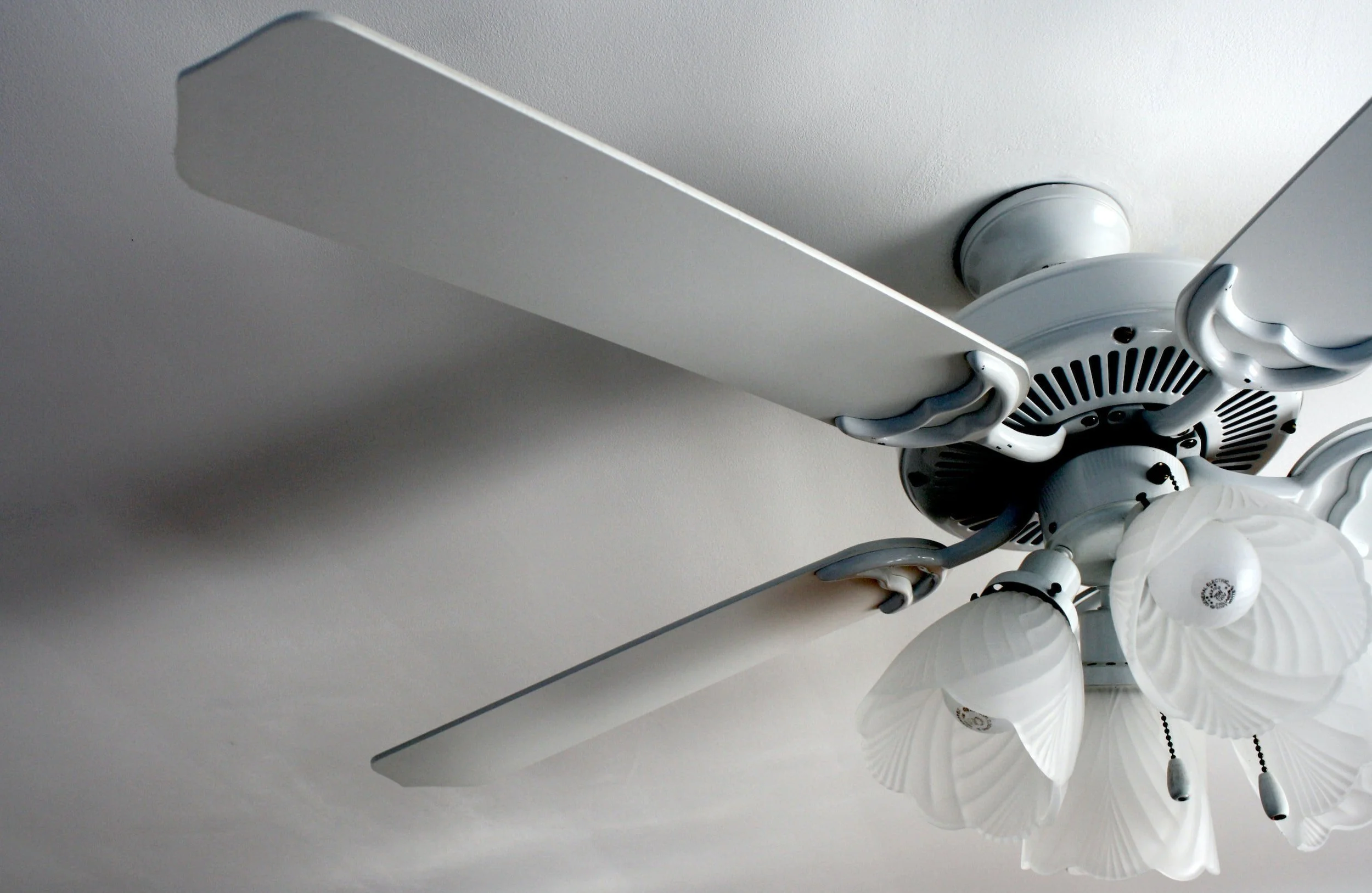
Choosing the right ceiling fan starts with knowing how to measure a ceiling fan correctly — a step most homeowners overlook until it’s too late.
Whether you’re replacing an old fan or installing a new one, getting the measurements right ensures optimal airflow, energy efficiency, and a perfect fit for your space.
We’ll walk you through Ceiling Fan Mounting Types and How to Measure for Each and provide a comprehensive Ceiling Fan Size Guide by Room Type to help you make the best choice for every room in your home.
How to Measure a Ceiling Fan Step by Step
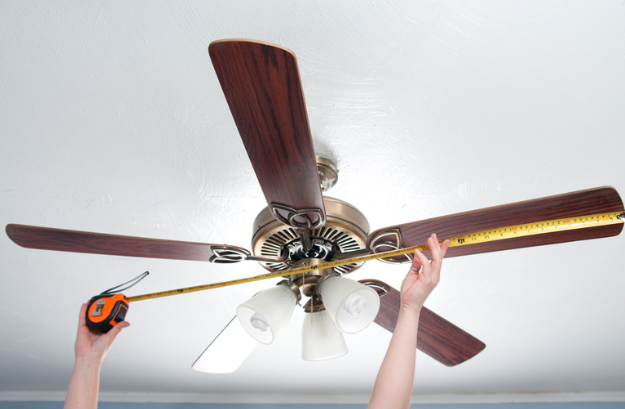
Measuring a ceiling fan correctly ensures you choose the right size for perfect airflow, safety, and style in any room. Here’s how to do it step by step:
Step 1: Measure the Blade Span
Measure from the tip of one blade to the tip of the directly opposite blade. For fans with an odd number of blades, measure from one blade tip to the center of the fan and double that number to get the full blade span.
Step 2: Measure the Blade Pitch
Blade pitch is the angle of the blades and directly affects airflow efficiency. Use a protractor or angle finder to measure the blade angle — the ideal pitch for maximum airflow is between 12 to 15 degrees.
Step 3: Measure the Motor Housing
Measure the diameter and height of the motor housing. This helps determine how much space the fan takes up and is especially important for rooms with low ceilings or tight spaces.
Step 4: Measure the Overall Hanging Height
Measure the total drop from the ceiling to the lowest point of the fan including the downrod, motor, and blades. Ensure the fan hangs at least 7 feet above the floor for safe clearance.
Step 5: Measure the Downrod Length
Measure the length of the downrod separately to confirm it positions the fan at the ideal operating height for your ceiling. Use the formula — Ceiling Height − 8 ft − Motor Height = Downrod Length Needed.
Tools You’ll Need Before You Start
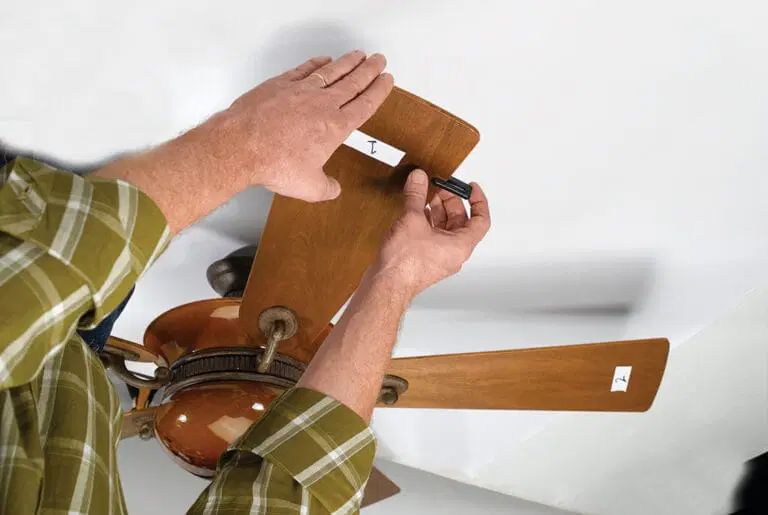
Before you begin measuring your ceiling fan, having the right tools on hand will make the process quick, accurate, and hassle-free. Here’s everything you’ll need:
- Measuring Tape: A standard retractable measuring tape (at least 6 feet long) is your most essential tool for measuring blade span and ceiling height.
- Ladder or Step Stool: To safely reach your ceiling fan, especially if it’s mounted on a high or vaulted ceiling.
- Pencil and Notepad: To jot down your measurements as you go, so nothing gets forgotten.
- Calculator: Helpful for calculating the blade span from the center of the fan when measuring blade to blade.
- Level: To check whether your fan is evenly balanced and hanging straight, especially useful during installation.
- Helper: Having a second person to hold the measuring tape or steady the ladder makes the job safer and more accurate.
How to Measure a Room for a Ceiling Fan?
Measuring your room correctly ensures you pick a fan that fits perfectly and circulates air efficiently. Follow these simple steps:
Step 1: Measure Length & Width
Measure your room’s length and width in feet, then multiply them to get the square footage. (Example: 12 ft × 14 ft = 168 sq ft)
Step 2: Measure Ceiling Height
This determines the right mounting style for your fan:
- 8–9 ft – Flush or standard mount
- 10–12 ft – Downrod mount
- 12+ ft – Extended downrod
Step 3: Match Room Size to Fan Size
| Room Size (Sq Ft) | Fan Blade Span |
| Up to 75 sq ft | 29–36 inches |
| 76–144 sq ft | 36–42 inches |
| 145–225 sq ft | 44–50 inches |
| 226–400 sq ft | 50–54 inches |
| 400+ sq ft | 56–72 inches |
Once you have these measurements, you’re ready to choose the perfect ceiling fan for your space.
How to Measure Ceiling Height for a Ceiling Fan?

Ceiling height is a critical factor when choosing and installing a ceiling fan. Safety standards require that fan blades must be at least 7 feet above the floor at all times. Here’s how to measure it correctly:
Measure Floor to Ceiling
Stand a measuring tape straight up from the floor to the ceiling to get the exact height. For high ceilings, use a laser measuring tool for accuracy.
Match Your Ceiling Height to the Right Mount
| Ceiling Height | Recommended Mount Type |
| 8 ft or less | Flush mount (hugger fan) |
| 9–10 ft | Standard mount |
| 10–12 ft | Short downrod (6–12 inches) |
| 12+ ft | Extended downrod (24–72 inches) |
Calculate the Downrod Length
If your ceiling is higher than 9 ft, use this simple formula:
Ceiling Height − 8 ft (ideal fan height from floor) − Fan Motor Height = Downrod Length Needed
- Example: 11 ft ceiling − 8 ft − 1 ft motor = 2 ft downrod
Getting your ceiling height right ensures your fan operates safely, looks proportionate, and delivers the best airflow throughout the room.
Ceiling Fan Mounting Types and How to Measure for Each
The right mounting type depends entirely on your ceiling height and angle. Here’s a quick breakdown:
- Flush Mount (Ceiling: 8 ft or less) Fan sits directly against the ceiling with no downrod. Ensure blades remain at least 7 feet above the floor.
- Standard Mount (Ceiling: 8–9 ft) Uses a short ball-and-socket mount. Confirm at least 8–9 inches of drop from ceiling to blade.
- Downrod Mount (Ceiling: 10–12 ft) Use this formula to find your downrod length: Ceiling Height − 8 ft − Motor Height = Downrod Length
- Extended Downrod Mount (Ceiling: 12+ ft) Same formula as above but requires a longer rod of 24–72 inches.
- Angled Mount (Sloped or Vaulted Ceilings) Requires a special adapter. Measure your ceiling slope — most adapters support up to 45–60 degrees.
| Ceiling Type | Mount Type | Downrod Length |
| 8 ft or less | Flush Mount | None |
| 8–9 ft | Standard Mount | 0–3 inches |
| 10–12 ft | Downrod Mount | 6–18 inches |
| 12+ ft | Extended Downrod | 24–72 inches |
| Sloped/Vaulted | Angled Mount | Varies by slope |
Picking the right mount ensures safe installation, optimal airflow, and a perfectly proportionate look in any room.
Ceiling Fan Size Guide by Room Type
Ceiling fan size is determined by your room’s square footage — choosing the right size ensures maximum airflow, energy efficiency, and a balanced look in every room. Here’s a room-by-room guide:
- Small Bedroom / Nursery (Up to 75 sq ft) A compact fan with a blade span of 29–36 inches is ideal for small, cozy spaces without overwhelming the room.
- Medium Bedroom / Kitchen (76–144 sq ft) A 36–42 inch fan provides sufficient airflow for average-sized bedrooms and kitchens comfortably.
- Large Bedroom / Living Room (145–225 sq ft) A 44–50 inch fan is the most popular choice for standard living rooms and master bedrooms.
- Large Living Room / Open Plan Space (226–400 sq ft) A 50–54 inch fan or two smaller fans ensure even air distribution across larger open spaces.
- Great Room / Commercial Space (400+ sq ft) A 56–72 inch fan or multiple fans are required to effectively circulate air in very large spaces.
How to Measure for a Replacement Ceiling Fan?
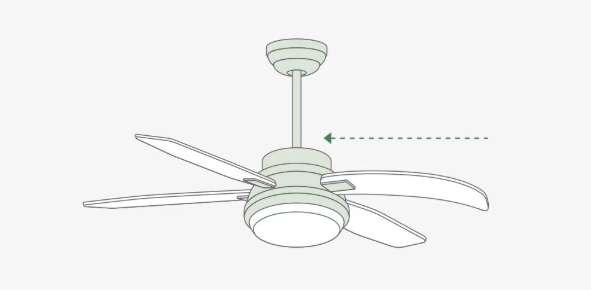
Replacing an old ceiling fan is much easier when you take the right measurements beforehand. Here’s what you need to measure:
Measure the Blade Span of Your Existing Fan
Measure from the tip of one blade to the tip of the opposite blade. For odd-numbered blades, measure from one tip to the center and double it. This ensures your new fan matches the same size and airflow capacity as the old one.
Measure the Downrod Length
Measure from the ceiling canopy down to the top of the motor to get the exact downrod length. Match this measurement with your new fan to ensure it hangs at the same height. A difference in downrod length can affect both airflow and room aesthetics.
Check the Mounting Type
Identify whether your current fan uses a flush, standard, or downrod mount before purchasing a replacement. Using the same mount type makes installation quick and hassle-free. If you want to switch mount types, ensure your ceiling and electrical box can support the change.
Measure the Ceiling Height
Confirm your ceiling height to make sure the new fan’s blades will sit at least 7 feet above the floor. This is a standard safety requirement that should never be overlooked. If needed, adjust your downrod length accordingly to meet this clearance.
Check the Electrical Box
Verify that your existing electrical box is fan-rated to handle the weight of a ceiling fan. Most ceiling fans weigh between 35 to 70 pounds, so a standard light fixture box won’t be sufficient. Always upgrade to a fan-rated box if your current one isn’t approved for fan installation.
Special Situations and Pro Tips
Not every room is straightforward — some spaces require extra consideration when measuring for a ceiling fan. Here are three key situations and expert tips to help you get it right:
- Sloped or Vaulted Ceilings Measure the angle of your ceiling slope before purchasing a fan and always use an angled mount adapter. Most adapters support slopes up to 45–60 degrees, so choose a longer downrod to keep the fan level and at the correct height. When in doubt, consult the fan manufacturer’s specifications for slope compatibility.
- Outdoor or Covered Patio Areas Always choose a fan rated for outdoor use — look for UL Damp or UL Wet ratings based on your space. Measure the area just like an indoor room but account for open airflow that may reduce the fan’s effectiveness. A larger blade span is often recommended for open outdoor spaces to ensure adequate air circulation.
- Large Open Plan Spaces One fan is rarely enough for spaces over 400 sq ft, so consider installing two or more fans evenly spaced. Measure the full length and width of the space and divide it into equal zones for better airflow coverage. Two mid-sized fans will always outperform one oversized fan in large open areas.
Quick Pro Tips
- Always measure twice before buying to avoid costly returns
- Use a laser measuring tool for high or vaulted ceilings for greater accuracy
- In summer run your fan counterclockwise and in winter run it clockwise for year round efficiency
Keeping these special situations and pro tips in mind will save you time, money, and effort — ensuring your ceiling fan performs perfectly in any space.
Frequently Asked Questions
What is the ideal distance between a ceiling fan and the floor?
The minimum safe distance between the fan blades and the floor is 7 feet. This ensures safe clearance for people walking underneath while still providing effective airflow throughout the room.
Can I install a ceiling fan where a light fixture already exists?
Yes, but you must first check whether the existing electrical box is fan-rated to handle the weight and movement of a ceiling fan. A standard light fixture box is not strong enough and must be replaced with a fan-rated box before installation.
How many blades should a ceiling fan have for the best airflow?
The number of blades does not significantly impact airflow — what matters more is blade pitch and motor speed. Most residential fans have 3 to 5 blades, with a blade pitch of 12–15 degrees offering the most efficient air circulation.
Does ceiling fan blade shape affect performance?
Yes, blade shape and pitch play a major role in how efficiently a fan moves air. Wider, angled blades with a steeper pitch move more air but require a stronger motor, making blade design an important factor when choosing a fan.
Can a ceiling fan be too big for a room?
Absolutely — an oversized fan can overpower a small room, create too much airflow, and look visually out of place. Always match your fan size to your room’s square footage using a size guide for the best balance of performance and aesthetics.
How do I measure a ceiling fan for a room with a dropped or coffered ceiling?
Always measure from the lowest point of the ceiling to the floor to get the true usable ceiling height. This ensures your fan mount and downrod length are calculated correctly and that blade clearance meets the minimum 7 foot safety requirement.
Conclusion
Knowing how to measure a ceiling fan correctly is the foundation of choosing the right fan for any room.
Every measurement — from room square footage and ceiling height to mount type and blade span — plays a crucial role in ensuring optimal airflow, safety, and aesthetics.
Follow the steps and tips shared in this guide, grab your measuring tape, and find the perfect ceiling fan that fits your space like it was always meant to be there.
Related Articles
Interior Basement Waterproofing: Complete Guide to a Dry & Safe Basement
Wood Filler for Hardwood Floors: Your Complete Guide
Brass Kitchen Faucets: Types, Benefits, Buying Guide, and Maintenance Tips
Complete Guide to Roof Ventilation for Metal Roofs: Types, Benefits, Installation & Maintenance
How Long Does It Take to Do a Bathroom Renovation? Timelines, Phases & What to Expect