

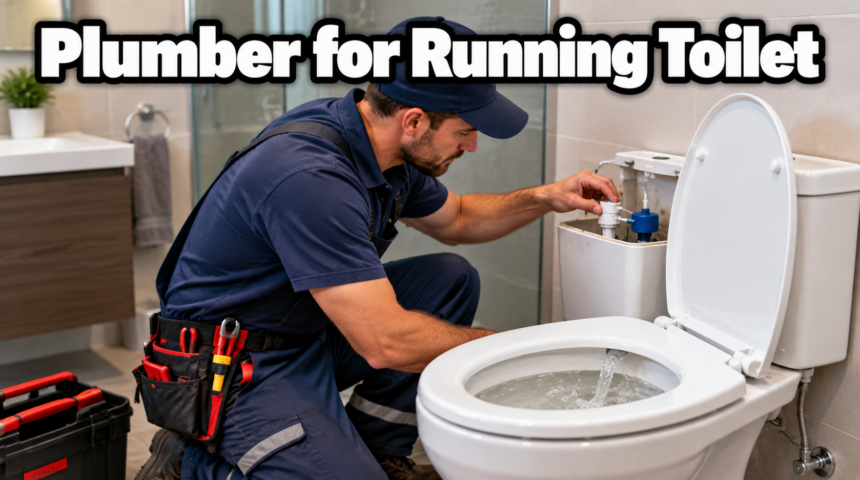
A running toilet almost always comes down to a few small parts inside the tank, and a plumber will charge about $100 to $300 to find the problem and stop the water. Call one when a new flapper doesn’t fix it, when you can’t spot where the water is going, or when there’s water on the floor or a leaking valve under the tank. A lot of running toilets, though, are a quick swap you can do yourself, so it’s worth a five-minute look before you pay anyone.
This guide walks you through what to check first, when it’s time to pick up the phone, what the repair should actually cost, and how to choose a plumber who won’t talk you into a new toilet you don’t need.
Why a running toilet is worth fixing today
A running toilet isn’t just the sound that keeps you up at night. It’s money going down the drain. A single running toilet can waste around 200 gallons of water a day, and leaks in an average home add up to roughly 10,000 gallons a year, according to the WaterSense program at the EPA. On your bill, a bad one often shows up as an extra $20 to $100 a month, depending on your water rates and how fast it’s leaking.
Here’s the upside. The parts that cause it are cheap, usually under $25, and fixing a running toilet is one of the most routine plumbing jobs there is. Whether you do it yourself or hire out, the goal is the same: get it handled within a day or two instead of letting it run for weeks.
How do you know your toilet is leaking?
Some running toilets are loud and obvious. Others leak in near silence, with the fill valve kicking on every few minutes to top up a slow drip past the flapper. A few simple checks confirm it before you spend a cent:
- The dye test. Add food coloring to the tank, wait about 10 minutes, and look for color in the bowl. Color in the bowl means water is leaking through.
- The meter test. Write down your water meter reading, then use no water for an hour or two. If the number has moved, something is leaking, and the toilet is the usual culprit.
- Phantom refills. If you hear the tank fill on its own when nobody has flushed, the flapper is letting water slip through.
Catching it early keeps a slow leak from quietly adding hundreds of gallons, and dollars, to a single month’s bill.
What makes a toilet keep running?
Most running toilets trace back to one of a handful of parts in the tank. Figuring out which one is misbehaving tells you how big the job is and whether you even need a plumber.
- The flapper. This is the rubber seal at the bottom of the tank. Over time it warps, stiffens, or gets coated in grime, so it stops sealing. Water then leaks from the tank into the bowl, and the fill valve keeps topping the tank back up to replace it. A worn flapper is the single most common cause.
- The flapper chain. If the chain is too long, it slips under the flapper and props it open. Too short, and it holds the flapper up so it never closes. Either way, the seal fails.
- The fill valve. This is the tall valve that refills the tank after each flush. When it wears out, it can fail to shut off, so the tank never stops filling and water pours down the overflow tube.
- The float. The float tells the fill valve when to stop. Set too high, the water rises above the overflow tube and drains away non-stop.
- The refill tube. If the thin refill tube is pushed down inside the overflow tube instead of clipped to the top, it can siphon water out of the tank without stopping.
Quick tell: if you hear water trickling into the bowl, suspect the flapper. If you hear the tank filling again and again, or water spilling into the overflow tube, suspect the fill valve or the float.
Quick checks to try before you call
Before you call anyone, give it five minutes. More than half of running toilets come down to a simple adjustment or a part you can swap with your hands. If you need to open things up, turn off the water at the shutoff valve on the wall behind the toilet first, then flush to empty the tank.
- Do the dye test. Put a few drops of food coloring in the tank and wait about 10 minutes without flushing. If color seeps into the bowl, your flapper is leaking.
- Check the flapper and chain. Lift the lid and watch a flush. Make sure the flapper drops flat and seals. Free the chain if it’s caught, and leave just a little slack, not a lot.
- Lower the float. If water is running into the overflow tube, bend or clip the float arm down, or slide the float lower, so the water level sits about an inch below the top of the tube.
- Reseat the refill tube. Make sure that thin tube clips onto the top of the overflow tube and doesn’t hang down inside it.
- Swap the flapper or fill valve. If adjusting didn’t do it, a new flapper ($5 to $25) or a new fill valve such as a Fluidmaster ($10 to $40) is a 15 to 30 minute job with one wrench. Take the old part to the store or match the brand and size so the new one fits.
If the toilet still runs after a fresh flapper and a fresh fill valve, the trouble is past the usual parts. That’s your signal to call a plumber.
When should you call a plumber?
Call a plumber for a running toilet when any of these is true:
- You replaced the flapper and the fill valve, and it still runs.
- You can’t find where the water is going.
- There’s water on the floor, or the tank is dripping onto the base.
- The shutoff valve or the supply line under the tank is corroded, stuck, or leaking.
- The tank or the bowl is cracked.
- More than one toilet or fixture is acting up, which can point to a water pressure problem.
- The toilet is old and you’ve already rebuilt it once before.
- You’re not comfortable turning off the water or working inside the tank.
A plumber earns their fee most when the leak isn’t in the usual tank parts. A worn shutoff valve, a cracked tank, or a supply line that won’t seal can turn a $15 fix into real water damage if it’s done wrong, and those are the jobs worth paying someone to get right.
What does a plumber charge to fix a running toilet?
Most plumbers charge about $100 to $300 to repair a running toilet. The final number depends on what’s actually broken, where you live, and whether it’s a scheduled visit or an after-hours emergency call. Here’s a rough breakdown of the common costs with a plumber:
| Job | Typical cost with a plumber |
| Diagnose / service call | $50 to $200 |
| Replace flapper | $75 to $150 |
| Replace fill valve | $100 to $200 |
| Replace flush valve | $100 to $250 |
| Full tank rebuild | $150 to $350 |
| New toilet, installed | $250 to $700 (up to $1,500+ for high-end) |
Plumbers bill one of two ways: a flat rate for the job, or an hourly rate that usually runs $45 to $150 an hour plus parts. A running toilet is normally a one-hour visit either way. The service call or diagnostic fee, around $50 to $200, is often rolled into the repair if you go ahead with the work, so ask about that when you book so you’re not paying it twice.
A few things push the price around. An emergency or weekend call can add $100 or more on top of the repair itself. Hard-water areas wear parts out faster and can turn a single swap into a full rebuild. And an older or uncommon toilet sometimes needs a universal kit or a special-order part, which nudges up both the time and the cost.
One more thing to weigh. If your toilet is more than 20 years old, runs often, and needs a full rebuild, put the rebuild cost next to the price of a new toilet. A modern model uses far less water per flush, so it can pay for itself in a few years and save you the next repair call.
What will the plumber do?
A plumber starts by watching the toilet run and doing the same checks you would, only faster. From there a typical visit looks like this: shut off the water, drain the tank, and inspect the flapper, fill valve, float, and flush valve. Most will replace the worn parts, and many rebuild the main internals all at once so you’re not calling them back in a month over the next tired part.
Then they turn the water back on, run several flushes, and watch for leaks at the tank bolts and the supply line. If the cause is outside the tank, they’ll check the shutoff valve and supply line and reseal or replace them as needed. If the tank or bowl is cracked, or the toilet is simply old, they’ll tell you a replacement makes more sense than another patch. A good plumber explains what they found and what they changed before they pack up.
How to choose a plumber (and what to ask)
A running toilet is a small job, which makes it a handy way to test a plumber before you need them for something big. A few things to check before you hire:
- Licensed and insured. Ask for both. It protects you if something goes wrong in your home.
- A clear quote up front. Get the flat price, or the hourly rate plus an estimate, before any work starts. Ask whether the service fee is waived if you go ahead.
- A warranty. Many plumbers back parts and labor for 30 to 90 days or longer. Get it in writing.
- Recent local reviews. Look for a steady track record over time, not just a high star rating with a handful of reviews.
Steer clear of anyone who won’t give a price range over the phone for a job this routine, or who pushes a full toilet replacement before they’ve even looked in the tank. For a simple running toilet, a flat rate you agree to in advance is usually the safest way to pay.
How to keep it from running again
Once it’s fixed, a little upkeep keeps it quiet. Replace the flapper every three to five years, since the rubber breaks down with age whether it’s leaking yet or not. Skip the drop-in bleach tablets that sit in the tank, because they eat away at the flapper and other rubber parts and cause the exact leak you just paid to fix. And once a year, run the food-coloring dye test to catch a slow leak early, before it turns up as a nasty surprise on your water bill.
Conclusion
A running toilet is usually a cheap, fast fix. Try a new flapper, check the chain and float, and swap the fill valve if you need to. If it still runs, or there’s water on the floor or a leaking valve, call a plumber and expect to pay around $100 to $300. Get a clear quote and a short warranty up front, and you’ll have it handled in about an hour, with no water quietly draining away and no padding on your next bill.
Frequently asked questions
How much does a plumber charge to fix a running toilet?
Most charge about $100 to $300, parts and labor included. A simple flapper swap sits at the low end, while a full tank rebuild or a corroded shutoff valve pushes toward the top. After-hours emergency visits cost more.
Can I fix a running toilet myself?
Often, yes. Adjusting the chain or float, or replacing the flapper or fill valve, takes 15 to 30 minutes and parts under $40. If it still runs after both of those, call a plumber.
Is a running toilet an emergency?
Not usually, but don’t leave it. A running toilet can waste around 200 gallons of water a day. Turn off the shutoff valve behind the toilet to stop the water until it’s fixed.
Why does my toilet keep running after I replaced the flapper?
The chain may be caught, or the new flapper may not match the valve seat. If a new fill valve doesn’t fix it either, the leak is likely at the flush valve or the supply line, which is a plumber’s job.
How long does it take a plumber to fix a running toilet?
About 30 minutes to an hour for a standard repair. Replacing a cracked tank or installing a brand-new toilet takes longer, usually one to two hours.
Related Articles
How Far Apart Should Floor Joists Be?
How Do You Remove Smoke Stains From Walls? Complete Step-by-Step Guide