

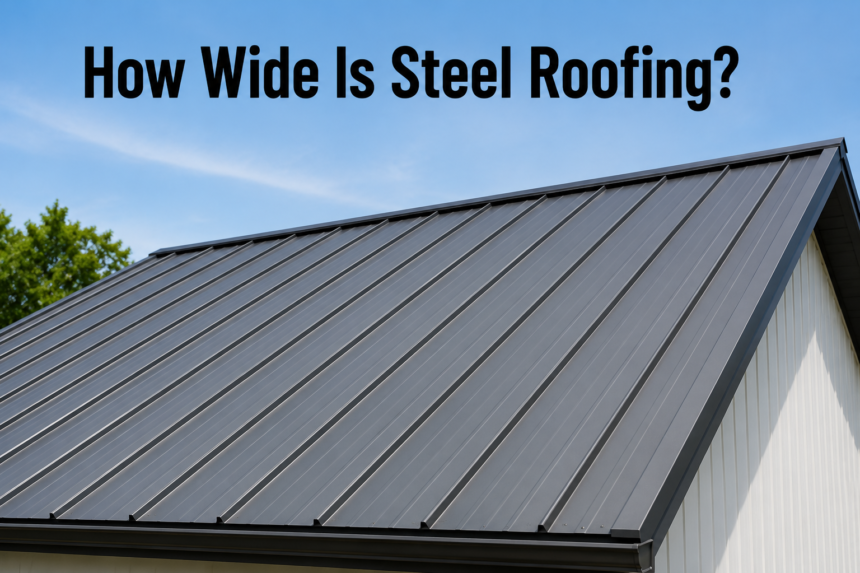
Steel roofing has become one of the most popular choices for homeowners who want a durable, long-lasting cover for their property. One question that comes up again and again during the planning stage is how wide is steel roofing, since panel width directly affects material calculations, installation time, and overall cost.
Unlike shingles, steel roofing comes in long panels that are manufactured in specific width ranges depending on the type and brand. Understanding these measurements before you start a project can prevent ordering mistakes and reduce material waste.
This guide walks through the standard widths, the different panel types available, and the factors that can change how wide your roofing sheets end up being. By the end, you will have a clear picture of what to expect when you order steel roofing for your next project.
What Is the Standard Width of Steel Roofing Panels?
Before choosing a panel style, it helps to understand the general range steel roofing falls into. Most manufacturers keep their panels within a predictable width bracket, though small variations exist across brands.
Standard Panel Width Range (24–36 Inches)
Steel roofing panels typically measure between 24 and 36 inches wide, and this range covers the majority of residential and light commercial products sold today.
Manufacturers settle on this bracket because it balances ease of handling with efficient roof coverage, since wider sheets become harder to transport and install without bending or warping.
When people ask how wide is steel roofing, this 24 to 36 inch window is usually the answer they are looking for.
Most Common Width (36 Inches)
Among the available options, 36 inches tends to be the most frequently used width for standard steel roofing panels, especially in corrugated and ribbed styles. This size strikes a practical balance, offering solid coverage per sheet while remaining manageable for a two-person installation crew. Builders often default to 36-inch panels unless a project calls for a narrower or specialty profile.
Coverage Width vs. Panel Width
The listed panel width is not always the same as the actual coverage width once the sheet is installed, because steel roofing panels overlap along their edges to create a weatherproof seal.
A 36-inch panel, for example, might only provide around 30 to 34 inches of true coverage after the overlap is accounted for.
This distinction matters when calculating how many panels are needed for a full roof, since relying on the raw panel width alone can lead to ordering short.
Types of Steel Roofing and Their Widths
Steel roofing is not a single uniform product, and different styles are manufactured at slightly different widths to suit various roof designs. Knowing which type fits your project helps narrow down the exact width you should expect.
Corrugated Steel Panels
Corrugated steel panels are among the most traditional roofing options, generally produced in widths around 26 to 36 inches with wavy ridges running the length of the sheet. These panels are popular for barns, sheds, and agricultural buildings because of their strength and relatively low cost.
Their wave pattern also affects the effective coverage, since part of each ridge overlaps with the neighboring panel during installation.
Standing Seam Steel Panels
Standing seam panels are typically narrower, often falling between 12 and 24 inches wide, with raised interlocking seams that run vertically along the roof slope. This style is favored for residential homes because of its clean, modern appearance and superior water resistance compared to exposed-fastener designs. The narrower width means more panels are usually required to cover the same roof area compared to wider corrugated sheets.
R-Panel / PBR Panels
R-panel and PBR (purlin bearing rib) panels are commonly manufactured at a standard width of 36 inches, making them a popular choice for commercial and industrial buildings. These panels feature a mix of major and minor ribs that add structural rigidity across long roof spans.
Their consistent width makes material estimation more straightforward compared to some of the more variable residential styles.
Metal Shingles
Metal shingles differ from panel-style steel roofing since they are produced in smaller, modular pieces rather than long continuous sheets, often ranging from 12 to 20 inches wide per shingle unit.
They are designed to mimic the look of traditional asphalt shingles or tiles while offering the durability of steel. Because of their smaller size, installation involves more individual pieces compared to full-length panel systems.
Factors That Affect Steel Roofing Width
Panel width is not always fixed, and several practical factors can influence the exact size a manufacturer or contractor recommends for a given project. Understanding these variables helps explain why width can shift slightly from one job to another.
Manufacturer Specifications
Different manufacturers set their own standard widths based on their production equipment and target market, so panels from one supplier may not match another exactly.
Some companies offer custom widths on request, particularly for commercial projects with unique roof dimensions. Always checking the specification sheet from the actual supplier is the most reliable way to confirm exact measurements before ordering.
Roof Pitch and Design
Steeper roof pitches and more complex designs, such as those with multiple valleys or hips, sometimes call for narrower panels to make installation and cutting more manageable.
Simpler, low-slope roofs can often accommodate wider panels since there is less need for intricate trimming around obstacles. The overall roof shape plays a real role in deciding which panel width makes the most practical sense.
Overlap and Seam Requirements
Every steel roofing installation requires a certain amount of overlap between panels to keep water from seeping through the seams, and this overlap reduces the usable width of each sheet.
Panels installed in areas with heavy rainfall or snow often use a wider overlap for extra protection, which slightly decreases effective coverage. Contractors typically factor this overlap into their material calculations well before installation begins.
Steel Roofing Width vs. Length: What’s the Difference?
While width refers to how wide each individual steel panel measures, length is a separate specification that refers to how long the sheet runs along the roof slope. Panel length is usually custom-cut to match the exact measurement of a roof, ranging anywhere from a few feet to over 40 feet depending on the manufacturer’s capabilities.
Width, on the other hand, stays fairly standardized across most product lines and does not change based on the size of the roof. Keeping these two measurements separate is important when placing an order, since confusing one for the other can lead to receiving the wrong quantity of material.
How to Measure Your Roof for Steel Panel Width?
Getting accurate measurements before ordering steel roofing helps avoid costly mistakes and material shortages. The process involves a few straightforward steps that any homeowner or contractor can follow.
Measuring Roof Slope Width
Start by measuring the horizontal distance across the roof slope from one edge to the other, making sure to account for any overhangs. This measurement determines how many panels will be needed side by side to fully cover that section of the roof. It is generally recommended to measure at multiple points along the slope, since older roofs are not always perfectly uniform.
Calculating Number of Panels Needed
Once the slope width is known, divide it by the effective coverage width of the chosen panel type, rounding up to the nearest whole panel to account for overlap.
Adding a small buffer, typically five to ten percent extra material, helps cover cutting waste and any unexpected trimming during installation. This calculation should be repeated for each distinct roof section, since angles and slopes can vary across a single structure.
Steel Roofing Width Comparison Table
| Panel Type | Typical Width | Effective Coverage | Best Used For |
| Corrugated Steel | 26–36 in | 24–34 in | Barns, sheds, agricultural buildings |
| Standing Seam | 12–24 in | 12–24 in | Residential homes, modern designs |
| R-Panel / PBR | 36 in | 36 in | Commercial and industrial roofs |
| Metal Shingles | 12–20 in | 12–20 in | Residential roofs styled like shingles/tile |
Common Mistakes to Avoid When Choosing Panel Width
One common mistake is ordering based on the listed panel width instead of the true coverage width, which often results in running short on material partway through a project. Another frequent error is mixing panel types from different manufacturers, since slight width variations can create uneven overlaps and weaker seams.
Skipping the extra buffer for cutting waste is also a frequent oversight that leads to delays when more material has to be reordered mid-project. Taking the time to double-check measurements against the specific product’s data sheet helps avoid these setbacks entirely.
FAQs
How wide is a standard sheet of steel roofing?
Most standard steel roofing sheets measure between 24 and 36 inches wide, with 36 inches being the most commonly used size across residential and commercial projects.
Does steel roofing width affect installation cost?
Yes, narrower panels generally require more units and more installation time to cover the same roof area, which can slightly increase labor costs compared to wider panels.
Can steel roofing panels be custom-cut to width?
Some manufacturers offer custom width options for commercial projects, though most residential installations rely on standard factory widths for cost efficiency.
Conclusion
Steel roofing width is not a single fixed number, and it varies depending on the panel type, manufacturer, and specific project requirements.
Standard panels generally fall between 24 and 36 inches, with 36 inches remaining the most widely used size across the industry. Understanding the difference between listed panel width and actual coverage width is essential for accurate material planning.
Factors such as roof pitch, overlap requirements, and manufacturer specifications can all influence the final width chosen for a project. Taking accurate measurements and accounting for overlap and cutting waste helps prevent shortages and unnecessary reorders.
Related Articles
How to Remove Paint from Concrete: Complete Guide 2026
How Do You Kill Mold in a Basement? A Complete Removal Guide
Electrician for Flickering Lights: Complete Guide 2026
Dual Ceiling Fan Guide: Everything You Need to Know Before Buying