


Flickering lights are one of the most common reasons homeowners search for an electrician, and for good reason. While a single bulb flickering is often harmless, persistent or widespread flickering can point to loose wiring, an overloaded circuit, or an unstable connection at the main panel, all of which create real fire risk if left alone.
Knowing when to handle it yourself and when to call an electrician for flickering lights can protect both your home and your family.
Common Causes of Flickering Lights
Flickering doesn’t always mean a major electrical fault, and the cause often depends on whether it’s happening in one fixture or across the entire home. Identifying the pattern is the first step before deciding whether to call a professional.
Loose Bulbs or Faulty Fixtures
The most frequent and least serious cause is a bulb that isn’t screwed in tightly enough to maintain a steady connection with the socket. Older bulbs nearing the end of their lifespan can also flicker briefly before burning out completely, and this is usually something a homeowner can fix in seconds.
If tightening the bulb or replacing it doesn’t solve the flicker, the socket or fixture itself may be worn and need a closer look.
Incompatible Dimmer Switches
LED bulbs require dimmer switches specifically designed for LED technology, and using a standard dimmer built for old incandescent bulbs often causes visible flickering or buzzing. This mismatch is extremely common since many homeowners upgrade their bulbs to LEDs without replacing the dimmer hardware at the same time.
Swapping in an LED-rated dimmer usually resolves this issue without any wiring work needed.
Overloaded Circuits
When too many appliances or devices draw power from the same circuit, the system can struggle to keep up, causing lights to dim or flicker, especially when something large like an air conditioner or refrigerator kicks on.
This is particularly common in older homes that weren’t designed for today’s higher electrical demand. Redistributing devices across different circuits often fixes minor cases, but recurring flickering means the circuit may need to be upgraded by a professional.
Warning Signs That Require an Electrician

Not every flicker is an emergency, but certain symptoms signal that the problem has moved beyond a simple fix and needs professional attention right away.
Flickering Across Multiple Rooms or the Whole House
If lights are flickering in more than one room at the same time, the issue likely isn’t isolated to a single fixture or switch, but instead points to a problem with the main electrical panel or the service connection feeding the home.
This kind of widespread flickering suggests loose service conductors or a failing breaker, both of which require a licensed electrician to diagnose safely. Waiting on this type of symptom increases the risk of more serious electrical failure.
Buzzing, Burning Smells, or Sparks
A burning odor near outlets, switches, or the panel, along with buzzing sounds or visible sparks, are clear indicators of an active electrical hazard rather than a cosmetic annoyance. These signs often mean wiring insulation has degraded or a connection is arcing, which is one of the leading causes of residential electrical fires.
Anyone noticing these symptoms should stop using the affected outlet or fixture immediately and call an electrician without delay.
Frequent Breaker Trips Alongside Flickering
When circuit breakers trip repeatedly at the same time lights are flickering, it usually means the panel is struggling to handle the load or there’s a fault somewhere in the circuit. This combination is a strong signal that the issue lives inside the breaker box rather than in an individual fixture.
A professional inspection at this stage can catch a failing breaker before it leads to a more expensive repair or safety incident.
Old Wiring and Outdated Panels
Homes built several decades ago often have wiring and panel technology that simply wasn’t designed for the electrical load of modern life, which makes them more prone to flickering and other issues.
Aging or Damaged Wiring
Over time, the wiring inside walls can degrade, develop poor connections, or become brittle, all of which interrupt the steady flow of electricity and cause flickering that gradually worsens.
This is especially common in homes over 30 to 40 years old that haven’t had an electrical update. Because this wiring is hidden behind walls, only a licensed electrician with proper diagnostic tools can confirm the extent of the damage.
Outdated Electrical Panels
Older panels were built to handle far less power than today’s homes typically use, and worn breakers, corrosion, or poor internal connections inside an aging panel can cause flickering throughout the house.
Certain older panel brands also carry a documented history of higher failure rates and have been linked to electrical fires. Replacing an outdated panel is a significant investment, but it directly addresses one of the most serious root causes of recurring flicker.
Loose or Corroded Neutral Connections
A loose or corroded neutral wire at the main panel can cause inconsistent voltage that affects multiple circuits at once, leading to flickering that seems to have no clear pattern. LED bulbs are especially sensitive to these voltage fluctuations compared to older incandescent bulbs, so newer homes with LED lighting may notice this issue more quickly.
This type of problem is never a DIY fix and should be treated as a priority repair.
What an Electrician Does to Diagnose the Issue
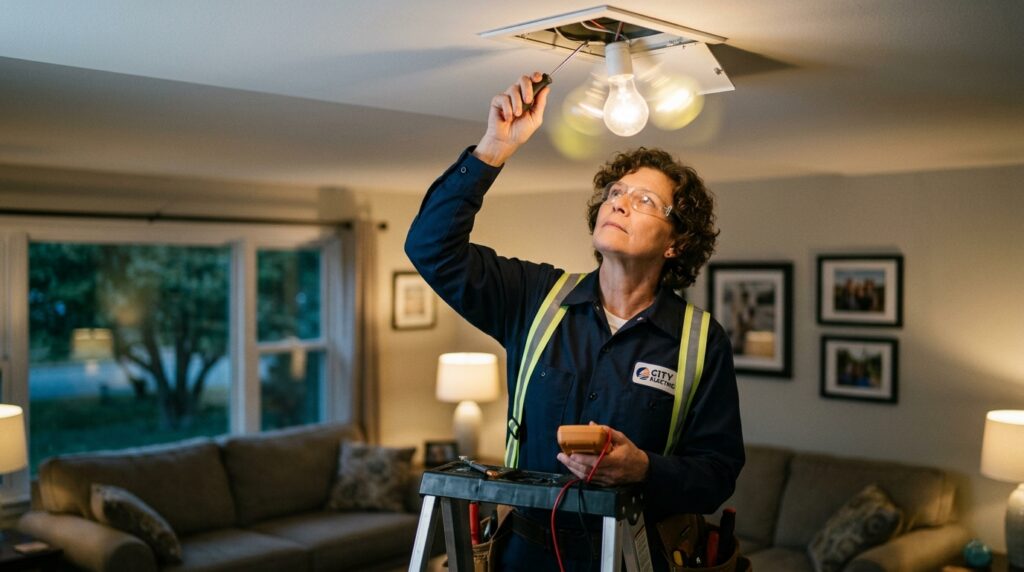
Hiring a professional isn’t just about stopping the visible flicker, it’s about identifying the actual root cause so the fix is permanent rather than temporary.
Visual and Voltage Inspection
A qualified electrician starts by visually inspecting fixtures, switches, and junction boxes for loose wires, scorch marks, or melted insulation, then uses a voltage meter to measure fluctuations at the affected circuit.
This combination of visual and electrical testing helps narrow down whether the issue is local to one fixture or systemic across the home. This step alone often reveals problems a homeowner would never spot without specialized tools.
Panel and Load Testing
The electrician will also check the main panel for loose or corroded neutral wires, overloaded breakers, and unbalanced loads that could be affecting several circuits simultaneously. In homes with frequent or widespread flickering, they may even test the quality of incoming power from the utility company to rule out an external cause.
Once the source is confirmed, repairs typically involve tightening connections, replacing damaged components, or rebalancing the electrical load across breakers.
Quick Reference: Flicker Pattern and Likely Cause
| Flicker Pattern | Likely Cause | DIY or Call an Electrician |
| One bulb flickers occasionally | Loose bulb or worn socket | DIY fix |
| Lights flicker with dimmer in use | Incompatible dimmer switch | DIY fix |
| Flicker when appliance turns on | Overloaded circuit | Often needs an electrician |
| Multiple rooms flicker together | Panel or service line issue | Call an electrician |
| Buzzing, sparks, or burning smell | Arcing or damaged wiring | Call an electrician immediately |
| Frequent breaker trips with flicker | Failing breaker or overloaded panel | Call an electrician |
Frequently Asked Questions
Is it normal for lights to flicker occasionally?
Brief, occasional flickering tied to a large appliance turning on is usually harmless, but flickering that happens often or worsens over time should be checked by a professional.
Can I fix flickering lights myself?
Simple causes like a loose bulb or an incompatible dimmer are safe DIY fixes, but anything involving the panel, wiring, or multiple rooms should be left to a licensed electrician.
How urgent is it to call an electrician for flickering lights?
If the flickering comes with buzzing, burning smells, or sparks, it should be treated as an emergency and addressed immediately rather than scheduled for later.
Does flickering always mean my wiring is unsafe?
Not always, since dimmer compatibility and loose bulbs cause plenty of harmless flicker, but persistent or widespread patterns are a strong signal of an underlying safety issue.
Conclusion
Flickering lights can range from a two-second annoyance to a genuine warning sign of a fire hazard, and the difference usually comes down to where the flicker happens and what symptoms accompany it.
Most competitor guides agree on the same core message: isolated, minor flickering is fine to troubleshoot at home, while anything widespread, recurring, or paired with buzzing and burning smells calls for an electrician for flickering lights right away. When in doubt, a professional inspection is a small cost compared to the risk of an undiagnosed electrical fault.
Related Articles
How to Insulate Basement Ceiling
Roofing Maintenance for Extreme Temperatures : Complete Guide
Brass Kitchen Faucets: Types, Benefits, Buying Guide, and Maintenance Tips
What Is a Composition Roof? A Complete Homeowner’s Guide
Best Primer for Painting Kitchen Cabinets – Complete Easy Guide for Smooth & Durable Cabinets