

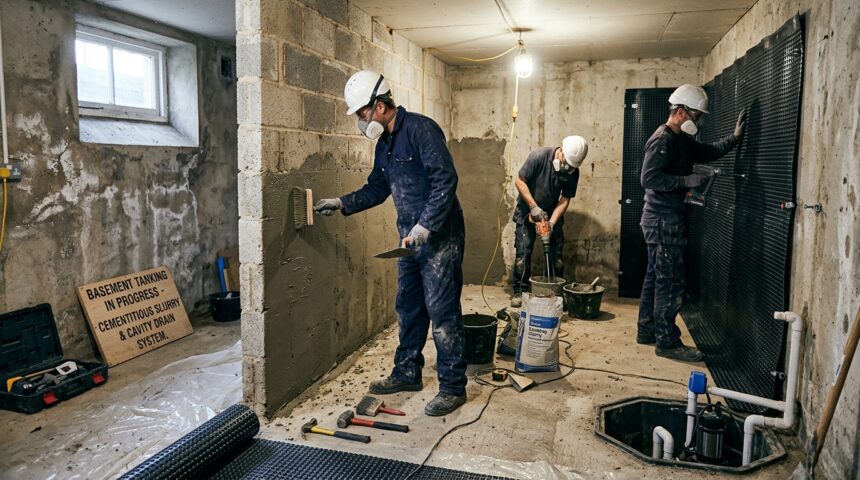
Damp basements and cellars are one of the most common structural concerns UK homeowners face, and the first question almost everyone asks is the cost to tank a basement before committing to any work.
Professional basement tanking typically costs between £40 and £250 per square metre depending entirely on the method used, while a full project usually runs anywhere from £2,500 to over £20,000 based on the size of the space and the severity of the existing damp issues. Understanding the different waterproofing systems and what drives the price up is the best way to avoid an unpleasant surprise once the work begins.
What Is Basement Tanking and Why It Matters
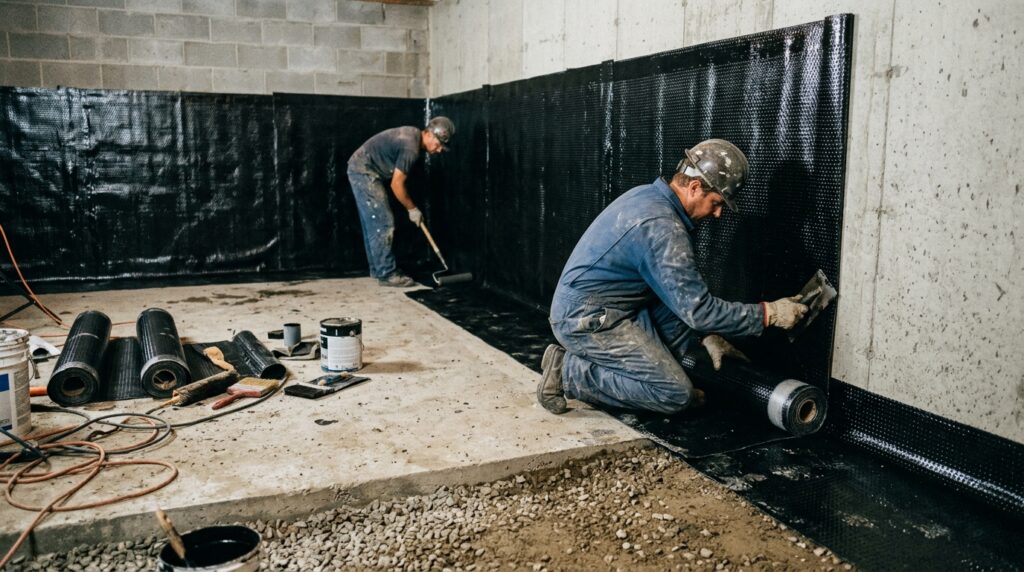
Tanking is a waterproofing process that creates a barrier between the basement structure and the surrounding ground, stopping moisture from penetrating walls and floors. It is essential for any cellar or basement that will be used as living space, storage, or anywhere belongings need to stay dry.
How Tanking Protects the Structure
A properly tanked basement prevents water ingress that would otherwise lead to mould, rot, and long-term structural damage to brickwork and timber.
Beyond protecting the building itself, a dry, usable basement also adds real value to a property, since it effectively creates extra livable or storable square footage. Skipping this step on a damp basement almost always leads to far more expensive remedial work later.
Internal vs External Tanking
Internal tanking applies waterproof slurry or membrane to the inside face of the walls and is the more common choice because it avoids digging up the ground outside the property.
External tanking, by contrast, applies waterproof material directly to the outer walls below ground, which requires excavation and therefore costs considerably more. Most homeowners choose internal tanking unless external access is already open or the damp problem is severe enough to justify the extra expense.
Cost to Tank a Basement By Method
The method chosen has the single biggest impact on the final price, since each system uses different materials and requires different levels of labour and preparation.
Cementitious Tanking
Cementitious tanking, also known as Type A barrier waterproofing, involves applying a waterproof cement-based slurry directly onto a prepared wall surface and typically costs £40 to £100 per square metre.
It is one of the more affordable options and works well for minor to moderate damp problems, but it relies entirely on forming a strong, continuous bond with the substrate. If the wall surface isn’t properly prepared, this system is the most likely to fail over time.
Cavity Drain Membrane Systems
A cavity drain membrane, classified as Type C “drained protection,” involves fitting a plastic membrane to the walls and sometimes the floor, which allows any water that does get through to drain safely into a sump and pump system rather than penetrating the room.
This method generally costs £80 to £150 per square metre and is widely regarded as the safer, more forgiving option for habitable basements. Because it doesn’t depend on a perfect bond like cementitious tanking, it performs better in basements with higher water pressure or unpredictable ground conditions.
External Tanking
External tanking is the most expensive method, typically costing £100 to £250 per square metre, mainly because it requires excavation around the outside of the property to expose the basement walls. It is usually reserved for situations involving severe water ingress, a high water table, or where applying waterproofing from inside simply isn’t practical.
The added labour and machinery needed for excavation is what pushes this option well above internal methods on a per square metre basis.
Total Project Cost By Basement Size
While the per square metre price gives a useful baseline, most homeowners want to know what the entire project is actually going to cost once everything is included.
Small Cellars and Single Rooms
For a small cellar or single room, total tanking costs commonly fall between £2,500 and £7,000 depending on the method chosen and the condition of the walls. Cementitious tanking alone on a modest space might land closer to £4,000 to £7,000, while a more robust cavity membrane system with a sump pump on the same footprint can reach £8,000 to £14,000.
Smaller spaces still carry a day rate for labour, so very tiny rooms don’t always scale down proportionally.
Larger Basements and Full Conversions
A typical 40 square metre cellar fitted with a full cavity membrane system and sump pump usually lands between £8,000 and £14,000 all in, while larger basements intended for full living conversions can run from £15,000 to over £25,000 once flooring, electrics, and finishing work are factored in.
Properties in London clay or known flood-prone areas often need a more robust cavity system with active drainage rather than slurry alone, which pushes costs toward the higher end of this range. The size of the basement combined with the severity of existing water ingress are the two factors that swing total project cost the most.
Hidden and Additional Costs

Quoted per square metre prices rarely tell the whole story, and several add-on costs commonly appear once work actually begins.
Wall Preparation and Repairs
Loose render, salt contamination, and cracked masonry all need repairing before any waterproofing can be applied, and this preparation work can account for nearly 30 percent of total labour on a damp-affected basement.
If walls are particularly friable or blown, this alone can add £1,000 to £3,000 to the project before tanking materials are even applied. Skipping proper preparation to save money is one of the most common reasons tanking systems fail prematurely.
Sump Pumps and Electrics
Cavity drain systems rely on a sump pump to remove collected water, and the electrical work to install this safely typically costs £250 to £600 when carried out by a qualified electrician. Adding battery backup, which keeps the pump running during a power cut, brings another £300 to £800 depending on the system specified.
This is a worthwhile addition for properties in areas where power outages are common, since pump failure during heavy rain can undo the entire waterproofing job.
Underpinning and Structural Work
If the basement needs underpinning to address an underlying structural cause of the damp, costs rise sharply, often running £1,200 to £2,000 per linear metre of wall. This level of work is only necessary in more serious cases, but it’s important to budget for the possibility if a survey reveals foundation movement or instability.
A reputable contractor should always flag this risk during the initial site assessment rather than after work has started.
Quick Reference Cost Table
| Tanking Method or Cost Factor | Typical Price |
| Cementitious tanking (Type A) | £40 – £100 per m² |
| Cavity drain membrane (Type C) | £80 – £150 per m² |
| External tanking | £100 – £250 per m² |
| Small cellar, full project | £2,500 – £7,000 |
| 40m² cellar with sump pump | £8,000 – £14,000 |
| Sump pump electrical install | £250 – £600 |
| Battery backup system | £300 – £800 |
| Underpinning | £1,200 – £2,000 per linear metre |
What Drives the Price Up or Down
Several site-specific factors explain why two basements of identical size can still receive very different quotes from contractors.
Property Age and Condition
Older properties, particularly Victorian terraces with original brickwork, often need more extensive wall preparation and may have higher salt contamination than newer builds, which increases both labour time and material cost.
Homes that have had previous failed waterproofing attempts can also require additional stripping out before new tanking can begin. A thorough site survey is the only reliable way to know which category a property falls into before committing to a price.
Water Table and Location
Properties sitting on clay soil or in known flood-prone areas typically need a more robust cavity drain system with active pumping rather than a simple slurry coating, since hydrostatic pressure from groundwater is far harder to resist with barrier methods alone.
London and the South East also tend to see prices 15 to 25 percent higher than the national average due to local labour rates. Anyone budgeting for tanking should factor in their specific location and ground conditions rather than relying purely on national averages.
Frequently Asked Questions
What is the average cost to tank a basement in the UK?
Most homeowners pay between £40 and £250 per square metre depending on the method, with full projects typically totalling £2,500 to over £20,000.
Which tanking method is cheapest?
Cementitious tanking is generally the most affordable option at £40 to £100 per square metre, though it’s best suited to milder damp problems rather than high water pressure.
Do I need a sump pump for basement tanking?
Only cavity drain membrane systems require a sump pump, since they work by collecting and removing water rather than fully blocking it like cementitious tanking does.
Is basement tanking worth the investment?
Yes, since a properly tanked basement protects the structure from long-term damp damage and typically adds usable living or storage space that increases overall property value.
Conclusion
The cost to tank a basement ultimately comes down to the method chosen, the size of the space, and how much preparation the existing walls need before waterproofing can even begin. Comparing pricing across UK trade guides shows fairly consistent agreement, with cementitious tanking sitting at the affordable end and external excavation work at the top, while most full residential projects land somewhere between £4,000 and £14,000.
Getting a proper site survey from a qualified waterproofing specialist remains the only way to turn these national averages into an accurate, property-specific figure.
Related Articles
Can you lay Hardwood Floors Over Tile? Complete Guide
What Is a Composition Roof? A Complete Homeowner’s Guide
How to Make Saltillo Floors Shine Again Expert Tips & Professional Solution
Roofing Maintenance for Extreme Temperatures : Complete Guide
Brass Kitchen Faucets: Types, Benefits, Buying Guide, and Maintenance Tips