

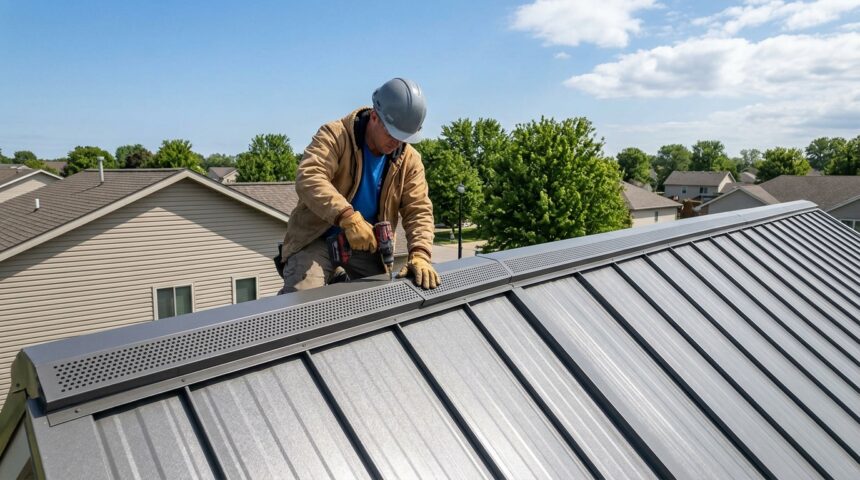
A metal roof ridge vent runs along the peak of a sloped metal roof and allows hot, moist air trapped inside the attic to escape continuously. For homeowners with metal roofing, choosing the right ridge vent matters more than it might seem, since metal roofs behave differently from asphalt shingles when it comes to heat buildup and moisture control.
This guide breaks down how a metal roof ridge vent works, the different types available, what installation typically costs, and how to decide if one is right for your home.
How a Metal Roof Ridge Vent Works
A ridge vent sits at the highest point of the roof and uses natural air pressure differences to pull warm air out of the attic without any motors or electricity involved. Understanding this basic mechanism makes it easier to see why pairing it with intake vents lower on the roof is so important.
The Exhaust and Intake Cycle
As attic temperature rises, warm air naturally moves upward and accumulates near the roof’s peak, where small openings built into the ridge vent allow that heated, moisture-laden air to escape outside.
At the same time, soffit vents installed under the eaves draw cooler outside air into the attic, creating a continuous, balanced cycle of airflow rather than a single point of exhaust. Without this paired intake system, a ridge vent on its own struggles to function efficiently, since it needs fresh air entering low on the roof to actually pull warm air out at the top.
Why Metal Roofs Need Specific Venting
Metal roofing reflects more heat than asphalt shingles but also expands and contracts more with temperature swings, which means proper ventilation plays a bigger role in protecting the structure underneath.
A poorly ventilated attic under a metal roof can still trap condensation, particularly in colder months when warm indoor air meets the cool underside of metal panels. This makes a properly fitted metal roof ridge vent especially valuable in preventing mold growth, wood rot, and insulation damage over time.
Types of Metal Roof Ridge Vents
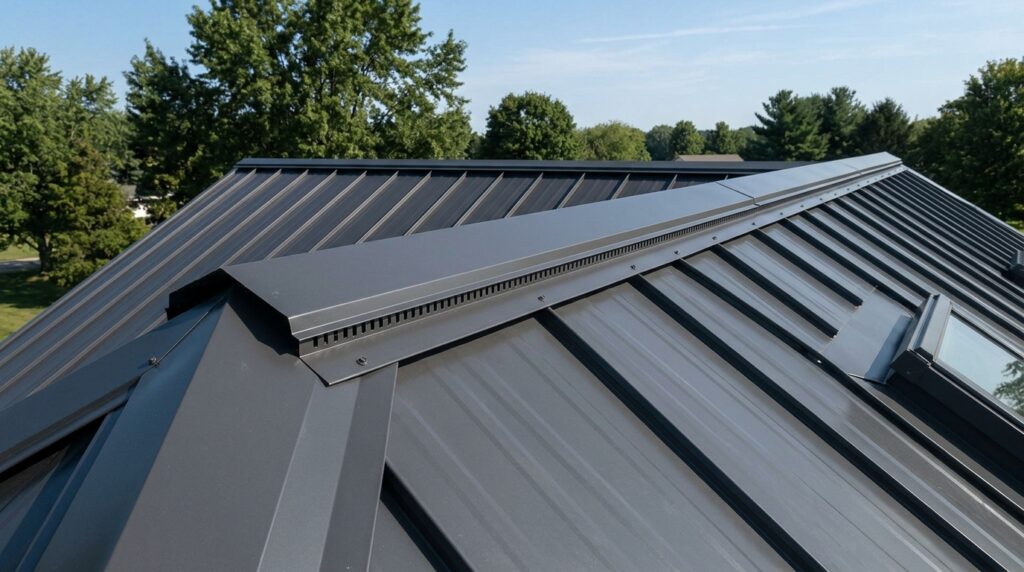
Not all ridge vents are built the same way, and the material and design chosen can affect both performance and how long the system lasts under a metal roof’s specific conditions.
Standard Metal Ridge Vents
A standard metal ridge vent is built from the same material as the roofing panels and is fastened directly along the ridge line using screws with a watertight seal.
While this option blends visually with the rest of the roof, the seal around each fastener can degrade over time due to UV exposure, which is why some roofing professionals recommend closer monitoring of metal vents compared to other materials. Despite this maintenance consideration, metal ridge vents remain a durable, long-lasting choice when properly installed and sealed.
Baffle Vents
Baffle-style ridge vents use internal channels designed to direct airflow while blocking wind-driven rain and snow from entering the attic space, making them especially useful in regions with heavy precipitation.
These vents also help prevent insulation from blocking airflow near the ridge opening, which keeps the ventilation system working as intended over the life of the roof. Many homeowners in coastal or storm-prone areas specifically choose baffle vents for this added layer of weather protection.
Rolled and Roll-Out Ridge Vents
Rolled ridge vents are a more budget-friendly option that come in continuous rolls and are cut to fit the length of the ridge during installation.
They tend to be more cost-effective upfront but are generally more prone to wind damage and typically don’t last as long as fixed metal or baffle systems. This makes rolled vents a reasonable choice for shorter-term budgets, though they may require replacement sooner than other options.
Cost to Install a Metal Roof Ridge Vent
Pricing for ridge vent installation varies based on roof length, material complexity, and whether the project is standalone or part of a larger roofing job.
Average Installation Pricing
Standard ridge vent installation typically costs $7 to $15 per linear foot, which usually totals between $300 and $700 for most residential roofs. Powered ridge vent options, which use a small fan to actively pull air rather than relying purely on passive convection, range from $200 to $1,200 depending on the unit size and whether it runs on electricity or solar power.
Since metal roofing requires more careful cutting and custom fitting around the ridge line compared to asphalt shingles, labor costs tend to land toward the higher end of these ranges.
What Affects the Final Price
Roof pitch, attic size, and the number of ridge lines on the home all influence both material quantity and labor difficulty, with steeper or more complex rooflines generally costing more to work on safely. Connector plugs and straps used to join sections of metal ridge vent typically run about $5 to $6 apiece, and these add up on longer ridge runs. Removing an old, outdated ventilation system before installing a new metal roof ridge vent can also add $50 to $150 to the total project cost.
Benefits of Installing a Ridge Vent on a Metal Roof
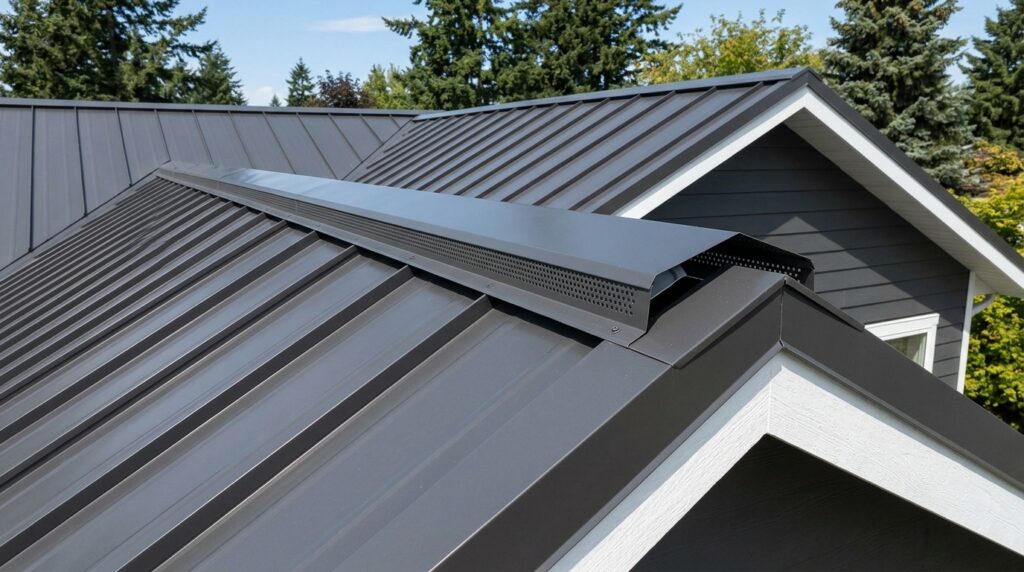
Beyond simply letting air escape, a properly installed ridge vent delivers several practical advantages that affect both comfort and the long-term health of the roofing system.
Protecting Roof Materials and Structure
Excessive heat and trapped moisture in an unventilated attic can cause roofing materials, insulation, and wooden structural components to deteriorate much faster than they otherwise would.
A ridge vent helps maintain a more balanced attic environment, reducing the risk of mold growth, rotting wood, and degraded insulation that often go unnoticed until they become expensive repairs. This protective effect is one of the main reasons ridge vents are considered a worthwhile long-term investment rather than just a comfort upgrade.
Energy Efficiency and Comfort
A well-ventilated attic reduces strain on a home’s air conditioning system during hot weather by expelling built-up heat before it transfers into living spaces below. In colder months, the same ventilation helps prevent moisture buildup and ice dam formation, which can otherwise damage roofing edges and gutters.
Homeowners often notice a more consistent indoor temperature and modestly lower energy bills after upgrading to proper ridge ventilation.
Quick Reference: Metal Roof Ridge Vent Types
| Vent Type | Typical Cost Range | Best For |
| Standard metal ridge vent | $7 – $15 per linear foot | Roofs matching metal panel finish |
| Baffle ridge vent | $7 – $15 per linear foot, slightly higher labor | Heavy rain or snow regions |
| Rolled ridge vent | Lower upfront cost | Budget-conscious, shorter-term use |
| Powered ridge vent | $200 – $1,200 | Larger attics needing active airflow |
Maintenance and Common Issues
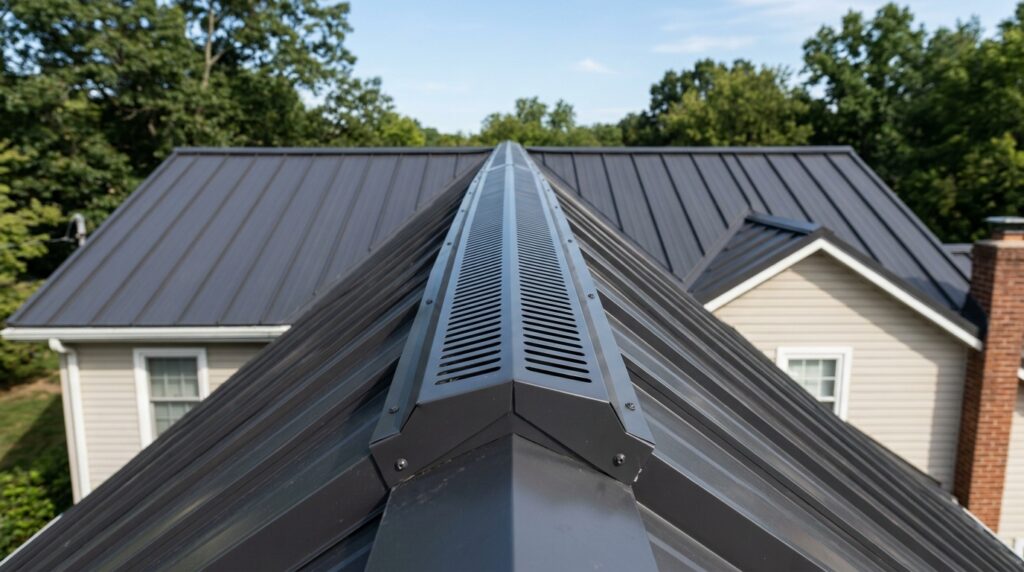
Like any exterior roofing component, a metal roof ridge vent needs periodic attention to keep performing the way it was designed to.
Sealant and Fastener Wear
Because metal ridge vents are secured with screws and a sealed connection, prolonged UV exposure can gradually break down that watertight seal, increasing the risk of small leaks developing over time.
Routine roof inspections, ideally once or twice a year, can catch this kind of wear before it leads to interior water damage. Resealing or replacing worn fasteners is typically a minor repair compared to addressing a leak that has gone unnoticed.
Debris and Pest Blockage
Vents with built-in mesh or filters help keep pests, leaves, and debris from clogging the airflow path, but even protected systems benefit from an occasional visual check. A blocked ridge vent loses much of its effectiveness, essentially returning the attic to the same poor ventilation conditions it was meant to solve.
Keeping nearby tree branches trimmed back also reduces the amount of debris that can collect along the ridge line over time.
Frequently Asked Questions
Does a metal roof ridge vent leak more than other types?
Standard metal vents rely on a sealed fastener system that can wear down with UV exposure over many years, so periodic inspection is recommended, though properly installed vents are generally reliable.
Can rain get into a ridge vent on a metal roof?
As long as the roof pitch is appropriate, typically above a 3/12 slope, the vent’s overlapping design and gravity prevent rain from traveling upward into the attic.
Do I need soffit vents if I install a ridge vent?
Yes, a ridge vent only works effectively when paired with intake ventilation like soffit vents, since the system depends on fresh air entering low and warm air exiting high.
How long does a metal roof ridge vent last?
A properly installed metal or baffle ridge vent can last as long as the roof itself, often 25 years or more, while rolled vents typically need replacement sooner.
Conclusion
A metal roof ridge vent plays a quiet but important role in keeping an attic dry, cool, and protected from long-term structural damage. Comparing pricing and recommendations across roofing industry sources shows broad agreement that ridge vents remain the most cost-effective passive ventilation option, provided they’re properly paired with soffit intake and matched to the local climate.
For most metal roofs, choosing between a standard metal vent and a baffle system mainly comes down to regional weather exposure rather than any major difference in core performance.
Related Articles
How to Insulate Basement Ceiling
Roofing Maintenance for Extreme Temperatures : Complete Guide
Brass Kitchen Faucets: Types, Benefits, Buying Guide, and Maintenance Tips