
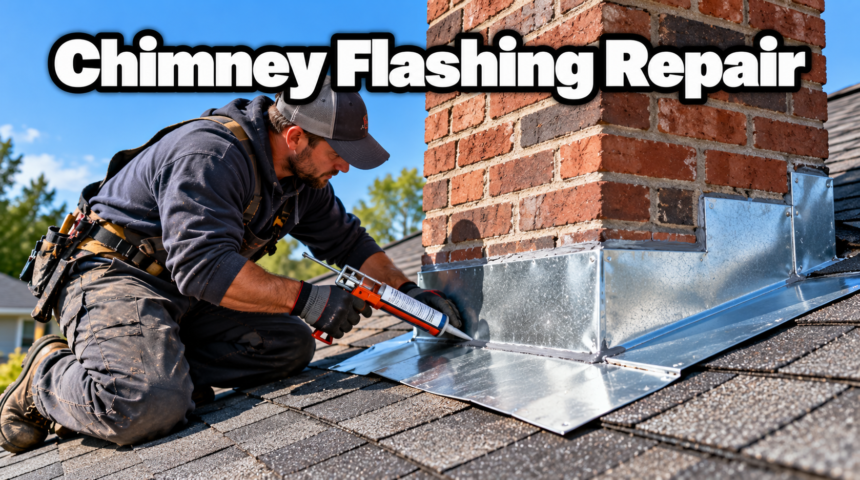
Chimney flashing repair means fixing or replacing the metal that seals the joint where your chimney meets the roof. When that seal breaks, rain runs straight down into your attic, walls, and ceilings. The fix can be small or large. A simple reseal costs a few dollars in materials if you handle it yourself, while a full flashing replacement by a roofer usually runs $400 to $900. This guide walks through how to spot the problem, decide between a reseal and a replacement, do the work safely, and know when to call a pro.
What chimney flashing is, and why it leaks
Flashing is thin bent metal that bridges the gap between your chimney and the roof surface. It is almost always aluminum, copper, or galvanized steel. The one thing to understand is that good flashing is not a single piece. It is a set of parts that overlap like shingles so water always runs down and out.
There are four parts worth knowing:
- Base or apron flashing sits across the front of the chimney, on the downhill side, and laps over the shingles.
- Step flashing runs up both sides in small L-shaped pieces, one tucked under each row of shingles.
- Counter flashing is the top layer. Its edge is set into the mortar joints of the brick and folds down over the step and base pieces.
- A cricket, also called a saddle, is a small sloped peak behind a wide chimney that splits water around it instead of letting it pool.
The metal you choose matters when you replace flashing. Aluminum is cheap and easy to bend, but it corrodes where it touches masonry and dents easily. Galvanized steel is tougher and holds up well for a mid-range price. Copper is the top choice. It never rusts, shapes cleanly, and can outlast the roof itself, though it costs the most. For a chimney you plan to keep, copper or heavy-gauge steel pays off over cheap aluminum that fails in a decade.
Here is the part most people miss. The base and counter pieces overlap but are not fastened to each other. That gap is on purpose. A house and its chimney settle at slightly different rates over the years, so a single joined piece of metal would tear and leak. Keeping them separate lets each one move and still shed water.
Flashing leaks for a few plain reasons. The sealant along the top edge dries out and cracks. The mortar joint holding the counter flashing crumbles and lets the metal pull loose. The metal itself rusts, bends in a storm, or was never stepped into the shingles correctly when the roof went on.
Signs your chimney flashing needs repair
The clearest sign is water showing up indoors near the chimney. Catch it early and the repair stays small. Look for these:
- Brown water stains on the ceiling or wall around the chimney
- A damp or musty smell in the attic, worse after rain
- Rust streaks on the flashing or running down the brick
- Metal that looks lifted, bent, curled, or missing in spots
- Cracked, peeling, or missing caulk along the top edge
- White crusty patches (efflorescence) on the brick, which means water is soaking into the masonry
- Drips or dark damp marks inside the firebox
If you spot any of these, get up for a closer look on a dry day, or have someone inspect it. Water that reaches the attic will rot framing and ruin insulation long before you ever see a stain on the ceiling.
Reseal or replace: which repair you actually need
Most chimney leaks fall into one of two repair levels, and the metal tells you which one you are facing.
Reseal it when the flashing metal is still solid and only the seal has failed. If the counter flashing is flat against the brick and the step pieces are in place, but the caulk along the top is cracked, a clean and re-caulk will stop the leak. This is the cheap, fast fix. It holds for several years, not forever.
Replace it when the metal is the problem. Rusted-through flashing, pieces that have pulled out of the mortar, bent or missing step flashing, or a chimney sealed with one big smear of tar instead of proper stepped metal all call for new flashing. Patching failed metal just buys a few months.
Counter flashing is set into the brick one of two ways, and the method changes how you repair it. The older way presses a folded metal lip into a raked-out mortar joint and wedges it with lead, then re-mortars over the top. The newer way cuts a straight slot, called a reglet, into the brick with a grinder, slips a barbed edge in, and fills the slot with urethane caulk that grips and seals. If your counter flashing was simply surface-mounted with a bead of caulk on the face of the brick, that seal fails fastest and is the usual culprit behind a slow leak.
A simple way to decide on bigger jobs is the 30 percent rule. If a repair would cost more than about 30 percent of a full replacement, replacing the whole flashing is the smarter spend. New flashing done right lasts decades, so you rarely regret it.
One more thing to check is the mortar joints. If the brick joints holding the counter flashing are soft or crumbling, they need re-pointing as part of the job. New metal set into bad mortar will only leak again.
How to repair chimney flashing step by step
You can handle a reseal or a small counter-flashing fix yourself if you are comfortable on the roof. A full replacement that involves lifting shingles is better left to a roofer. Here is the process for a do-it-yourself reseal and re-bed.
- Wait for a dry stretch. The surface must be dry, with no rain due for 24 hours after. Set your ladder on firm ground and use a roof harness if the pitch is steep.
- Find the failure point. Trace where water is getting in. It is usually the top edge of the counter flashing or a gap at a corner.
- Clean everything. Scrape out the old cracked caulk, brush away dirt and debris, and wire-brush any rust or loose mortar. Sealant only sticks to clean, dry metal and brick.
- Reseal the seams. Run a steady bead of polyurethane roof and flashing sealant along the top edge of the counter flashing and into any open seams or nail heads. Tool it smooth with a gloved finger so water sheds off it.
- Re-bed loose counter flashing. If a piece has pulled out of the mortar joint, bend it back, clean the slot, press the lip in, and fill the joint with urethane caulk. For a lasting fix, cut a fresh reglet (a thin slot) in the mortar with a grinder, set the metal lip into it, and seal.
- Replace damaged metal. If step or base flashing is rusted or bent, that piece gets swapped out, which means lifting the nearby shingles and weaving new metal in. Base flashing should lap the shingles by at least 4 inches, its flange should run about 12 inches up the chimney face, and counter flashing should overlap the base by about 4 inches.
- Test it. Once the sealant cures, run a garden hose over the chimney and watch the attic and ceiling for any sign of water.
If you want a clear visual of how the pieces layer together, Fine Homebuilding’s chimney flashing guide shows the overlaps and both the mortar and caulk methods in detail.
Mistakes that make a flashing repair fail
A flashing repair only lasts if it is done right. A few common shortcuts send people back up the ladder within a season:
- Caulking over dirt or rust, so the sealant never bonds and peels away within months
- Using one long strip of metal instead of stepped pieces, which tears the next time the chimney shifts
- Sealing the gap between base and counter flashing shut, which traps water instead of letting it drain out
- Relying on roofing tar or flex tape as a permanent fix, when both dry out, crack, and hide the real problem
- Ignoring soft mortar, so the new metal pulls loose again within a year
Do the boring parts well, clean metal, stepped pieces, and sound mortar, and the repair will hold.
What chimney flashing repair costs
Cost depends on whether you are resealing old metal or replacing it, and on your roof and region. A full flashing replacement by a pro typically takes 3 to 5 hours.
| Type of repair | Typical cost |
| DIY reseal (materials only) | $15 to $60 |
| Pro reseal or re-caulk | $150 to $400 |
| Partial flashing repair | $300 to $600 |
| Full flashing replacement | $400 to $900 |
| Add a new cricket or re-pointing | $150 to $500+ |
What drives the price is access and extras, not the metal alone. A single-story home with an easy-reach chimney sits at the low end. A tall, steep, or multi-story roof costs more for safety setup and time. Jobs that add re-pointing, a new cricket, or shingle replacement around the base push toward the top of the range.
Labor is the biggest swing. Roofing rates run higher in the Northeast, roughly $75 to $110 an hour in Massachusetts, and lower in places like Texas at around $50 to $80. Copper flashing costs more than aluminum or steel but lasts the longest, which can be worth it on a home you plan to keep for years.
Quick tip: if the same leak keeps coming back after two reseals, stop patching. The metal or the mortar has failed, and only a proper replacement will fix it for good.
When to call a professional
Some of this work is fine for a steady DIYer, and some of it is not. Call a roofer or a chimney specialist when:
- The roof is steep, high, or metal, where footing is dangerous
- The counter flashing needs new reglets cut and the mortar re-pointed
- The chimney needs a cricket built behind it
- You have replaced the seal twice and it still leaks
- You cannot find where the water is getting in
A pro also catches related trouble, like a cracked crown or failing brick, that feeds the same leak. Paying once for a full, correct job usually costs less than a string of patch jobs and the water damage in between.
Conclusion
Chimney flashing repair comes down to one choice. Reseal if the metal is sound and only the caulk has failed, or replace it if the metal is rusted, bent, or pulling loose. A DIY reseal costs a few dollars and holds for years, while a full professional replacement runs $400 to $900 and lasts decades. Fix it the moment you see a stain or rust, test the work with a hose, and bring in a pro for steep roofs or any masonry work.
Frequently asked questions
How long does chimney flashing last?
Properly installed metal flashing lasts 20 to 30 years or more, with copper on the longer end. The sealant along the top edge wears out sooner, usually in 5 to 10 years, so an occasional re-caulk is normal.
Can I just caulk the flashing instead of replacing it?
Yes, if the metal is still solid and flat against the chimney. A clean and re-caulk with polyurethane sealant stops a leak for several years. If the metal is rusted or loose, caulk only hides the problem.
How much does chimney flashing repair cost?
A DIY reseal costs $15 to $60 in materials. A professional reseal runs $150 to $400, and a full flashing replacement usually costs $400 to $900, more if mortar re-pointing or a cricket is needed.
Why does my chimney leak only in heavy rain?
Heavy, wind-driven rain pushes water under lifted metal and into tiny gaps that light rain runs past. It points to a worn seal or loose counter flashing, not a roof-wide problem.
Does homeowners insurance cover chimney flashing leaks?
Insurance usually covers sudden damage, like flashing torn off in a storm, but not leaks from age or missed maintenance. Keep photos and repair records to support a storm-related claim.
Related Articles
How Do You Remove Tile From a Bathroom Wall? Step-by-Step Guide
Standard Shower Curtain Size: Complete Guide to Sizes, Types & Measurements
What Common Kitchen Item Can Be Used to Extinguish Fire Complete Guide 2026