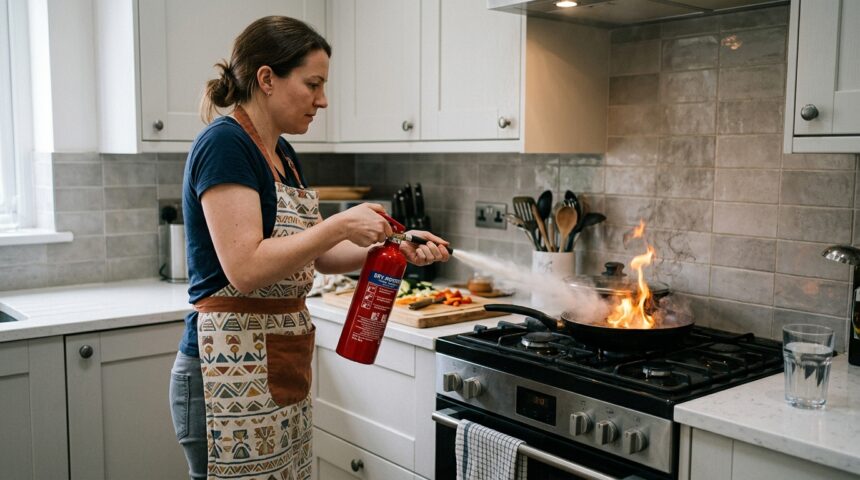
Kitchen fires can start suddenly, and knowing which household items can help control them may prevent serious damage or injury. Several everyday kitchen items, including baking soda, salt, and metal lids, can be effective in smothering small flames quickly.
Understanding How Kitchen Fires Can Be Controlled
Most small kitchen fires can be managed by cutting off their oxygen supply rather than using water, which can actually make certain fires worse. This is why common household items that smother flames are often more useful than people realize.
Why Water Is Not Always Safe
Water should never be used on grease or oil fires because it causes the burning oil to splash and spread rapidly. This reaction can turn a small, contained fire into a much larger and more dangerous situation within seconds. Understanding this risk is essential before reaching for any extinguishing method in the kitchen.
Why Smothering Works Better
Smothering a fire means cutting off its oxygen supply, which causes the flames to die out naturally without spreading. Many common kitchen items are effective specifically because they can cover or block airflow to the burning surface. This principle is the foundation for most of the household fire-extinguishing methods described below.
Baking Soda as a Fire Extinguishing Tool
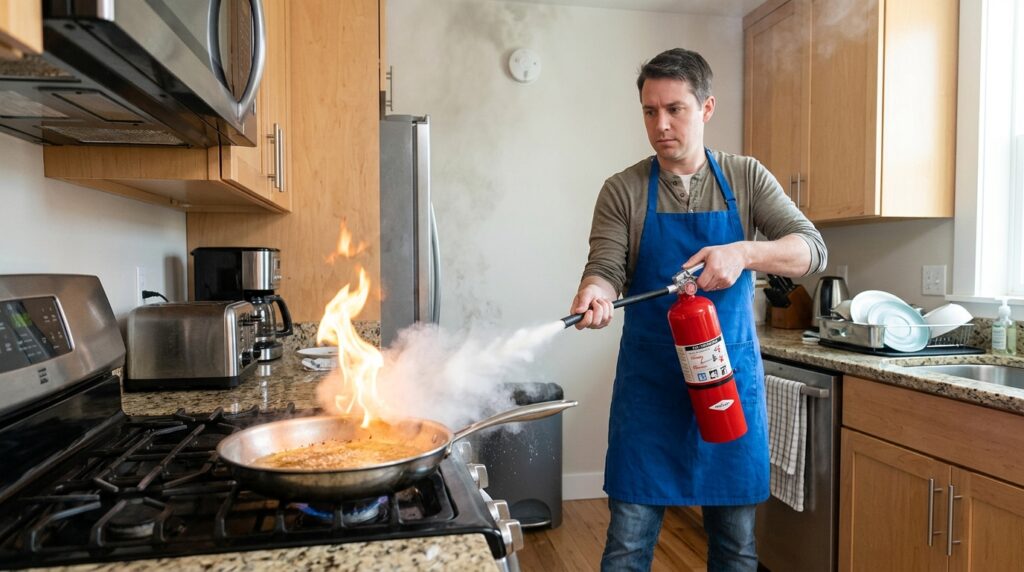
Baking soda is one of the most well-known kitchen items used to put out small fires, especially grease or oil fires on a stovetop. Its chemical properties make it particularly effective for this specific type of household emergency.
How Baking Soda Extinguishes Flames
When baking soda is heated, it releases carbon dioxide gas, which helps smother the fire by displacing the oxygen around it. This reaction works quickly when a generous amount is poured directly onto small, contained flames. It is most effective on stovetop grease fires rather than larger or spreading fires.
Limitations of Using Baking Soda
Baking soda is only practical for very small fires, since a large fire would require an unrealistic amount to be effective. Using baking powder instead of baking soda should be avoided, as baking powder contains other ingredients that can worsen the fire. This limitation makes baking soda a helpful first response rather than a complete fire safety solution.
Table Salt as a Fire Suppression Option
Table salt is another surprisingly effective household item that can help extinguish small kitchen fires when baking soda is not available. Its widespread availability makes it a convenient backup option in most kitchens.
How Salt Smothers Small Fires
Salt works by physically covering the flames and blocking oxygen from reaching the fuel source, similar to how sand is used in some fire safety kits. Pouring a thick layer of salt directly onto a small fire can help extinguish it within moments. This method is particularly useful for stovetop fires involving oil or grease.
Why Salt Is a Practical Backup
Since salt is found in nearly every kitchen and does not expire, it serves as a reliable backup option when other extinguishing tools are unavailable. It is also easy to store near the stove for quick access during a cooking emergency. This practicality makes salt a commonly recommended item in kitchen fire safety discussions.
Using a Metal Lid to Smother Flames
A simple pot or pan lid can be one of the fastest and safest tools for extinguishing a small stovetop fire. This method works especially well because most kitchens already have lids readily available near the cooking area.
How Covering a Pan Stops the Fire
Placing a metal lid directly over a burning pan cuts off its oxygen supply almost instantly, causing the flames to die out. This method works best when done quickly, before the fire has a chance to spread beyond the pan itself. It is considered one of the safest and most immediate responses to a small grease fire.
Safety Tips When Using a Lid
It is important to turn off the stove burner immediately after covering the pan to prevent the fire from reigniting. The lid should also remain in place for several minutes to ensure the fire has fully died out before checking underneath. Using oven mitts during this process helps protect hands from heat and potential steam.
Comparison Table of Common Kitchen Fire Extinguishing Items
| Kitchen Item | Best Used For | Effectiveness | Availability |
| Baking Soda | Small grease fires | High for small fires | Common in most kitchens |
| Table Salt | Small stovetop fires | Moderate to high | Always available |
| Metal Lid | Pan or skillet fires | Very high | Found in most kitchens |
| Fire Blanket | Small to medium fires | High | Less commonly owned |
When to Avoid DIY Methods Entirely
While household items can help with very small fires, there are situations where relying on them is unsafe and professional intervention is necessary instead.
Fires That Are Spreading Quickly
If a fire begins spreading beyond the original pan or surface, household items like baking soda or salt will no longer be effective. At this point, evacuating the area and calling emergency services becomes the safest and most appropriate action. Attempting to control a spreading fire manually can lead to serious injury or property damage.
Fires Involving Electrical Appliances
Fires caused by electrical appliances require a different approach, since water and certain household items can create additional hazards like electric shock. In these cases, cutting power to the appliance and using a proper fire extinguisher is the safer choice. Household kitchen items are not designed to handle electrical fire risks safely.
Final Thoughts
Common kitchen items like baking soda, salt, and metal lids can be genuinely useful for controlling small, contained fires when used correctly and quickly. However, these methods are only appropriate for minor fires and should never replace proper fire safety equipment for larger emergencies. Knowing these simple techniques can provide valuable extra seconds of safety during an unexpected kitchen fire.
Frequently Asked Questions
Can baking soda put out a large kitchen fire?
No, baking soda is only effective for very small, contained fires and cannot handle larger or spreading flames.
Is it safe to use water on a grease fire?
No, water should never be used on grease fires because it can cause the fire to splash and spread further.
What is the safest way to stop a pan fire quickly?
Covering the pan with a metal lid and turning off the burner is generally the safest and fastest method.
Should I keep a fire extinguisher even if I know these methods?
Yes, a proper fire extinguisher should always be kept nearby, since household items only work for very minor fire situations.
Related Articles
Should Curtains Touch the Floor? Complete Guide
Can you lay Hardwood Floors Over Tile? Complete Guide
How Long Do Vinyl Windows Last? A Complete Guide
Are Toilet Seats Universal? Complete Guide
How to Hang a Rug on the Wall: Step-by-Step Methods for Every Rug Type