

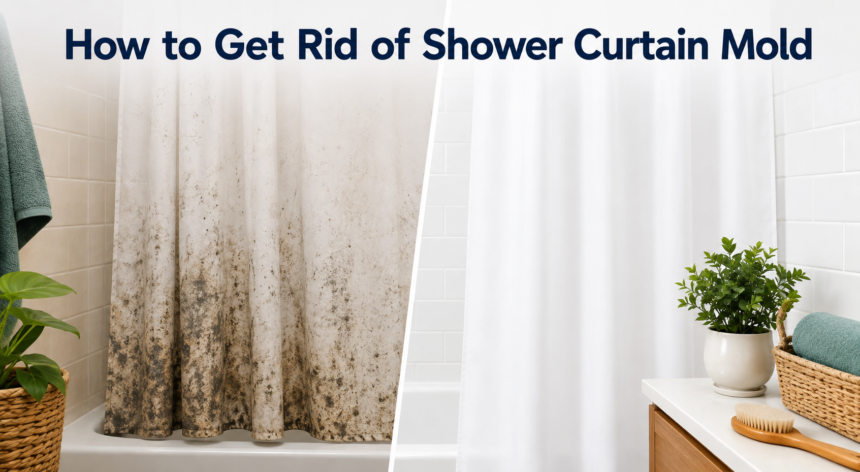
Shower curtain mold is one of the most common bathroom problems that almost every household faces at some point. It usually appears as black, pink, or greenish spots along the bottom edge or folds of the curtain, and it grows because of constant moisture, warmth, and poor air circulation.
Many people struggle to find a method that actually works instead of just hiding the smell for a few days. This guide explains how to get rid of shower curtain mold using simple, tested techniques that are safe for both fabric and plastic curtains. You will also learn why mold keeps coming back and what small daily habits can stop it permanently.
Why Does Mold Grow on Shower Curtains
Mold grows on shower curtains mainly because bathrooms create the perfect breeding ground for fungal spores. Warm temperatures, constant water splashes, and low ventilation combine to give mold everything it needs to spread quickly.
Excess Moisture and Humidity
Every time you take a shower, water droplets settle on the curtain and take hours to dry completely. Because bathrooms are often closed spaces with little airflow, this dampness lingers far longer than it should, giving mold spores the moisture they need to settle and multiply.
Poor Ventilation in the Bathroom
Bathrooms without an exhaust fan or window trap steam inside for long periods after every shower. This trapped humidity clings to the curtain fibers, and without fresh air moving through the room, the curtain never gets a real chance to dry out fully.
Curtains Left Bunched Together
When a curtain is pushed to one side after use, the folds press against each other and stay wet for much longer. This creates dark, damp pockets that are ideal for mold, which is why spreading the curtain out flat after every shower makes such a noticeable difference.
Is Shower Curtain Mold Harmful to Health
Shower curtain mold is not just an appearance problem; it can also affect the air quality of your bathroom and, over time, your overall health if left untreated.
Allergy and Respiratory Concerns
Mold spores can trigger sneezing, coughing, itchy eyes, and skin irritation in people who are sensitive to allergens. For individuals with asthma or existing respiratory conditions, prolonged exposure to mold-heavy air can make symptoms noticeably worse.
Difference Between Mildew and Black Mold
Mildew usually appears as a light gray or white powdery layer and is generally easier to remove. Black mold, on the other hand, looks darker and denser, often growing in thicker patches, and typically requires stronger cleaning methods to fully eliminate.
Signs Your Shower Curtain Needs Cleaning
Before jumping into cleaning methods, it helps to recognize the early warning signs so you can act before the mold spreads further across the curtain.
Visible Spots and Discoloration
The most obvious sign is small black, green, or pinkish dots appearing near the bottom hem or inside the folds. These spots tend to multiply quickly if the curtain isn’t cleaned soon after they first appear.
Musty or Damp Smell
A persistent musty odor in the bathroom, even after cleaning the tiles and floor, often points directly to a moldy curtain. This smell tends to get stronger as the mold colony grows larger over time.
Slimy or Sticky Texture
If the curtain feels slightly slimy or sticky when touched, especially near the bottom, this is a strong indicator of active mold growth rather than just old dirt or soap residue.
Supplies You Need Before You Start Cleaning
Having everything ready before you begin makes the entire cleaning process faster and far less frustrating. Below is a simple table of commonly used supplies and what each one is used for.
| Supply | Purpose |
| White vinegar | Natural mold killer and deodorizer |
| Baking soda | Scrubbing agent and odor absorber |
| Household bleach | Strong solution for severe mold stains |
| Spray bottle | Easy application of cleaning solutions |
| Old toothbrush or scrub brush | Reaching folds and tight edges |
| Rubber gloves | Skin protection during cleaning |
| Mild detergent | Machine washing fabric curtains |
| Clean cloth or sponge | Wiping and rinsing surfaces |
Safety Precautions Before Cleaning Mold
Cleaning mold safely is just as important as removing it, since some cleaning agents can be harmful if mixed or used incorrectly.
Never Mix Bleach With Vinegar or Ammonia
Combining bleach with vinegar or ammonia-based products creates toxic fumes that are dangerous to inhale. Always use one cleaning agent at a time and rinse the area thoroughly before switching to a different product.
Keep the Bathroom Ventilated
Open a window or turn on the exhaust fan while cleaning to avoid breathing in concentrated fumes or mold spores that get released into the air during scrubbing.
Wear Gloves and Avoid Direct Contact
Mold spores and cleaning chemicals can irritate the skin, so wearing rubber gloves throughout the process protects your hands and reduces the risk of allergic reactions.
Method 1: Cleaning Shower Curtain Mold With Vinegar
Vinegar is one of the most popular natural solutions when people search for how to get rid of shower curtain mold, mainly because it is affordable, safe, and genuinely effective on light to moderate mold.
Step-by-Step Vinegar Cleaning Process
Fill a spray bottle with equal parts white vinegar and water, then spray it generously over every visible moldy patch. Let the solution sit for ten to fifteen minutes so it can break down the mold at the surface level before you begin scrubbing.
Scrubbing and Rinsing
Use an old toothbrush or scrub brush to work the solution into the folds and bottom hem where mold tends to hide the most. Once the spots have loosened, rinse the entire curtain with warm water and let it air dry completely.
Method 2: Baking Soda and Vinegar Combination
For curtains with tougher, more stubborn mold stains, combining baking soda with vinegar creates a slightly abrasive paste that lifts stains more effectively than vinegar alone.
Making the Paste
Mix baking soda with a small amount of water until it forms a thick paste, then apply it directly onto the moldy areas. Let it sit for about fifteen minutes so the paste can loosen the mold’s grip on the fabric or plastic fibers.
Applying Vinegar Afterward
Once the paste has settled, spray vinegar over the same spots so it reacts with the baking soda and creates a light foaming action. Scrub gently, rinse thoroughly, and repeat the process on any remaining stubborn spots.
Method 3: Using Bleach for Severe Mold Growth
When mold has spread heavily or turned into dense black patches, a diluted bleach solution is often necessary since natural remedies may not be strong enough on their own.
Safe Bleach Dilution Ratio
Mix one part bleach with ten parts water in a well-ventilated area, and always test it on a small hidden section of the curtain first to check for discoloration before applying it more broadly.
Application and Rinsing Steps
Apply the diluted solution directly onto the mold using a sponge or spray bottle, then let it sit for five to ten minutes only, since leaving bleach too long can weaken curtain fabric. Rinse extremely thoroughly afterward to remove all bleach residue.
Method 4: Machine Washing Fabric Shower Curtains
Fabric shower curtains can usually be cleaned effectively using a standard washing machine, which also helps remove built-up soap scum along with the mold itself.
Wash Cycle Settings
Place the curtain in the machine with a mild detergent and about one cup of baking soda, then run it on a warm or gentle cycle depending on the fabric care label. Adding a few old towels to the load can help scrub the curtain during the wash.
Adding Vinegar During Rinse
Pour half a cup of white vinegar into the rinse cycle to help eliminate any leftover mold spores and neutralize odors. Avoid using fabric softener, as it can reduce the curtain’s water resistance over time.
Method 5: Hand-Washing Plastic or Vinyl Liners
Plastic and vinyl liners cannot go through a standard wash cycle in the same way, so hand-washing remains the safer and more reliable option for these materials.
Soaking the Liner
Fill a bathtub with warm water, a cup of vinegar, and a small amount of mild detergent, then submerge the liner completely for about twenty to thirty minutes. This soaking period softens mold buildup before scrubbing begins.
Scrubbing and Drying
After soaking, scrub the moldy sections with a brush, focusing especially on the bottom hem and any folded creases. Hang the liner up immediately afterward so it can air dry fully without folding back onto itself.
Natural and Eco-Friendly Alternatives
For households that prefer avoiding harsh chemicals altogether, several natural alternatives work well against mild mold growth without leaving behind strong chemical residue.
| Natural Ingredient | How It Helps |
| Tea tree oil | Antifungal properties that inhibit mold regrowth |
| Hydrogen peroxide | Breaks down mold spores without strong fumes |
| Lemon juice | Natural acidity that helps loosen light stains |
Drying the Curtain Properly After Cleaning
Drying is often the most overlooked step, yet it plays a major role in whether mold returns within just a few days of cleaning.
Air-Drying Versus Sun-Drying
Hanging the curtain outdoors in direct sunlight is ideal, since UV rays naturally help kill remaining mold spores. If outdoor drying isn’t possible, hanging it fully spread out indoors with a fan nearby works as a reasonable alternative.
Avoiding Damp Storage
Never fold or store a shower curtain while it’s still even slightly damp, as this creates the exact dark, moist environment mold needs to start growing again almost immediately.
How Often Should You Clean Your Shower Curtain?
Most fabric curtains benefit from a deep clean once every two to four weeks, while plastic liners often need attention slightly more often due to their tendency to trap moisture. Wiping the curtain down quickly after each shower and doing a light vinegar spray weekly can significantly extend the time between deep cleanings.
Preventing Mold From Coming Back
Cleaning mold once is only half the solution, since without proper prevention habits, it tends to return within a matter of weeks.
Spreading the Curtain After Every Shower
Always pull the curtain fully open after use instead of leaving it bunched to one side, allowing air to reach every section evenly so it dries much faster.
Improving Bathroom Ventilation
Running an exhaust fan for at least fifteen minutes after every shower, or cracking open a window when possible, drastically reduces the humidity that mold depends on to survive.
Weekly Maintenance Spray
Keeping a vinegar-water solution in a spray bottle under the sink makes it easy to do a quick weekly maintenance spray, which helps catch mold before it has a real chance to establish itself.
Choosing a Mold-Resistant Shower Curtain
If mold keeps returning no matter what you try, upgrading to a curtain specifically designed to resist it can save considerable time and effort long-term.
Fabric Types That Resist Mold Better
Polyester blends and curtains treated with antimicrobial coatings tend to resist mold far better than plain cotton or untreated vinyl options.
Features Worth Looking For
When shopping for a replacement, look for labels mentioning mold-resistant or antimicrobial treatment, along with a weighted hem that helps the curtain stay open and dry more evenly after each use.
When to Replace Instead of Clean
Sometimes cleaning simply isn’t enough, and knowing when to let go of an old curtain can save you from repeating the same frustrating cleaning cycle every few weeks.
Signs of Permanent Staining or Damage
If dark spots remain even after multiple thorough cleanings, or if the fabric has started thinning or tearing near the mold-affected areas, the material has likely absorbed the mold too deeply to fully recover.
Weighing Cost Against Effort
Considering how affordable replacement liners typically are, spending hours repeatedly scrubbing a heavily mold-damaged curtain often costs more in time and effort than simply buying a new one.
Common Mistakes to Avoid While Cleaning Mold
Many people unintentionally make the mold problem worse by rushing through the cleaning process or skipping important steps along the way.
Overusing Bleach on Delicate Fabrics
Using bleach too frequently or leaving it on too long can weaken curtain material and cause it to tear or discolor faster than normal wear would.
Not Drying the Curtain Completely
Rushing to hang the curtain back up while it’s still damp undoes most of the cleaning effort, since leftover moisture allows mold spores to settle right back in within days.
Frequently Asked Questions
Can shower curtain mold be removed permanently? Mold can be fully removed with proper cleaning, but permanent prevention depends on consistent ventilation and drying habits afterward.
Is mold on a shower curtain always dangerous? Not always severely, but prolonged exposure can trigger allergies or respiratory irritation in sensitive individuals, so it shouldn’t be ignored.
Can vinegar damage plastic shower curtains? No, vinegar is generally safe for both plastic and fabric curtains and is one of the gentlest yet effective natural cleaning options available.
How long does it take for mold to grow back after cleaning? Without proper drying and ventilation, mold spores can begin resettling within just a few days of cleaning.
Conclusion
Understanding how to get rid of shower curtain mold comes down to two main things: choosing the right cleaning method for the severity of the mold, and building simple daily habits that keep moisture from building up afterward.
Whether you rely on natural options like vinegar and baking soda or a stronger bleach solution for tougher stains, the real key to staying mold-free long-term is proper drying, good ventilation, and spreading the curtain out after every single shower.
Related Articles
Why Is My Toilet Gurgling But Not Clogged? Causes, Fixes & Prevention Guide
How High Should a Toilet Flange Be? Complete Height & Installation Guide
How to Fix a Cracked Toilet Tank: Complete Step-by-Step Guide
Is It Ok to Flush Hair Down the Toilet? Here’s Why You Shouldn’t