
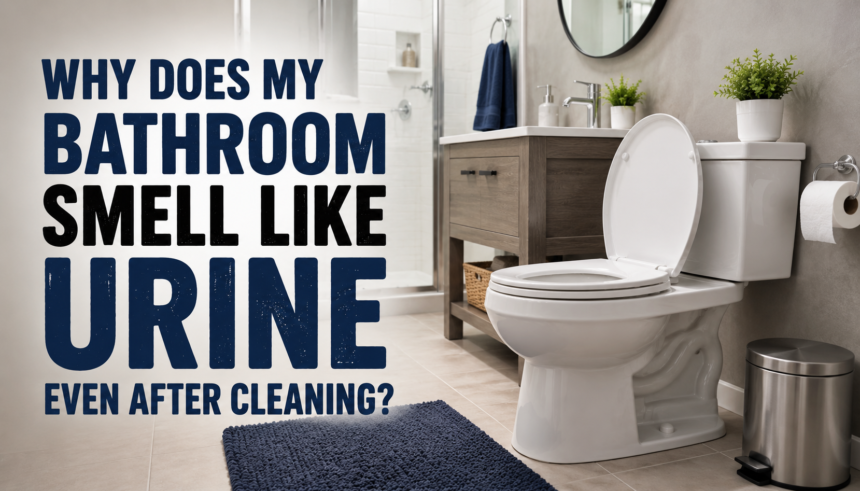
You mop the floor, scrub the toilet, spray your favorite air freshener, and everything looks spotless. Yet a few hours later, that unmistakable, sharp smell creeps back. If you’ve been left wondering why does my bathroom smell like urine even after cleaning, you’re far from alone. This is one of the most common — and most frustrating — household odor problems, and it usually has nothing to do with how hard you’re scrubbing.
The truth is that surface cleaning only deals with what you can see. Urine odor is often trapped in places a mop or spray bottle can never reach: inside grout lines, underneath the toilet base, beneath bath mats, or even inside the subfloor itself. In this guide, we’ll walk through exactly why this happens, where the smell is really coming from, and how to get rid of it permanently — not just mask it for a day.
Understanding the Real Cause: Uric Acid Crystals
To understand why does my bathroom smell like urine even after cleaning, you first need to understand what urine actually leaves behind. Urine isn’t just liquid — it contains uric acid, a compound that, once the moisture evaporates, crystallizes and binds tightly to porous surfaces like grout, unsealed tile, wood, and caulk.
Here’s the key problem: uric acid crystals are not water-soluble. That means regular soap, all-purpose cleaner, or even bleach can rinse away the surface residue, but the crystals embedded deep in porous material stay exactly where they are. When humidity rises — such as after a hot shower — these crystals reabsorb moisture and release ammonia gas, which is what produces that unmistakable urine smell all over again.
In short, you’re not smelling old dirt. You’re smelling a chemical reaction happening inside your bathroom’s building materials every time the air gets humid.
Common Hidden Sources of the Smell
Bathroom odor rarely comes from just one spot. Below are the most common hidden sources, explained in detail.
Grout and Tile Joints
Grout is extremely porous, especially if it was never sealed or if the sealant has worn off over time. Urine splashes — even tiny, invisible droplets — seep into these joints daily. Over months or years, this builds up into a reservoir of uric acid that mopping simply cannot reach.
Base of the Toilet (Wax Ring Seal)
Every toilet sits on a wax ring that creates a watertight seal between the toilet base and the drainpipe. If this ring degrades, cracks, or was installed incorrectly, urine and even wastewater can leak underneath the toilet base with every flush.
This is one of the most overlooked reasons why does my bathroom smell like urine even after cleaning remains unanswered for so many homeowners — the leak is completely hidden from view.
Floor-to-Toilet Caulk Seam
The thin caulk line where the toilet meets the floor is meant to be decorative and protective, but it also creates a perfect trap. Splashes seep underneath this seam, where they sit undisturbed since no cleaning tool can physically get under sealed caulk.
Baseboards and Wall-Floor Junctions
If urine reaches the base of the wall, it can wick into wood baseboards, drywall, or the paint layer. Wood, in particular, absorbs liquid quickly and holds onto odor far longer than tile or ceramic.
Bath Mats and Rugs
Soft, absorbent bath mats sitting near the toilet act like a sponge for splashes. Even after washing, cheap or old mats may retain enough residue in their fibers to keep smelling musty or ammonia-like.
Subfloor or Wood Beneath Tile
In older bathrooms, or those with cracked or loose tiles, urine can seep through grout and tile joints into the plywood subfloor underneath. Wood absorbs and holds odor-causing compounds far more stubbornly than tile, making this one of the hardest sources to fix without removing flooring.
Dry P-Trap or Drain Issues
Every drain has a P-trap — a curved pipe designed to hold a small amount of water that blocks sewer gas from entering your home. If a sink, tub, or floor drain isn’t used often, that water can evaporate, letting sewer gas rise up. This smell is often mistaken for urine odor, even though the toilet itself may be perfectly clean.
Poor Ventilation
Bathrooms without a working exhaust fan or window trap humidity. Since ammonia odor becomes stronger in humid air, poor airflow doesn’t just fail to remove the smell — it actively makes it worse.
Why Regular Cleaners Don’t Work?
This is the part most people miss. Standard bathroom cleaners are designed to cut through soap scum, water stains, and general grime — not to break down uric acid crystals. Below is a quick comparison of common products and why they typically fail.
| Cleaning Product | What It’s Good At | Why It Fails Against Urine Odor |
|---|---|---|
| Soap and Water | Removes visible dirt | Cannot dissolve embedded uric acid crystals |
| Bleach | Disinfects and whitens | Reacts with ammonia but doesn’t break the crystal bond in porous material |
| Vinegar | Cuts mineral deposits, mild odor control | Too weak to penetrate deep grout or subfloor buildup |
| Air Fresheners/Sprays | Temporarily masks smell | Doesn’t clean anything — smell returns once spray fades |
| Enzymatic Cleaners | Breaks down uric acid at a molecular level | Actually eliminates the source instead of masking it |
As the table shows, the only category of product built specifically to solve this problem is an enzymatic cleaner. These use bio-active enzymes that digest uric acid crystals, rather than simply cleaning the surface around them.
Step-by-Step Deep Cleaning Solution
Now that you understand the “why,” here’s the practical “how.” This process targets the real source of the smell rather than covering it up.
Tools and Products You’ll Need
- Enzymatic cleaner (specifically labeled for uric acid or pet/human urine odor)
- Rubber gloves
- Stiff grout brush or old toothbrush
- Microfiber cloths
- Bathroom-safe caulk remover tool
- New silicone caulk
- A wet/dry vacuum (optional, for deep floor cleaning)
Cleaning Grout and Tile Properly
Apply the enzymatic cleaner generously along grout lines and let it sit for the time stated on the label — usually 10 to 15 minutes — so the enzymes have time to break down crystallized residue. Scrub with a stiff brush, then rinse thoroughly. Repeat for heavily affected areas, and allow the grout to fully dry before resealing it with a grout sealant to prevent future absorption.
Cleaning Around the Toilet Base
Remove the toilet cover and clean around the base and floor bolts carefully. If you notice the toilet rocking slightly when pressure is applied, this is a strong sign of a failing wax ring seal, which will need replacement rather than cleaning.
Re-Caulking the Toilet Base
Carefully remove the old caulk using a caulk removal tool, clean and dry the area completely, then apply a fresh, even bead of bathroom-safe silicone caulk. This creates a new barrier that prevents future splashes from seeping underneath.
Washing or Replacing Bath Mats
Wash mats in hot water with a laundry-safe enzymatic detergent. If the smell persists after washing, or the mat is several years old, replacement is usually more effective — and more hygienic — than repeated washing.
Testing the P-Trap and Drains
For rarely used drains, simply pour a cup of water down them every one to two weeks to keep the trap filled and blocking sewer gas. If odor continues from a drain despite this, a plumber may need to inspect for a dry, damaged, or improperly vented trap.
When to Call a Professional?
While most causes can be handled with DIY effort, certain signs point to a bigger underlying issue:
- The toilet visibly rocks or feels unstable when you sit down or clean around it.
- Water stains or discoloration appear on the ceiling below the bathroom (in multi-story homes).
- The smell is accompanied by soft or spongy flooring, which may indicate subfloor rot.
- Odor persists strongly from a drain even after refilling the P-trap.
- You’ve deep-cleaned grout, caulk, and mats, and the smell still hasn’t improved after a week.
In these situations, a licensed plumber or contractor can inspect the wax ring, subfloor, or drainage venting — issues that go beyond surface cleaning.
How to Prevent the Smell From Returning?
Daily and Weekly Cleaning Habits
Wipe down the toilet base and surrounding floor daily, especially in households with young children or male users, since this is where most splashes occur. A quick daily wipe prevents buildup from ever reaching the crystallization stage.
Improving Bathroom Ventilation
Run the exhaust fan during and for 15–20 minutes after every shower. If your bathroom doesn’t have one, even cracking a window or using a small dehumidifier can significantly reduce the humidity that reactivates trapped odor.
Choosing Urine-Resistant Materials
When renovating or replacing flooring, consider large-format tiles with fewer grout lines, epoxy-based grout (which is far less porous than standard cement grout), and washable, quick-dry bath mats. These small material choices make future cleaning dramatically easier.
Frequently Asked Questions (FAQs)
Q: Why does my bathroom smell like urine even after cleaning with bleach? Bleach disinfects surfaces but cannot break down uric acid crystals trapped in porous grout, caulk, or wood — which is why the smell often returns.
Q: How long does it take for enzymatic cleaner to remove urine odor? Most products need 10–15 minutes of contact time per application, but deeply embedded odor may require two or three treatments over several days.
Q: Can a clean-looking toilet still be the source of the smell? Yes. The visible bowl and seat may be spotless while the real source — the wax ring seal or the caulk seam at the base — remains hidden from sight.
Q: Is bathroom urine odor a health concern? Persistent ammonia odor can contribute to poor indoor air quality and, in cases involving hidden leaks, may lead to mold growth, so it’s worth addressing promptly.
Conclusion
If you’ve been asking yourself why does my bathroom smell like urine even after cleaning, the answer almost always lies beneath the surface — in grout, caulk, subflooring, or a compromised toilet seal. Regular cleaners simply aren’t built to break down the uric acid crystals responsible for the odor.
By switching to enzymatic cleaners, addressing hidden trouble spots like the wax ring and caulk seam, and improving ventilation, you can eliminate the smell at its source rather than masking it session after session. With the right approach, a fresh-smelling, truly clean bathroom is well within reach.
Related Articles
How to Measure a Ceiling Fan: The Complete Size Guide for Every Room
Can Lights in Ceiling Tiles: A Complete Installation Guide 2026