

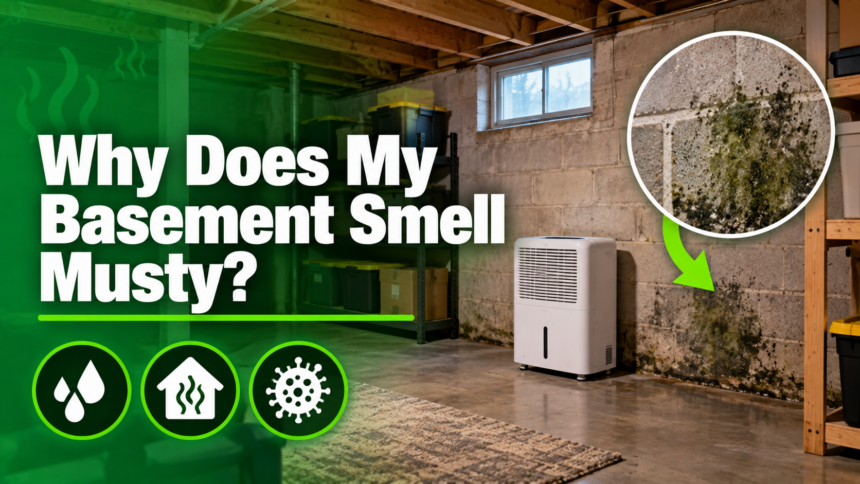
If you have ever walked down your stairs and asked yourself why does my basement smell musty, you are not alone. This smell is one of the most common household complaints, and it almost always points to excess moisture trapped somewhere in the space.
Basements sit below ground level, which naturally makes them cooler, damper, and less ventilated than the rest of the house. Over time, that moisture interacts with building materials, dust, and organic items to create the stale, earthy odor most homeowners describe as musty.
Understanding the real reasons behind this smell is the first step toward fixing it permanently instead of just masking it with air fresheners.
What Causes That Musty Smell in a Basement
A musty smell is usually a sign that mold, mildew, or trapped moisture is present somewhere in the basement environment. It develops when damp conditions combine with organic materials like wood, cardboard, or dust that has settled over time.
High Humidity Levels
Basements naturally hold more humidity because they sit close to the soil, where moisture constantly seeps upward through concrete floors and walls.
When humidity levels stay above fifty percent for extended periods, the air becomes a breeding ground for musty odors. This is especially common during warm and rainy seasons when outdoor moisture levels rise sharply.
Water Seepage and Leaks
Small cracks in the foundation walls or floor allow groundwater to slowly enter the basement, even if you never see standing water.
This slow seepage keeps surfaces damp and encourages odor-causing growth behind the scenes. Poor exterior grading around the home can also direct rainwater straight toward the foundation instead of away from it.
Condensation Issues
When warm, humid air inside the home meets the naturally cooler surfaces of a basement, such as pipes, walls, or concrete floors, condensation forms.
This constant cycle of moisture buildup keeps surfaces perpetually damp, which is one of the quiet contributors people often overlook when asking why does my basement smell musty.
Mold and Mildew Growth
Mold spores are naturally present in almost every home, but they only become a problem when they find moisture to thrive on.
Basements offer the perfect combination of darkness, dampness, and limited airflow, making them a common hiding spot for mold behind drywall, under carpets, or along wooden beams.
Poor Ventilation
Basements are often the least ventilated part of a home, with few windows and limited airflow compared to upper floors. Without proper air circulation, moisture has nowhere to escape, so it lingers in the air and settles into porous materials like wood and fabric, intensifying the musty odor over time.
Sewer Gas or Plumbing Issues
Sometimes the smell is not just dampness but a sign of a plumbing problem. A dry P-trap in a rarely used floor drain can allow sewer gases to rise into the basement, while cracked or leaking sewer lines can release similar unpleasant odors that mimic a musty smell.
Organic Materials and Clutter
Cardboard boxes, old furniture, stacks of paper, and other organic materials absorb moisture from the air and slowly begin to mildew. Clutter also blocks airflow around the room, trapping humidity close to the floor and walls where it has the most impact on air quality.
How to Identify the Exact Source of the Smell

Before fixing the odor, it helps to pinpoint exactly where it is coming from, since different causes require different solutions.
DIY Inspection Checklist
Start by walking through the basement slowly and checking corners, wall bases, and areas around windows for visible dampness or discoloration. Pay close attention to musty smells that get stronger near specific walls or the floor, since this often points directly to the source of moisture intrusion.
Signs Pointing to Moisture, Plumbing, or Mold
A smell that intensifies after rainfall usually suggests water seepage, while a rotten egg type odor points toward plumbing or sewer gas issues. Visible black, green, or white patches on walls or wood strongly suggest active mold growth rather than simple humidity buildup.
When to Call a Professional
If the smell persists despite cleaning and ventilation efforts, or if you notice visible mold covering a large area, it is time to bring in a certified inspector. Professionals use moisture meters and air quality tests to detect hidden problems that are not visible to the naked eye.
Health Risks of Ignoring a Musty Basement
Ignoring the smell does more than affect comfort, since it can directly impact the health of everyone living in the home over time.
Mold Related Respiratory Issues
Prolonged exposure to mold spores can irritate the lungs and airways, leading to coughing, wheezing, and shortness of breath in sensitive individuals. This risk increases significantly in homes where the basement air circulates into the rest of the living space through the HVAC system.
Allergies and Asthma Triggers
For people who already suffer from allergies or asthma, a musty basement can worsen symptoms considerably, triggering frequent flare ups. Common reactions include sneezing, itchy eyes, skin irritation, and tightness in the chest after spending time near the affected area.
Long Term Structural Damage
Beyond health concerns, prolonged moisture exposure weakens wooden support beams, causes rusting in metal fixtures, and deteriorates drywall. If left unaddressed, this steady damage can compromise the structural integrity of the home and lead to expensive repairs down the line.
How to Fix a Musty Basement Smell
Once the source is identified, the right combination of fixes can eliminate the odor and prevent it from returning.
Improving Ventilation
Installing exhaust fans or simply opening basement windows on dry days allows fresh air to circulate and pushes trapped moisture out of the space. Running a ceiling fan or portable fan periodically also helps prevent stagnant pockets of humid air from settling in corners.
Using a Dehumidifier
A dehumidifier actively pulls excess moisture from the air, which is one of the most effective long term solutions for a musty smell. Choosing a unit sized correctly for your basement’s square footage and setting it to maintain around forty five to fifty percent humidity produces the best results.
Sealing Cracks and Leaks
Small foundation cracks can often be sealed using hydraulic cement or masonry sealant available at most hardware stores. For larger or recurring leaks, professional waterproofing services provide a more permanent solution by addressing the water intrusion at its source.
Fixing Drainage Problems
Ensuring gutters are clean and downspouts direct water at least several feet away from the foundation prevents rainwater from pooling near basement walls. Regrading the soil around the home so it slopes away from the foundation further reduces the risk of water seepage.
Removing Mold Safely
Small patches of mold on non-porous surfaces can typically be cleaned using a mixture of water and mild detergent, followed by thorough drying.
Larger infestations, especially on porous materials like drywall or carpet, are best left to professional remediation teams who can safely remove and dispose of affected materials.
Addressing Plumbing or Sewer Issues
Pouring water into rarely used floor drains helps refill dry P-traps and stops sewer gas from escaping into the basement. If the smell persists after this simple fix, a plumber should inspect the sewer lines for cracks or blockages that may need repair.
Decluttering and Storage Tips
Switching from cardboard boxes to sealed plastic storage bins prevents moisture absorption and protects belongings from mildew. Elevating stored items a few inches off the floor using shelving also improves airflow and reduces contact with damp concrete surfaces.
Preventing Future Musty Odors
Once the current smell is resolved, ongoing maintenance keeps it from coming back and protects the basement long term.
Routine Maintenance Checklist
Regularly inspecting for leaks, checking dehumidifier performance, and cleaning gutters each season helps catch small issues before they grow into bigger problems. A simple quarterly walkthrough of the basement is often enough to maintain a fresh, dry environment.
Best Humidity Levels to Maintain Year Round
Keeping indoor humidity between thirty and fifty percent throughout the year significantly reduces the chances of mold growth and musty odors returning. A basic hygrometer, which is inexpensive and easy to find, allows homeowners to monitor these levels accurately at all times.
Waterproofing Options
Interior waterproofing methods, such as sealant coatings and interior drainage systems, offer a budget friendly way to manage minor moisture issues. Exterior waterproofing, while more costly and labor intensive, provides a more comprehensive long term barrier against water intrusion from outside the foundation.
Smart Moisture Monitors
Modern smart sensors can track humidity and alert homeowners directly through a smartphone app when levels rise beyond a safe threshold. These devices make it far easier to catch moisture problems early, long before a musty smell has a chance to develop.
Comparing Common Solutions at a Glance
| Solution | Best For | Approximate Cost Level |
| Dehumidifier | General humidity control | Low to Moderate |
| Crack sealant | Minor foundation cracks | Low |
| Exterior waterproofing | Persistent water intrusion | High |
| Mold remediation service | Large mold infestations | Moderate to High |
| Drainage regrading | Water pooling near foundation | Moderate |
When to Call a Professional
While many musty basement issues can be resolved through DIY methods, certain situations genuinely call for expert intervention.
Signs the Problem Is Beyond DIY Fixes
If mold keeps returning despite repeated cleaning, or if the smell is accompanied by visible water stains and peeling paint, the underlying issue is likely more serious than surface moisture. These recurring signs usually mean a structural or drainage problem needs professional attention.
Choosing a Waterproofing or Mold Remediation Expert
Look for licensed and insured professionals with verified reviews and experience specifically in basement waterproofing or mold remediation. Requesting a detailed inspection report before committing to any service ensures transparency about the scope and cost of the work involved.
What Inspections and Tests Typically Involve
Professional inspections often include moisture meter readings, air quality testing, and a visual assessment of the foundation for cracks or weak points. Some specialists also use thermal imaging cameras to detect hidden moisture behind walls that would otherwise go unnoticed.
Conclusion
A musty basement smell is rarely just a minor annoyance, since it usually signals an underlying moisture or ventilation problem that deserves attention. B
y identifying the exact cause, whether it is humidity, seepage, poor airflow, or plumbing related, homeowners can apply the right fix rather than relying on temporary cover ups. Consistent maintenance, proper humidity control, and timely repairs go a long way in keeping the space fresh, dry, and safe for everyone in the home.
FAQs
Is a musty basement smell dangerous?
It can become a health concern over time, especially if the smell is caused by active mold growth affecting air quality.
Can I remove mold smell without removing mold?
No, masking the smell with air fresheners does not solve the underlying issue, since the mold will continue growing and releasing odor.
How long does it take to fix a musty basement?
Simple fixes like ventilation and dehumidifiers show results within days, while structural repairs may take several weeks depending on the extent of damage.
Do air fresheners actually help?
Air fresheners only mask the odor temporarily and do nothing to address the moisture or mold causing the smell in the first place.
What humidity level prevents mustiness?
Maintaining indoor humidity between thirty and fifty percent is generally effective in preventing musty odors from developing in a basement.
Related Articles
How to Measure Window Screens: Complete Guide 2026
Can You Put Metal Roofing Over Shingles?
Metal Roof Overhang: A Complete Guide to Designing Effective Overhangs