

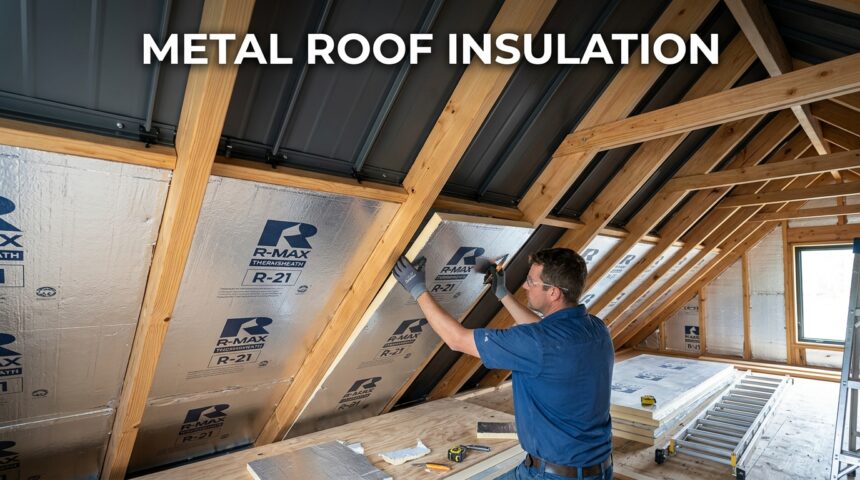
Metal roof insulation plays a major role in keeping a building comfortable, energy-efficient, and protected from moisture damage. Since metal naturally conducts heat faster than other roofing materials, an uninsulated metal roof can lead to higher energy bills, condensation problems, and excessive indoor noise during rain or hail.
This guide walks you through everything you need to know, from the different insulation types available to installation methods, costs, and climate-based recommendations.
Whether you are building a new metal roof or upgrading an existing one, understanding proper insulation will help you make a smarter, longer-lasting investment.
What Is Metal Roof Insulation?
Metal roof insulation refers to the materials and techniques used to reduce heat transfer through a metal roofing system. It helps regulate indoor temperature, prevents condensation, and improves overall energy performance.
What Is Metal Roof Insulation?
In simple terms, metal roof insulation is a protective layer added above, below, or between the roof structure and the metal panels. Its job is to slow down the movement of heat, keeping warm air inside during winter and outside during summer.
Without this layer, a metal roof would transfer outdoor temperatures almost instantly into the building below.
Why Metal Roofs Need Special Insulation
Metal is a highly conductive material, which means it heats up and cools down much faster than wood, asphalt, or tile roofing.
This rapid temperature change can cause condensation to form on the underside of the panels, leading to rust, mold, or wood rot over time. Proper insulation acts as a barrier that controls this temperature swing and protects the structure underneath.
Benefits of Insulating a Metal Roof
Adding insulation to a metal roof offers far more than just temperature control. It improves comfort, protects the building, and adds long-term financial value to the property.
Energy Efficiency and Cost Savings
A well-insulated metal roof significantly reduces the workload on heating and cooling systems. Since less heat escapes in winter and less enters during summer, homeowners typically notice a visible drop in their monthly utility bills within the first few months of installation.
Temperature Control
Insulation helps maintain a consistent indoor temperature throughout the year. Instead of feeling extreme heat in summer or cold drafts in winter, the interior stays balanced, making living or working spaces far more comfortable regardless of the season outside.
Condensation and Moisture Prevention
One of the most important reasons to insulate a metal roof is moisture control. When warm indoor air meets a cold metal surface, condensation forms. Over time, this trapped moisture can damage insulation, wooden supports, and ceiling materials, so a proper vapor barrier paired with insulation is essential.
Noise Reduction
Metal roofs are known for amplifying sound during rainfall or hailstorms. Insulation materials, especially mineral wool and spray foam, absorb sound vibrations before they travel into the living space, resulting in a noticeably quieter indoor environment.
Increased Property Value
Homes and commercial buildings with properly insulated metal roofs are often seen as more energy-efficient and lower maintenance. This makes the property more appealing to future buyers and can increase resale value over time.
Types of Metal Roof Insulation
There are several insulation materials available for metal roofs, each offering different benefits depending on budget, climate, and building structure. Choosing the right type depends on your specific performance needs.
Rigid Foam Board Insulation
Rigid foam boards, such as polyiso, XPS, and EPS, offer a high R-value per inch of thickness. These boards are commonly installed above the roof deck, creating a continuous thermal barrier that minimizes heat loss through structural framing.
Spray Foam Insulation (SPF)
Spray polyurethane foam expands on application, filling gaps and sealing air leaks effectively. It comes in open-cell and closed-cell varieties, with closed-cell offering higher density and better moisture resistance, making it a popular choice for below-deck applications.
Fiberglass Batt Insulation
Fiberglass batts are a budget-friendly option, typically installed between purlins or rafters. While not as effective at air sealing as spray foam, they still provide decent thermal resistance and are relatively easy to install in most roofing structures.
Reflective or Radiant Barrier Insulation
This type of insulation uses a foil-faced material that reflects radiant heat instead of absorbing it. It works exceptionally well on metal roofs in hot climates, helping to keep attic and interior spaces cooler during peak sunlight hours.
Mineral Wool Insulation
Mineral wool is valued for its fire resistance and excellent sound-dampening properties. It performs well in both hot and cold climates and adds an extra layer of safety in buildings where fire protection is a priority.
Comparison of Insulation Types
The table below gives a quick side-by-side look at how these materials compare in terms of performance and typical use cases.
| Insulation Type | R-Value per Inch | Best For | Moisture Resistance |
| Rigid Foam Board | 5.5–6.5 | Continuous above-deck insulation | High |
| Spray Foam (Closed-Cell) | 6.0–7.0 | Air sealing and below-deck use | Very High |
| Fiberglass Batt | 2.9–3.8 | Budget installations | Low |
| Reflective Barrier | N/A (reflective) | Hot climates | Moderate |
| Mineral Wool | 3.0–3.3 | Fire safety and soundproofing | Moderate |
Understanding R-Value for Metal Roofs
R-value measures how well an insulation material resists heat flow. The higher the R-value, the better the material performs at keeping indoor temperatures stable.
What Is R-Value?
R-value indicates a material’s thermal resistance capability. A higher number means the insulation is more effective at slowing down heat transfer, which directly impacts how efficiently a building maintains its indoor temperature throughout the year.
Recommended R-Value by Climate Zone
Colder regions generally require a higher R-value, often between R-30 and R-38, to keep heat from escaping during winter. Warmer climates can perform well with a slightly lower R-value, typically around R-13 to R-21, combined with reflective barriers for added heat control.
Common R-Value Mistakes to Avoid
Many homeowners under-insulate their roofs to cut initial costs, which leads to higher long-term energy expenses. Another common mistake is ignoring thermal bridging, where heat escapes through metal fasteners or framing that were not properly insulated during installation.
Metal Roof Insulation Installation Methods
Insulation can be installed in different positions within the roofing system, depending on the building’s design and performance goals. Selecting the right method ensures maximum efficiency and durability.
Above-Deck Insulation
This method places a continuous insulation layer directly on top of the roof deck, beneath the metal panels. It minimizes thermal bridging and provides one of the most efficient insulation layouts available for metal roofing systems.
Between Purlins or Rafters
Insulation installed between the structural framing members is a common and cost-effective method. Batt or blown-in insulation fits snugly into these spaces, though some heat loss can still occur through the exposed framing.
Below-Deck Insulation
Spray foam or rigid panels attached to the underside of the roof deck create an effective thermal seal from the interior side. This method works particularly well for retrofitting older metal roofs without removing the existing panels.
Importance of Proper Ventilation
Regardless of the installation method chosen, proper roof ventilation is essential to prevent trapped moisture. Good airflow helps insulation perform at its best and significantly reduces the risk of condensation-related damage over time.
Step-by-Step Installation Process
Installing metal roof insulation involves careful preparation and precise application to ensure long-lasting performance. Following the right sequence prevents costly mistakes down the line.
Tools and Materials Needed
Before starting, gather insulation boards or rolls, a vapor barrier, sealing tape, fasteners, a utility knife, and safety equipment such as gloves and goggles. Having everything ready beforehand makes the installation process smoother and more efficient.
Preparing the Roof Surface
The roof deck should be cleaned thoroughly and inspected for damage before insulation begins. Any existing leaks, rust spots, or structural issues must be repaired first, since insulating over unresolved problems can trap moisture and worsen damage.
Installing the Insulation Layer
Once the surface is ready, insulation panels or batts are placed according to the chosen method, whether above-deck, between rafters, or below-deck. Each piece should fit snugly without gaps to avoid weak points in thermal performance.
Sealing and Vapor Barrier Installation
After the insulation is placed, a vapor barrier is added to block moisture from penetrating the layer. All seams and edges should be sealed carefully with tape or adhesive to maintain an airtight and moisture-resistant barrier.
Common Mistakes to Avoid
Skipping the vapor barrier or leaving gaps between insulation panels are frequent errors that reduce overall effectiveness. Choosing a material that does not match the local climate can also lead to poor performance and higher energy costs later.
Cost of Metal Roof Insulation
Insulation costs vary widely depending on material choice, roof size, and labor requirements. Understanding these factors helps homeowners budget more accurately for their project.
Average Cost by Insulation Type
Fiberglass batt insulation tends to be the most affordable option, while spray foam and rigid board insulation cost more due to their higher performance and installation complexity. The table below offers a general cost comparison.
| Insulation Type | Estimated Cost per Sq. Ft. |
| Fiberglass Batt | $0.50 – $1.50 |
| Rigid Foam Board | $1.00 – $2.50 |
| Reflective Barrier | $0.50 – $1.00 |
| Spray Foam | $1.50 – $3.50 |
| Mineral Wool | $1.00 – $2.00 |
Factors That Affect Cost
Roof size, regional labor rates, material quality, and the complexity of the roof structure all influence the final price. Steeper or larger roofs generally require more labor time, which increases overall installation costs.
DIY vs Professional Installation Costs
DIY installation can save on labor expenses but requires proper knowledge to avoid costly mistakes, especially with vapor barrier sealing. Professional installation costs more upfront but typically comes with better performance guarantees and long-term reliability.
Choosing the Right Insulation for Your Climate
Climate plays a significant role in determining which insulation type will perform best. Matching the material to your regional weather conditions ensures maximum energy efficiency year-round.
Best Insulation for Hot Climates
Reflective barriers and radiant insulation work best in hot regions, as they reflect heat away from the building instead of absorbing it. This keeps indoor spaces noticeably cooler even during peak summer temperatures.
Best Insulation for Cold Climates
Colder regions benefit most from high R-value materials like closed-cell spray foam or rigid foam board. These options retain heat effectively, reducing strain on heating systems during long winter months.
Best Insulation for Mixed or Humid Climates
Areas with fluctuating weather conditions often perform best with a combination approach, such as rigid foam paired with a reflective layer. This balances both heat retention and heat reflection depending on seasonal changes.
Maintenance and Longevity Tips
Regular maintenance ensures that metal roof insulation continues to perform efficiently for many years. Catching small issues early prevents costly repairs later.
Signs Your Roof Insulation Needs Replacing
Noticeable increases in energy bills, visible condensation, or musty odors inside the building are common warning signs. Sagging insulation or water stains on ceilings also indicate that the insulation may no longer be functioning properly.
Regular Inspection Checklist
Homeowners should inspect their roof insulation at least twice a year, ideally before summer and winter seasons. Checking for moisture buildup, pest activity, and physical damage helps maintain consistent performance throughout the year.
Extending the Lifespan of Roof Insulation
Keeping gutters clean, ensuring proper attic ventilation, and addressing roof leaks promptly all contribute to a longer insulation lifespan. Scheduling professional inspections every few years can also catch hidden issues before they escalate.
Frequently Asked Questions
Does a metal roof need insulation?
Yes, insulation is essential for metal roofs since metal conducts heat quickly, and without it, buildings experience temperature swings, condensation issues, and higher energy costs.
What is the best insulation for a metal roof?
The best choice depends on climate and budget, but closed-cell spray foam and rigid foam boards generally offer the highest performance for most regions.
Can I insulate an existing metal roof?
Yes, below-deck insulation methods like spray foam are commonly used to retrofit existing metal roofs without removing the current panels.
How long does metal roof insulation last?
Most quality insulation materials last between 20 to 30 years when properly installed and maintained, though this can vary based on material type and climate exposure.
Conclusion
Metal roof insulation is a valuable investment that improves energy efficiency, prevents moisture damage, and enhances indoor comfort throughout the year.
By choosing the right material for your climate and following proper installation practices, you can significantly extend the life of your roof while reducing long-term energy costs. Regular maintenance and timely inspections further ensure that your insulation continues performing at its best for decades to come.
Related Articles
How to Replace Screening in Window Screens: Complete Guide 2026
How Deep Is a Bathroom Vanity? Complete Guide 2026
What Are the Measurements of a Standard Shower Curtain?
Commercial Garage Door Installation: A Complete Guide for Business Owners