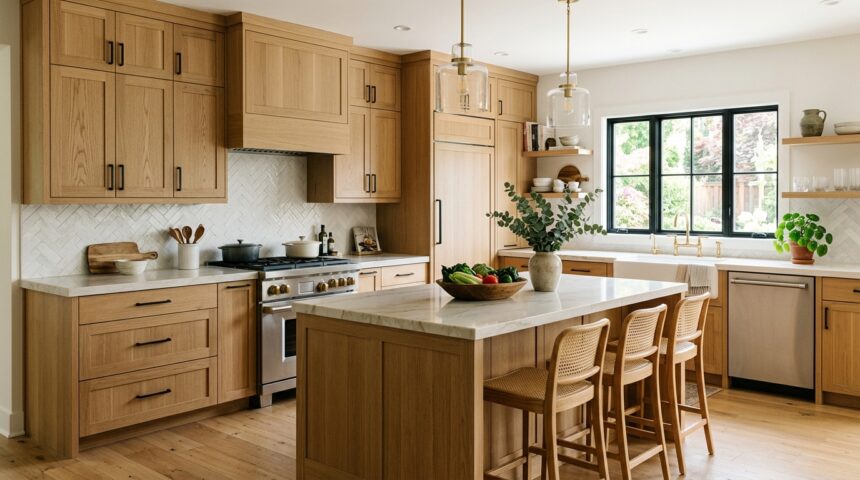
White oak cabinets have become one of the most sought-after choices in kitchen and bathroom design due to their natural beauty, durability, and versatility. Homeowners renovating their spaces often turn to this material because it complements a wide range of interior styles while offering long-lasting performance.
This guide explores everything about white oak cabinets, from their unique characteristics to maintenance tips and cost factors.
What Are White Oak Cabinets?
White oak cabinets are cabinetry pieces crafted from white oak wood, known for its light color tone, prominent grain patterns, and exceptional strength. This hardwood has been used in furniture and cabinetry for generations due to its reliable performance.
Characteristics of White Oak Wood
White oak wood features a light tan to golden brown color with distinctive grain lines that create a natural, textured appearance. Unlike some other hardwoods, it has closed pores, which make it more resistant to moisture absorption.
This natural resistance makes it particularly suitable for kitchen environments where humidity levels fluctuate.
Difference Between White Oak and Red Oak
While both white oak and red oak are popular cabinet materials, white oak has a straighter grain pattern and a slightly cooler tone compared to the reddish hue of red oak. White oak also offers better resistance to water damage due to its tighter wood structure.
These differences often influence homeowners when choosing between the two options for their cabinetry needs.
Benefits of Choosing White Oak Cabinets
White oak cabinets offer a combination of aesthetic appeal and practical advantages that make them a popular choice among homeowners and designers alike.
Durability and Longevity
White oak is known for its exceptional strength and resistance to wear, making white oak cabinets a long-term investment for any home.
This hardwood can withstand daily use in kitchens without showing significant signs of damage over time. Many homeowners find that these cabinets maintain their structural integrity for decades with proper care.
Natural Aesthetic Appeal
The light color and visible grain pattern of white oak cabinets bring a warm, natural look to kitchens and bathrooms without overwhelming the space. This aesthetic works well with both traditional and contemporary interior designs, making it a versatile choice. The wood’s neutral undertones also allow for easy pairing with various countertop and wall color combinations.
Moisture Resistance
Due to its closed-pore structure, white oak naturally resists moisture better than many other wood types, reducing the risk of warping or swelling in humid kitchen conditions.
This property makes white oak cabinets particularly practical for areas near sinks or dishwashers. Proper sealing further enhances this natural resistance for long-term protection.
Popular Styles of White Oak Cabinets
White oak cabinets can be customized into various styles to match different interior design preferences and functional requirements.
Shaker Style Cabinets
Shaker style white oak cabinets feature simple, recessed panel doors with clean lines, making them a timeless choice for both modern and traditional kitchens.
This style highlights the natural grain of white oak without unnecessary detailing. Its minimalist design has remained popular across various design trends over the years.
Slab Front Cabinets
Slab front cabinets offer a smooth, flat door design that emphasizes the natural wood grain of white oak in a more modern, streamlined appearance.
This style is particularly popular in contemporary kitchen designs that favor simplicity and clean aesthetics. The absence of paneling allows the wood’s natural beauty to stand out fully.
Rustic and Textured Finishes
Rustic white oak cabinets often include wire-brushed or textured finishes that enhance the wood’s natural grain pattern for a more organic, farmhouse-style look.
These finishes add depth and character, making them suitable for homes with a cozy, traditional aesthetic. This style works particularly well when paired with natural stone countertops.
Maintenance and Care for White Oak Cabinets
Proper maintenance ensures that white oak cabinets retain their beauty and functionality for many years without significant deterioration.
Cleaning Best Practices
Regular cleaning with a soft, damp cloth and mild soap solution helps maintain the appearance of white oak cabinets without damaging their finish.
Harsh chemical cleaners should be avoided as they can strip protective coatings over time. Wiping spills immediately also prevents potential staining on the wood surface.
Protecting Against Sun Damage
Prolonged exposure to direct sunlight can cause white oak cabinets to fade or change color slightly over time, especially near windows.
Using window treatments or UV-protective coatings can help minimize this effect. Rotating decorative elements occasionally can also prevent uneven fading across cabinet surfaces.
Cost Factors for White Oak Cabinets
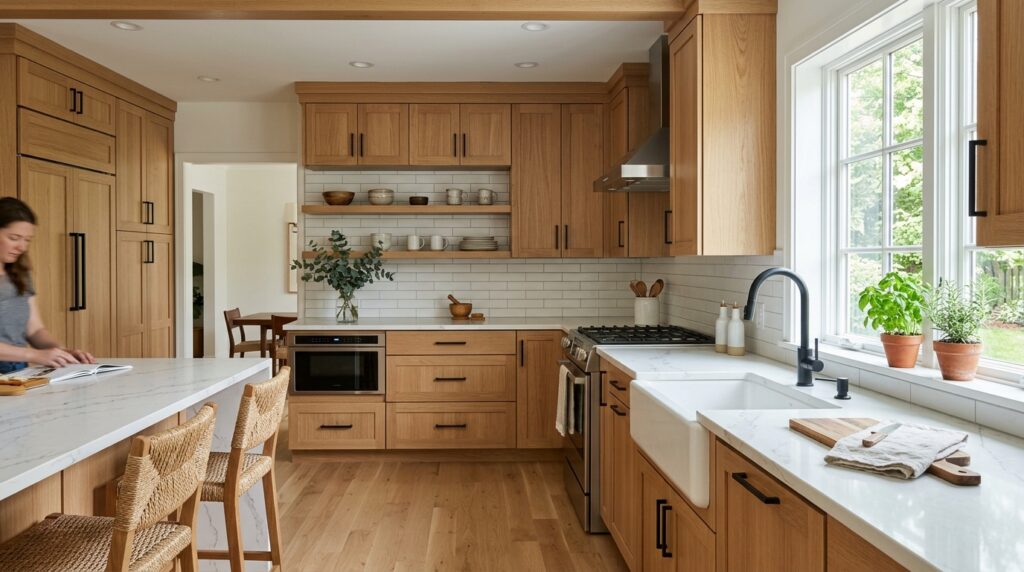
The overall cost of white oak cabinets depends on several factors that homeowners should consider before making a purchase decision.
Cabinet Style and Customization
Custom-built white oak cabinets with intricate designs or specialized finishes generally cost more than standard, mass-produced options.
Homeowners seeking unique styles or specific dimensions should expect higher pricing due to the additional labor involved. Semi-custom options often provide a balance between affordability and personalization.
Installation and Labor Costs
Professional installation costs can vary based on kitchen size, layout complexity, and regional labor rates, adding to the overall investment in white oak cabinets.
Hiring experienced installers ensures proper fitting and long-term durability of the cabinetry. While DIY installation can reduce costs, it requires adequate skill to avoid structural issues.
Comparison of White Oak Cabinet Styles
| Style | Best For | Maintenance Level | Price Range |
| Shaker | Traditional/Modern | Low | Moderate |
| Slab Front | Contemporary | Low | Moderate to High |
| Rustic/Textured | Farmhouse Style | Moderate | Moderate |
Competitor Content Analysis
Many existing articles about white oak cabinets focus primarily on aesthetics while overlooking practical details like moisture resistance, maintenance routines, or cost-influencing factors. Several competitor pages also fail to compare different cabinet styles in a clear, structured format, leaving readers with limited guidance for decision-making.
This guide addresses these gaps by combining design insights, care tips, and cost comparisons into one comprehensive resource.
Frequently Asked Questions
Are white oak cabinets a good choice for kitchens?
Yes, their durability and natural moisture resistance make white oak cabinets an excellent choice for kitchen environments.
Do white oak cabinets require special maintenance?
Basic cleaning with mild soap and avoiding harsh chemicals is generally sufficient to maintain their appearance and durability.
How do white oak cabinets compare to painted cabinets?
White oak cabinets showcase natural wood grain and texture, while painted cabinets offer a more uniform, solid color appearance without visible wood patterns.
Conclusion
White oak cabinets offer a perfect balance of durability, natural beauty, and versatility, making them a valuable addition to any kitchen or bathroom renovation. Understanding the different styles, maintenance requirements, and cost factors helps homeowners make an informed decision suited to their needs. With proper care, white oak cabinets can remain a timeless and functional feature in any home for many years to come.
Related articles
How to Winterize Your Garden Complete guide 2026
Are Toilet Seats Universal? Complete Guide
How to Program a Garage Door Opener? Step-by-Step Guide for All Brands
How Do You Hang Wall Cabinets? A Complete Step-by-Step Guide
How to Hang a Rug on the Wall: Step-by-Step Methods for Every Rug Type