
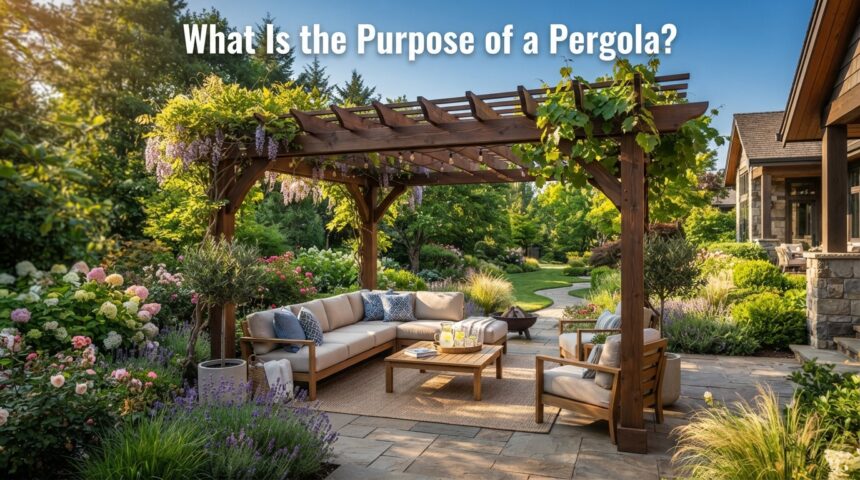
So, what is the purpose of a pergola? In simple terms, a pergola gives an outdoor area shade, shape, and character without closing it in. Its open roof softens the sun, its posts mark out a defined zone, and its beams hold up climbing plants and useful fixtures.
Homeowners choose one to turn a bare patio, deck, or lawn into a place that feels finished and inviting. This guide explains each purpose in plain language, then covers where pergolas work best, which materials and styles suit different needs, and what to check before you build.
What Is a Pergola?
A pergola is a freestanding or attached outdoor structure built from upright posts that carry horizontal beams and cross rafters.
Unlike a solid-roofed shelter, its top stays open, so light and air pass through the gaps. The idea comes from old European and Mediterranean gardens, where vine-covered frames shaded walkways and courtyards.
Most pergolas share the same basic parts:
- Posts: vertical supports anchored to footings or a solid surface.
- Beams: horizontal members that rest on top of the posts.
- Rafters: cross pieces laid over the beams to form the open roof.
- Slats or lattice: an optional layer that adds shade and plant support.
The Main Purposes of a Pergola
A pergola does several jobs at once, which is why it suits so many yards. The eight purposes below explain what makes it worth building.
Provide Shade
The spaced rafters filter harsh sun instead of blocking it completely. This keeps the area cooler while still letting natural light in. Many people find this gentler shade more pleasant than a solid roof.
Create an Outdoor Living Space
A pergola turns a flat patio or lawn into a room with a clear purpose. Posts and beams form the outline, so dining, lounging, or reading areas feel intentional. Furniture and rugs then complete the space.
Support Climbing Plants
Vines such as wisteria, grapes, jasmine, and climbing roses grow easily over the frame. Their leaves add natural cover that changes with the seasons. Flowers and fragrance also make the structure feel alive.
Add Beauty and Curb Appeal
The structure works as a focal point that draws the eye and adds height to a flat yard. Its lines can echo your home’s style, whether rustic, classic, or modern. A well-placed pergola makes the whole property look more polished.
Define and Separate Spaces
In a large yard, a pergola marks one zone apart from another, such as a dining spot beside a lawn. It creates a sense of privacy without heavy walls. Curtains or screens can strengthen that effect.
Create Walkways and Entrances
Placed over a path or gate, a pergola frames the route and guides people forward. It builds a welcoming entrance and hints at what lies ahead. Framed views make ordinary garden paths feel special.
Increase Property Value
Extra usable outdoor space is a feature many buyers look for. A quality pergola adds visible appeal and suggests a well-kept property. Value gains vary by market, so treat it as a benefit rather than a guaranteed return.
Provide a Base for Accessories
The beams offer secure points for lights, ceiling fans, outdoor heaters, speakers, and hanging plants. This extends evening use and lets you adjust comfort through the year. Mounting fixtures overhead also keeps the floor clear.
Where a Pergola Works Best
The purpose of a pergola shifts slightly depending on where you place it. The same frame can shade a table in one spot and guide visitors along a path in another.
| Area | Main Purpose |
| Backyard patio | Shaded dining and relaxing |
| Deck | Adds structure and comfort to an open platform |
| Poolside | Shade, privacy, and a lounge zone |
| Garden | Plant support plus a quiet seating spot |
| Front entrance | A welcoming approach to the door |
| Outdoor kitchen | Partial cover for a defined cooking zone |
| Commercial spaces | Covered seating for cafés, restaurants, and hotels |
Pergola Materials and How They Affect Purpose
The material you choose changes how well a pergola does its job, because it affects upkeep, lifespan, and appearance. A wooden frame suits a garden full of vines, while metal fits a modern patio that needs little care.
| Material | Strength | Point to Consider |
| Wood | Natural look, ideal for climbing plants | Needs regular sealing or staining |
| Vinyl | Low maintenance and a clean finish | Fewer custom looks available |
| Aluminum | Lightweight, rust resistant, modern | Can feel less natural |
| Steel | Very strong and long lasting | Heavier and needs rust protection |
| Fiberglass | Light and weather resistant | Limited range of styles |
Pergola Styles and What They Are Best For
Style decides how the structure behaves in sun, rain, and wind. Picking one that matches your main goal prevents disappointment later.
| Style | Best For |
| Freestanding | Placing shade anywhere in the yard |
| Attached | Extending a house or existing patio |
| Louvered | Adjusting sun and rain with angled slats |
| Retractable canopy | Shade only when you want it |
| Arched or curved | Gardens and decorative paths |
| Minimalist | Contemporary homes with clean lines |
Ways to Make a Pergola Protect More
An open roof means basic protection only, but simple upgrades can change that. Each addition below suits a different weather problem.
- Shade cloth or a retractable canopy: blocks more sun during the hottest hours and folds back when you want light.
- Side curtains: add privacy and cut wind, which helps in exposed yards.
- Louvered or clear roof panels: keep light rain off the seating area while preserving the open feel.
Pergola vs. Similar Structures
People often confuse a pergola with other outdoor structures, but the roof and scale set them apart. Knowing the difference helps you choose the right one.
| Structure | Roof Type | Key Difference |
| Pergola | Open slats | Filters light and keeps an airy feel |
| Gazebo | Solid roof | Full cover, often with enclosed sides |
| Pavilion | Solid, larger roof | Built for big gatherings |
| Arbor | Small open frame | Marks an entry and supports vines |
| Patio cover or awning | Solid or fabric | Attached shade with less design impact |
Things to Consider Before Building a Pergola
Good planning ensures the structure delivers the purpose you had in mind. A few early decisions save money and rework.
- Your main goal: shade, plants, style, or extra space.
- Size and location: enough room for furniture and movement around it.
- Sun and wind: the direction of afternoon sun and any strong gusts.
- Budget: materials, installation, and future upkeep.
- Permits and HOA rules: many areas require approval, especially for attached designs.
- DIY or professional: simple kits suit confident builders, while large or attached designs often need an expert.
Common Mistakes and Maintenance Tips
Most problems come from rushed choices rather than the pergola itself. Avoiding a few errors keeps the structure useful for years.
Common mistakes include choosing a size that feels cramped, ignoring sun direction, using a material unsuited to your climate, and weak anchoring that fails in wind. Planting heavy or invasive vines on a light frame is another frequent issue.
Upkeep is straightforward. Clean the frame according to its material, reseal or restain wood every couple of years, check joints and posts after storms, and trim vines so they do not overload the beams.
Frequently Asked Questions
Does a pergola give full shade?
Not by itself, because the open roof only filters sunlight. Adding a canopy, shade cloth, or dense vines increases coverage.
Can a pergola protect against rain?
A standard design offers little rain protection. Louvered roofs and retractable canopies solve this problem.
Is a pergola worth the money?
It is worth it if you will use the space often for dining, relaxing, or gardening. The value depends on your climate, budget, and how you plan to use it.
Do I need a permit to build one?
Requirements differ by location and by whether the structure is attached to your home. Check local building rules and any HOA guidelines before starting.
What is the best plant for a pergola?
Wisteria, grapevines, jasmine, and climbing roses are popular choices. Pick one that suits your climate and can be trimmed easily.
Conclusion
Understanding what is the purpose of a pergola makes it easier to decide whether one fits your yard. It offers gentle shade, defines living areas, supports plants, and adds lasting visual appeal.
Choose the material, style, and upgrades that match your main goal, and check local rules before you build. With sound planning, a pergola becomes one of the most useful and attractive features outdoors.
Related Articles
What Is a Rim Joist? Complete Guide
How Much Grout Do I Need? A Simple Guide to Getting It Right
How Long Does Grout Take to Dry? Full Guide by Grout Type
Can You Grout Over Grout? Full Guide & Expert Tips
How to Clean Stainless Cooktop: Easy Steps for a Spotless Finish