
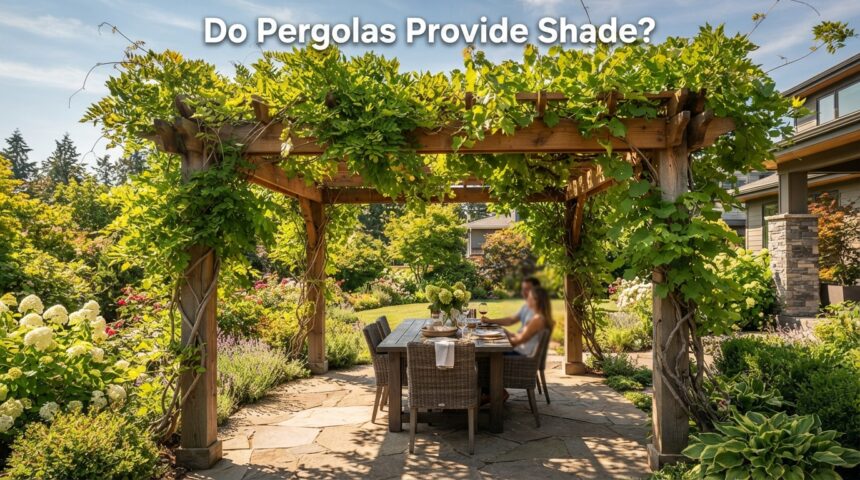
Yes, pergolas provide shade, but a basic one does not give full cover like a solid roof.An open-rafter pergola usually blocks about 30 to 70 percent of direct sunlight.The exact amount depends on slat spacing, height, and the direction of the sun.Adding a canopy, louvers, or climbing plants can raise the shade level a lot.Solid and louvered roofs give the most shade of all pergola styles.The right choice depends on how much sun you want to block.
Many homeowners build a pergola hoping for a cool, comfortable corner in the yard. So the question “do pergolas provide shade” comes up often, and the honest answer is that it depends. This guide explains how pergolas create shade, what changes the result, and how to get the amount of shade you want.
What Is a Pergola?
A pergola is an outdoor structure with an open, slatted top. Knowing how it is built helps explain why its shade works the way it does.
Basic Parts of a Pergola
A pergola has vertical posts, horizontal beams, and cross rafters on top. Some designs add thin slats above the rafters. The gaps between these parts decide how much sunlight passes through.
Pergola vs. Gazebo
A gazebo normally has a full, solid roof, so it blocks nearly all sun and rain. A pergola keeps its top open by design. That is why a plain pergola feels lighter and airier but gives less shade.
How Pergolas Create Shade
Shade under a pergola comes from the roof parts blocking some of the sun’s rays. The rest of the light slips through the gaps.
Slats and Rafters
Each rafter casts a strip of shadow on the ground below it. When rafters sit close together, those strips overlap and the area feels darker. Wide gaps leave more bright patches.
Dappled Light
The mix of shadow and light under an open pergola is called dappled light. It feels soft and pleasant and does not turn the space gloomy. However, it also means you still get some direct sun on your skin.
Shade Through the Day
Shade moves as the sun travels across the sky. Morning and evening sun comes in at a low angle, so shadows are long and can miss the seating area. At midday the sun is high and shadows fall straight down, which usually gives the best cover.
Factors That Affect Pergola Shade
Two pergolas that look alike can give very different shade. Small design and location choices make the difference.
Slat Spacing and Thickness
Closer and deeper slats block more light than thin, widely spaced ones. Even a small change in gap size can noticeably change the shade. Thicker beams also add more shadow.
Height and Direction
A lower pergola throws darker shade on a smaller area, while a taller one spreads lighter shade wider. The way the pergola faces also matters. Slats running east to west usually block more midday sun than slats running north to south.
Season and Surroundings
The sun sits higher in summer and lower in winter, so shade changes across the year. Nearby trees, walls, and fences can add extra shade or block it in unexpected ways. Local climate matters too, since strong sun makes gaps feel more noticeable.
Types of Pergolas and Their Shade Levels
The roof style is the biggest factor in shade. The table below gives a quick comparison.
| Pergola Type | Shade Level | Best For |
| Open-rafter | Light to medium | Gardens, mild climates |
| Closely spaced slats | Medium | Patios and dining areas |
| Fabric or retractable canopy | Medium to high | Flexible sun control |
| Louvered roof | High, adjustable | Hot climates, all-year use |
| Solid roof | Very high | Full cover and rain protection |
Open-Rafter Pergolas
This is the classic style. It gives light, filtered shade and keeps the space open and breezy. It works well if you want to soften the sun rather than block it.
Canopy and Retractable Pergolas
A fabric cover stretched over the top gives much more shade. Retractable versions can be pulled back on cooler days. This gives you control without changing the structure.
Louvered Pergolas
Louvers are angled roof blades that tilt open or closed. You can let in sun in the morning and close them at noon. Many are also designed to shed rain when shut.
Solid Roof Pergolas
A solid roof blocks almost all direct sun. The space feels more like a covered room than an open frame. The trade-off is less airflow and a heavier look.
Ways to Add More Shade to a Pergola
If your pergola feels too bright, you can upgrade it without rebuilding. Most fixes are simple and affordable.
Shade Sails and Fabric Covers
Shade sails are tensioned fabric panels that attach to the top frame. They give strong sun protection and come in many colors. Choose UV-rated fabric so it lasts longer.
Curtains and Side Panels
Outdoor curtains block the low sun that comes in from the sides. They can be drawn back when you want a view. This is useful in the early morning and late afternoon.
Roll-Up Shades and Roof Panels
Bamboo or fabric roll-up shades are cheap and easy to install. Polycarbonate panels give a more permanent roof while still letting some soft light through. Pick based on your budget and how long you want the fix to last.
Using Plants for Natural Shade
Climbing plants turn a bare frame into a green canopy. They add shade and beauty at the same time.
Best Climbing Plants
Wisteria, grapevine, clematis, jasmine, and climbing roses all grow well on pergolas. Grapevines and wisteria give some of the thickest cover. Choose plants that suit your climate and check that they are not invasive.
Time and Care
Most vines need two to four years to fill the top fully. They also need regular trimming and a strong frame to carry their weight. Once grown, they cool the air as their leaves release moisture.
Cooling, UV, and Rain
Shade is only part of comfort. People also want to know how a pergola handles heat, sun rays, and weather.
Does a Pergola Keep You Cool?
The area under a pergola is usually a few degrees cooler than open sun. The open design also lets air move through. Adding a fan or misting system improves this further in very hot weather.
UV Protection
Dappled shade blocks a good part of UV rays but not all of them. Sunburn is still possible on long, sunny days. For better protection, use UV-blocking fabric or a louvered or solid roof.
Rain Protection
An open pergola does not stop rain. If you want to use the space in wet weather, you need a waterproof canopy, a closed louvered roof, or a solid cover. Plan this early if year-round use matters to you.
Choosing the Right Pergola for Shade
A good choice starts with how you will use the space. A dining area needs more cover than a garden walkway.
What to Consider
Think about your climate, budget, and how many hours of sun the spot receives. Place the pergola where it covers your seating during the hottest part of the day. Check the sun’s path before you commit to a position.
Mistakes to Avoid
Many people are disappointed because of a few simple errors:
- Expecting full shade from an open-rafter design.
- Leaving wide gaps between slats.
- Ignoring the sun’s direction when placing the structure.
FAQs
Do pergolas provide enough shade for a patio?
A standard open pergola gives partial shade that is comfortable for many patios. If the patio faces strong afternoon sun, you will likely want a canopy or louvers. Vines can also fill the gaps over time.
Which pergola gives the most shade?
Solid roof pergolas give the most shade, followed by louvered roofs. Louvers are often preferred because you can adjust them through the day. Fabric canopies come next.
Can I make my pergola fully shaded?
Yes, by covering the top with a solid roof, tight louvers, or a heavy canopy. Note that full shade reduces airflow and natural light. Many people choose an adjustable option to keep a balance.
What is the cheapest way to add shade?
Roll-up shades and simple shade cloth are the lowest-cost options. Climbing plants are also cheap, though they take time. Both work well on an existing frame.
Which direction should a pergola face?
Slats running east to west usually give better midday shade. Place the open side away from the strongest afternoon sun where possible. Your own yard layout can change the best answer.
Conclusion
So, do pergolas provide shade? Yes, but a plain open pergola gives soft, partial cover rather than full protection. Slat spacing, height, direction, and roof style decide how much shade you get.
With a canopy, louvers, or climbing plants, a pergola can become a cool and comfortable place to spend time outdoors.
Related Articles
How Long Does It Take for Silicone Sealant to Dry?
How to Choose a Contractor for Renovations?
How Long Does It Take to Renovate a House?