

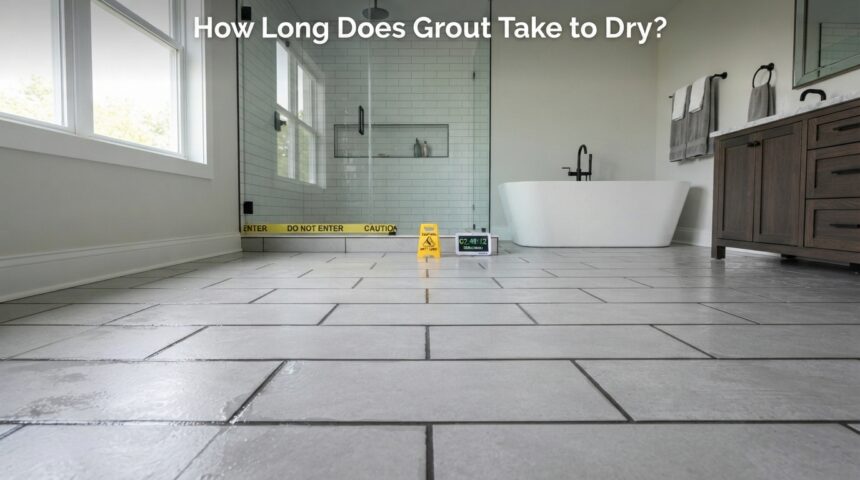
Most cement grout feels dry to the touch in about 24 hours, but it usually needs 48 to 72 hours before normal use. Full curing can take up to 28 days. Epoxy and urethane grout cure faster, often within 5 to 7 days.
The exact answer to how long does grout take to dry depends on the product, the room conditions, and the type of tile. Knowing the difference between surface dryness and real strength protects your new tile job. This guide breaks down every timing so you can plan with confidence.
Grout Drying Times at a Glance
The table below shows typical times for the most common grout types. Treat these as averages, because every brand sets its own limits on the label.
| Grout Type | Firm to the Touch | Light Foot Traffic | Full Cure |
| Sanded cement | About 24 hours | 24 to 48 hours | Up to 28 days |
| Unsanded cement | About 24 hours | 24 to 48 hours | Up to 28 days |
| Epoxy | 12 to 24 hours | About 24 hours | 5 to 7 days |
| Urethane | About 24 hours | About 24 hours | About 7 days |
| Rapid-set | 1 to 3 hours | 2 to 24 hours | Varies by brand |
Drying vs. Curing: What Is the Difference?
Drying is the loss of surface water, while curing is the chemical process that gives grout its strength. Both matter, but curing takes far longer.
What Drying Means
Drying happens when extra water leaves the joint and the surface turns firm. Cement grout usually reaches this stage within a day. At this point the grout looks finished but can still be soft inside.
What Curing Means
Curing is a chemical reaction that slowly hardens the grout from the inside out. It continues for days or weeks, and most of the final strength develops during this time. Epoxy and urethane cure through a different reaction, which is why they finish sooner than cement grout.
Why Touch-Dry Does Not Mean Ready to Use
A grout line can feel hard while its core is still weak. Early traffic or water can crack it, dull its color, or leave it powdery. Waiting a little longer costs far less than redoing the joints.
How Long Does Grout Take to Dry for Each Type?
Every grout type follows its own schedule. Choose the one that fits your tile and how soon you need the room back.
Sanded Cement Grout
Sanded grout is made for joints wider than about 1/8 inch and is the most common floor choice. It is firm in roughly 24 hours and ready for normal walking after 48 to 72 hours. Full strength arrives after about 28 days.
Unsanded Cement Grout
Unsanded grout suits narrow joints and delicate tiles that could scratch easily. Its schedule matches sanded grout, with a firm surface at about 24 hours. Thin joints hold less water, so it often feels ready a little sooner in practice.
Epoxy Grout
Epoxy grout hardens through a chemical reaction rather than by air drying, so humidity affects it less. It usually allows light traffic after about a day and reaches full cure in 5 to 7 days. Excess must be cleaned off quickly, because the working time is short.
Urethane Grout
Urethane grout comes premixed and stays slightly flexible after it sets. Expect light use within about 24 hours and a full cure near 7 days. It generally needs no sealing, which removes one extra waiting step.
Rapid-Set Grout
Rapid-set grout contains additives that speed up hardening. Many brands allow foot traffic within a few hours, though the product label has the final word. It is a smart pick for busy spaces or tight schedules.
Grout Drying Timeline for Cement Grout
Cement grout, the most common type, moves through clear stages after installation. Here is what usually happens and when.
- 15 to 30 minutes: The grout begins to set, and you wipe away the excess with a damp sponge.
- 1 to 3 hours: The surface firms up, and a light haze may appear on the tile.
- 24 hours: The grout is dry to the touch, and very light use may be possible.
- 48 to 72 hours: The floor is ready for normal use, and sealing can begin.
- Up to 28 days: The grout reaches its maximum strength and hardness.
Factors That Affect Grout Drying Time
Several conditions decide how long grout takes to dry in your home. A few simple factors explain most of the differences between projects.
Temperature and Humidity
Grouting works best at moderate room temperatures, roughly 65 to 75°F (18 to 24°C). Cold air slows curing, and high humidity keeps moisture in the joint for longer. Extreme heat can dry the surface too fast and cause cracks.
Ventilation and Airflow
Moving air carries moisture away from the grout surface. Good ventilation helps joints dry evenly, especially in windowless bathrooms. Stagnant, damp air can stretch the wait well beyond one day.
Joint Width and Tile Porosity
Wide, deep joints hold more water and take longer to dry. Porous tiles such as some natural stone absorb water from the grout and can speed up drying along the edges. Glazed porcelain and glass absorb almost nothing, so the joint dries only from the top.
Water in the Mix
Extra water makes grout easier to spread but weakens it and lengthens drying time. Follow the mixing ratio printed on the bag. The finished mix should look like thick toothpaste, not soup.
When You Can Walk On, Seal, or Wet Grout
Each activity has its own safe waiting period. Going too soon risks weak, stained, or cracked joints.
Walking on Grouted Floors
Light foot traffic is usually fine after 24 to 48 hours for cement grout. Wait longer before moving furniture or placing heavy items on the floor. If you must cross the room sooner, lay down boards or cardboard to spread your weight.
Sealing Grout
Cement grout generally needs 48 to 72 hours before sealer goes on, although some brands ask for longer. Sealing damp grout traps moisture and can cloud the finish. Epoxy and urethane grout usually skip this step entirely.
Getting Grout Wet
Many brands ask for about three days before showers and tub surrounds see regular use. Mopping and outdoor rain exposure should also wait until the grout is firm. Early water can wash out color and leave a chalky surface.
How to Tell if Grout Is Dry and How to Speed It Up
Checking dryness by eye and touch prevents costly mistakes. Small changes to the room can also shorten the wait safely.
Signs That Grout Is Fully Dry
Dry grout has an even, lighter color, because wet grout always looks darker. It feels hard rather than cool or damp, and a fingernail leaves no mark. Dark, patchy spots mean moisture is still trapped inside.
Safe Ways to Speed Up Drying
Run a fan or open a window to keep air moving, and use a dehumidifier in damp rooms. Keep the temperature moderate and steady throughout the process. Avoid hair dryers and heaters, since uneven heat can cause cracks.
Common Mistakes to Avoid
Using an overly wet sponge during cleanup pushes water back into the joints. Grouting in extreme heat or cold, or ignoring the label, also slows curing. If grout stays soft after 24 hours, check the mix ratio and room humidity before deciding to redo it.
Frequently Asked Questions
These quick answers cover the questions homeowners ask most often. Each one is based on standard grout behavior.
Can grout dry too fast?
Yes, very fast drying from heat or strong airflow pulls water out before the grout has cured properly. This leaves weak joints that may crack. Keep the room comfortable and avoid direct heat.
Can you use a hair dryer to dry grout?
It is not recommended. Concentrated heat dries the surface unevenly and can cause hairline cracks. A fan or dehumidifier is a much safer choice.
How long does grout take to dry in cold weather?
Cold slows the chemical reaction, so cement grout can need several extra days. Keep the room at the temperature listed on your product label, which is often at least 50°F (10°C). Allow extra time before walking on or sealing the grout.
Can grout get wet while drying?
A little moisture during the first cleanup is normal and expected. After the surface is wiped, keep additional water away for the full period on the label. Showers and mopping should wait until then.
Conclusion
So, how long does grout take to dry? Cement grout is firm in about a day and ready for normal use in two to three days, while epoxy and urethane finish curing sooner. Be patient, keep the room ventilated, and follow the product label to protect your tile work for years.
Related Articles
How to Clean Brass Door Knobs the Right Way?
How to Install a Door Knob: A Simple Step-by-Step Guide
How Wide Is a Door? Standard Door Widths & Sizes