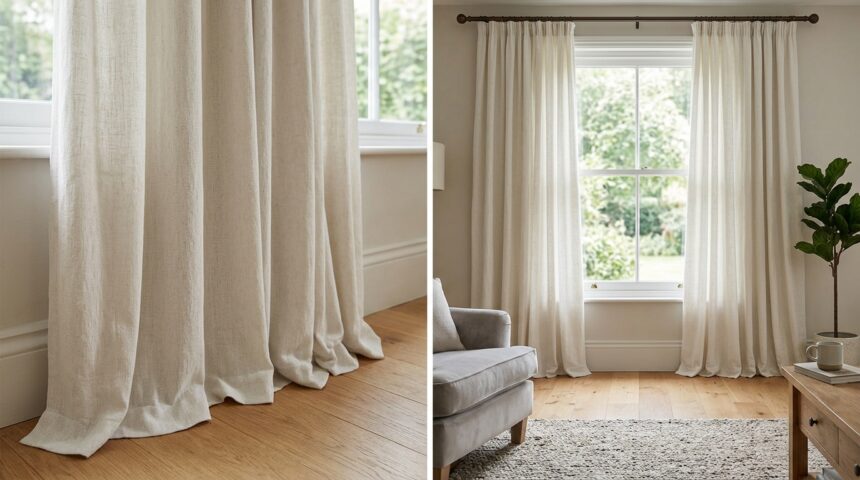
Whether curtains should touch the floor depends on the room’s function, the desired visual effect, and personal style preference rather than one fixed rule. Below we explain the general reasoning before covering specific length styles in detail.
Why This Question Comes Up So Often
Homeowners often struggle with curtain length because too short can look unfinished while too long can create tripping hazards or a messy appearance if not styled correctly.
Interior designers frequently disagree on strict rules, which adds to the confusion when shopping for new curtains. Understanding the different length options available helps clarify which approach suits a specific space best.
The General Rule Designers Follow
Most designers agree that curtains touching or slightly grazing the floor create a more polished, intentional look compared to curtains that stop short above the floor.
However, this general guideline still depends on room type, curtain function, and whether the curtains are purely decorative or used for daily privacy and light control. This flexibility is why the answer is not the same for every room in a home.
Common Curtain Length Styles Explained
Curtains typically fall into a few standard length categories, each creating a different visual effect. The subsections below explain the two most commonly used styles.
Floor-Length Curtains That Just Touch
Floor-length curtains are cut to end exactly at the floor, creating a clean, tailored appearance without excess fabric pooling. This style works well in most living rooms, bedrooms, and dining areas where a neat, structured look is desired. It is often considered the safest and most universally flattering length choice.
Puddle-Length Curtains for Dramatic Effect
Puddle-length curtains extend a few extra inches beyond the floor, allowing fabric to gently pool for a soft, luxurious appearance. This style is popular in formal living rooms or bedrooms aiming for an elegant, romantic aesthetic. However, it requires more fabric and is less practical in high-traffic areas due to dust collection and tripping risk.
Short and Above-Floor Curtain Options
Not all curtains are meant to reach the floor, especially in functional or high-traffic spaces. The subsections below cover two common shorter length choices.
Sill-Length Curtains for Practical Spaces
Sill-length curtains end right at or just below the window sill, making them a practical choice for kitchens, bathrooms, or spaces near radiators and furniture.
This shorter length avoids interference with counters, appliances, or foot traffic in tighter areas. It also tends to give a room a casual, relaxed feel rather than a formal one.
Apron-Length Curtains for Balanced Coverage
Apron-length curtains extend a few inches past the windowsill, roughly to where a window apron or trim ends, offering more coverage than sill-length without reaching the floor.
This length works well in spaces like home offices or breakfast nooks where a slightly more finished look is wanted without full floor-length fabric. It strikes a middle ground between practicality and style.
Factors That Determine the Right Curtain Length
Several practical and aesthetic factors influence which curtain length works best for a specific room. The subsections below explain furniture placement and room function as key considerations.
Furniture and Window Placement
If furniture, radiators, or built-in shelving sits directly beneath a window, floor-length curtains may not be practical and could interfere with daily use.
In such cases, sill or apron-length curtains provide better functionality without sacrificing style. Measuring the space around the window carefully helps avoid awkward fitting issues later.
Room Function and Foot Traffic
High-traffic rooms like kitchens, mudrooms, or children’s play areas benefit from shorter curtain lengths that avoid dust buildup and tripping hazards.
Formal spaces like living rooms, dining rooms, or primary bedrooms are better suited for floor-length or puddle-length curtains where foot traffic is lower. Matching curtain length to how a room is actually used prevents both practical and aesthetic mismatches.
How Curtain Length Affects Room Perception
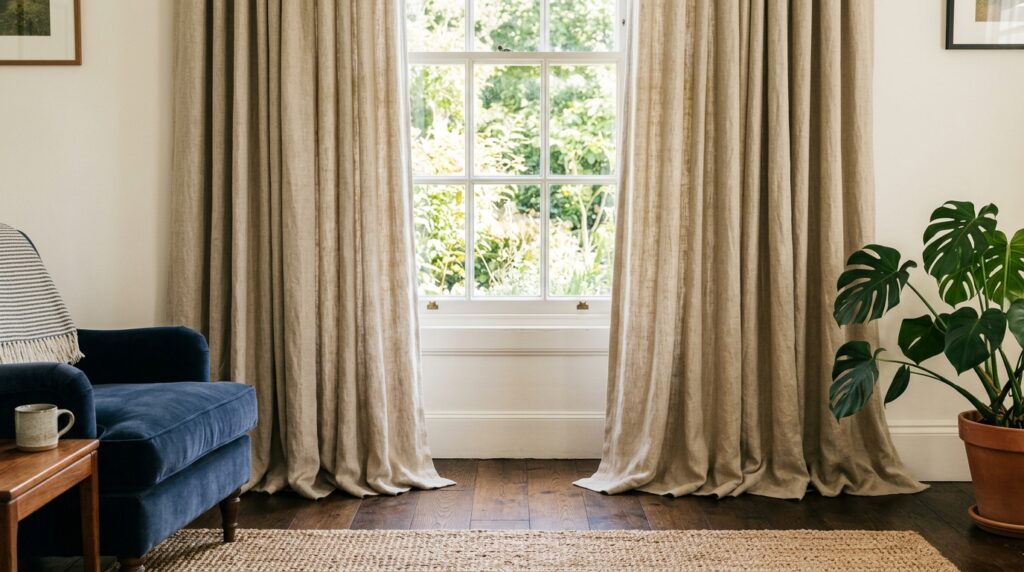
The way curtains hang can visually change how a room feels in terms of height and spaciousness. The subsections below explain these visual effects separately.
Creating the Illusion of Height
Floor-length curtains hung close to the ceiling, rather than directly above the window frame, create a visual line that draws the eye upward, making ceilings appear taller than they actually are. This technique is commonly used in smaller rooms to enhance a sense of spaciousness. Shorter curtains do not offer this same visual elongation effect.
Impact on Overall Room Elegance
Longer curtains that touch or graze the floor generally contribute to a more elegant, finished appearance compared to shorter styles that can sometimes look unintentional or incomplete. This is particularly noticeable in formal entertaining spaces where visual polish matters more than daily practicality.
Choosing the right length adds significant value to a room’s overall interior design impression.
Comparison Table of Curtain Length Styles
The table below summarizes the main curtain length styles and where they work best for quick reference.
| Curtain Style | Length Relative to Floor | Best Suited For |
| Sill-Length | Ends at window sill | Kitchens, bathrooms |
| Apron-Length | A few inches past sill | Home offices, nooks |
| Floor-Length | Just touches the floor | Living rooms, bedrooms |
| Puddle-Length | Extends past floor slightly | Formal, decorative spaces |
How to Measure Curtains for the Correct Length
Getting accurate measurements prevents curtains from looking too short or excessively long once installed. The subsections below break down the measuring process step by step.
Measuring From Rod to Desired End Point
Measurement should begin from the bottom of the curtain rod rings, not the rod itself, down to the desired end point, whether that is the sill, floor, or a slight puddle allowance. Using a steel tape measure rather than a fabric one ensures more accurate results. Measuring at multiple points across the window helps account for any flooring unevenness.
Accounting for Flooring and Rod Height Variations
Uneven flooring, thick carpet, or varying rod heights can all affect how curtains ultimately hang once installed. It is helpful to measure closer to installation time rather than far in advance, especially if flooring changes are planned. Small adjustments during hemming can correct minor inconsistencies before curtains are finally hung.
How This Compares to General Styling Advice
Many general home décor guides oversimplify this topic by stating curtains should always touch the floor without accounting for room function or furniture placement. Compared to this one-size-fits-all advice, a more practical approach considers both aesthetic goals and everyday usability, especially in kitchens or high-traffic areas where floor-length fabric is impractical. This balanced perspective offers more realistic guidance than blanket styling rules found in many quick-tip articles.
Frequently Asked Questions
Should curtains touch the floor in every room?
Not necessarily, since practical spaces like kitchens or bathrooms often work better with shorter sill or apron-length curtains instead of floor-length fabric.
Is it better for curtains to be slightly longer or shorter than the floor?
Slightly longer, often called a break, is generally preferred over curtains that stop noticeably short, as it creates a more finished appearance.
Do puddle-length curtains work in every home?
No, puddle-length works best in low-traffic formal spaces since the extra fabric can collect dust and become impractical in busy areas.
How high should curtain rods be placed for floor-length curtains?
Rods are typically placed several inches above the window frame, and sometimes closer to the ceiling, to maximize the visual height effect when curtains reach the floor.
Conclusion
Whether curtains should touch the floor ultimately depends on the specific room, its function, and the style effect a homeowner wants to achieve, rather than a strict universal rule.
By considering factors like foot traffic, furniture placement, and desired visual impact, and by measuring carefully before installation, homeowners can choose a curtain length that balances both practicality and polished interior design.
Related Articles
How to Clean Faux Suede Furniture Without Ruining It?
Commercial Garage Door Installation: Complete Guide 2026
How to Cut Ceiling Tiles: A Step-by-Step Guide for Mineral Fiber and Fiberglass Panels
How to Repaint Kitchen Cabinets: Complete DIY Guide with Costs, Tips & Mistakes to Avoid
Complete Guide to Roof Ventilation for Metal Roofs: Types, Benefits, Installation & Maintenance