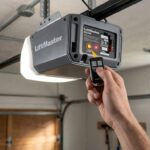

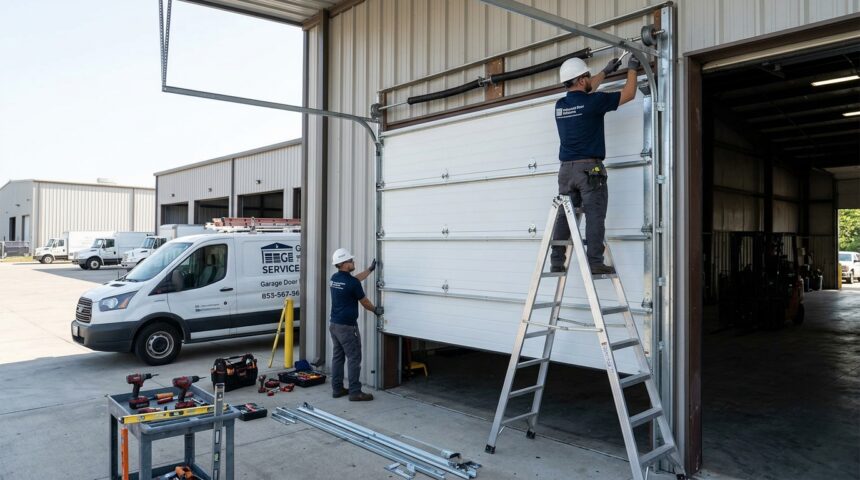
Commercial garage door installation involves far more planning and technical consideration than residential projects, since these doors must handle heavier use, larger openings, and specific safety regulations.
Choosing the right door type and installation approach directly affects a business’s daily operations, security, and long-term maintenance costs. This guide covers everything business owners need to know before starting a commercial garage door project.
Understanding Commercial Garage Door Needs
Commercial spaces have different functional requirements compared to residential garages, often involving higher traffic and specialized equipment access. Identifying these needs early helps guide the entire installation process.
Assessing Usage Requirements
Before selecting a door, it’s important to evaluate how frequently the door will be used throughout the day, since high-traffic entrances require more durable materials and stronger motor systems.
Warehouses and loading docks, for example, need doors built to withstand constant opening and closing cycles without frequent breakdowns.
Considering Building Codes and Regulations
Commercial garage door installation must comply with local building codes, fire safety regulations, and sometimes industry-specific standards depending on the business type. Consulting with local authorities or a licensed contractor early in the process helps avoid costly compliance issues later on.
Types of Commercial Garage Doors
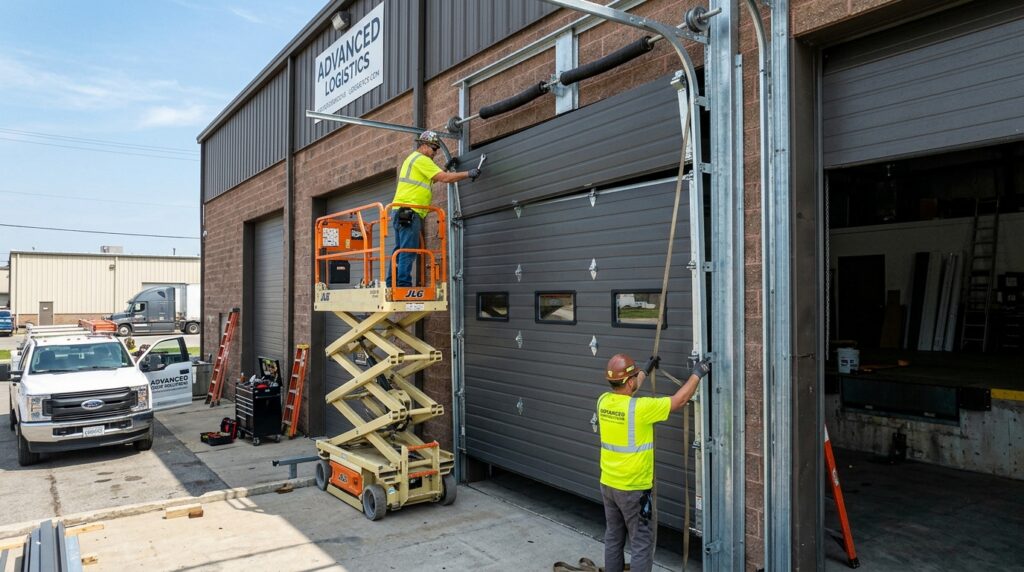
Different commercial garage door types serve different purposes, from security-focused rolling doors to insulated sectional doors for climate control. The table below summarizes the most common options used in commercial settings.
| Door Type | Best Application | Key Feature |
| Sectional Doors | Warehouses, retail | Space-saving vertical operation |
| Rolling Steel Doors | Security-focused facilities | Compact coiling design |
| High-Speed Doors | Distribution centers | Fast open and close cycles |
| Fire-Rated Doors | Industrial buildings | Fire containment compliance |
Sectional Garage Doors
Sectional doors are made of horizontal panels that roll up along a track, making them a popular choice for businesses with limited overhead clearance. Their insulated versions also help regulate indoor temperatures, which is useful for climate-sensitive storage areas.
Rolling Steel Doors
Rolling steel doors coil up into a compact drum above the doorway, making them ideal for facilities where security is a top priority. Their solid steel slat construction offers strong resistance against forced entry compared to other door types.
High-Speed Doors
High-speed doors are designed to open and close rapidly, reducing energy loss and improving workflow efficiency in busy distribution centers. These doors are often made from flexible materials like reinforced fabric or lightweight aluminum to allow for faster movement.
Materials Used in Commercial Garage Doors
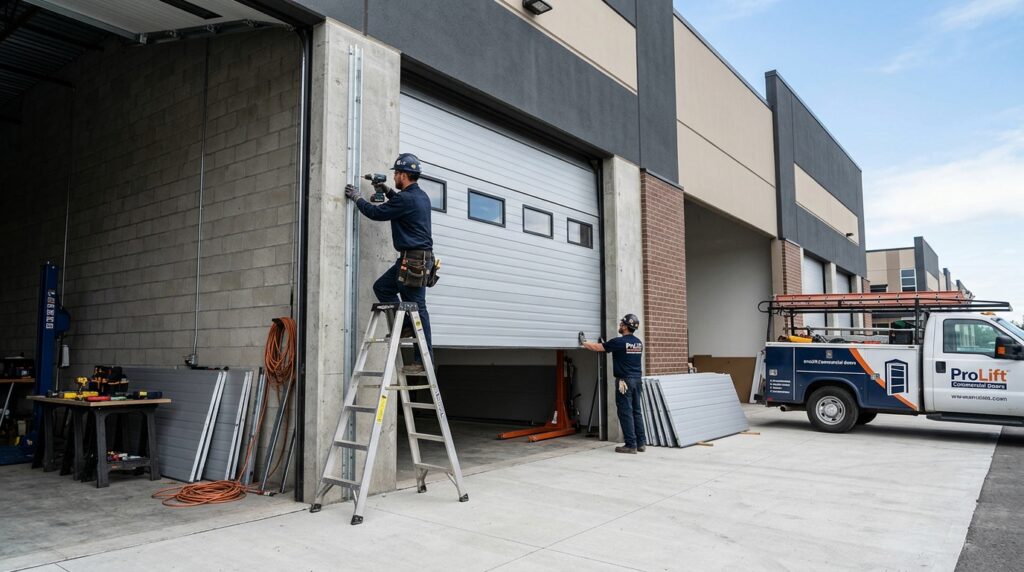
The material chosen for a commercial garage door affects its durability, insulation properties, and overall maintenance needs. Selecting the right material depends on the specific demands of the business environment.
Steel Construction
Steel is one of the most common materials used for commercial doors due to its strength, affordability, and resistance to impact damage. Galvanized or coated steel options also provide additional protection against rust in humid or coastal environments.
Aluminum Construction
Aluminum doors are lighter than steel, making them easier to operate manually if needed, while still offering decent durability for moderate-use applications. This material is often chosen for storefronts or facilities where large glass panel inserts are desired for natural light.
Fiberglass Construction
Fiberglass doors resist denting and corrosion better than metal options, making them suitable for businesses located in harsh weather conditions or near saltwater environments. However, they generally offer less impact resistance compared to steel, making them better suited for lower-traffic applications.
Planning the Commercial Garage Door Installation Process
Proper planning before installation begins helps avoid delays, budget overruns, and operational disruptions for the business. This stage involves several important steps that set the foundation for a successful project.
Measuring the Opening Accurately
Accurate measurements of the door opening, including width, height, and headroom clearance, are essential to ensure the correct door size and type are ordered. Even small measurement errors can lead to installation delays or the need for costly custom modifications.
Choosing Between New Installation and Replacement
Businesses must decide whether they are installing a door in a completely new opening or replacing an existing unit, as this affects the overall project timeline and cost. Replacement projects often involve additional steps like removing old tracks, motors, and support structures before new installation can begin.
The Commercial Garage Door Installation Process
The actual installation process involves multiple stages, each requiring specific tools and expertise to ensure proper function and safety. Professional installation is generally recommended given the size and weight of commercial doors.
Installing the Track System
The track system guides the door’s movement and must be installed with precise alignment to prevent operational issues like jamming or uneven movement. Vertical and horizontal tracks are secured to the building structure using heavy-duty brackets designed to handle the door’s weight.
Mounting the Door Panels
Once the track system is in place, door panels are carefully lifted and secured into position, starting from the bottom and working upward for sectional doors. Each panel must be properly aligned and tested for smooth movement before proceeding to the next section.
Installing the Motor and Control System
The motor system, along with safety sensors and control panels, is installed and calibrated to ensure smooth automated operation. Testing the motor’s force settings and safety reversal mechanisms is a critical step to prevent accidents during daily use.
Safety Features in Commercial Garage Door Installation
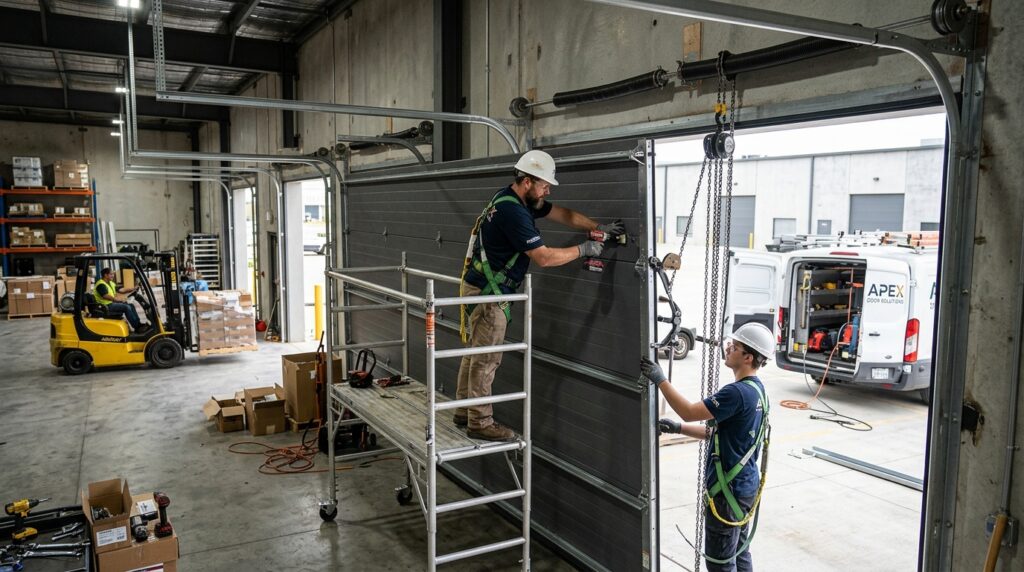
Given the size and weight of commercial doors, safety features play a crucial role in protecting employees, customers, and property. These features are often required by industry regulations and insurance policies.
Photo-Eye Sensors
Photo-eye sensors detect obstructions in the door’s path and automatically reverse the door’s movement to prevent accidents. These sensors are typically installed close to the ground on either side of the door opening for maximum coverage.
Emergency Release Mechanisms
Emergency release systems allow the door to be manually operated during power outages or motor malfunctions, ensuring business operations aren’t completely halted. This feature is particularly important for facilities that rely on the garage door for regular loading and unloading activities.
Cost Factors in Commercial Garage Door Installation
The overall cost of commercial garage door installation depends on several variables, including door type, material, size, and additional features required. Understanding these factors helps businesses budget accurately for their project.
Door Size and Customization
Larger openings and custom-sized doors naturally cost more due to increased material requirements and specialized manufacturing processes. Standard sizes tend to be more budget-friendly compared to unique or oversized configurations.
Additional Features and Automation
Adding features like insulation, high-speed operation, or advanced security systems increases the overall installation cost but often provides long-term savings through improved energy efficiency and reduced downtime. Businesses should weigh these upfront costs against potential operational benefits before finalizing their choice.
Maintenance After Commercial Garage Door Installation
Regular maintenance following installation helps extend the door’s lifespan and ensures continued safe operation. Neglecting maintenance can lead to costly repairs or unexpected downtime for the business.
Routine Inspections
Scheduling regular inspections helps identify wear on tracks, cables, and motor components before they lead to major malfunctions. Many businesses opt for maintenance contracts with installation companies to ensure consistent upkeep throughout the year.
Lubrication and Cleaning
Keeping moving parts like rollers, tracks, and hinges properly lubricated reduces friction and wear, extending the overall lifespan of the door system. Regular cleaning also prevents debris buildup that could interfere with smooth operation over time.
Commercial vs Residential Garage Door Installation
Comparing commercial and residential installations highlights why businesses require a different approach compared to typical home garage projects. The differences primarily involve scale, materials, and regulatory requirements.
Scale and Durability Differences
Commercial doors are built to handle significantly more usage cycles and often larger openings compared to residential garage doors. This means commercial installations require heavier-duty tracks, motors, and support structures to handle the increased demand.
Regulatory and Safety Differences
Commercial installations often face stricter safety and building code requirements due to higher foot traffic and potential liability concerns. Residential installations, while still requiring safety standards, generally involve fewer regulatory hurdles compared to commercial projects.
Frequently Asked Questions
How long does commercial garage door installation typically take?
Installation time varies based on door type and size, but most projects are completed within one to three days for standard configurations.
Do commercial garage doors require special permits?
In many cases, yes, especially for new construction or significant structural modifications, so checking with local building authorities beforehand is recommended.
Can existing commercial garage doors be upgraded with automation?
Yes, many existing manual doors can be retrofitted with motorized systems, though compatibility should be assessed by a professional installer first.
What is the average lifespan of a commercial garage door?
With proper maintenance, most commercial garage doors last between twenty and thirty years, depending on usage frequency and material quality.
Conclusion
Commercial garage door installation requires careful planning around door type, material selection, and safety compliance to ensure long-term reliability for business operations.
By understanding the installation process and maintaining the system properly afterward, businesses can maximize the lifespan and performance of their investment compared to opting for lower-quality or improperly installed alternatives.
Related Articles
Why Does My Bathroom Smell Like Sewage? Causes, Fixes & Prevention Tips
Brass Kitchen Faucets: Types, Benefits, Buying Guide, and Maintenance Tips
Cracks in Garage Floor: Causes, Types & Complete Repair Guide
Laundry Room Cabinets: The Complete Guide to Storage, Style, and Smart Organization
Ceiling Refinishing: Complete Guide to Methods, Costs & Best Results