

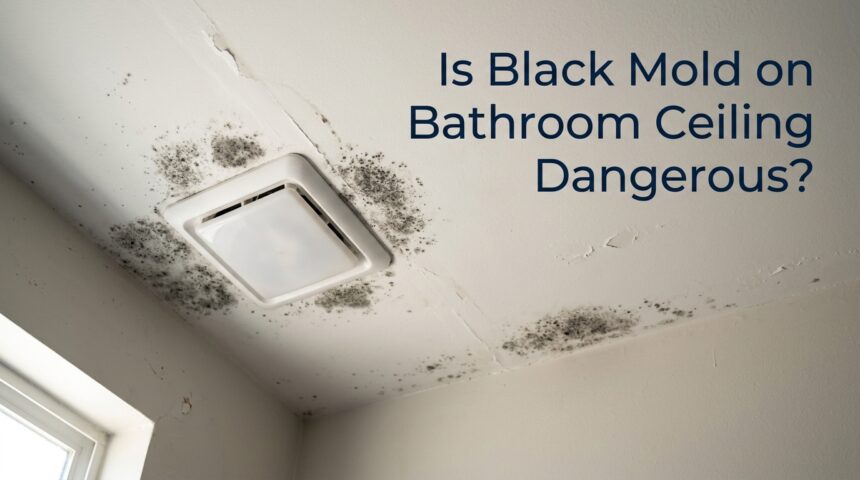
Yes, black mold on a bathroom ceiling can be dangerous, though the level of risk depends on several factors like the mold type, exposure time, and a person’s overall health condition. Small patches usually act as a mild irritant, causing symptoms like sneezing or throat discomfort, while larger infestations can lead to more serious respiratory problems over time.
People with asthma, allergies, or weak immunity are more likely to feel the negative effects sooner. This guide explains everything about black mold on bathroom ceilings in a simple and detailed way, so you can understand the real risk and take the right action confidently.
What Exactly Is Black Mold?
Black mold is a general term used for fungal growth that appears dark in color on damp surfaces like bathroom ceilings. It is not always the dangerous “toxic” variety that news articles often talk about, and most cases found at home are far less severe than people assume.
Understanding Mold as a Living Organism
Mold is a type of fungus that reproduces through tiny spores floating in the air. These spores settle on damp surfaces and start growing into visible colonies within a short period. Bathrooms provide the perfect combination of moisture and warmth for this process to happen quickly.
How Mold Gets Its Black Appearance
The dark or blackish color comes from the pigmentation of the mold species and the organic material it feeds on.
Some molds appear greenish-black while others look almost pure black, depending on the surface and environmental conditions. This visual difference alone cannot confirm the exact species without testing.
Common Bathroom Mold Types
Cladosporium and Aspergillus are the most frequently found molds in bathrooms, and both are generally irritating rather than life-threatening.
Stachybotrys chartarum, known as “toxic black mold,” is far less common in typical households. Identifying the exact type usually requires a lab test rather than a visual guess.
Black Mold Versus Toxic Black Mold
Regular black mold and toxic black mold are often confused, but they are not the same thing in terms of severity.
Toxic black mold produces mycotoxins that can cause stronger reactions, while common black mold mainly triggers allergy-like symptoms. This distinction matters a lot when deciding how urgently to act.
Why Does Mold Grow on Bathroom Ceilings?
Bathroom ceilings are one of the most common places for mold because of constant exposure to steam, moisture, and limited airflow. Understanding the exact causes helps in preventing regrowth after cleaning.
The Role of Humidity and Steam
Hot showers release large amounts of steam that rises directly to the ceiling and settles as moisture. Over time, this repeated exposure creates a damp surface where mold spores can easily attach and multiply. Bathrooms without proper airflow trap this humidity for hours after every shower.
Poor Ventilation Problems
A bathroom without a working exhaust fan or window struggles to release trapped moisture into the outside air. This stagnant air keeps the ceiling wet for longer periods, giving mold enough time to establish itself. Even a partially blocked or weak exhaust fan can cause the same issue gradually.
Water Leaks and Hidden Condensation
Leaking pipes above the ceiling or condensation building up inside the attic space can silently feed mold growth from behind the surface. This type of hidden moisture is often harder to detect until the mold becomes visible on the ceiling itself. It usually indicates a bigger plumbing or insulation issue that needs attention.
Warm Temperature as a Growth Factor
Mold thrives in warm environments, and bathrooms typically stay warmer than other rooms due to hot water usage. This warmth, combined with moisture, speeds up spore germination and colony expansion significantly. Cooler, drier rooms rarely show the same rapid mold development.
Is Black Mold Actually Dangerous?
The short answer to is black mold on bathroom ceiling dangerous is yes, but the danger level varies based on the situation. It is rarely an emergency for healthy adults but should never be ignored completely.
Factors That Determine the Real Danger Level
The actual risk depends on the mold species present, how long a person is exposed, and their personal health background. A small, dry patch cleaned quickly poses far less risk than a large, damp colony left untreated for months. Ventilation quality in the bathroom also plays a direct role in how much spore exposure occurs daily.
Annoying Mold Versus Hazardous Mold
Most bathroom mold falls into the “annoying but manageable” category rather than a serious health hazard. However, mold that keeps returning despite cleaning, or spreads beyond a small area, moves closer to the hazardous category. The size, smell, and recurrence pattern together indicate how seriously it should be treated.
Health Effects of Black Mold Exposure
Exposure to black mold spores can affect the body in different ways depending on the duration and the person’s sensitivity. Some effects appear quickly while others build up silently over months.
Short-Term Symptoms to Watch For
Common early symptoms include coughing, sneezing, headaches, and irritation in the eyes or throat after spending time in the bathroom. These reactions usually happen because the immune system responds to inhaled spores as foreign particles. Symptoms often reduce once the person leaves the moldy environment.
Long-Term Health Risks
Continuous exposure over months or years can worsen existing respiratory conditions like asthma or chronic bronchitis. Some people develop new sensitivities or breathing difficulties that persist even after the mold is removed. This is why long-standing bathroom mold should not be left untreated indefinitely.
Groups at Higher Risk
Children, elderly individuals, pregnant women, and people with weakened immune systems tend to experience stronger reactions to mold exposure. Those with pre-existing asthma or allergies may notice their symptoms flare up more frequently near affected areas. Households with such members should treat bathroom mold more urgently than others.
Rare but Serious Reactions
In uncommon cases, prolonged exposure to toxic mold species can lead to fungal infections or reactions linked to mycotoxins. These situations are rare in typical home environments but are more likely in cases of severe, untreated water damage. Anyone experiencing unusual or worsening symptoms should consult a doctor rather than self-diagnosing.
Myths Versus Facts About Toxic Black Mold
Media coverage has created a lot of fear around the term “toxic black mold,” but the reality is often less dramatic than portrayed. Separating myths from facts helps homeowners react appropriately instead of panicking.
What Media Exaggeration Gets Wrong
News stories often use extreme cases to represent all black mold situations, which creates unnecessary fear among readers. In reality, most household mold cases are manageable with proper cleaning and improved ventilation. The exaggerated framing has made ordinary bathroom mold seem far more dangerous than it typically is.
The Real Behavior of Stachybotrys Chartarum
This specific mold species does require significant water damage and prolonged dampness to develop, which is uncommon in regularly cleaned bathrooms. It typically appears in situations involving flooding or long-term leaks rather than everyday shower steam. Its presence usually signals a bigger structural moisture problem.
How to Identify Black Mold on Your Ceiling
Recognizing mold early makes cleanup much easier and reduces health risks significantly. There are a few reliable indicators that help separate mold from harmless staining.
Visual Signs to Look For
Black mold usually appears as dark spots or patches with an uneven, fuzzy, or slightly raised texture on the ceiling surface.
It often spreads outward in a circular or irregular pattern rather than staying as a single clean dot. The color can range from dark green to deep black depending on the species.
Musty Smell as a Warning Sign
A persistent musty or earthy odor in the bathroom is often the first sign of mold, even before it becomes visible.
This smell comes from microbial volatile organic compounds released during mold growth. If the smell continues after cleaning, hidden mold behind the surface may be the cause.
Mold Versus Mildew Differences
Mildew usually appears as a flat, powdery white or gray coating that stays on the surface without penetrating deeply.
Mold, on the other hand, tends to be darker, thicker, and can grow into the material itself over time. Mildew is generally easier to wipe away compared to established mold colonies.
When Should You Be Worried?
Not every mold spot requires panic, but certain warning signs indicate it is time to take the situation more seriously.
| Situation | Action Needed |
| Small patch under 10 sq ft | DIY cleaning is usually sufficient |
| Mold covering large ceiling area | Professional remediation recommended |
| Recurs quickly after cleaning | Check for hidden leaks or humidity source |
| Strong musty smell with no visible mold | Inspect behind walls or ceiling |
| Household member showing breathing issues | Consult a doctor and remove mold source promptly |
How to Remove Black Mold Safely
Removing mold safely protects both your health and the surface underneath from further damage. Following the right steps prevents spores from spreading during the cleaning process.
Before starting, always wear gloves, an N95 mask, and keep the bathroom door open or the exhaust fan running for airflow. Skipping protective gear increases the chance of inhaling loose spores while scrubbing the affected area.
A simple and effective cleaning routine includes the following steps:
- Mix equal parts water and white vinegar, or use a mild bleach solution diluted properly.
- Apply the solution directly onto the moldy patch and let it sit for about ten minutes.
- Scrub gently with a soft brush or sponge until the visible mold is removed.
- Wipe the area dry completely to prevent moisture from encouraging regrowth.
- Dispose of used cloths or sponges instead of reusing them elsewhere in the house.
Avoid mixing bleach with ammonia-based products, as this combination creates harmful fumes. Painting over mold without removing it first is also ineffective and often leads to the mold reappearing beneath the new coat.
When to Call a Professional
Some mold situations go beyond what a simple DIY cleanup can safely handle, and knowing when to call an expert saves time and prevents bigger damage.
Size and Severity Guidelines
If the mold covers an area larger than roughly ten square feet, professional remediation is generally recommended over home cleaning. Large infestations often indicate deeper moisture problems that surface cleaning alone cannot fix. Professionals also have equipment to safely contain spores during removal.
Signs of Hidden Structural Damage
Sagging ceiling patches, peeling paint combined with mold, or a musty smell without visible growth often point to hidden damage behind the surface. These situations usually require opening up the ceiling to inspect and treat the source properly. Attempting this without experience can worsen the spread of spores throughout the home.
How to Prevent Black Mold From Coming Back
Preventing mold long-term is far easier than repeatedly cleaning it, and small daily habits make a noticeable difference over time.
Running the bathroom exhaust fan during and after every shower helps clear out steam before it settles on the ceiling. Keeping a window open when possible also improves airflow and speeds up drying.
Wiping down visible moisture on the ceiling and walls after bathing reduces the surface dampness mold needs to grow. Fixing any leaking pipes or fixtures promptly stops hidden moisture sources from feeding future mold colonies. Using mold-resistant paint specifically designed for bathrooms adds an extra layer of long-term protection.
Frequently Asked Questions
Can black mold make you sick just from breathing it?
Yes, inhaling mold spores over time can cause irritation and allergy-like symptoms, especially in sensitive individuals.
Is it safe to shower if there is mold on the ceiling?
Occasional short-term exposure is usually not an emergency, but the mold should still be cleaned as soon as possible.
Can black mold cause permanent health damage?
Permanent damage is rare and mostly linked to severe, prolonged exposure in people with existing health conditions.
How fast does black mold spread?
Mold can start growing within 24 to 48 hours in a consistently damp and warm environment.
Is bleach enough to kill black mold permanently?
Bleach can remove surface mold, but without fixing the underlying moisture issue, regrowth is likely.
Conclusion
Black mold on a bathroom ceiling is a genuine concern, but it is manageable when addressed early with proper cleaning and better ventilation.
Most cases are not medical emergencies, though ignoring persistent or large infestations can lead to real health issues over time. Staying alert to visible mold, unusual smells, and recurring patches is the simplest way to keep your bathroom safe and mold-free.
Related Articles
Lamp Floor Arc: A Complete Guide 2026
How to Measure a Ceiling Fan: The Complete Size Guide for Every Room
How to Program a Garage Door Opener? Step-by-Step Guide for All Brands
How Long Does It Take for Acrylic Paint to Dry? Complete guide 2026