

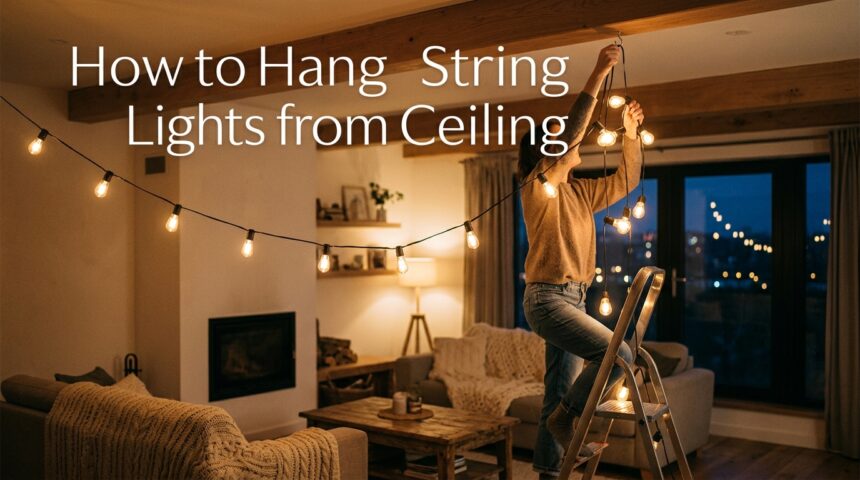
Hanging string lights from a ceiling is one of the easiest ways to transform a plain room into a warm and inviting space. Whether you want a cozy bedroom glow, a festive party setup, or a relaxing patio corner, the right hanging method makes all the difference.
This guide walks you through every step of how to hang string lights from ceiling, from choosing the right lights to picking hooks, planning a pattern, and keeping everything safe. You will also learn ceiling-specific tricks, cord management ideas, and common mistakes to avoid so your setup looks polished and lasts long.
Types of String Lights
Before learning how to hang string lights from ceiling, it helps to know which type suits your space and goals. Different lights work better for different ceiling heights, room moods, and power sources.
Fairy Lights and Mini Lights
Fairy lights are thin, delicate strands with tiny bulbs that create a soft, twinkling glow. They work beautifully for bedroom canopies or draped patterns because their light weight makes them easy to hang on almost any hook.
Globe and Bulb String Lights
Globe lights have larger, rounded bulbs and give a bolder, more decorative look. They are commonly used for patios, cafés, and party ceilings since they cast wider, warmer light across a room.
LED versus Incandescent
LED lights use less electricity, stay cooler to the touch, and last far longer than incandescent bulbs. Incandescent lights give a warmer, more traditional glow but generate more heat, which matters when lights stay close to a ceiling for long hours.
Battery, Plug-in, and Solar Options
Battery-operated lights are the easiest to install since there is no need to plan around outlets. Plug-in lights need a nearby power source, while solar lights are ideal for outdoor ceilings like pergolas where sunlight is available during the day.
Planning Before You Start
Good planning turns a messy installation into a clean, professional-looking result. Take a few minutes to measure your space and decide on your pattern before touching any hooks.
Measuring Your Space
Use a measuring tape to note the length and width of the ceiling area you want to cover. This tells you how many light strands and hooks you will need before you begin shopping or installing.
Choosing a Pattern
Popular patterns include straight lines, a draped swag look, a crisscross grid, or a spiral canopy. Picking your pattern early helps you calculate hook spacing and the exact amount of cable or string lights required.
Calculating Strand Length
Add up the total ceiling distance your pattern will cover, then add extra length for drooping in a swag style. Buying slightly more string light than the exact measurement avoids running short mid-installation.
Checking Outlets and Extension Cords
Identify the closest power outlet and decide whether an extension cord is needed to reach it. Planning this early prevents visible cords running awkwardly across the floor or wall.
Tools and Materials Needed
Having the right tools ready before you start makes the process of how to hang string lights from ceiling much faster and neater. Most items are inexpensive and available at any hardware store.
Hooks and Clips
Adhesive hooks, screw-in cup hooks, and gutter clips are the three most common hanging tools. Each suits a different ceiling type, so choose based on whether you want a permanent or damage-free installation.
Fishing Line, Wire, or Tension Rods
Clear fishing line or thin wire lets you create an almost invisible support system across a room. Tension rods work well for straight, taut light lines between two walls without needing a ladder for every hook.
Ladder and Measuring Tools
A sturdy step ladder, measuring tape, pencil, and a small level ensure your hooks are placed evenly and safely. Skipping these basics often leads to uneven spacing or lights that sag unevenly.
Ceiling Types and Best Hanging Methods
Not every ceiling accepts the same hanging method, so understanding your ceiling material helps you choose the safest and strongest option. Below is a simple table comparing common ceiling types with recommended methods.
| Ceiling Type | Recommended Method | Notes |
| Drywall | Adhesive hooks or screw hooks with anchors | Avoid heavy globe lights without anchors |
| Popcorn ceiling | Adhesive hooks with strong grip | Textured surface may reduce adhesive hold |
| Wood beams | Screw hooks directly into wood | Very sturdy for heavier string lights |
| Drop ceiling | Push pins or clip hooks on grid | Best for lightweight fairy lights |
| Concrete | Masonry anchors and screws | Requires a drill with masonry bit |
| Outdoor pergola | Weatherproof screw hooks or zip ties | Choose outdoor-rated lights only |
Drywall and Popcorn Ceilings
Drywall accepts both adhesive hooks and screw-in hooks with plastic anchors for extra support. Popcorn ceilings can be trickier since the textured surface sometimes weakens adhesive grip, so testing one hook first is wise.
Wood Beams and Concrete Ceilings
Exposed wood beams are ideal for screw hooks since they hold weight securely without extra anchors. Concrete ceilings need masonry screws and a drill, making this method more permanent than others.
Step-by-Step Hanging Methods
This is the core part of learning how to hang string lights from ceiling, covering the five most reliable installation methods. Pick the one that matches your ceiling type and desired look.
Method One: Adhesive Hooks
Clean the ceiling surface, press the adhesive hook firmly for the recommended time, and let it set before adding weight. This method is damage-free and works well for lightweight fairy or mini string lights.
Method Two: Screw-in Hooks
Mark your hook spots, use a stud finder if possible, and screw hooks directly into the ceiling or a wooden beam. This method holds more weight and suits permanent installations with heavier globe lights.
Method Three: Tension Wire System
Install a wire or tension rod from one wall to the opposite wall, then clip or drape the lights along it. This creates a clean canopy effect and is especially popular for bedroom or patio ceilings.
Method Four: Push Pins for Lightweight Lights
For drop ceilings or foam ceiling tiles, small push pins can hold thin fairy lights without any drilling. This is a quick, renter-friendly option for temporary decorations.
Method Five: Gutter Hooks and Clips
Gutter-style clips attach to crown molding or ceiling trim without any tools at all. This no-drill method is ideal for renters who want a fast, damage-free setup.
Creating Different Light Patterns
Once your hooks are installed, the way you drape the lights determines the final visual effect. Each pattern gives a distinct mood to the room.
Straight Line Installation
Pull the string lights taut between two hooks for a clean, minimal look across the ceiling. This pattern suits modern rooms and hallways where simplicity is preferred.
Swag or Draped Canopy
Let the lights hang loosely between hooks so they curve gently downward in soft arcs. This romantic style works beautifully in bedrooms or over dining tables for a relaxed ambiance.
Crisscross Grid Pattern
Run several strands across the ceiling in intersecting lines to create a starry, layered canopy. This pattern needs more planning but delivers a dramatic effect for parties or outdoor patios.
Cord and Cable Management
Neat cord management keeps your string light setup looking intentional rather than messy. A few simple tricks hide wires and protect them from damage.
Hiding Cords Along Walls
Run cords along the corner where the wall meets the ceiling and secure them with small clips or cord covers. This keeps wiring nearly invisible from normal eye level.
Concealing the Plug Connection
Position the plug end near furniture or behind curtains so the connection point stays out of sight. Using a cord cover strip also protects the wire from foot traffic if it runs along the floor.
Safety Tips for Hanging String Lights
Safety should never be skipped when learning how to hang string lights from ceiling, especially with electrical components involved. Following a few precautions keeps your home and family protected.
Weight and Ceiling Limits
Never exceed the weight limit listed on adhesive hooks, since overloading can cause lights to fall unexpectedly. Heavier globe lights should always use screw-in hooks rather than adhesive ones.
Electrical and Fire Safety
Check that your lights carry a proper safety certification and avoid connecting too many strands to one outlet. Keep bulbs away from curtains or paper decorations that could overheat and catch fire.
Special Considerations for Renters
Renters often need damage-free solutions that satisfy lease agreements while still achieving a stylish result. A few adjustments make this possible without losing your security deposit.
Damage-Free Hanging Options
Command-style adhesive hooks and tension rods are the safest choices since they leave no holes in the ceiling. Removing these hooks slowly and following the manufacturer’s removal instructions prevents paint damage.
Lease-Friendly Alternatives
Clip-on hooks for molding or curtain rods offer a completely tool-free installation method. These options can be removed in seconds when moving out, making them ideal for temporary living spaces.
Common Mistakes to Avoid
A few small errors can ruin an otherwise great string light setup. Being aware of these mistakes beforehand saves time and frustration.
Overloading Hooks and Poor Spacing
Placing hooks too far apart causes lights to sag unevenly, while overloading a single hook risks it pulling loose. Spacing hooks twelve to eighteen inches apart usually gives the best balance for most patterns.
Using Indoor Lights Outdoors
Indoor-only string lights are not built to handle rain or humidity and can become a safety hazard outside. Always check the packaging for an outdoor or weatherproof rating before hanging lights on a patio or pergola.
Maintenance and Longevity
Proper care extends the life of your string lights and keeps them looking fresh for future use. A little maintenance goes a long way toward avoiding early replacement.
Cleaning and Storage
Wipe down bulbs gently with a dry cloth to remove dust buildup that dims their glow over time. When not in use, coil the lights loosely around a piece of cardboard to prevent tangling and wire damage.
FAQs
Will hooks damage my ceiling?
Adhesive hooks and clip-style hangers are generally damage-free, while screw-in hooks leave small holes that can be patched easily.
How much weight can adhesive hooks hold?
Most adhesive hooks hold between two and five pounds, so always check the label before hanging heavier globe lights.
Can I hang string lights without drilling?
Yes, adhesive hooks, tension rods, and clip-on molding hooks all allow a no-drill installation.
How do I hang string lights on a popcorn ceiling?
Use strong-grip adhesive hooks and test one spot first, since textured surfaces can reduce adhesive strength.
Conclusion
Learning how to hang string lights from ceiling is simple once you understand your ceiling type, choose the right hooks, and plan a pattern that fits your space.
With careful measuring, safe installation, and good cord management, your string lights will look polished and last for years. Start with a small section if you are new to this project, then expand your design once you feel confident with the method that works best for your home.
Related Articles
Commercial Garage Door Installation: A Complete Guide for Business Owners
How to Program a Garage Door Remote
How to Get Rid of Shower Curtain Mold
How to Hang Curtain Rods on Plaster Walls
How to Open a Locked Garage Door: A Complete Step-by-Step Guide