

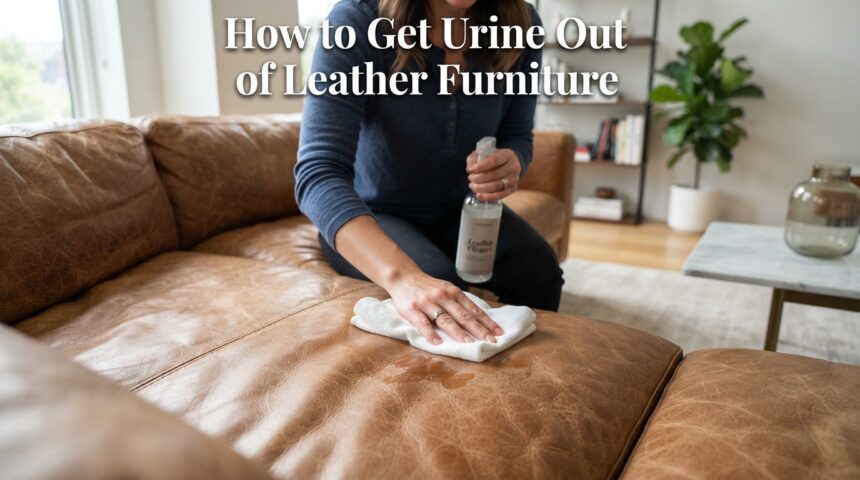
Leather furniture adds elegance to any home, but urine stains can quickly ruin its appearance and create lingering odors if not treated properly. Whether the accident came from a pet, a child, or an elderly family member, knowing how to get urine out of leather furniture the right way can save your couch or chair from permanent damage.
This guide walks you through every stage of the cleaning process, from immediate response to long-term prevention, using simple household methods and safe techniques that protect the leather’s texture and finish.
Understanding Leather and Why Urine Damages It
Leather reacts differently than fabric when exposed to liquid, which is why urine stains require a careful and specific cleaning approach. Knowing the type of leather you own and how it absorbs moisture helps you avoid mistakes that could permanently damage the surface.
Types of Leather Used in Furniture
Furniture is typically made from top-grain, genuine, bonded, or faux leather, and each reacts differently to moisture.
Top-grain and genuine leather are more porous and absorb liquid faster, while bonded and faux leather have a protective coating that resists penetration. Identifying your leather type before cleaning helps you choose the safest method.
How Porous Leather Absorbs Liquid
Natural leather contains tiny pores that allow it to breathe, but these same pores also let urine seep beneath the surface quickly. Once liquid penetrates past the top layer, it becomes harder to remove and can affect the padding underneath. This is why speed matters when treating any urine accident.
Why Urine Causes Both Stains and Odor
Urine contains urea and other compounds that break down over time, releasing a strong ammonia-like smell as they dry.
This means even after the visible stain is gone, the odor-causing bacteria can remain trapped inside the leather fibers. Proper cleaning must address both the stain and the underlying bacteria.
Risks of Improper Cleaning
Using the wrong products or techniques can cause leather to crack, fade, or develop a permanent odor that never goes away.
Harsh chemicals strip away natural oils, while excess water can warp the material. Understanding these risks helps you avoid turning a simple accident into permanent damage.
What You Will Need Before You Start
Having the right supplies ready before you begin ensures a smoother and safer cleaning process. Most of these items are already available at home or easy to find at any local store.
Essential Cleaning Supplies
You will need paper towels or microfiber cloths, white vinegar, mild soap such as castile soap, baking soda, a pet-safe enzyme cleaner, and a leather conditioner.
A soft-bristle brush is also helpful for working the solution gently into textured leather. Keeping these items together makes future accidents easier to handle quickly.
Products You Should Avoid
Ammonia-based cleaners, bleach, and harsh detergents should never be used on leather since they can worsen the smell and damage the finish.
Steam cleaners are also risky because excess heat and moisture can cause the leather to crack over time. Sticking to gentle, leather-safe products protects the material long-term.
Immediate First Response After the Accident
Acting quickly within the first few minutes of noticing the urine accident makes the entire cleaning process significantly easier and more effective. Delaying this step allows the liquid to soak deeper into the leather.
The Correct Blotting Technique
Press a clean paper towel or cloth firmly onto the wet area without rubbing, allowing it to absorb as much liquid as possible. Rubbing pushes the urine further into the pores and spreads the stain across a wider area. Repeat with fresh towels until no more moisture transfers.
Why Rubbing Makes the Stain Worse
Rubbing motion forces liquid deeper into the leather’s fibers and can also damage the surface texture through friction. It spreads bacteria and odor-causing compounds across a larger section of the furniture. Always blot in a gentle, patting motion instead.
Step-by-Step Cleaning Process
Once the initial liquid has been absorbed, the actual cleaning process begins with careful preparation and gentle application. Following each step in order prevents damage and ensures the stain is fully removed.
Preparing the Cleaning Solution
Mix equal parts white vinegar and water, or dilute a small amount of mild soap in warm water for a gentler alternative. Both solutions break down urine residue without stripping the leather’s natural oils. Avoid making the mixture too strong, as concentrated vinegar can dull the finish.
Spot Testing on a Hidden Area
Before applying any solution to the visible stain, test it on a small hidden section such as the back or underside of the furniture. Wait a few minutes to check for discoloration or texture changes. This simple precaution prevents unexpected damage to visible areas.
Cleaning the Stained Area
Dampen a clean cloth with the solution, making sure it is not soaking wet, and gently wipe the affected spot in small circular motions. Avoid oversaturating the leather, as excess moisture can seep into the cushion padding. Work slowly to lift the stain without spreading it further.
Rinsing and Drying Properly
Use a separate cloth dampened with plain water to wipe away any leftover soap or vinegar residue from the surface. Pat the area dry with a clean towel and allow it to air dry naturally away from direct sunlight or heating vents. Rushing the drying process with heat can cause cracking.
Eliminating Odor Completely
Removing the visible stain does not always eliminate the smell, since bacteria can remain trapped within the leather. A separate deodorizing step ensures the furniture is completely fresh.
Using Baking Soda for Odor Removal
Sprinkle a generous layer of baking soda over the treated area and let it sit for several hours or overnight to absorb lingering odors. Vacuum the powder away once it has finished working. This method is gentle enough for regular use without damaging the leather.
Enzyme-Based Cleaners for Deep Odor
Enzyme cleaners specifically designed for pet accidents break down the proteins in urine that cause persistent smells. Apply according to the product instructions, making sure it is labeled safe for leather surfaces. This method works especially well for older or repeated stains.
Removing Tough or Dried Stains
Older stains that have already dried require a slightly different approach since the urine has had time to set into the material. Patience and repetition are often necessary for full removal.
Reactivating Old Stains
Lightly dampen the dried stain with your cleaning solution to soften it before wiping, rather than scrubbing directly on dry leather. This prevents unnecessary friction damage. Allow a few minutes of contact time before wiping away.
Repeating the Process Safely
If the stain does not fully disappear after one attempt, repeat the cleaning steps rather than increasing the strength of the solution. Multiple gentle applications are safer than one aggressive cleaning session. This protects the leather’s finish while still achieving results.
Special Cases in Leather Cleaning
Not all leather furniture is treated the same way, and certain situations require extra care beyond the standard cleaning method.
Light-Colored Leather
Pale or white leather shows stains more visibly and is more prone to permanent discoloration from strong cleaning agents. Always use the mildest solution possible and test thoroughly before applying it broadly. Consider a specialized leather cleaner made for light tones.
Suede or Nubuck Surfaces
Suede and nubuck require dry cleaning methods rather than liquid solutions, since moisture can permanently alter their texture. A suede brush and specialized suede cleaner are recommended instead of vinegar or soap. Never apply water-based solutions directly to these surfaces.
Common Mistakes to Avoid
Certain habits, though well-intentioned, often make urine stains and odors worse rather than better. Being aware of these mistakes helps protect your furniture during the cleaning process.
Overusing Water or Cleaning Solution
Excess liquid seeps into the padding beneath the leather and can lead to mold or a musty smell over time. Always use a barely damp cloth rather than soaking the surface. Less is more when cleaning leather.
Skipping the Conditioning Step
Cleaning solutions, even mild ones, can dry out leather and leave it prone to cracking if not followed by conditioning. A quality leather conditioner restores lost moisture and keeps the material supple. This step is often overlooked but essential for long-term care.
Preventing Future Accidents
Taking preventive measures reduces the chances of dealing with urine stains again in the future, saving both time and effort.
Protective Sprays and Covers
Leather protectant sprays create a barrier that makes future spills easier to wipe away before they soak in. Waterproof furniture covers offer an additional layer of protection, especially in homes with pets or young children. Both options are affordable and simple to apply.
When to Call a Professional
Some stains and odors are too deep-set for home remedies to fully resolve, especially on expensive or antique leather pieces.
Professional upholstery cleaners have specialized equipment and products designed to treat leather without causing damage. If the smell persists after multiple attempts or the stain has spread into the cushioning, professional help is the safer choice.
Comparing DIY Methods to Store-Bought Products
| Method | Effectiveness on Fresh Stains | Effectiveness on Odor | Risk to Leather |
| Vinegar and Water | High | Moderate | Low if diluted properly |
| Mild Soap Solution | High | Low | Low |
| Baking Soda | Not applicable to stains | High | Very Low |
| Enzyme Cleaner | High | Very High | Low if leather-safe |
| Steam Cleaning | Moderate | Moderate | High |
This comparison shows that a combination approach, using vinegar for the initial clean and baking soda or enzyme cleaner for odor, tends to produce the best results while keeping risk to the leather minimal.
Frequently Asked Questions
Does vinegar damage leather furniture?
Diluted white vinegar is generally safe for leather when mixed properly with water and not left sitting for extended periods.
How long does it take for urine smell to disappear completely?
With proper treatment, most odors fade within a few days, though deep-set smells may take a week or longer with repeated deodorizing.
Can I use a steam cleaner on leather furniture?
Steam cleaners are not recommended since the combination of heat and moisture can cause cracking and warping over time.
Is baking soda safe for all types of leather?
Baking soda is safe for most leather types when used dry and vacuumed away, but a spot test is still recommended for delicate finishes.
What if urine has soaked into the cushion foam underneath?
If the padding beneath the leather is affected, professional cleaning or foam replacement may be necessary to fully eliminate the odor.
Conclusion
Knowing how to get urine out of leather furniture properly can save your upholstery from lasting damage while keeping your home fresh and comfortable.
By acting quickly, using gentle cleaning solutions, and following up with proper conditioning, most stains and odors can be completely resolved without professional help. For deeper or older stains, patience and repeated gentle treatment remain more effective than harsh chemicals or aggressive scrubbing.
Related Articles
Commercial Garage Door Installation: A Complete Guide for Business Owners
How Do You Remove Tile From a Bathroom Wall? Step-by-Step Guide
How to Organize Office Furniture: A Complete Guide
How to Assemble Furniture After a Move: Complete Step-by-Step Guide