
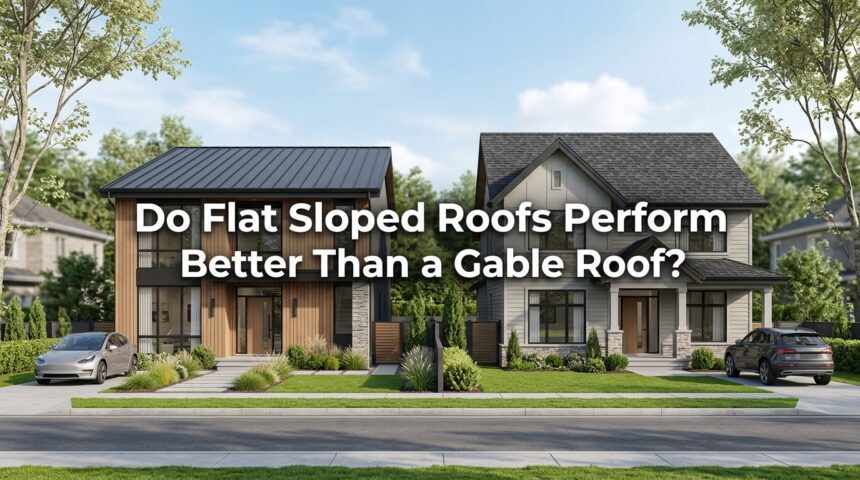
Choosing between a flat roof and a gable roof is one of the most important decisions in home construction, and the honest answer is that neither option wins in every situation. When people ask do flat sloped roofs work better than a gable roof, the real answer depends on climate, budget, building use, and how long you want the roof to last without major repairs.
Gable roofs generally win on drainage and long-term durability, while flat roofs win on cost and usable space. This guide breaks down every angle so you can make a confident, informed decision for your own property.
Understanding Flat and Low-Slope Roofs
Flat roofs are not perfectly horizontal; they carry a very slight slope, usually between one and ten degrees, just enough to guide water toward a drain instead of letting it pool indefinitely.
Builders favor this shape in modern residential and commercial construction because it is fast to install and opens up the rooftop for practical use rather than wasted attic space.
What Is a Flat Roof?
A flat roof is a roofing system built with a nearly level surface supported by a membrane or built-up layer instead of angled trusses.
The structure sits directly above the living space, which reduces overall building height and material use. Because there is no steep pitch, the entire roof deck becomes accessible for equipment, gardens, or seating areas.
Types of Flat Roofs
Flat roofing comes in several forms, including built-up roofing made from layered tar and gravel, single-ply membrane systems like TPO and EPDM, modified bitumen roofing, and green roofs covered in vegetation.
Each type offers different durability and cost profiles, but all rely on a waterproof membrane rather than gravity-driven shingles to keep water out. Metal flat roofing is also common in commercial buildings for its long service life.
How Flat Roofs Handle Water Drainage
Since gravity alone cannot clear a flat surface efficiently, these roofs depend on internal drains, scuppers, or slight tapered insulation layers to direct water off the building.
When drains clog with debris or the membrane develops even a small tear, water tends to pool rather than run off immediately. This makes routine drain cleaning and membrane inspection far more critical on a flat roof than on a sloped one.
Common Materials Used in Flat Roofs
Most flat roofs use synthetic rubber membranes, PVC, or modified bitumen sheets sealed with heat or adhesive to create a continuous waterproof layer.
Metal flat roofs use standing-seam panels with sealed joints for commercial-grade durability. Material choice directly affects lifespan, with quality membranes lasting fifteen to twenty-five years when properly maintained.
Understanding Gable Roofs
Gable roofs are the classic triangular roof shape most people picture when they think of a house, formed by two sloped sides meeting at a central ridge. This design has remained popular for centuries because it sheds water and snow naturally without relying on any mechanical drainage system.
What Is a Gable Roof?
A gable roof consists of two rectangular slopes that rise from the walls and meet at a ridge line, creating a triangular wall section, called the gable, at each end of the house. The pitch can range from gentle to steep depending on regional weather needs. This shape has been used in residential architecture worldwide because it is structurally simple and highly effective at water shedding.
Types of Gable Roofs
Common variations include the standard gable, the Dutch gable which adds a small hip at the peak, the cross gable found on L-shaped homes, and the front gable often seen on colonial-style houses. Each variation adjusts the basic triangular shape to suit different architectural styles or roof-space needs. Builders choose a variation based on aesthetic goals and regional building codes.
How Gable Roofs Handle Water and Snow
Because the slope relies purely on gravity, rain and melting snow slide off almost immediately without needing drains or membranes to move the water away. Steeper gable pitches are specifically used in snow-heavy regions because they prevent dangerous snow accumulation and ice damming. This natural drainage is the single biggest reason gable roofs are considered more weather-resistant than flat designs.
Common Materials Used in Gable Roofs
Asphalt shingles remain the most popular covering for gable roofs due to affordability and easy replacement, while metal panels, wood shakes, and clay tiles are used in higher-end or climate-specific builds. These materials are designed to interlock and overlap so that gravity assists in keeping water moving downward and outward. Because the roof already sheds water efficiently, the covering material mainly needs to resist wind uplift and UV degradation.
Head-to-Head Comparison
Both roof types have genuine strengths, so the fair comparison depends on isolating specific performance categories rather than declaring one universally superior. The table below summarizes how flat and gable roofs compare across the factors that matter most to homeowners.
| Factor | Flat Roof | Gable Roof |
| Installation Cost | Lower, less material and labor | Higher, more framing and material |
| Water Drainage | Depends on drains and membrane | Natural, gravity-based |
| Lifespan | 15–25 years with maintenance | 25–50 years depending on material |
| Maintenance | Frequent inspection needed | Minimal routine upkeep |
| Ventilation | Limited attic space | Strong natural attic ventilation |
| Usable Space | Rooftop usable for solar, HVAC | Attic storage only |
| Wind Resistance | Good in high-wind zones | Vulnerable if improperly braced |
| Aesthetic Style | Modern, minimalist | Traditional, widely accepted |
This comparison shows a fairly even split: flat roofs win on cost and functional rooftop space, while gable roofs win on drainage reliability and lifespan. Your decision should weigh which of these categories matters most for your specific property and climate.
Climate Suitability
Roof performance changes dramatically depending on local weather patterns, so climate should be one of the first factors in your decision.
Best Roof Type for Rainy Climates
In consistently rainy regions, gable roofs are the safer choice because their pitch moves water away instantly, reducing the chance of leaks.
Flat roofs can still work in rain-heavy areas, but only with well-maintained drains and a high-quality membrane. Skipping regular inspection in wet climates is the most common cause of flat roof failure.
Best Roof Type for Snowy or Cold Climates
Steep gable roofs are strongly preferred in snowy climates since they prevent heavy snow buildup and reduce the risk of structural strain or ice damming.
Flat roofs in snow zones require reinforced structural support and active snow removal to avoid collapse risk. Builders in northern regions rarely recommend flat roofs unless heavily reinforced.
Best Roof Type for Hot or Arid Climates
Flat roofs perform very well in hot, dry climates where rainfall is minimal, since drainage concerns are far less pressing.
The flat surface also allows for reflective coatings or solar panel installation, which helps reduce cooling costs. Many desert and Mediterranean-style homes use flat roofs specifically for this reason.
Best Roof Type for High-Wind or Coastal Areas
Flat roofs generally handle high wind uplift better because of their low profile and reduced surface area facing the wind.
Gable roofs can perform well in wind zones too, but only when properly braced with hurricane straps and reinforced trusses. Coastal building codes often dictate specific bracing requirements for gable designs.
Cost Breakdown
Understanding the full financial picture requires looking beyond just the initial installation price.
Upfront Construction Costs
Flat roofs are almost always cheaper to build initially because they use fewer materials and require less complex framing labor.
Gable roofs need additional trusses, ridge beams, and steeper material coverage, which raises both material and labor costs. For budget-focused projects, this upfront gap is often the deciding factor.
Long-Term Maintenance Costs
Flat roofs typically demand more frequent professional inspections, drain cleaning, and membrane repairs over their lifespan.
Gable roofs need occasional shingle replacement and gutter cleaning but far less specialized maintenance overall. Over a twenty-year period, gable roofs often prove cheaper to maintain despite their higher starting cost.
Repair and Replacement Costs
Repairing a flat roof membrane leak is usually quicker and cheaper per incident, but leaks tend to happen more often.
Gable roof repairs, such as replacing damaged shingles, are also straightforward, though full replacement can cost more due to the larger surface area and steeper labor. Both roof types eventually require full replacement, typically once every fifteen to thirty years depending on material quality.
Insurance Considerations
Insurance providers sometimes charge higher premiums for flat roofs in regions prone to heavy rain or snow due to higher leak risk. Gable roofs, especially those with wind-rated bracing, can qualify for lower premiums in storm-prone areas. It is worth checking with your insurer before finalizing a roof style in high-risk climate zones.
Pros and Cons Summary
Advantages of Flat Roofs
- Lower upfront construction cost
- Usable rooftop space for solar panels or gardens
- Simpler, faster installation
- Suits modern architectural styles
Disadvantages of Flat Roofs
- Higher risk of pooling and leaks
- Requires frequent maintenance
- Shorter average lifespan
- Not ideal for heavy snow regions
Advantages of Gable Roofs
- Excellent natural water and snow drainage
- Longer average lifespan
- Better attic ventilation
- Lower long-term maintenance needs
Disadvantages of Gable Roofs
- Higher initial construction cost
- Vulnerable to wind uplift if unbraced
- No usable rooftop space
- More complex framing required
Which Roof Is Right for You?
Before deciding, ask yourself how much rainfall or snow your region typically receives, what your renovation budget allows, and whether you want extra rooftop functionality like solar panels.
Residential homes in wet or snowy climates generally benefit more from a gable roof’s reliable drainage, while commercial buildings or homes in dry climates often lean toward flat roofs for their practicality. Budget-conscious projects tend to favor flat roofs initially, but buyers planning a long-term investment often find that a gable roof saves money on repairs over several decades.
Maintenance Tips for Each Roof Type
Flat Roof Maintenance Checklist
Inspect the membrane at least twice a year for cracks, blisters, or ponding water, and clear drains before every rainy season. Address even small punctures immediately, since flat roofs have little margin for delayed repair. Reflective coatings should be reapplied periodically to protect against UV degradation.
Gable Roof Maintenance Checklist
Check shingles annually for curling, cracking, or missing pieces, and keep gutters clear so water continues to flow away from the foundation.
Inspect the attic occasionally for signs of moisture, which can indicate a hidden leak at the ridge or flashing. Trim overhanging branches to prevent debris buildup on the slopes.
Signs You Need Roof Repair or Replacement
Watch for interior water stains, sagging roof sections, or a noticeable rise in energy bills, all of which point toward roofing problems regardless of shape.
On flat roofs, standing water that lasts more than 48 hours is a clear warning sign. On gable roofs, missing shingles or visible daylight through the attic boards signal it’s time for repair.
Frequently Asked Questions
Do flat roofs leak more than gable roofs?
Yes, flat roofs statistically leak more often because they rely on membranes and drains instead of gravity, making regular maintenance essential.
Which roof type lasts longer?
Gable roofs generally last longer, often twenty-five to fifty years, compared to fifteen to twenty-five years for most flat roofing systems.
Can I convert a flat roof to a gable roof?
Yes, but it requires significant structural work, added framing, and a higher budget, so it is usually only done during major renovations.
Conclusion
There is no single winner when comparing do flat sloped roofs to gable roofs, since each design excels in different conditions. Flat roofs offer lower costs and usable space, making them ideal for dry climates and budget-driven projects, while gable roofs deliver superior drainage and longevity, making them the safer choice for wet or snowy regions.
The smartest decision comes from matching the roof style to your specific climate, budget, and long-term maintenance plans rather than following a one-size-fits-all trend.
Related Articles
Why Is My Basement Flooding? Causes, Fixes & Prevention Tips
Does Plumbing Use Electricity? A Complete Guide for Homeowners
How Much Is a Plumber Per Hour? Full Pricing Guide 2026