
Most homeowners pay between $100 and $200 to have a dryer vent professionally cleaned. The national average sits around $130 to $150. A short, easy-to-reach vent can cost as little as $80, while a long run, a roof exit, or a badly clogged vent can push the bill to $350 or more.
Below you’ll find what the job really costs, what makes the number go up or down, what a pro actually does, when it’s fine to do it yourself, and how often the vent needs attention. The short version: it’s cheap insurance for something that quietly turns into a fire risk.
What dryer vent cleaning costs?
Here’s a quick look at what people pay in most parts of the country. Your quote depends mainly on where the vent runs and how much lint is packed inside it.
| Job | Typical cost |
| Short vent, first floor or basement | $80 to $175 |
| Second-floor vent | $110 to $200 |
| Roof vent | $150 to $300 |
| Clogged or wet-lint vent | $100 to $300 |
| Bird nest or pest removal | $120 to $400 |
| Inspection only, no cleaning | $30 to $60 |
Many companies charge a flat rate for a standard job and set a minimum service fee, often around $80 to $100, so a very simple vent may not cost much less than a mid-range one. Others price by the foot, roughly $6 to $11, or by the hour at $90 to $160. A typical clean takes 30 to 60 minutes, and a long or messy vent can run up to two hours.
Prices also shift with where you live. Labor in a big coastal city costs more than in a small inland town, so the same job can vary by $40 or $50 from one zip code to the next. If a quote comes in far below the ranges above, ask what it includes before you book. Some low prices cover only the part of the vent behind the dryer and skip the full line to the outside.
If you live in a condo or townhouse, check who owns the vent before you book. In many buildings the line runs through a shared wall or the roof, and the building or HOA takes care of it. In a single-family home the vent is entirely yours to maintain.
What a professional cleaning includes?
A good service does more than run a brush through the pipe. Knowing the steps helps you judge whether a quote is fair.
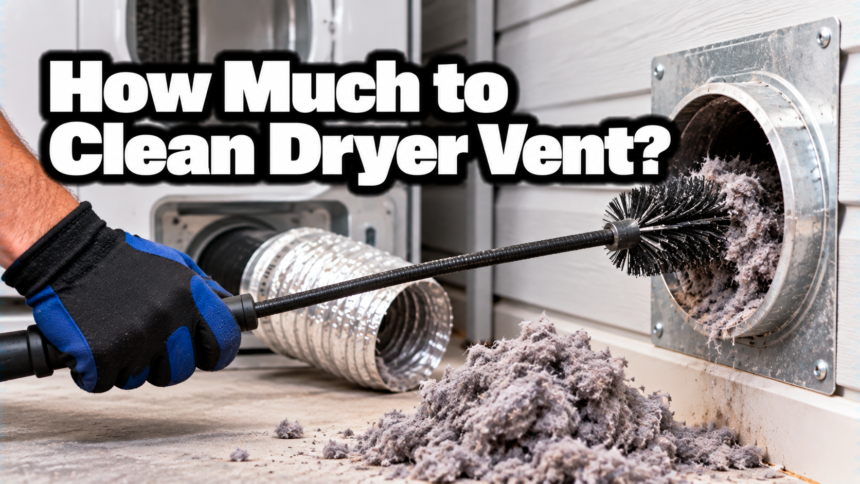
The technician starts by checking the vent and the outside hood to see how much lint has built up. They pull the dryer away from the wall and disconnect the duct. Then they push a rotating brush through the whole line, usually from both the dryer end and the outside end, while a vacuum catches the loosened lint. They clean the vent hood and its flap, check that air now flows freely, reconnect everything, and make sure the dryer runs.
Better companies finish with a quick camera pass to confirm the line is clear and the duct isn’t crushed or disconnected. That full service is what separates a $130 job from a cheap surface clean. A thorough job like this usually keeps the vent clear for a full year of normal use.
What changes the price?
Two vents in the same town can get very different quotes. A few things drive the gap.
- Vent length. The farther the air has to travel from the dryer to the outside, the more line there is to clean. Long runs cost more and take longer.
- Bends and turns. Every 90-degree elbow traps lint and makes the vent harder to reach. A straight shot is cheaper than one with three or four turns.
- Where it exits. A vent that ends at ground level on the side of the house is easy. One that exits through the roof needs a ladder and more care, which is why roof jobs start near $150 and climb from there.
- How clogged it is. Light lint clears fast. Packed or damp lint takes longer, and a full blockage can add $50 to $150 to the job.
- Pests. Birds and rodents like a warm vent. Removing a nest, plus a guard to keep them out, adds $120 to $400.
- Access. If the dryer is boxed into a tight closet or the vent hides behind finished walls, the extra labor shows up on the bill.
- Dryer type. Gas dryers need a little more care because of the gas line, so some companies charge slightly more.
Add-on services and what they run
Cleaning is often bundled with small extras. You don’t need all of them, but they show up on quotes, so it helps to know the going rate.
| Add-on service | Typical cost |
| Bird or pest guard | $30 to $100 |
| Booster fan (helps long vents push air out) | $150 to $400 |
| Lint alarm or monitor | $150 to $250 |
| Rerouting or a new vent install | $200 to $500 |
| Dryer vent plus full air duct cleaning | $340 to $800 |
Be careful with the air duct add-on. Cleaning your home’s heating and cooling ducts is a separate, much bigger job, and it isn’t needed just because your dryer vent is due. Say no to it unless you actually want that service.
Should you clean it yourself, or hire a pro?
You can clean a dryer vent yourself for the price of a kit, about $15 to $70. It’s a fair weekend job if your vent is short, straight, and easy to reach on the ground floor.
A basic kit is a set of flexible rods with a brush on the end that you spin with a drill, plus a hose adapter for your shop vacuum. Unplug the dryer first, and if it’s gas, shut off the gas valve. Pull the dryer out, disconnect the duct, run the brush through from both ends, and vacuum up what falls out. Wipe down the outside vent flap while you’re there. Set aside an hour and expect to get dusty.
Hire a pro when the vent is long, has several turns, exits through the roof or an upper floor, or is fully blocked. Pros have longer rods, stronger vacuums, and small cameras to check the whole line, and they’ll catch a crushed or disconnected duct you might miss. A gas dryer is another good reason to call someone, since the gas line sits right behind it.
A cheap kit clears the lint you can reach. It rarely clears a true blockage deep in a long or bent vent, which is exactly the kind that starts fires. When in doubt, pay for one professional clean and inspection, then keep up with a kit between visits.
Stop and call a pro if you can’t reach the outside end, if the brush won’t push all the way through, or if you find a nest or standing water. Forcing a stuck brush can crack the duct, and that costs far more to fix than a cleaning would.
How to keep the cost down?
A few simple habits stop small bills from turning into big ones.
- Get two or three quotes. Prices for the same vent swing widely, so a couple of calls can save you $50 or more.
- Ask what’s included. A fair quote covers the full line to the outside, the vent hood, and an airflow check, not just the duct behind the dryer.
- Book in the off-season. Spring and summer are often quieter than fall, and some companies discount slower months.
- Do the easy part yourself. Cleaning the lint screen after every load and running a kit through a short vent keeps the paid job smaller and less frequent.
- Fix the setup once. Swapping a crushed foil hose for smooth rigid metal duct, and shortening a long run where you can, means faster, cheaper cleanings every time after.
- Bundle with neighbors. Some companies drop the per-home price when two or three houses on the same street book on the same day, since they save on travel time.
Is it worth the money?
Yes, and it’s one of the cheaper safety jobs a home needs. A clogged vent traps heat and lint, and lint catches fire easily. With a gas dryer there’s a second risk, since a blocked vent can push carbon monoxide back into the home instead of outside, so a clear line protects your air as well.
Clothes dryers cause about 2,900 home fires in the United States each year. Those fires lead to roughly five deaths, 100 injuries, and $35 million in property damage. The single biggest cause, behind about a third of them, is simply failing to clean the dryer. The U.S. Fire Administration’s clothes dryer fire safety guidance lays out the full picture.
There’s a money side too. A blocked vent makes the dryer work harder, so cycles run longer and use more power, and the machine wears out sooner. When clothes come out damp after one cycle, you often run a second, which doubles the energy for that load. A dryer that breathes easily also lasts longer. Most machines are built for 10 to 13 years, and running hot against a clogged vent shortens that. A $130 cleaning that speeds up dry times, protects the machine, and lowers your fire risk pays for itself fast.
How often should you clean a dryer vent?
Clean the vent at least once a year. If you run the dryer most days, have a big family, or your vent is long, clean it every three to six months.
You don’t have to wait for the calendar, though. The dryer will tell you when it’s struggling. Watch for these signs:
- Clothes are still damp after a full cycle, or need two cycles to dry.
- The dryer and your clothes feel very hot at the end of a load.
- There’s a burning or musty smell when it runs.
- Lint builds up around the outside vent flap, or the flap won’t open.
- It has been more than a year since the last cleaning.
The vent material matters too. Smooth rigid metal duct holds far less lint than the flexible foil or plastic kind, so a home with good ducting can often stretch to once a year, while a foil setup clogs faster and needs more frequent attention.
Also clean the lint screen after every load. That’s the filter inside the dryer door. It’s free, takes five seconds, and it’s the single best thing you can do between vent cleanings.
Conclusion
Cleaning a dryer vent costs most people $100 to $200, with an average near $130 to $150, and jobs landing anywhere from $80 to $350 depending on length, exit point, and how clogged it is. Do it yourself with a $15 to $70 kit if the vent is short and easy, or hire a pro for long, roofline, or blocked vents. Clean it once a year, watch for slow drying, and empty the lint screen after every load. It’s small money for real safety.
Frequently asked questions
How long does dryer vent cleaning take?
Most jobs take 30 to 60 minutes. A long vent, a roof exit, or a heavy blockage can stretch it to about two hours. A quick inspection on its own takes just a few minutes.
Can I clean my dryer vent myself?
Yes, if it’s short, straight, and easy to reach. A kit costs $15 to $70 and clears normal lint. Call a pro for long, bent, roof, or fully blocked vents, or for gas dryers.
How often should a dryer vent be cleaned?
At least once a year for most homes. Clean every three to six months if you dry laundry most days, have a large household, or your vent run is long.
Does the price include cleaning the lint trap?
The lint trap is the filter you clean after every load yourself, so it isn’t really a paid service. A pro cleans the full vent line and the housing behind the dryer, which the trap can’t reach.
How do I know if my dryer vent is clogged?
The clearest signs are clothes that need more than one cycle to dry, a dryer that runs very hot, a burning smell, or lint around the outside vent flap. Any of these means it’s time to clean.
Related Articles
Are Solar Attic Fans Worth It? A Straight Cost and Savings Look
How to Caulk a Toilet the Right Way?
How to Install a Dryer Vent Hose?
How Long Can a Dryer Vent Be? The Max Length and What Changes It