

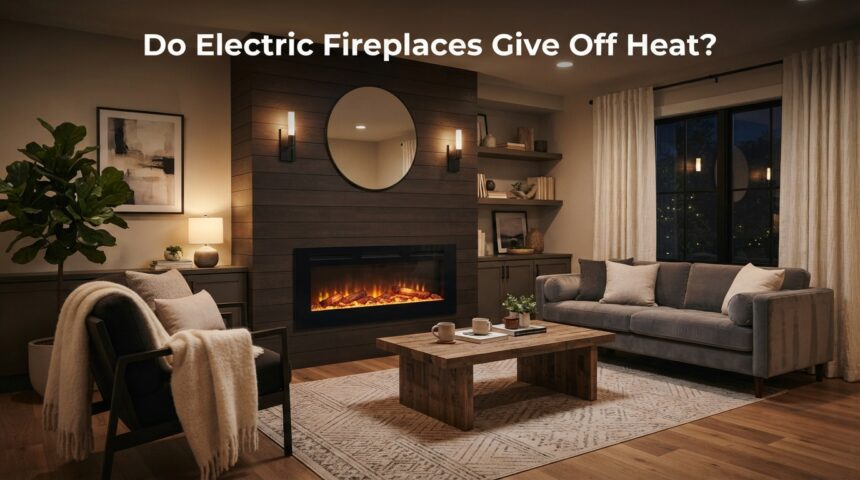
Yes, most electric fireplaces give off real, usable heat. The warmth comes from a built-in heating element, not from the flame picture. A typical plug-in model uses 1,500 watts and produces about 5,100 BTUs per hour. That is enough to warm a room of roughly 400 square feet under good conditions. The flames can also run alone with the heater switched off. A few décor-only models have no heater at all, so always check the specifications.
Many people love the glow of a fireplace but do not want the work of wood, ash, or a chimney. Electric fireplaces solve that problem, yet they raise a fair question: are they real heaters or just decoration? This guide explains how they make warmth, how much they produce, what they cost to run, and how to get the most from one. It is written for homeowners, renters, and apartment dwellers who want clear facts before buying.
How Electric Fireplaces Work and Create Heat
An electric fireplace runs on a standard household outlet and has two separate systems: one for the visual flame and one for heat. Knowing the difference explains why the answer to “do electric fireplaces give off heat” depends on the model.
The Flame Effect
The flames come from LED lights reflected off a moving screen or mirrored surface, usually above a simulated log or ember bed. This effect looks convincing but produces almost no heat. It runs independently, so you can enjoy the display in any season.
Fan-Forced Heaters
A metal or ceramic coil heats up, and a small fan pushes the warmed air into the room. This is the most common design, and it raises air temperature quickly. The fan adds light background noise, which some people notice in quiet bedrooms.
Infrared Quartz Heaters
Quartz elements produce infrared waves that warm people and objects directly instead of heating the air first. The result feels like gentle sunshine and works almost silently. It suits people who sit near the fireplace more than those who want even warmth across the whole room.
| Heater Type | Warm-Up Speed | Noise Level | Best For |
| Fan-forced | Fast | Light fan hum | Quick warmth across a room |
| Infrared quartz | Moderate | Very quiet | Close-range comfort |
| Ceramic element | Fast | Low to light | Steady, consistent output |
How Much Heat Does an Electric Fireplace Give Off?
Heat output is measured in watts and BTUs, and both numbers appear on the product label. Room conditions then decide how far that output actually goes.
Wattage and BTU Output
Most plug-in models draw 1,500 watts, the standard limit for portable heaters on a 120-volt household circuit. That converts to about 5,100 BTUs per hour. Some hardwired 240-volt units can produce more, but they need a dedicated circuit.
Room Size Coverage
Manufacturers usually rate a 1,500-watt unit for about 400 square feet in a well-insulated room. A common rule of thumb of 10 watts per square foot suggests closer to 150 square feet if it is your only heat in cold weather. Treat 400 square feet as the upper limit for supplemental warmth.
Factors That Change Results
Ceiling height, insulation, window quality, and drafts all affect how warm a room feels. A small, sealed bedroom heats quickly, while a tall open living area loses warmth fast. Closing doors and blocking gaps often matters as much as the wattage rating.
Do Electric Fireplaces Heat a Room Well?
An electric fireplace works best as a supplemental or zone heater. It warms the room you are sitting in so you can lower the thermostat elsewhere in the house. In a small space, a 1,500-watt unit usually makes the room comfortable within a short time.
Good fits:
- Bedrooms and home offices, where a small area needs steady warmth
- Small living rooms and apartments with decent insulation
Weak fits:
- Large open-plan areas, where heat spreads out and disappears
- Drafty or uninsulated rooms that lose warmth as fast as it arrives
Can it be your main heat source? In a small, well-insulated home in a mild climate, sometimes. For a whole house in cold weather, it should support your main system rather than replace it.
Electric Fireplaces With Heat vs. Without Heat
Nearly every electric fireplace lets you switch the heater and the flames on separately. Flame-only mode is handy in summer or on mild evenings when you want atmosphere without warmth. A small group of models, often sold as decorative wall pieces or media consoles, contain no heater at all. Before buying, confirm these details on the product page or label:
- A stated wattage, such as 1,500 W, which signals a working heater.
- A BTU rating, since décor-only units usually do not list one.
- A heat or thermostat control shown in the manual or on the remote.
Types of Electric Fireplaces and Their Heating Ability
The heating element is often similar across styles, so the main differences are placement, portability, and how well the unit suits your room. This table shows what to expect from each type.
| Type | Typical Heating Ability | Notes |
| Wall-mounted | Usually 1,500 W fan-forced | Saves floor space; heat blows out from the front or bottom |
| Recessed | Usually 1,500 W | Sits flush in the wall for a built-in look |
| Insert | Usually 1,500 W | Fits inside an existing masonry firebox |
| Freestanding or stove-style | Good, often 1,500 W | Portable and needs no installation |
| Mantel suite | Same heaters in a furniture surround | Adds a traditional look |
| TV stand | Moderate | Check that heat does not blow toward electronics |
| Tabletop | Lower output | Best for close-range warmth |
Efficiency and Running Cost
Efficiency and price are two different questions with electric heat. One tells you how much power becomes warmth, and the other tells you what that warmth costs.
How Efficient Are Electric Fireplaces?
Almost all the electricity an electric fireplace uses turns into heat inside your room, unlike wood or gas units that send much of their warmth up the chimney. This does not automatically make them the cheapest option, because electricity often costs more per unit of heat than gas. Their real advantage is heating only the room you actually use.
What Does It Cost to Run?
Multiply kilowatts by hours by your electricity rate to find the cost. A 1.5-kilowatt heater at $0.16 per kWh costs about $0.24 per hour. Flame-only mode uses just a few watts, so it costs very little.
| Electricity Rate | Cost Per Hour | Cost Per Day (4 Hours) | Cost Per Month (4 Hours Daily) |
| $0.12 per kWh | $0.18 | $0.72 | $21.60 |
| $0.16 per kWh | $0.24 | $0.96 | $28.80 |
| $0.25 per kWh | $0.38 | $1.50 | $45.00 |
Electric Fireplace vs. Other Heat Sources
Comparing options side by side shows where an electric fireplace fits. Figures below are general ranges, and real results vary by model and region.
| Heat Source | Heat Output | Running Cost | Installation | Upkeep |
| Electric fireplace | About 5,100 BTU | Moderate (electricity) | Plug in or mount | Very low |
| Portable space heater | About 5,100 BTU | Moderate (electricity) | Plug in | Very low |
| Gas fireplace | Often much higher | Often lower per BTU | Gas line and venting | Yearly inspection |
| Wood fireplace | High, but much escapes | Depends on wood supply | Chimney required | Regular cleaning |
| Central heating | Whole house | Varies by system | Professional | Periodic servicing |
The key point is that an electric fireplace and a 1,500-watt space heater deliver the same heat per watt. What you pay extra for is the flame display, which is a fair trade if ambiance matters to you.
Pros and Cons of Electric Fireplace Heat
Pros
- Easy installation with no chimney, vent, or fuel delivery
- Adjustable heat and flame settings for year-round use
- Low maintenance and no soot or ash
- Cooler glass surfaces than many traditional fireplaces
Cons
- Limited heating area compared with central or gas systems
- Higher electricity use than flames alone
- Needs a suitable outlet and does not work in a power outage
- No real crackle, smell, or radiant intensity of a wood fire
Safety: Do Electric Fireplaces Get Hot?
The glass front stays relatively cool on many models but can still become warm. The air leaving the vent is the hottest part, so keep furniture, curtains, and bedding clear of it by the distance in your manual, often around three feet. Overheat protection and auto shut-off give extra peace of mind.
- Plug directly into a wall outlet, not an extension cord or power strip.
- Keep the unit uncovered so air can move freely.
- Supervise children and pets while the heater is on.
Tips to Get More Heat From Your Electric Fireplace
- Match the room: Use the unit in a space within its rated area so it does not struggle.
- Seal drafts: Close doors and use draft stoppers or thick curtains to hold warmth in.
- Use the thermostat: It keeps the temperature steady and avoids running at full output nonstop.
- Keep airflow clear: Furniture blocking the vent traps heat and reduces comfort.
- Circulate the air: A ceiling fan on low in winter mode pushes warm air back down.
- Clean the vents: Dust buildup restricts airflow, so vacuum the openings from time to time.
How to Choose the Right Electric Fireplace for Heating
- Wattage and BTU: Look for around 1,500 W and 5,100 BTU for a standard room.
- Room match: Compare the rated coverage with your actual square footage.
- Controls: A thermostat, timer, and remote make daily use easier.
- Noise: Infrared models run quieter than fan-forced ones.
- Voltage: Choose 120-volt plug-in for simplicity or 240-volt hardwired for higher output.
- Style and budget: Pick the installation type that suits your space and price range.
Common Myths About Electric Fireplace Heat
| Myth | Fact |
| Higher wattage always means more heat | Plug-in units are capped by the household circuit, so bigger output needs hardwiring |
| Cool glass means no heat is being made | Warmth usually leaves through the vents instead of the glass |
| Brighter flames make the room warmer | Flame brightness is a lighting setting and has no effect on heat |
Frequently Asked Questions
Do electric fireplaces give off heat without a fan?
Yes, infrared quartz models warm you directly without a blowing fan. They are quieter but work best at close range.
Can an electric fireplace replace a furnace?
Not for a whole house in cold weather. It is designed to heat one room and reduce how hard your main system works.
Is it safe to leave one on overnight?
Check the manual first, since many manufacturers advise against unattended use. A timer and auto shut-off feature add an extra layer of protection.
Do electric fireplaces need to be vented?
No, because they burn no fuel and create no smoke or fumes. That is why they can be installed almost anywhere with an outlet.
Will one work during a power outage?
No, both the flames and the heater need electricity. Plan another heat source if outages are common where you live.
Conclusion
So, do electric fireplaces give off heat? Most models do, offering about 5,100 BTUs that suit small to medium rooms, while the flames alone provide ambiance at almost no cost.
They are best used as a supplemental heater for the space you use most. Check the wattage, match the unit to your room size, and follow the safety guidelines to enjoy comfortable warmth with very little maintenance.
Related Articles
Does Home Insurance Cover Flooded Basement? A Complete Coverage Guide
How to Choose Furniture for a Bathroom: Complete Buying Guide
Cost to Tank a Basement: Complete Guide 2026