

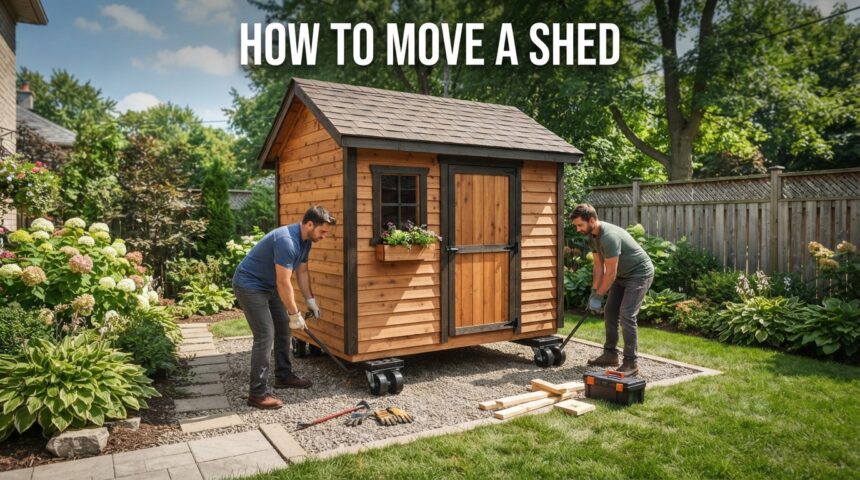
To move a shed, first check local rules and the condition of the structure. Empty it completely and brace the walls so the frame stays square. Prepare a level base at the new spot before you touch the shed. Lift it with jacks, then slide it on pipe rollers, a dolly, or a trailer, depending on the distance. Set it down slowly, level it, and anchor it. Small sheds suit DIY, while heavy or long-distance moves are safer with a professional.
Many people think a shed is stuck in one place for life, but that is not true. Whether you are changing your yard layout, selling your home, or fixing a property line problem, learning how to move a shed can save you the cost of buying a new one. The right method depends on the shed’s size, material, and floor type, and on how far it needs to go. This guide walks you through each stage in plain words so you can decide what fits your situation.
Check Rules and Shed Condition First
A shed move can go wrong before it even starts if you skip the basic checks. Spend a little time on paperwork and inspection, and the physical work becomes far smoother.
Local Rules and Permits
Most areas require sheds to sit a set distance from fences, homes, and property lines. Homeowner associations may add their own limits on size or placement. Check these rules for the new spot, and ask whether a permit is needed there.
Underground Utilities
Digging or leveling the new site can hit buried pipes or cables. Contact your local utility marking service before any digging begins (in the United States, that means calling 811). This step is quick and prevents dangerous and expensive damage.
Shed Condition
Walk around the shed and press on the floor, corners, and lower walls. Rotten wood, rusted panels, or a cracked floor can fall apart under stress. If the damage is heavy, rebuilding may cost less than repairing during a move.
Choose the Right Way to Move a Shed
There is no single best method, because every shed and yard is different. Your choice mainly depends on distance and on whether the shed can stay in one piece.
Short Distance or Long Distance
Moving within the same yard is usually a slow, controlled job done with rollers or a dolly. A move to another property needs a trailer or a professional mover. Longer trips also mean you must think about roads, height limits, and strapping.
Whole Shed or Taken Apart
Small wood, metal, and plastic sheds can often be lifted and moved whole. Kit sheds and older, weak structures are often safer to dismantle and rebuild. Taking a shed apart takes more time, but it avoids damage from stress on the frame.
The table below compares the main options.
| Method | Best For | Difficulty | Approximate Cost |
| Pipe rollers | Short moves, small sheds | Medium | Very low |
| Shed dolly | Short moves, medium sheds | Medium | Low (rental) |
| Trailer | Long distance | High | Medium to high |
| Tractor or truck | Sheds on skids | Medium | Low to medium |
| Take apart and rebuild | Weak or kit sheds | Medium | Low (mostly labor) |
Gather Tools and Prepare the Shed
Good preparation keeps the shed’s frame safe and your helpers out of trouble. Most problems during moving come from rushing this stage.
Tools and Materials
Most DIY moves need the following items:
- Two or more bottle jacks
- Strong steel pipes or wooden rollers
- Thick boards (2×6 or wider) to spread weight
- Ratchet straps and chains
- Pry bar, drill, and basic hand tools
- Work gloves, boots, and eye protection
For heavier sheds, add a winch, tractor, or dolly.
Emptying and Bracing
Remove everything inside, including shelves, hooks, and loose parts, because leftover weight makes the shed twist.
Take off doors and windows if they might shift, and disconnect any wiring. Then add temporary diagonal braces to the walls and lock the doors so the structure holds its shape. Take photos and measure the shed, as these help when setting it up again.
Prepare the New Location
A shed moved onto a poor base will sink, lean, or jam its doors within months. Getting the ground right is just as important as the move itself.
Picking and Leveling the Spot
Choose ground that is flat, dry, and reachable along a clear path. Avoid low areas where water collects. Clear grass and roots, then level the soil so the base sits evenly.
Building the Base
The base should match the shed type. A gravel pad works well for most wood and plastic sheds, while concrete blocks suit skid-built sheds. Heavy or large sheds do best on a concrete slab. Whatever you choose, make sure water can drain away from it.
How to Move a Shed a Short Distance
For moves inside your yard, the key is to lift the shed slightly and keep it rolling smoothly. Slow work and steady helpers matter more than strength.
Using Pipe Rollers
Lift one side with jacks and slide boards under the shed’s skids or floor beams. Place several pipes across the boards, then lower the shed onto them. Push gently, and as pipes come out from the back, carry them to the front. Keep the pipes straight so the shed does not drift off course.
Using a Shed Dolly
A rental dolly or shed mover lifts the shed and carries it on wheels. Slide the arms under the base, raise the shed a few inches, and steer it slowly. This method works well on firm, level ground, but soft or bumpy areas need boards laid down first.
How to Move a Shed a Long Distance
Longer trips add weight, road risk, and legal limits. If the shed is large, this is often the point where professional help pays for itself.
Using a Trailer
Lift the shed with jacks, slide a flatbed trailer beneath it, and lower it in place. Strap it down at several points and check that the load fits height and width limits on your route. Drive slowly and avoid sharp turns. At the new site, reverse the process to unload it.
Using a Tractor or Truck
Sheds built on runners can be dragged short distances with chains attached to the skids, not the walls. Pull slowly and steadily to avoid jerks. Place boards under the runners on soft ground to protect the floor and frame.
Taking It Apart and Rebuilding
Label every panel and photograph each stage as you dismantle it. Move the pieces in a truck, then rebuild on the new base by following your photos in reverse. This is often the safest option for older sheds and kit designs.
Set Up the Shed in Its New Spot
The job is not finished when the shed lands. A careful final setup keeps it stable and stops small problems from growing.
Leveling and Anchoring
Check the shed with a spirit level and shim any low corners. Once level, secure it with ground anchors, concrete fasteners, or straps, depending on the base. Anchoring matters because strong winds can shift an unattached shed.
Final Checks and Repairs
Open and close the doors and windows to confirm they still fit. Repair any cracks or loose fasteners caused by the move, and reconnect electrical lines using a qualified electrician if needed. Fixing small issues now avoids leaks later.
Cost, DIY or Pro, and Safety
Money and safety usually decide whether you handle the job yourself. Knowing both in advance helps you avoid unpleasant surprises.
How Much Moving a Shed Costs
A do-it-yourself move mostly costs equipment rental and helper time, often a small amount compared to hiring. Professional movers charge based on size, distance, and access. Prices below are rough ranges and vary by region.
| Option | Approximate Cost | Main Cost Factors |
| DIY with rollers or dolly | Low | Rental, materials |
| DIY with trailer | Medium | Trailer, fuel, helpers |
| Professional mover | Medium to high | Size, distance, access |
When to Hire a Professional
Choose a professional if the shed is large, has a concrete floor, holds a workshop, or must travel far. Ask movers about insurance, experience with your shed type, and written quotes. A good company should explain its method before starting.
Safety and Common Mistakes
Lift with your legs, wear gloves, and avoid working in wet or windy weather. Keep children and pets away from the area. The most common mistakes are:
- Moving the shed without emptying it
- Skipping bracing
- Building a weak base
- Rushing with too few helpers
FAQs About Moving a Shed
Can I move a shed without taking it apart?
Yes, small and medium sheds with solid frames can be moved whole using jacks, rollers, or a dolly. Weak or old sheds are safer when dismantled.
Can one person move a shed alone?
Only a very small, empty shed is realistic for one person. Most moves need at least two or three helpers for safety and control.
How do I move a shed on grass or soft ground?
Lay thick boards or plywood along the path to spread the weight. This stops rollers and wheels from sinking.
Do I need a permit to move a shed?
It depends on your area and the new location. Check with your local building office before you start.
Conclusion
Knowing how to move a shed comes down to good planning, a solid new base, and the right method for your shed’s size and distance. Empty and brace it, move slowly, and finish with proper leveling and anchoring. For heavy or long-distance jobs, hiring a professional is often the safer choice.
Related Articles
Wood Filler for Hardwood Floors: Your Complete Guide
How to Hang String Lights from Ceiling
Wood Filler for Hardwood Floors: Your Complete Guide
Laundry Room Cabinets: The Complete Guide to Storage, Style, and Smart Organization