
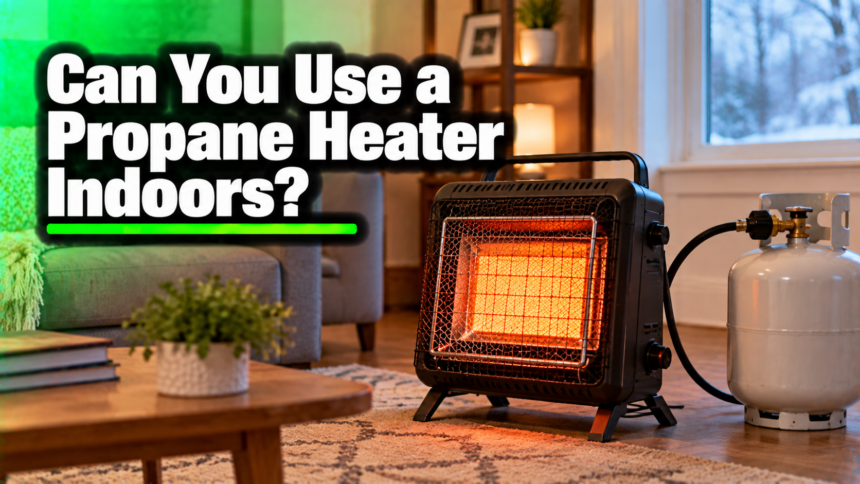
Yes, you can use a propane heater indoors, but only if it is built and labeled for indoor use. Indoor-safe heaters have safety sensors that outdoor models do not, and even then you need some fresh air and a working carbon monoxide alarm.
An outdoor-only propane heater brought inside is a real danger, and every year people die from carbon monoxide poisoning because of it. The good news is that telling the safe kind from the unsafe kind is simple once you know what to look for. Here is how to do that, and how to run one without putting anyone at risk.
Which propane heaters are safe to use indoors?
Only heaters marked “indoor safe” on the box or on the unit itself belong inside your home. If a heater does not clearly say it is approved for indoor use, treat it as outdoor only. That one label is the difference between a heater built with the right safety parts and one that was never meant to run in a closed space.
The most common indoor-safe type is a small portable radiant heater. It gives off heat you feel like sunlight, warming people and objects in front of it instead of blowing hot air around the room. Larger blue-flame convection models heat the air itself and spread warmth more evenly, and some of those are indoor rated too. What matters is not the style but the safety features built into it.
The key part is an oxygen depletion sensor, often shortened to ODS. This sensor watches the oxygen level in the room and shuts the heater off before the air gets too thin for the flame to burn cleanly. Most indoor-safe models also have a tip-over switch that cuts the gas the second the heater falls over. Outdoor heaters skip both of these, which is a big reason they are unsafe in a room.
A well-known example is Mr. Heater’s Portable Buddy, which puts out 4,000 or 9,000 BTU per hour and heats up to about 225 square feet.
It carries both an oxygen depletion sensor and a tip-over shut-off, runs off a small one pound propane cylinder or a larger tank with a hose, and is rated for use up to about 7,000 feet of elevation. Its smaller sibling, the Little Buddy, puts out 3,800 BTU and is a common pick for tents and small rooms. Both are indoor safe because of those sensors, not in spite of being propane.
Why can propane heaters be dangerous inside?
Burning propane uses up oxygen and gives off carbon monoxide, and both of those are a problem in a closed room. Understanding the three things a flame does to the air (uses oxygen, makes carbon monoxide, and adds water vapor) is what makes the safety rules later make sense.
Carbon monoxide is the biggest threat. It is invisible, has no smell, and no taste, so you cannot sense it building up around you. In high enough amounts it kills. A clean, well-tuned propane flame actually makes very little carbon monoxide. The trouble starts when the flame cannot get enough air.
As the oxygen in a sealed room drops, the flame burns badly and pumps out far more carbon monoxide than normal. A tight, closed room speeds this up, which is why fresh air matters even with an indoor-rated heater.
Early signs of carbon monoxide poisoning feel a lot like the flu: a dull headache, nausea, dizziness, and tiredness. People often blame something else and stay in the room, which is exactly what makes it so dangerous. If two or more people or pets in the same room start feeling ill at once, and feel better after going outside, treat it as a warning and get everyone into fresh air.
The second issue is oxygen itself. A running heater slowly burns through the oxygen in a small space. The oxygen depletion sensor on an indoor-safe unit is there to catch this and shut off before the level gets too low.
Finally, propane gives off water vapor as it burns, so a heater left on for hours can leave windows damp and a room feeling muggy. That moisture is harmless on its own, but it is a clear sign the room is not getting enough fresh air.
A carbon monoxide alarm is not optional. Your nose cannot detect this gas, and a battery-powered alarm is the only thing that will warn you in time.
Heaters you should never use indoors
Plenty of propane heaters are made for open air only, and using them inside is where most accidents happen. None of these have the sensors that make a heater safe for enclosed spaces, so keep them outdoors, always:
- Patio heaters, the tall standing kind, are built for open decks and put out far too much exhaust for any room.
- Tank-top heaters, which screw onto the top of a 20 pound cylinder, have an open flame and no oxygen sensor.
- Forced-air or “torpedo” heaters, the loud blower type used on job sites, burn a lot of fuel fast and are meant for large, drafty spaces like a garage that is open to the outside.
- Propane camp stoves and grills are for cooking outside and should never be used to heat a room.
Bringing one of these inside, even for a short time, can raise carbon monoxide to a deadly level quickly. A cold snap or a power cut is not a good enough reason. If all you have is an outdoor heater, you are safer in extra layers and blankets than running it in a closed room.
How to use a propane heater indoors safely?
An indoor-safe heater still needs to be used the right way. The sensors are a backup, not a free pass. Follow these steps every time you run one:
- Read the label and the manual first. Use the heater only in the rooms and the way the maker allows. Some small models are not approved for bedrooms or bathrooms, and the manual will say so.
- Crack a window or a door. Give the flame fresh air, since even a small gap helps a lot. This keeps the oxygen level up and the carbon monoxide down, and it lets out the moisture the flame makes.
- Install a carbon monoxide alarm. Put a working, battery-backed alarm in the same room or right next to it, and test it before each cold season. Official propane heater safety guidance treats a detector as your main line of defense, because you will not smell the gas yourself.
- Keep clear space around it. Leave at least three feet between the heater and anything that can burn, such as bedding, curtains, furniture, paper, and clothing.
- Never sleep with it running. Turn the heater off before bed or before you leave the room. Most poisonings happen when no one is awake to notice the early signs.
- Set it on a hard, flat, level surface. Steady footing lets the tip-over switch work and keeps the heater from toppling into something.
- Store propane cylinders outside. Never keep spare tanks indoors, in a basement, or in a closed garage. Keep them outdoors, standing upright, and away from heat and direct sun.
Watch the flame while it runs, too. It should burn a steady blue. A large yellow or flickering flame, black soot on the heater, or a strong gas smell means something is wrong. Shut it off, move to fresh air, and do not use it again until you have found and fixed the problem.
What to do if your carbon monoxide alarm goes off
If the alarm sounds, do not stop to investigate or open windows first. Get everyone, including pets, outside into fresh air right away. Then call your local emergency number or fire department from outside, and do not go back in until they say it is safe.
If anyone has a headache, feels dizzy, or is confused or sleepy, tell the dispatcher, because those are signs of poisoning that need medical care. Only after the air has been checked and cleared should you look at what went wrong with the heater.
What size propane heater do you need for a room?
Match the heater to the room so you are not running a big unit flat out in a space that is too large for it. A rough guide for extra, spot heating is about 10 BTU per square foot in a reasonably sealed room, though radiant heaters warm you directly and can feel warm sooner than that number suggests. Use this as a simple starting point:
| Room size | Rough heat needed | Typical indoor-safe unit |
| Up to 100 sq ft (small room, tent) | About 1,000 BTU | Little Buddy, 3,800 BTU |
| Up to 200 sq ft (bedroom, office) | About 2,000 BTU | Portable Buddy, 4,000 or 9,000 BTU |
| 200 to 450 sq ft (large room, cabin) | About 4,500 BTU | Big Buddy, up to 18,000 BTU |
Bigger is not better indoors. A heater that is too large for the space burns more fuel, uses more oxygen, and makes more exhaust than a small room can clear. If anything, size down and give it a little longer to warm the space. Also check the altitude rating if you live somewhere high up, since many portable models are only rated to around 7,000 feet and can burn poorly above that.
Using one in a garage, RV, tent, or cabin
The same rules follow the heater wherever it goes. In a garage or workshop, an indoor-safe unit is fine for short jobs as long as you keep a door or window cracked and a carbon monoxide alarm running.
In an RV or camper, only use a heater the maker approves for that use, keep a roof vent or window open, and never run it overnight while you sleep.
Tents are the riskiest spot because they are small and sealed, so use only a small heater rated for tent use, keep a vent open, and turn it off before you fall asleep. A cabin is really just a small room, so treat it like one: ventilate, alarm, clearance, and off at bedtime.
Keeping an indoor propane heater in good shape
A heater that is cared for burns cleaner and safer, and clean burning is what keeps carbon monoxide low. Before the first cold day each year, wipe dust off the heater and check the burner and the little pilot area for cobwebs, lint, or dirt, since a blocked burner is a common reason a flame turns yellow.
Look over the hose and fittings for cracks or wear, and brush a little soapy water on the connections with the gas on to check for bubbles, which means a leak. Make sure the oxygen depletion sensor and tip-over switch both still work by testing that the heater shuts off when you tilt it.
Keep the heater dry between uses and store it with the cylinder removed. If a part is damaged, replace it with the maker’s own part rather than a makeshift fix.
One more habit worth building is watching how long you run the heater. A one pound cylinder on a 9,000 BTU unit lasts only a couple of hours on high, so plan to refuel or swap tanks in fresh air, never in the same closed room. Turning the heater off for a few minutes every so often also gives the room a chance to trade stale air for fresh.
Conclusion
So can you use a propane heater indoors? Yes, as long as it is labeled indoor safe, has an oxygen depletion sensor, and is sized for the room. Give it fresh air, keep a working carbon monoxide alarm nearby, hold three feet of clearance, and turn it off before you sleep.
Never bring an outdoor patio, tank-top, or torpedo heater inside. Do those simple things and a portable propane heater is a safe, cheap way to take the chill off a room.
Frequently asked questions
Can you use a propane heater indoors without ventilation?
No. Even an indoor-safe heater needs some fresh air. Crack a window or door so the flame gets oxygen and carbon monoxide does not build up. Running one in a fully sealed room is not safe.
Do propane heaters give off carbon monoxide?
Yes, but a clean flame with enough air makes very little. The danger rises when oxygen runs low and the flame burns poorly. That is why fresh air and a carbon monoxide alarm both matter.
Is it safe to sleep with a propane heater on?
No. Turn it off before you sleep. You cannot smell carbon monoxide, and most poisonings happen while people are asleep and cannot notice the early warning signs.
Can you use a 20 lb propane tank heater indoors?
Only with an indoor-safe heater rated for it, and the tank itself should stay outdoors with a hose run in. Never store or use a standard 20 pound cylinder in a closed room.
Where should I put a carbon monoxide detector with a propane heater?
Place it in the same room or just outside it, around head height, with fresh batteries. Test it before each heating season and replace the whole unit by the date on the back.
Related Articles
How Wide Is Steel Roofing? Complete Panel Width Guide
Lamp Floor Arc: A Complete Guide 2026