

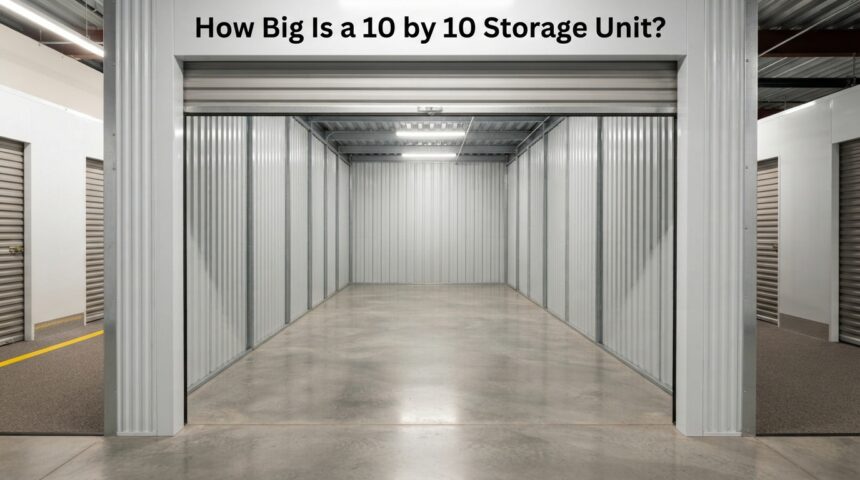
A 10 by 10 storage unit measures 100 square feet, formed by a width of 10 feet and a length of 10 feet. With a standard ceiling height of about 8 feet, the unit offers roughly 800 cubic feet of usable storage volume.
This size is one of the most popular rental options because it strikes a balance between affordability and real storage capacity. It works well for people moving out of a small apartment, clearing out a garage, or storing furniture between homes. Understanding how big is a 10 by 10 storage unit in practical terms helps renters avoid paying for space they do not need.
Understanding 10×10 Storage Unit Dimensions
Before deciding on a unit, it helps to know exactly what the numbers mean. The sections below break the measurements down piece by piece.
Width and Length Explained
The first number in “10×10” refers to the width of the unit, while the second refers to its length. Both measurements are exactly 10 feet, which is why the unit is described as a perfect square rather than a rectangle. This layout makes it easier to arrange furniture and boxes along every wall without wasted corners.
Square Footage and Cubic Footage
Multiplying the width by the length gives 100 square feet of floor space, which is the number most facilities advertise. However, the true storage capacity depends on cubic footage, calculated by multiplying the floor area by the ceiling height. At a typical 8-foot ceiling, that works out to around 800 cubic feet, giving renters far more usable space than the floor area alone suggests.
Standard Ceiling Height
Most 10×10 units come with an 8-foot ceiling, though some facilities offer taller units for an additional cost. A higher ceiling allows renters to stack boxes and furniture vertically, which is one of the most effective ways to make the most of a fixed footprint. Checking the ceiling height before booking is a simple step that can significantly change how much fits inside.
Visualizing How Big a 10×10 Unit Really Is
Numbers on paper do not always translate into a clear mental picture, so it helps to compare the unit to spaces people already know.
Comparable Room Sizes
A 10×10 storage unit is roughly the size of a small bedroom or a one-car garage. If you picture a standard walk-in closet doubled in size, that gives a fairly accurate sense of the floor area. This comparison is often the fastest way for renters to judge whether the unit will feel spacious or cramped.
Everyday Object Comparisons
Another way to visualize the space is by imagining it filled with familiar furniture pieces stacked closely together. A queen-size bed frame, a sofa, and a few dressers placed side by side would fill a noticeable portion of the floor, leaving room for boxes stacked along the remaining walls. This mental exercise makes the abstract square footage feel much more concrete.
What Can Fit Inside a 10×10 Storage Unit
Once the dimensions are clear, the next natural question is what actually fits inside a space this size.
Furniture That Fits
A 10×10 unit can comfortably hold larger furniture pieces such as a queen or full-size bed, a sofa, a dining table with chairs, and multiple dressers. Renters typically arrange bulky items along the walls first, then use the center space for boxes and smaller belongings. This approach keeps the layout organized and makes items easier to retrieve later.
Appliances and Boxes
Beyond furniture, this unit size can also accommodate mid-sized appliances like a washer, dryer, or small refrigerator. After placing larger items, most renters can still fit between 30 and 40 medium-sized moving boxes, depending on how efficiently the space is packed. Stacking boxes to the ceiling, when done safely, makes a noticeable difference in total capacity.
Ideal Household Size
This unit size is generally considered suitable for the contents of a one to two-bedroom apartment. It offers enough room for major furniture, several boxes, and miscellaneous household items without requiring renters to upgrade to a larger and more expensive unit. For most small households, it hits a practical middle ground.
Who Should Choose a 10×10 Storage Unit
Not every renter has the same storage needs, so it is worth identifying who this size actually serves best.
Best For Small Households and Students
College students storing belongings between semesters and residents of studio or one-bedroom apartments often find this size ideal. It comfortably holds essential furniture and personal items without leaving excess empty space that would otherwise go to waste on a larger unit.
Best For Business and Seasonal Storage
Small business owners also use 10×10 units to store inventory, equipment, or office furniture during transitions. Homeowners frequently rely on this size for seasonal items like holiday decorations, patio furniture, or sports equipment that only needs occasional access throughout the year.
10×10 vs Other Popular Storage Unit Sizes
Comparing this size to smaller and larger alternatives makes it easier to confirm it is the right fit before booking.
10×10 vs 5×5
A 5×5 unit offers only 25 square feet, roughly the size of a small closet, making it suitable for boxes and small items only. The 10×10 unit provides four times that floor space, which is why it comfortably handles furniture and appliances that a 5×5 simply cannot hold.
10×10 vs 10×15 and 10×20
A 10×15 unit adds 50 extra square feet, useful for renters with slightly more furniture or a small vehicle’s worth of extra items. A 10×20 unit, offering 200 square feet, is closer to a two-car garage and suits full households or larger inventory storage needs.
| Unit Size | Square Footage | Best For |
| 5×5 | 25 sq ft | Boxes, small furniture, documents |
| 5×10 | 50 sq ft | Studio apartment contents |
| 10×10 | 100 sq ft | One to two-bedroom apartment |
| 10×15 | 150 sq ft | Two to three-bedroom home |
| 10×20 | 200 sq ft | Three-bedroom home, vehicles |
Cost and Smart Packing Tips for a 10×10 Unit
Beyond size, cost and packing strategy play a major role in getting the most value from this unit.
Average Monthly Cost
Pricing for a 10×10 storage unit varies based on location, demand, and whether the unit includes climate control. Standard units typically cost less than climate-controlled versions, so renters storing temperature-sensitive items should budget accordingly when comparing facilities in their area.
Tips to Maximize Space
Disassembling furniture, using uniform box sizes, and stacking vertically toward the ceiling are simple habits that noticeably increase usable capacity. Leaving a narrow walkway also makes it far easier to reach items stored toward the back without having to unpack the entire unit.
Frequently Asked Questions
Can a 10×10 unit fit a two-bedroom apartment?
Yes, a 10×10 unit can generally hold the contents of a small one to two-bedroom apartment when packed efficiently with furniture along the walls and boxes stacked in the center.
How many boxes fit in a 10×10 storage unit?
Most renters can fit between 30 and 40 medium-sized boxes alongside furniture, though the exact number depends on how tightly items are stacked and organized.
Is a 10×10 unit big enough for a car?
No, a 10×10 unit is not designed for vehicle storage; renters needing to store a car typically require a 10×20 unit or a dedicated vehicle storage space.
What is the difference between 10×10 and 10×15 units?
A 10×15 unit adds 50 extra square feet compared to a 10×10, making it better suited for households with additional furniture or slightly larger inventory needs.
Conclusion
A 10×10 storage unit offers 100 square feet and roughly 800 cubic feet of space, making it one of the most practical sizes for small households, students, and business owners.
It comfortably holds major furniture, appliances, and dozens of boxes without the extra cost of a larger unit. Knowing exactly how big is a 10 by 10 storage unit helps renters make a confident, well-informed choice before booking.
Related Articles
What Is a Galley Kitchen? A Complete Guide to Layout, Pros, and Design
How to Lock a Garage Door: Complete Step-by-Step Guide
Why Does My Ceiling Fan Click? Causes & Fixes
How to Insulate Basement Walls: Step-by-Step Guide 2026
Brass Kitchen Faucets: Types, Benefits, Buying Guide, and Maintenance Tips