

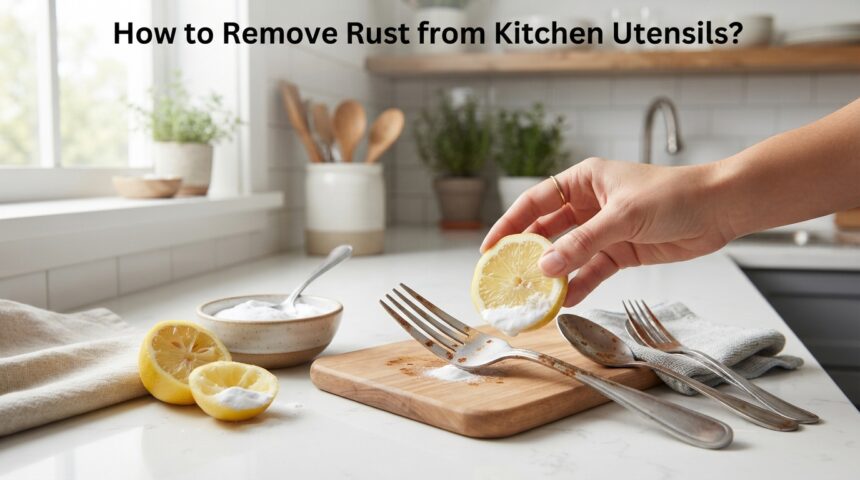
The easiest way to remove rust from kitchen utensils is to match the method to the material. Light rust on stainless steel spoons or knives usually comes off with a baking soda paste, lemon and salt, or a short white vinegar soak.
Heavy rust on cast iron needs a firmer approach, such as a salt scrub or fine steel wool. After scrubbing, always rinse well and dry the item completely, because leftover moisture brings rust back within hours. Cast iron and carbon steel also need a thin coat of cooking oil. If the metal is deeply pitted, flaking, or cracked, replacing it is the safer choice.
Understanding Rust and Its Safety
Before cleaning, it helps to know what you are dealing with and whether it is a health concern. The two parts below cover the cause of rust and the real risk of using a rusty item.
What Causes Rust in Kitchens
Rust forms when iron reacts with oxygen and water, creating a flaky orange-brown compound called iron oxide. Kitchens speed this up through steam, wet sponges, salty food, acidic sauces, and dishwasher cycles. Even stainless steel can rust when its thin protective layer is scratched or worn down.
Is Rusty Kitchenware Safe?
A tiny amount of surface rust is not considered toxic, but it can give food a metallic taste and stain it. The bigger concern is that rough, pitted metal traps food and bacteria that are hard to wash away. Tetanus comes from bacteria in soil, not from rust itself, so a clean rusty spoon is not a special tetanus risk.
Before You Start
Good results depend on preparation. Knowing the material and gathering the right supplies prevents damage to the utensil.
Identify the Utensil Material
Check the markings on the handle or base, and try a magnet: cast iron and carbon steel are strongly magnetic, while many stainless steels are only weakly magnetic or not at all. Each material tolerates different cleaners, so this step decides which method is safe. Test any new cleaner on a hidden spot first, especially on plated, coated, or wooden-handled items.
Supplies You Need
Most jobs need only household items such as baking soda, white vinegar, lemons, coarse salt, a potato, and dish soap. Add a soft brush, an old toothbrush, and a non-scratch sponge for scrubbing. Keep gloves, cooking oil, and dry towels ready, and use a food-safe rust remover only when home methods fail.
Natural Methods for Light Rust
These gentle options suit spoons, forks, knives, and small tools. Start here, because the mildest effective method protects the metal best.
Baking Soda Paste
Mix baking soda with a small amount of water until it forms a thick paste, then spread it over the rusty area. Leave it for one to two hours so it can loosen the rust, then scrub with a brush and rinse. This is the safest first choice for most metals because it barely scratches.
Lemon Juice and Salt
Sprinkle salt over the rust and squeeze fresh lemon or lime juice on top. The citric acid softens the rust while the salt works as a mild scrubber. Leave it for two to three hours, scrub, and rinse, but do not leave it overnight because prolonged acid can dull the surface.
White Vinegar Soak
Submerge the utensil in white vinegar for thirty minutes to a few hours, checking every so often. The acetic acid dissolves rust so it wipes away with a brush. Avoid overnight soaks on thin or plated metal, and rinse the item afterward, optionally with a baking soda and water wash to neutralize the acid.
Potato and Dish Soap
Cut a potato in half, dip the cut side in dish soap or baking soda, and rub it over the rust. Potatoes contain oxalic acid, which reacts with rust and lifts it gently. This works nicely on knife blades and small spots, and it takes only fifteen to thirty minutes.
Stronger Methods for Heavy Rust
When home remedies leave stubborn patches, these methods offer more power. They demand more care because they can scratch or damage delicate surfaces.
Bar Keepers Friend or Oxalic Acid Cleaners
Apply the cleaner as a paste on a damp surface, wait one to two minutes, then scrub lightly and rinse well. Its oxalic acid dissolves rust quickly and is well suited to stainless steel. Wear gloves and never leave it on for long.
Steel Wool and Fine Sandpaper
Use fine steel wool or high-grit sandpaper only on sturdy items like cast iron and thick baking sheets. Scrub in one direction with light pressure until bare metal shows. Never use these on non-stick, coated, or plated utensils, because they strip the finish and make rusting worse.
Commercial Rust Removers
Choose a product that states it is safe for cookware or food-contact surfaces and follow the label exactly. Rust removers are strong, so ventilate the room and wear gloves and eye protection. Rinse repeatedly with clean water and wash with soap before the item touches food.
Method Guide by Utensil Type
Different utensils respond differently to the same treatment. The table below shows the best approach and what to avoid for common items.
| Utensil | Best Method | Avoid |
| Cast iron pans | Coarse salt and oil scrub, short vinegar soak, then re-season | Long soaks, dishwasher |
| Carbon steel pans | Baking soda paste, light scrub, re-oil | Extended acid contact |
| Stainless spoons and forks | Baking soda or Bar Keepers Friend | Harsh abrasives |
| Knives | Potato, baking soda paste, lemon and salt | Long vinegar soaks, dishwasher |
| Graters and peelers | Short vinegar soak with a soft brush | Steel wool on sharp edges |
| Baking trays and racks | Baking soda paste, vinegar soak | Metal scrapers on coatings |
| Non-stick cookware | Replace if rust is on the cooking surface | Any abrasive scrubbing |
Step-by-Step Process
Follow this order whichever method you choose, and the results will be more consistent.
- Wash away grease and food residue with warm soapy water.
- Judge the rust level: light dust, thicker scale, or deep pits.
- Pick the gentlest method suited to the material.
- Apply it and wait for the recommended time.
- Scrub gently first, then with more pressure only if needed.
- Rinse thoroughly and repeat if rust remains.
- Dry completely by hand right away.
Aftercare and Prevention
Removing rust is only half the job. What you do next decides whether it returns.
Drying and Re-Oiling
Dry the utensil at once with a clean towel, then warm it briefly on low heat or in sunlight to remove hidden moisture. For cast iron and carbon steel, rub on a thin layer of cooking oil and bake or heat it to rebuild the protective coating. Knives may also need sharpening, since rust can dull the edge.
Prevention Habits
Wash and dry metal items promptly, and never leave them soaking in the sink. Keep cast iron, carbon steel, and good knives out of the dishwasher. Store everything in a dry, ventilated place, and check your utensils monthly so small spots are caught before they spread.
Common Mistakes to Avoid
- Soaking in vinegar or lemon juice for too long, which can pit the metal.
- Using steel wool on coated or plated surfaces.
- Mixing cleaning chemicals, such as bleach with vinegar, which releases dangerous fumes.
- Skipping the drying step or forgetting to re-oil after cleaning.
When to Throw It Away
Some items are not worth saving. Replace any utensil with deep pitting, flaking metal, cracks, or weak joints, because these hide bacteria and can break. Rust on the inside of non-stick cookware or on a cutting edge that cannot be restored is also a reason to replace it, as is rust that returns quickly after thorough cleaning.
Frequently Asked Questions
Can I cook in a pan that had rust?
Yes, once the rust is fully removed, the pan is washed, and cast iron or carbon steel is re-seasoned. If the surface is still pitted or flaking, replace it.
Can bleach remove rust?
No. Bleach does not dissolve rust and can react with other cleaners to release harmful fumes. Use baking soda, vinegar, or an oxalic acid cleaner instead.
Why does my stainless steel spoon have rust spots?
Its protective layer may be scratched or worn down by harsh cleaners or long contact with moisture. Baking soda paste or Bar Keepers Friend usually clears these spots.
How long can I leave vinegar on rust?
Thirty minutes to a few hours is enough for most items. Overnight soaking can damage thin or plated metal.
Conclusion
Learning how to remove rust from kitchen utensils comes down to three habits: identify the material, use the gentlest method that works, and dry everything thoroughly. Act on small spots early, since they are far easier to clean than heavy rust. When an item is badly pitted or cracked, replacing it is the safest decision.
Related Articles
How Long Does It Take to Build a Home?
White Oak Cabinets: A Complete Guide 2026
How to Hang Pictures on Concrete Walls: Complete Guide
Why Is My Basement Flooding: Complete guide 2026
Roofing Maintenance for Extreme Temperatures : Complete Guide