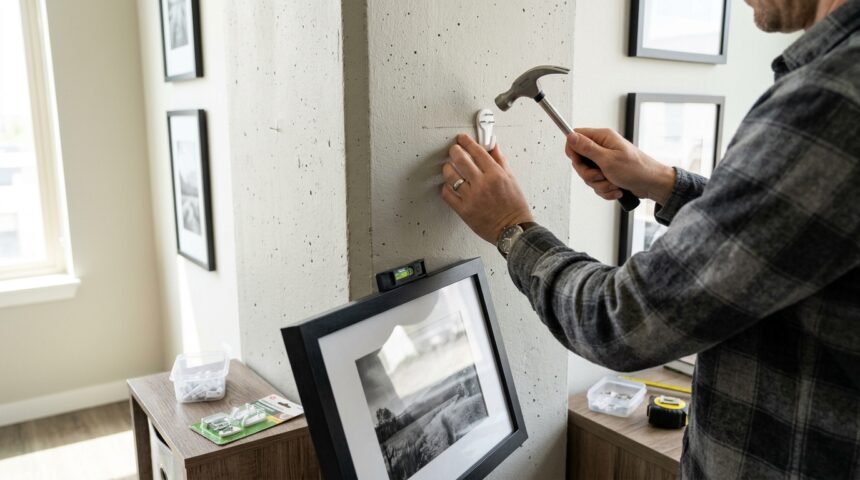
You can hang pictures on concrete walls by drilling a hole with a masonry bit, inserting a proper concrete anchor, and securing a screw or hook designed to hold the weight of your frame. This method ensures a stable, long-lasting hold since concrete requires different tools and techniques compared to drywall or wood surfaces.
Why Concrete Requires Special Tools
Concrete is far denser and harder than drywall, meaning standard nails or plastic anchors simply won’t penetrate the surface without the right equipment. Using tools designed specifically for masonry prevents cracked walls and ensures the picture stays securely mounted over time.
What the Hanging Process Involves
Successfully hanging pictures on concrete involves choosing the right anchor type, drilling accurately, and matching the hardware to the weight of the artwork or frame. Skipping proper preparation often results in loose hooks or damaged walls that need repair later.
Tools Needed for Hanging Pictures on Concrete
Having the correct tools before starting makes the entire process faster and prevents frustration halfway through the project. Concrete work requires slightly more specialized equipment than typical wall hanging tasks.
Masonry Drill Bit
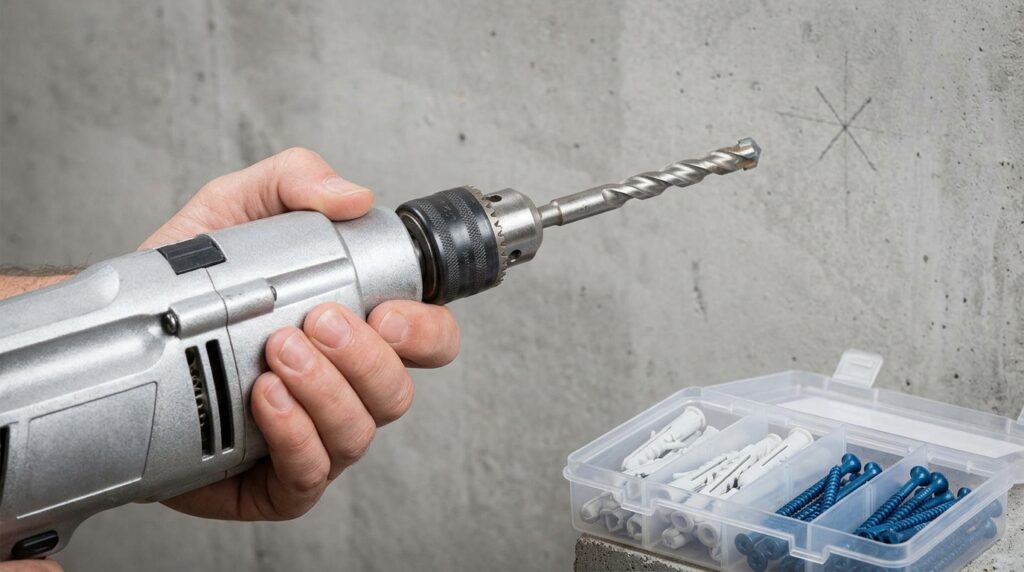
A carbide-tipped masonry drill bit is essential since regular metal bits cannot penetrate concrete without dulling quickly or breaking. The bit size should match the anchor being used, which is usually specified on the anchor’s packaging.
Hammer Drill
While a standard drill can sometimes work on softer concrete, a hammer drill makes the process significantly easier by combining rotation with a hammering action that breaks through dense material. Renting a hammer drill for a single project is often more practical than purchasing one for occasional use.
Concrete Anchors and Screws
Concrete anchors, such as plastic sleeve anchors or metal expansion anchors, are designed to grip tightly inside a drilled hole and provide a secure base for screws. Choosing the correct anchor size and weight rating ensures the picture stays firmly in place without slipping over time.
Choosing the Right Anchor for Your Picture
Not all anchors are created equal, and selecting the right one depends largely on how heavy your picture frame is. Using an anchor rated for less weight than your frame can lead to it falling and potentially causing damage.
Plastic Sleeve Anchors
Plastic sleeve anchors work well for lightweight frames and are relatively easy to install using just a drill and hammer. These anchors expand slightly once a screw is inserted, gripping the sides of the drilled hole securely for everyday picture hanging needs.
Metal Expansion Anchors
For heavier frames or mirrors, metal expansion anchors offer significantly more holding strength since they grip the concrete more firmly than plastic alternatives. These anchors are slightly more involved to install but provide peace of mind for larger or more valuable pieces.
Self-Tapping Concrete Screws
Self-tapping concrete screws, often called Tapcon screws, thread directly into a pre-drilled hole without needing a separate anchor, simplifying installation for many users. These screws work well for both light and moderately heavy frames, making them a versatile choice for most home projects.
Anchor Weight Capacity Comparison
The table below outlines typical weight capacities for different anchor types to help you choose the right hardware for your picture frame.
| Anchor Type | Typical Weight Capacity | Best Used For |
| Plastic Sleeve Anchor | Up to 10–15 lbs | Small, lightweight frames |
| Self-Tapping Concrete Screw | Up to 25–35 lbs | Medium-sized frames or shelves |
| Metal Expansion Anchor | 35 lbs and above | Heavy frames, mirrors, or artwork |
Matching the anchor to your frame’s actual weight, rather than guessing, prevents accidents and ensures a long-lasting, secure hold on the wall.
Step-by-Step Process to Hang Pictures on Concrete
Following a clear sequence of steps makes the entire process manageable, even for those with little experience working with masonry tools. Each step plays an important role in achieving a clean, secure result.
Step One: Mark the Drilling Spot
Use a pencil to mark the exact spot where the picture hook or screw needs to go, double-checking measurements with a level to ensure the frame will hang straight. Taking a few extra minutes at this stage prevents unnecessary extra holes in the wall later.
Step Two: Drill the Pilot Hole
Using a masonry bit matched to your anchor size, drill slowly and steadily into the marked spot, applying light pressure rather than forcing the drill. Pause periodically to clear dust from the hole, which helps the drill bit work more efficiently and reduces strain on the tool.
Step Three: Insert the Anchor
Once the hole is drilled to the correct depth, gently tap the anchor into place using a hammer until it sits flush with the wall surface. The anchor should fit snugly without excessive force, as forcing it too hard can sometimes cause the surrounding concrete to crack.
Step Four: Secure the Screw or Hook
Insert the screw or picture hook into the anchor and tighten it firmly, ensuring it holds steady without wobbling. For heavier frames, using two anchors spaced evenly apart provides additional stability and helps distribute weight more evenly.
Step Five: Hang and Adjust the Picture
Carefully hang the picture on the installed hook or screw, then step back and check that it’s level and positioned as intended. Small adjustments at this stage are much easier than having to remove and reposition an anchor later.
Alternative Methods for Lightweight Pictures
For those who prefer not to drill into concrete, especially in rental properties, several alternative methods can still achieve a secure hold for lighter frames. These options are worth considering depending on the situation.
Heavy-Duty Adhesive Hooks
Heavy-duty adhesive hooks designed for masonry surfaces can hold lightweight frames without the need for drilling, making them ideal for renters or temporary hanging needs. It’s important to check the weight rating on the packaging, since adhesive strength varies significantly between brands.
Picture Hanging Strips
Command-style picture hanging strips work on smooth concrete surfaces and can support small to medium frames, though textured or painted concrete may reduce their holding power. These strips also allow for easier repositioning without leaving permanent holes in the wall.
Leaning Against the Wall
For very lightweight or decorative frames, simply leaning them against the wall on a shelf or ledge avoids the need for any hardware altogether. While this isn’t suitable for every space, it’s a practical option for casual, adjustable displays.
Common Mistakes to Avoid
Even a straightforward project like hanging pictures on concrete can go wrong if certain common mistakes aren’t avoided. Being aware of these issues beforehand saves time and prevents wall damage.
Using the Wrong Drill Bit
Attempting to drill concrete with a standard bit instead of a masonry bit often results in a dull, ineffective tool and an incomplete hole. Always confirm the bit is specifically labeled for masonry or concrete before starting the project.
Choosing an Undersized Anchor
Selecting an anchor rated for less weight than the picture frame can lead to it loosening or falling over time, especially in high-traffic areas where vibrations are common. Always round up slightly when estimating frame weight to ensure a safety margin.
Skipping the Level Check
Failing to check for level before drilling often results in a crooked picture that requires an additional hole to fix. Using a small level during the marking stage prevents this frustrating and avoidable mistake.
Frequently Asked Questions
Can I hang a picture on concrete without drilling?
Yes, heavy-duty adhesive hooks or hanging strips can work for lightweight frames, though drilling with proper anchors provides a more secure and long-lasting hold.
What drill bit do I need for concrete walls?
A carbide-tipped masonry drill bit is required to effectively drill into concrete without damaging the tool or the wall.
How much weight can a concrete anchor hold?
Weight capacity varies by anchor type, ranging from about 10 pounds for small plastic anchors to over 35 pounds for metal expansion anchors.
Do I need a hammer drill for concrete?
While a standard drill can work on softer concrete, a hammer drill makes the process significantly faster and easier, especially for denser walls.
Conclusion
So, how to hang pictures on concrete walls? The process involves choosing the right masonry tools, selecting an anchor rated for your frame’s weight, and carefully drilling and securing the hardware in place. Whether using traditional anchors and screws or lightweight adhesive alternatives, following the correct steps ensures your pictures stay securely mounted without damaging the wall. With the right preparation, even a dense concrete surface can become a reliable spot to showcase your favorite artwork or photos.
Related Articles
Beadboard Ceiling Ideas: A Complete Guide
Can You Paint Roof Shingles? Pros, Cons, and Best Practices
Wood Filler for Hardwood Floors: Your Complete Guide
Can You Paint Vinyl Cladding? Prep and Paint Like a Pro
Basement Ceiling Insulation: Complete Guide to Types, Costs & Best Options