

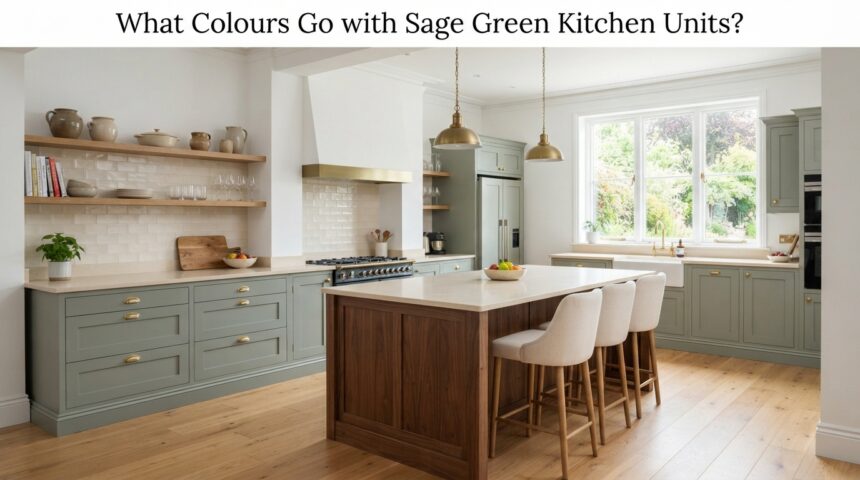
Sage green kitchen units pair best with warm white, cream, natural oak, soft beige and warm grey. For more contrast, add charcoal, matt black or deep navy. Brass, gold and terracotta bring warmth, while blush pink adds a gentle, modern touch. The right choice depends on whether your sage leans grey or yellow. Natural light and worktop material also change how each colour looks. Test small samples in your own kitchen before you decide.
Sage green has moved from passing trend to trusted kitchen classic, yet choosing partners for it can still feel confusing. Many homeowners ask what colours go with sage green kitchen units, and the honest answer starts with the undertone of the cabinets, not with a favourite paint chart. This guide covers the safest neutrals, the boldest accents, the best materials and the mistakes worth avoiding, so your palette feels calm and complete.
Why Sage Green Is So Popular in Kitchens
Sage sits between grey and green, so it feels calm without looking cold. It suits Shaker doors and flat-fronted units alike, and it brings a natural note into a room full of hard surfaces. Because it behaves almost like a neutral, it dates more slowly than louder colours, which makes it a safer long-term choice.
Understanding Sage Green: Shades and Undertones
Sage green is not one fixed shade, and its undertone decides which partners look right. Hold a white sheet of paper beside your doors to spot a blue, grey or yellow lean.
Grey-Green Sage
This cooler sage has a muted, silvery look. It pairs well with crisp white, cool stone and soft blue-grey accents. Heavy yellow tones nearby can make it feel flat.
Yellow-Green Sage
Warmer and more earthy, this sage carries a hint of olive. It flatters cream, oak, brass and terracotta. Cold, bluish greys tend to fight with it.
Pale Sage
Light sage reflects more light, so it suits smaller or darker rooms. White, pale wood and soft neutrals keep the result airy. Very deep accents can overpower it.
Deep or Dusty Sage
Darker sage feels richer and more dramatic. It looks striking with brass, dark stone and warm wood. Lighter walls stop the room from feeling closed in.
Quick Guide: Best Colours to Pair with Sage Green Kitchen Units
The table below gives a fast overview before we look at each colour in detail. Use it to shortlist two or three options that suit your undertone.
| Colour | Mood | Best used for |
| Warm white or cream | Fresh, timeless | Walls, tiles |
| Oak or walnut | Warm, organic | Worktops, shelves |
| Beige or greige | Soft, calm | Walls, flooring |
| Charcoal or matt black | Modern, defined | Taps, handles |
| Brass or gold | Rich, classic | Handles, lighting |
| Terracotta | Earthy, cosy | Tiles, accessories |
| Blush pink | Gentle, fresh | Walls, textiles |
| Navy | Bold, grounded | Island, feature wall |
A reliable formula is one main neutral, one natural material and one accent colour. Keep the palette to three or four shades in total.
Neutral Colours That Go with Sage Green
Neutrals let sage stay the star of the room. Choose them by undertone rather than by name.
Warm White and Cream
These shades brighten the space without harsh contrast. They suit walls, tiles and worktops, and they work with almost every sage. Creamy tones feel softer than stark white.
Beige and Greige
Soft beige creates a cosy backdrop that feels natural beside sage. Greige offers similar warmth with a slightly more modern edge. Both are ideal for walls and flooring.
Warm Grey
A grey with a brown undertone keeps the scheme balanced and calm. It works well in a two-tone layout or a utility area. Icy greys can make sage look dull.
Charcoal and Black
Dark neutrals add structure and sharp contrast. Use them in small doses, such as taps, window frames or a slim island top. A matt finish looks especially current.
Warm Colours That Go with Sage Green
Warm shades make sage feel richer and more welcoming. They work best as accents rather than main colours.
Terracotta and Clay
These earthy reds sit almost opposite green on the colour wheel, so they create natural harmony. Try them in tiles, plant pots or ceramics. They suit country and Mediterranean kitchens especially well.
Blush and Dusty Pink
A muted pink softens sage and gives a fresh, contemporary feel. It works best on walls, blinds and textiles. Keep the pink pale so the pairing stays elegant.
Mustard and Ochre
A touch of golden yellow adds energy without shouting. Use it on a vase, a tea towel or a fruit bowl. Too much can make the room feel busy.
Cool and Deep Colours That Go with Sage Green
Cooler shades add depth and a more grown-up mood. They suit larger kitchens and rooms with plenty of daylight.
Navy Blue
Navy gives striking contrast on an island or feature wall. It grounds the lighter sage and feels classic. Pairing it with brass gives a traditional finish.
Forest Green
A deeper green creates a tonal, layered scheme. Use it on an island, a pantry door or the ceiling. Keep the undertones similar so the greens do not clash.
Slate Blue and Teal
Blue-grey brings a soft coastal feel, while teal is bolder and more dramatic. Both work best on walls or accessories. A cooler sage suits them best.
Natural Materials and Textures That Pair with Sage Green
Sage comes from nature, so natural materials suit it best. Mixing two or three textures adds depth without adding more colour.
| Material | Effect | Tip |
| Oak, ash or walnut | Warm, organic | Light woods suit small rooms; walnut suits deep sage |
| White or veined marble | Elegant, classic | Warm veining beats cool veining |
| Quartz | Clean, practical | Choose a subtle pattern |
| Terrazzo or concrete | Modern, textured | Neutral flecks keep it calm |
| Rattan and linen | Soft, relaxed | Use in stools, blinds and baskets |
Metallic Finishes: Handles, Taps and Lighting
Metal finishes act like jewellery for sage units. Pick one main metal and, at most, one supporting finish.
- Brass and gold: warm up grey-green and yellow-green sage for a classic, upscale look.
- Matt black: gives a sharp, modern edge, especially with light wood.
- Brushed nickel and chrome: stay clean and understated, and suit cooler sage.
- Copper: adds rustic warmth and fits country-style kitchens.
Best Colour Combinations for Different Kitchen Styles
Your kitchen style should guide the supporting palette. These combinations are ready to copy.
| Style | Palette |
| Modern | Sage, matt black, light wood |
| Farmhouse | Sage, cream, natural oak |
| Traditional | Sage, brass, white marble |
| Scandinavian | Sage, white, pale ash |
| Coastal | Sage, soft blue, white |
| Country cottage | Sage, terracotta, linen |
Colours for Specific Kitchen Areas
Each surface plays a different role, so the best colour changes from area to area. Use this guide when finalising your choices.
| Area | Best colour choice |
| Walls | Warm white, cream or pale greige |
| Worktops | Oak, white quartz or veined marble |
| Splashback | Off-white or handmade clay-toned tiles |
| Flooring | Light wood, stone-look tiles or a warm rug |
| Island | Navy, forest green or cream for contrast |
| Accessories | Terracotta, brass and leafy plants |
How Light Affects Sage Green Kitchens
Daylight changes sage through the day. North-facing kitchens make it look greyer and cooler, so warm whites and brass help, while south-facing rooms show its brightest, freshest side. Warm bulbs flatter the green in the evening, whereas very cool bulbs can dull it. View your samples in the morning, at midday and at night before committing.
Colours and Mistakes to Avoid with Sage Green Units
Some choices work against sage, especially when the undertones disagree. Watch out for these:
- Icy grey or blue-grey tiles beside a warm sage, which pull the scheme in opposite directions.
- Neon or very bright colours, which overpower a muted green.
- Too many accent shades or mixed metals, which make the kitchen look cluttered.
Tips for Choosing the Right Colour Palette
Good palettes follow a simple balance. Use roughly 60 percent neutral walls and floors, 30 percent sage and wood, and 10 percent accents. Add plants to tie the greens together, and keep bold trends in items you can change easily, such as cushions, ceramics and towels.
Frequently Asked Questions
What colour walls go with sage green kitchen cabinets?
Warm white, cream and soft greige are the safest options. A pale blush or slightly deeper green also works for a bolder look.
What worktop suits sage green units best?
Oak and veined marble are the most reliable choices. White quartz gives a cleaner finish, while dark stone suits deeper sage.
Does sage green go with grey?
Yes, provided the grey is warm. Cold grey can make sage look lifeless.
What handle colour suits sage green cabinets?
Brass suits warm sage, and matt black gives a modern edge. Nickel is better with cooler shades.
Will a sage green kitchen go out of style?
It is likely to stay popular because it behaves like a soft neutral. Choose timeless worktops and hardware, and keep trends in accessories.
Conclusion
The best answer to what colours go with sage green kitchen units is a balanced palette of warm neutrals, natural wood, one metal finish and a small accent colour. Let your sage’s undertone and your kitchen’s light guide each decision, and confirm with real samples before buying. Done well, the result feels calm, natural and long-lasting.
Related Articles
How to Assemble Furniture After a Move: Complete Step-by-Step Guide
How Long Do Garage Door Springs Last? Full Lifespan Guide
Basement Ceiling Insulation: Complete Guide to Types, Costs & Best Options
How to Clean Slate Tile Floors: Complete Care & Maintenance Guide