

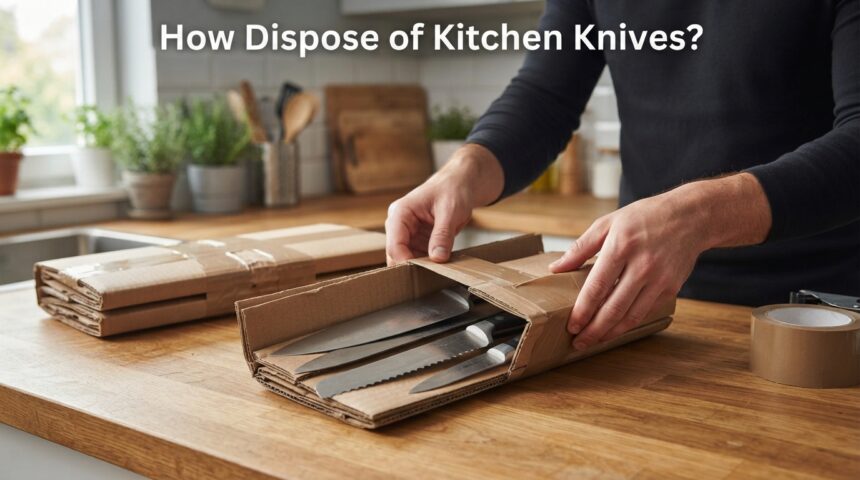
To answer how dispose of kitchen knives safely, start by covering the blade so nobody can get cut. Wrap the knife in thick cardboard and tape it firmly around the edge and tip. Slide the wrapped knife into a rigid box or carton and seal it well.
Write “Sharp: Knife Inside” on the outside so waste workers see the warning. Place the package in your household trash, never loose in a bag or recycling bin. If the knife still works, donating, selling, or scrap recycling is a smarter choice.
Why Careless Knife Disposal Is Dangerous
A knife tossed loosely into a bin can cut through a bag in seconds. The risk reaches far beyond your own kitchen.
Risk to Waste Workers
Garbage is often compressed and sorted by hand. A bare blade can slice through a thin bag and cut a worker’s hands or arms. Many injuries in waste handling come from exactly this kind of hidden sharp object.
Risk to Family Members and Pets
Children and animals tend to dig into open bins. A knife left in an easy-to-reach spot can cause a serious wound. Keep discarded blades sealed and out of reach until collection day.
Local Rules and the Environment
Some councils have specific rules about sharp objects in household waste. Metal that ends up in a landfill is also a wasted resource that could be melted and reused. A quick look at your local guidelines saves both trouble and material.
Should You Throw the Knife Away at All?
Not every old knife belongs in the trash. A short inspection tells you whether it deserves a second life.
Signs a Knife Is Worth Saving
A firm handle, a straight blade, and only light surface stains are good signs. Dullness alone is not a problem, because sharpening fixes it cheaply. Quality steel from a known brand can often last for decades with care.
Signs a Knife Is Beyond Saving
Deep rust pits, cracks near the handle, and a bent or chipped blade make a knife unsafe to use. A wobbling handle can cause the blade to slip during cutting. In these cases, safe disposal is the responsible route.
Better Alternatives to the Trash
Before you learn how dispose of kitchen knives in the bin, consider paths that keep good metal in use.
Donate or Sell
Thrift stores, shelters, and community kitchens often accept clean, usable knives. Online marketplaces and local groups are useful for selling sets in decent condition. Always hand over knives with the blade covered.
Sharpen and Restore
A professional sharpener can revive a tired blade for a small fee. Rust that has not eaten deep into the steel can often be removed. A restored knife may serve you for years, which beats buying a new one.
Repurpose or Trade In
Old blades can become garden tools, craft cutters, or camping gear if handled carefully. Some brands and kitchenware shops run trade-in programs that give you credit toward new knives. Ask at the store where you bought the set.
Supplies You Need for Safe Packaging
Gathering materials first makes the job quick and safe. Most items are already in a typical home.
| Item | Purpose |
| Thick cardboard or folded newspaper | Covers the blade and blocks the edge |
| Duct or packing tape | Holds the wrapping firmly in place |
| Rigid container (box, carton, plastic tube) | Adds a second protective layer |
| Cut-resistant gloves | Protects your hands during wrapping |
| Marker | Labels the package clearly |
How Dispose of Kitchen Knives Step by Step in Household Trash
When no other option fits, this method keeps everyone safe. Each stage builds on the one before it.
Prepare the Knife
Put on gloves, then wash and dry the knife so no food residue remains. Lay it flat on a stable surface, away from the edge of the counter. Handle it by the spine or handle, never by the edge.
Wrap and Seal
Fold cardboard around the blade so the edge and tip are fully covered. Tape it tightly in several places, adding extra layers over the point. Then place the bundle in a sturdy box or carton and close it completely.
Label and Bin
Mark the container clearly with the words “Sharp: Knife Inside.” Put it in your regular garbage bin, not the recycling bin. Store it out of children’s reach until the collection truck arrives.
Recycling Knives as Scrap Metal
Recycling is a good middle ground when a knife is damaged but the steel is sound. It works only if the center accepts such items.
Which Knives Qualify
Stainless and carbon steel blades are usually accepted by scrap metal yards. Ceramic knives are not metal and normally cannot be recycled. Call ahead, because policies differ between facilities.
Handles and Packaging
Wood, plastic, or composite handles may need to stay on if they cannot be removed safely. Some yards accept complete knives, while others prefer bare metal. Wrap the blades the same way you would for the trash before transporting them.
Finding a Local Center
Search online for scrap metal yards near you or check your municipal website. Ask whether they take small kitchen items and whether there is a drop-off fee. Some communities also run collection days for sharp objects.
Disposal Methods by Knife Type
Different knives call for slightly different care. The table below shows the best approach for each.
| Knife Type | Best Method | Extra Note |
| Chef’s and paring knives | Donate, sharpen, or scrap recycle | Usually worth restoring |
| Serrated bread knives | Wrap heavily and bin, or scrap recycle | Teeth catch on cardboard, so use extra layers |
| Steak and butter knives | Donate as a set or scrap recycle | Cutlery sets often sell easily |
| Ceramic knives | Wrap and place in household trash | Brittle, so pack them gently |
| Rusty or broken knives | Wrap and bin, or scrap recycle | Cover broken edges completely |
| Full knife blocks | Remove blades, wrap each one | Dispose of the wooden block separately |
Common Mistakes to Avoid
Most knife disposal accidents come from rushing. Watch out for these errors:
- Dropping a knife loose into a trash bag
- Wrapping the blade in thin paper or plastic film alone
- Placing sharp items in curbside recycling
- Skipping the warning label
- Leaving the package where children or pets can reach it
Frequently Asked Questions
Can I put a knife in the recycling bin?
Usually no, because collection workers sort recycling by hand. Take it to a scrap metal yard instead.
What should I do with a broken knife?
Wrap every sharp edge in thick cardboard, tape it, and place it in a rigid container. Then label it and bin it or drop it at a scrap yard.
Can I donate used knives?
Yes, if they are clean, sturdy, and safe to use. Many charities welcome them when the blades are covered.
What if my local rules are unclear?
Contact your city’s waste department or check its website. They can tell you what is allowed in household trash.
Conclusion
Knowing how dispose of kitchen knives protects workers, family, and pets while cutting waste. Choose reuse or recycling first, and use the wrap, seal, and label method when the trash is your only option. A few minutes of care prevents serious injuries.
Related Articles
How to Stain Wood Floors: A Complete Step-by-Step Guide
How to Choose the Best Flooring for Kids: Complete Buying Guide
Can You Use Pine-Sol on Wood Floors?
How to Regrout Tile Floor: A Complete Step-by-Step Guide
How to Clean Linoleum Floors: The Complete Step-by-Step Guide