
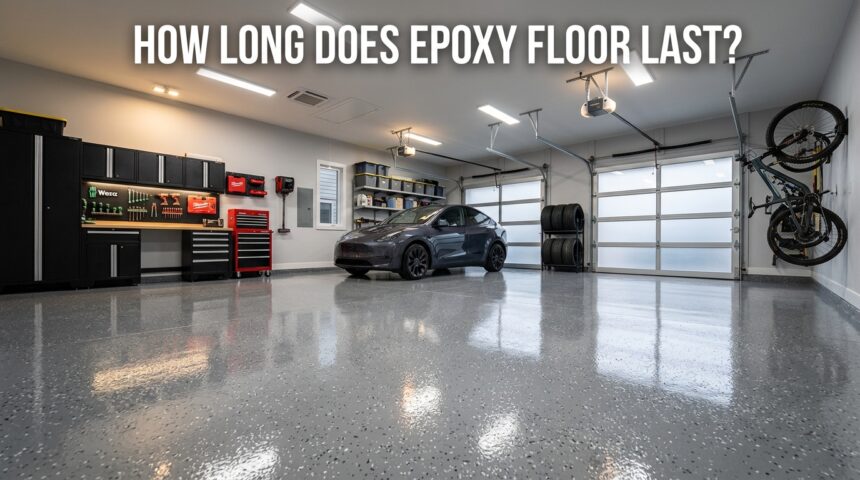
Epoxy flooring has become one of the most popular choices for garages, basements, and industrial spaces because of its durability, glossy finish, and resistance to damage. But before investing in this flooring option, most homeowners and business owners want to know exactly how long does epoxy floor last once it is installed.
On average, a properly installed epoxy floor can last anywhere between five and twenty years, depending heavily on the type of epoxy used, the surface it is applied over, the amount of daily foot or vehicle traffic it faces, and how consistently it is cleaned and maintained.
This guide breaks down every factor that influences epoxy floor lifespan, explains the warning signs of wear, and shares practical maintenance tips so you can get the maximum value from your investment.
What Is Epoxy Flooring?
Epoxy flooring is a resin-based coating applied over concrete to create a hard, seamless, and chemical-resistant surface. It is widely used because it combines strength with a clean, polished appearance that suits both homes and workplaces.
The Basic Composition of Epoxy
Epoxy flooring is made by mixing a resin with a hardener, which triggers a chemical reaction that binds the coating tightly to the concrete beneath it.
This reaction is what gives epoxy its rock-hard, glass-like finish once it has fully cured. The strength of this bond is one of the biggest reasons epoxy floors resist cracking and peeling far better than paint-based alternatives.
Why Homeowners and Businesses Choose It
People choose epoxy flooring because it offers a rare combination of visual appeal and industrial-grade toughness at a relatively affordable price.
It resists oil stains, chemical spills, and heavy impacts, making it ideal for garages, warehouses, and workshops. Its smooth, reflective surface also makes cleaning simple, which adds to its long-term appeal for busy households and commercial spaces.
Average Lifespan of Epoxy Flooring
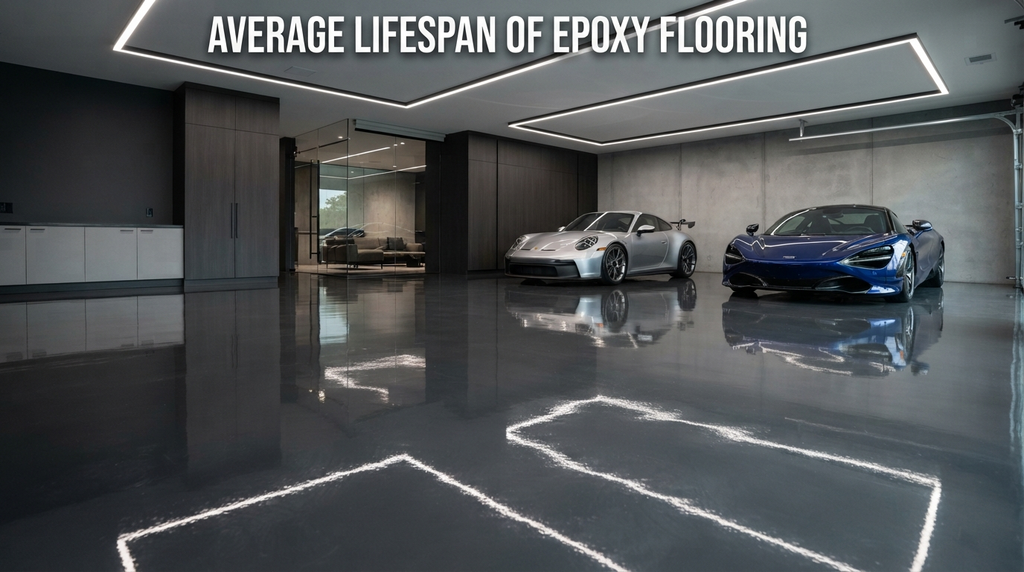
The lifespan of epoxy flooring is not a fixed number since it changes based on where and how the floor is used. Generally speaking, residential floors last far longer than commercial or industrial ones because they experience far less daily stress.
Residential Epoxy Floors
In a typical home setting, epoxy floors can last between fifteen and twenty years or even longer when properly maintained.
Homes usually see lighter foot traffic and fewer harsh chemical spills compared to commercial spaces, which allows the coating to stay intact for a much longer period. Regular sweeping and occasional mopping are often enough to keep a residential epoxy floor looking new for well over a decade.
Commercial and Industrial Epoxy Floors
Commercial and industrial spaces put epoxy flooring through a much tougher test, with heavy machinery, forklifts, and constant foot traffic wearing down the surface faster.
In these environments, the coating typically lasts between five and ten years before it needs recoating or full replacement. Facilities that handle chemicals, oils, or extreme temperatures may see this lifespan shortened even further if protective topcoats are not reapplied regularly.
Garage Floors Specifically
Garage floors sit somewhere between residential and light commercial use, since they deal with vehicle weight, tire friction, and occasional chemical drips like oil or brake fluid.
A well-installed garage epoxy floor generally lasts between ten and twenty years, with the exact figure depending on how often vehicles are parked and how quickly spills are cleaned. Garages that also serve as workshops with heavier tool use may experience faster wear along high-traffic zones.
Factors That Affect Epoxy Floor Lifespan
Several variables work together to determine exactly how long an epoxy floor will hold up over time. Understanding these factors helps set realistic expectations and highlights what can be controlled to extend the coating’s life.
Quality of Installation
The single biggest factor influencing epoxy floor lifespan is how well the surface was prepared and coated during installation.
Concrete that is not properly cleaned, ground, and primed before the epoxy is applied often leads to poor adhesion, causing the coating to bubble or peel much earlier than expected. Professional installation, which includes moisture testing and correct curing time, dramatically increases the chances of the floor lasting toward the higher end of its expected range.
Type of Epoxy Used
Not all epoxy coatings are built the same, and the formulation used has a direct impact on durability. Below is a simple comparison of common epoxy types and their typical performance:
| Epoxy Type | Durability Level | Typical Lifespan |
| 100% Solids Epoxy | Very High | 15–20+ years |
| Water-Based Epoxy | Moderate | 5–10 years |
| Solvent-Based Epoxy | High | 10–15 years |
100% solids epoxy is thicker and more resistant to chemicals and impact, which is why it is often chosen for garages and industrial floors that need to last for decades.
Traffic and Usage
The amount of daily activity a floor experiences plays a major role in how quickly the coating wears down.
Heavy foot traffic, rolling equipment, or constant vehicle movement gradually thins out the protective topcoat, leading to dullness and eventual exposure of the base layer. Spaces with lighter, more occasional use naturally preserve the glossy finish for a much longer stretch of time.
Exposure to Chemicals and UV Light
Epoxy floors are generally chemical resistant, but prolonged exposure to harsh substances like gasoline, strong solvents, or prolonged direct sunlight can still cause gradual damage.
UV exposure in particular can cause the surface to yellow or become slightly chalky over the years, especially in garages with large windows or open doors. Choosing a UV-resistant topcoat can help slow down this discoloration process significantly.
Maintenance Routine
How consistently a floor is cleaned and cared for has a direct effect on its long-term appearance and structural integrity.
Floors that are swept regularly and mopped with mild, non-abrasive cleaners retain their shine and resist scratching far better than neglected surfaces. Skipping maintenance allows grit and debris to act like sandpaper underfoot, wearing down the topcoat much faster than expected.
Climate and Temperature
Extreme temperature swings and high humidity levels can affect how well epoxy bonds to concrete and how long it remains stable. In regions with significant seasonal temperature changes, the expansion and contraction of concrete can sometimes stress the coating, leading to hairline cracks over time.
Moisture trapped beneath the concrete slab before installation is another common cause of early coating failure, which is why proper moisture testing is essential.
Signs Your Epoxy Floor Is Wearing Out
Recognizing the early signs of wear allows you to address problems before they require a full floor replacement. Most warning signs fall into either visible surface changes or functional performance issues.
Visual Cues
Common visual signs of an aging epoxy floor include fading color, a dull or cloudy finish where the surface used to be glossy, and small cracks forming near high-traffic areas.
Peeling or bubbling at the edges is another clear indicator that the bond between the epoxy and concrete has started to weaken. These issues often begin in small, isolated sections before spreading across the floor if left untreated.
Functional Issues
Beyond appearance, a worn epoxy floor may start to feel slippery, especially when wet, since the anti-slip additives in the topcoat break down over time.
Chipping near doorways or under heavy furniture and equipment is also common, as these are the areas that endure the most repeated impact. If you notice these functional changes, it is usually a sign that a fresh topcoat or partial recoating is needed soon.
How to Extend the Life of Your Epoxy Floor
While every epoxy floor eventually shows some wear, consistent care can push its lifespan toward the higher end of the expected range. The following practices are simple but make a noticeable difference over the years.
Regular Cleaning Tips
Sweeping or dust-mopping the floor weekly helps remove grit that would otherwise scratch the surface underfoot. For deeper cleaning, a mild pH-neutral cleaner mixed with warm water is enough to maintain shine without breaking down the coating.
Harsh chemicals like ammonia-based cleaners or abrasive scouring pads should be avoided since they can dull the topcoat over time.
Preventive Measures
Placing mats under vehicle tires or heavy equipment helps distribute weight and reduces direct wear on the coating. Using furniture pads under workbenches or storage racks similarly prevents scratching when items are moved across the floor.
Quickly wiping up spills, especially oil or chemical drips, prevents staining and reduces the chance of long-term surface damage.
Reapplying Topcoats
Most epoxy floors benefit from a fresh topcoat every few years, even if the base layer is still structurally sound.
This thin recoating restores gloss, renews slip resistance, and adds another protective layer against everyday wear. It is generally a much more affordable option than a full floor replacement and can significantly extend the overall lifespan of the flooring system.
Epoxy vs. Other Flooring Options: Lifespan Comparison
Comparing epoxy to other common flooring materials helps put its durability into perspective. Many competing options are frequently reviewed alongside epoxy, so understanding the differences is useful before making a final decision.
Epoxy vs. Polished Concrete
Polished concrete is another long-lasting option, often rated to last twenty years or more since there is no separate coating layer to wear away.
However, it lacks the chemical resistance and customizable color options that epoxy offers, making epoxy the more practical choice for garages and workshops exposed to spills.
Epoxy vs. Tile or Vinyl Flooring
Tile and vinyl flooring typically last between ten and twenty years but are more prone to cracking, chipping, or water damage at the seams. Epoxy’s seamless application eliminates these weak points, giving it an advantage in moisture-heavy or high-impact environments where tile grout lines tend to fail first.
Cost vs. Lifespan: Is Epoxy Worth It?
Understanding the balance between upfront cost and long-term durability helps determine whether epoxy is a worthwhile investment for a specific space.
Initial Cost Breakdown
Epoxy flooring installation costs generally range based on the size of the area, the type of epoxy chosen, and the complexity of surface preparation required beforehand.
Professional installation with premium 100% solids epoxy tends to cost more upfront but pays off through a significantly longer lifespan compared to cheaper water-based alternatives.
Long-Term Value
When the cost is calculated per year of actual use, epoxy often works out cheaper than repeatedly replacing tile, vinyl, or painted concrete floors.
A durable epoxy floor lasting fifteen to twenty years spreads its upfront cost over a long period, making it one of the more economical flooring choices for high-traffic areas over time.
Frequently Asked Questions
Can epoxy floors be repaired instead of replaced?
Yes, minor cracks, chips, or dull patches can usually be repaired by sanding down the affected area and applying a fresh coat, avoiding the need for a full replacement in most cases.
Does epoxy flooring crack over time?
Epoxy itself is flexible, but cracks can appear if the underlying concrete shifts or if moisture was trapped beneath the slab during installation, making proper prep work essential.
How often should an epoxy floor be recoated?
Most floors benefit from a new topcoat every three to five years in residential settings, while commercial floors with heavier traffic may need recoating every one to three years.
Is epoxy flooring better than paint for garages?
Epoxy generally outlasts standard garage floor paint by many years since it forms a much thicker, chemically bonded layer instead of sitting as a thin surface film.
Conclusion
So, how long does epoxy floor last in real-world conditions? The honest answer depends on installation quality, epoxy type, traffic levels, and how well the floor is maintained over the years, but most properly installed floors comfortably last between ten and twenty years.
Residential spaces tend to see the longest lifespan, while busy commercial and industrial floors may need recoating sooner due to heavier daily wear.
By choosing a high-quality epoxy type, following simple maintenance habits, and addressing early warning signs promptly, most homeowners and business owners can get well over a decade of reliable performance from their epoxy flooring investment.
Related Articles
What is TPO Roofing? Complete Guide to Benefits, Cost & Installation
How to Maintain a Roof in Harsh Weather Conditions: A Complete Homeowner’s Guide
How to Measure Gutter Size: The Complete Step-by-Step Guide
Do Gutter Guards Cause Ice Dams? The Truth Homeowners Need to Know
How to Fill a Blank Wall: 12 Creative & Practical Ideas for Every Room