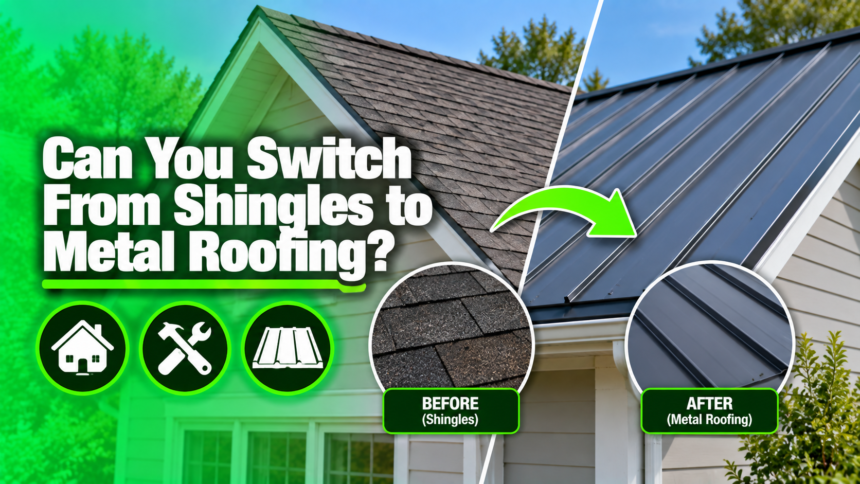
Yes, you can switch from shingles to metal roofing, and thousands of homeowners make this change every year for better durability and long-term value. The conversion can be done either by installing metal panels directly over the old shingles or by removing the shingles completely before the new roof goes on.
Your choice depends on the condition of your roof deck, local building codes, and how much you are willing to invest upfront. This guide walks through every part of the process so you know exactly what switching from shingles to metal roofing actually involves before you call a contractor.
Why Switch From Shingles to Metal?
Homeowners move away from shingles because metal roofing lasts far longer and handles harsh weather much better. The switch also brings energy savings and a noticeable boost to resale value.
Longer Lifespan
A shingle roof usually needs replacing every fifteen to thirty years, while a metal roof can easily last forty to seventy years with basic upkeep. This means fewer replacement cycles and less money spent over the life of your home.
Better Durability
Metal panels resist wind uplift, hail dents, and fire spread far better than standard asphalt shingles. In regions with severe storms, metal roofing is often rated to withstand gusts that would tear shingles apart.
Energy Efficiency
Metal reflects solar heat instead of absorbing it, which keeps attics cooler during summer months. This reflectivity can lower cooling costs noticeably, especially in warmer climates.
Higher Home Value
Homes with metal roofs often sell faster and at better prices because buyers see it as a long-term upgrade with less maintenance ahead. It signals to buyers that a major replacement will not be needed for decades.
Can You Install Metal Roofing Over Shingles?
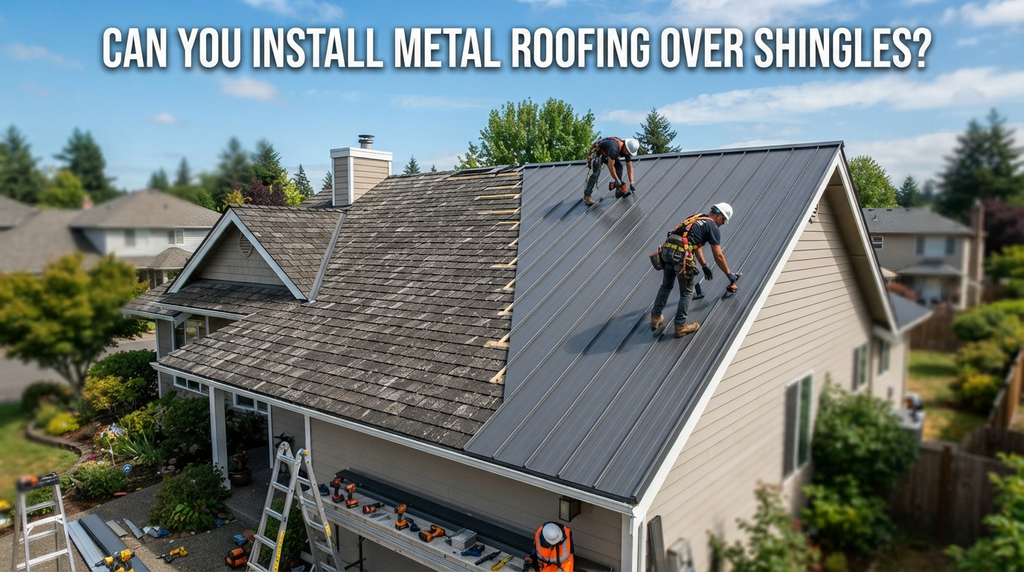
In many cases, yes, metal panels can be installed directly over existing shingles using furring strips, but this depends heavily on local code and roof condition. It is a faster and cheaper option, though not always the best long-term choice.
The Overlay Method Explained
Installing over shingles usually involves attaching wood furring strips across the roof, then fastening the metal panels to that framework. This creates an air gap that helps with insulation and moisture control while skipping the mess of tearing off the old layer.
When Overlay Is Allowed
Overlay is generally acceptable when the shingles are reasonably flat and the deck underneath shows no signs of rot or sagging. Many local codes limit roofs to a maximum of two layers, so this depends on how many layers already exist.
Pros and Cons of Overlay vs Tear-Off
Overlay saves time, labor costs, and disposal fees, but it also hides any existing deck problems and adds extra weight to the structure.
Tear-off costs more upfront but gives installers a clean surface and a chance to catch hidden damage early. Weighing these trade-offs is a key step before deciding how to switch from shingles to metal roofing.
Full Tear-Off: Why It’s Often Recommended
Removing the old shingles completely before installing metal is generally the safer, more thorough approach. It gives contractors full access to inspect and repair the roof deck underneath.
Inspecting the Roof Deck
Once the shingles are gone, installers can check the plywood or OSB decking for soft spots, water stains, or structural weakness. This step catches problems that would otherwise stay hidden under a new layer of metal for years.
Fixing Hidden Damage
Tear-off often reveals rot, mold, or old leaks that were never visible from inside the attic. Addressing these problems before the new roof goes on protects the investment you are making in metal roofing.
Downsides of Tear-Off
The main drawbacks are higher labor costs, longer project timelines, and disposal fees for the removed shingles. Still, most roofing professionals consider tear-off the more reliable long-term option.
Structural Considerations
Before any installation begins, it helps to confirm that your home’s framing can support the new roofing system properly. Metal is typically lighter than shingles, so this is rarely a serious obstacle.
Weight Differences
Standard asphalt shingles weigh significantly more per square foot than most metal roofing panels. Because metal is lighter, switching from shingles to metal roofing usually reduces the load on your rafters rather than increasing it, making reinforcement unnecessary in most homes.
Roof Pitch and Slope Requirements
Metal roofing performs best on roofs with a moderate to steep slope that allows water and snow to shed quickly. Very low-slope roofs may need special panel types or additional sealing to prevent leaks.
Underlayment and Ventilation Needs
Metal roofing requires different underlayment than shingles to manage moisture and temperature changes correctly. Proper attic airflow is just as important as the panels themselves.
Why Synthetic Underlayment Matters
Traditional felt paper is often replaced with synthetic or high-temperature underlayment when switching to metal.
This material handles heat better and provides a stronger moisture barrier beneath the panels. It also helps prevent condensation from forming on the underside of the metal.
Attic Ventilation Requirements
Good airflow through the attic prevents heat and moisture buildup that could damage the roof deck over time. Ridge vents, soffit vents, or specialized breathable underlayment are commonly used with metal systems. Without proper ventilation, even a well-installed metal roof can develop problems.
Types of Metal Roofing to Choose From
Metal roofing comes in several styles, each offering a different look and price point. Choosing the right type depends on budget, climate, and personal style preference.
| Metal Roof Type | Typical Look | Best For |
| Standing Seam Panels | Sleek vertical lines | Modern homes, steep slopes |
| Metal Shingles/Shakes | Mimics wood or slate | Traditional-style homes |
| Corrugated Panels | Wavy, industrial pattern | Barns, budget projects |
| Stone-Coated Steel | Looks like tile or shingles | Homeowners wanting a classic appearance |
Standing Seam Panels
These panels feature raised seams that interlock, creating a clean and modern appearance with hidden fasteners. They are among the most popular and durable choices for residential metal roofing. Their design also makes them highly resistant to leaks.
Metal Shingles and Corrugated Options
Metal shingles replicate the look of wood shakes or slate while offering metal’s durability, making them popular for traditional-style homes.
Corrugated panels, on the other hand, are typically the most budget-friendly and are common on garages or outbuildings. Both options still deliver the core benefits of switching to metal.
Cost Breakdown
Understanding the price difference helps set realistic expectations before starting the project. Metal costs more initially but often pays off through savings over time.
Average Cost Comparison
Asphalt shingles typically cost between four and seven dollars per square foot installed, while metal roofing ranges from about eight to fourteen dollars or more depending on the style chosen.
The exact price depends on panel type, roof size, and regional labor rates. Getting multiple quotes helps homeowners find a fair price for their specific project.
Long-Term Savings
Even though metal costs more upfront, its extended lifespan and lower maintenance needs often make it cheaper over a twenty or thirty year period.
Energy savings from better reflectivity can also add up significantly each year. Many homeowners find the higher initial investment worthwhile once these savings are factored in.
Permits and Local Codes
Roofing projects almost always require some level of local approval before work begins. Skipping this step can create problems when selling the home later.
Do You Need a Permit
Most municipalities require a permit for a full roof replacement, including a switch from shingles to metal roofing. Requirements vary widely, so checking with the local building department before starting is essential. A licensed contractor usually handles this paperwork as part of the job.
HOA and Contractor Requirements
Homes in a homeowners association may face additional restrictions on roofing color, material type, or panel style.
It’s also wise to confirm that any contractor hired carries proper licensing and insurance for metal roofing work specifically. This protects homeowners from liability if something goes wrong during installation.
DIY vs Hiring a Professional
Metal roofing installation is technical work that differs significantly from typical shingle repair. Most homeowners are better served by hiring an experienced crew.
Skills and Tools Needed
Metal roofing requires specialized tools for cutting, seaming, and fastening panels correctly, along with a solid understanding of expansion and contraction with temperature changes.
Incorrect fastening or spacing can lead to leaks or panel warping down the road. This makes the learning curve steeper than typical shingle work.
Why Professionals Are Recommended
Experienced installers understand flashing details, proper overlap, and ventilation requirements that are easy to get wrong on a first attempt.
Hiring a professional also usually comes with a workmanship warranty that protects the investment. For most homeowners, this added assurance outweighs the savings of doing it themselves.
Step-by-Step Overview of the Conversion Process
The general project timeline follows a fairly predictable sequence from inspection through final walkthrough.
- Initial roof inspection and consultation
- Removal of old shingles, if a full tear-off is chosen
- Repair of any damaged decking
- Installation of new synthetic underlayment
- Attachment of metal panels or furring strips
- Installation of flashing, trim, and edge details
- Final inspection and cleanup
Maintenance After Switching to Metal
Metal roofs require far less upkeep than shingles, but they still benefit from periodic attention. Simple habits go a long way toward protecting the investment.
Routine Cleaning and Inspection
Removing debris like leaves and branches prevents moisture from collecting in seams or valleys. An annual visual inspection helps catch loose fasteners or minor scratches before they become bigger issues. Most maintenance tasks can be handled quickly without professional help.
What to Watch For
Homeowners should watch for signs of rust near cut edges, loose screws, or scuffed protective coatings after major storms. Addressing these small issues early keeps the roof performing at its best for decades. Left unchecked, minor wear can eventually lead to leaks.
Common Myths About Metal Roofing
A few misconceptions still discourage homeowners from making the switch, even though most no longer hold true with modern systems.
Metal Roofs Are Noisy
Modern metal roofing includes solid decking and underlayment that absorb sound, so rain noise is comparable to a shingle roof. The noisy-roof reputation mostly comes from old barn-style installations without proper insulation. A correctly installed home roof is quiet during storms.
Metal Attracts Lightning
Metal is not a lightning magnet, and there is no evidence that it increases the chance of a strike. If lightning does strike a metal roof, the material is noncombustible and disperses the charge safely. This makes it a safer option in that specific scenario, not a riskier one.
Pros and Cons Summary
| Factor | Shingles | Metal Roofing |
| Lifespan | 15–30 years | 40–70 years |
| Upfront Cost | Lower | Higher |
| Maintenance | Moderate | Low |
| Weather Resistance | Moderate | High |
| Resale Impact | Neutral | Positive |
Conclusion
So, can you switch from shingles to metal roofing? Absolutely, and for most homeowners it is a worthwhile long-term upgrade despite the higher initial cost.
Whether you choose an overlay or a full tear-off, working with a qualified contractor ensures the job is done safely and correctly. With proper planning around permits, structure, and ventilation, the switch can deliver decades of reliable protection.
FAQs
Is it cheaper to overlay metal over shingles instead of tearing them off?
Yes, overlay is usually cheaper upfront since it skips removal and disposal costs, though it may hide existing deck damage.
How long does a metal roof installation take?
Most residential metal roof projects take a few days to about a week, depending on roof size and whether tear-off is required.
Does switching to metal roofing increase home insurance costs?
Many insurers actually offer discounts for metal roofs due to their fire and storm resistance, though this varies by provider.
Related Articles
What Are the Measurements of a Standard Shower Curtain?
How to Fill a Blank Wall: 12 Creative & Practical Ideas for Every Room
White Oak Cabinets: A Complete Guide 2026
How to Get Rid of Shower Curtain Mold
Laundry Room Cabinets: The Complete Guide to Storage, Style, and Smart Organization