
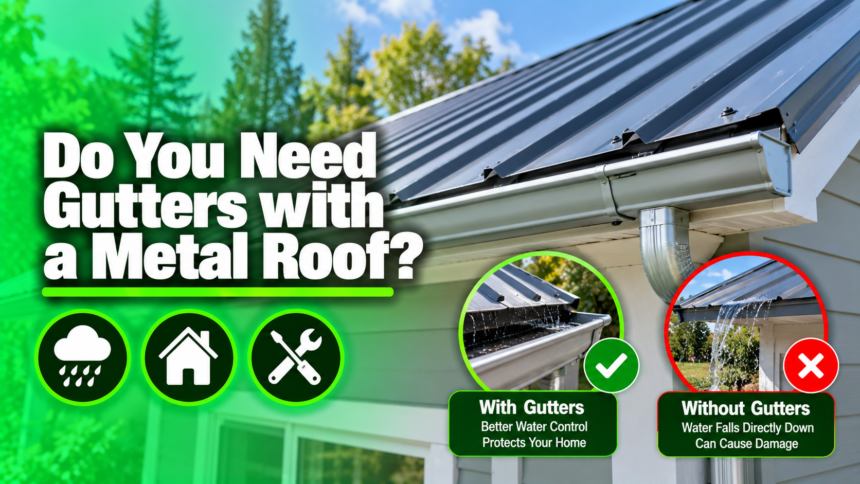
Yes, you do need gutters with a metal roof, and skipping them can actually cause more harm than good. Many homeowners assume that because metal roofing sheds water quickly, gutters become unnecessary, but the opposite is true in most cases.
Metal roofs move water off the surface faster and in larger volumes than shingle roofs, which means that water needs to be controlled and redirected properly. Without gutters, this fast-moving runoff can damage your foundation, erode your landscaping, and stain your siding over time.
Gutters simply give that water a safe path away from your home instead of letting it fall randomly off the roof edge. In short, gutters are not just helpful with a metal roof, they are one of the most important accessories you can install alongside it.
Quick Answer Summary
If you are short on time, here is the simple version: metal roofs need gutters just as much as, if not more than, asphalt shingle roofs. The speed at which water leaves a metal surface makes proper drainage even more important for protecting the structure around your home.
The Short Version
A metal roof does not stop rain, it only speeds up how quickly that rain reaches the ground. Because of this, water tends to hit the gutter line with more force and volume compared to a shingle roof. Installing the right type of gutter system, with proper hangers and spacing, solves this problem completely.
Why People Think Metal Roofs Don’t Need Gutters
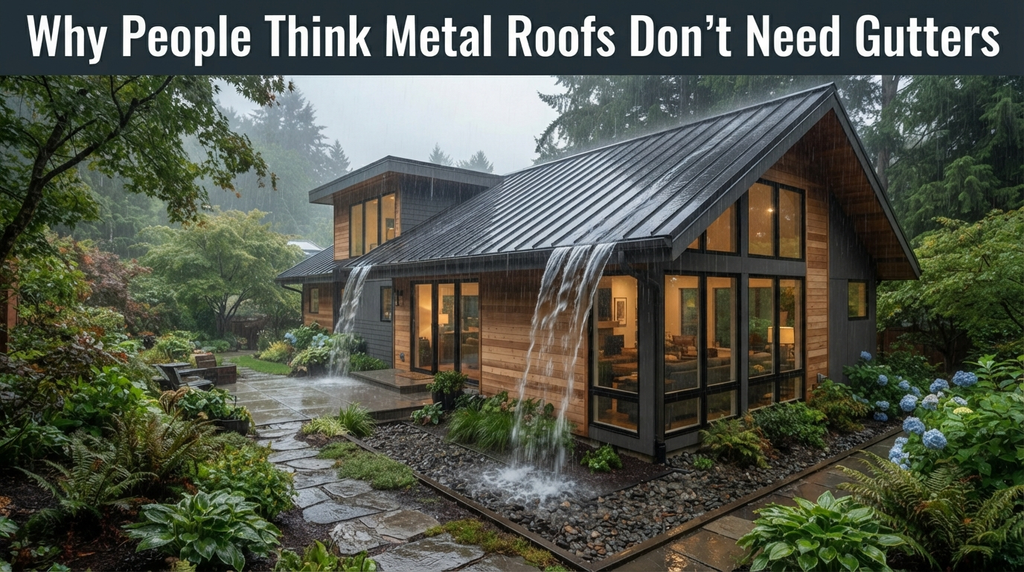
This misconception has spread widely because of how metal roofing is marketed and how it visually behaves during rainfall. People see water sliding off quickly and assume nothing further is needed to manage it.
The Self-Shedding Myth
Metal roofs are often advertised as “self-shedding,” which refers to their ability to release snow and rain without holding onto moisture the way shingles sometimes do.
Homeowners misread this feature as meaning the water disappears safely on its own. In reality, the water still has to land somewhere, and without gutters, that somewhere is usually the ground right next to your foundation.
Slippery Surface Misconception
Because metal panels feel smooth and slippery, people assume water simply runs off harmlessly.
This idea ignores the fact that a slippery surface actually increases the speed and force of water leaving the roof. Faster runoff without a gutter system means more soil erosion and splashing near your home’s base.
Marketing Claims vs Reality
Some roofing advertisements focus only on the durability and lifespan of metal roofing, rarely mentioning drainage needs.
This creates a knowledge gap where buyers focus on the roof material itself and forget about the full water management system. A roof and a gutter system work together, not separately.
Why Metal Roofs Actually Need Gutters More Than You Think
Metal roofing changes how water behaves once it leaves the surface, and this directly affects why gutters become even more important here than on other roof types.
Faster Water Runoff Speed
Water moves across a metal panel much faster than across textured shingles, which slightly slow down flow through friction.
This speed means water reaches the roof edge in a concentrated stream rather than a gradual trickle. Gutters are needed to catch this stream before it becomes a problem for the ground below.
Larger Volume Released at Once
During heavy rainfall, metal roofs can release large amounts of water in a short burst rather than spreading it out.
This sudden volume can overwhelm unprotected areas around your home if there is no gutter system to manage the flow. A properly sized gutter prevents this concentrated water from pooling in one spot.
Risk to Foundation, Siding, and Landscaping
Without gutters, water repeatedly splashes against the same section of your home’s exterior every time it rains.
Over months and years, this constant exposure can weaken foundation walls, stain siding, and wash away mulch or soil. Gutters direct this water safely away, protecting these vulnerable areas long term.
How Metal Roofs Differ From Shingle Roofs in Water Behavior
Understanding the difference between these two roofing materials helps explain why gutter needs are not identical across roof types.
Speed and Volume Compared to Shingles
Asphalt shingles have a rougher, more textured surface that naturally slows water down as it moves toward the edge.
Metal panels are smooth and often coated, which allows water to travel with very little resistance. This difference in speed is the main reason metal roofs need well-designed gutter systems.
No Granule Absorption Like Shingles
Asphalt shingles contain granules that absorb a small amount of moisture and slightly reduce runoff speed during light rain.
Metal roofing has no such absorption layer, meaning nearly all rainfall becomes runoff almost immediately. This makes consistent gutter performance even more essential on a metal roof.
Special Considerations for Metal Roof Gutters
Standard gutter installation methods sometimes need slight adjustments when paired with a metal roofing system.
Correct Gutter Hangers and Fasteners
Gutters on a metal roof should use fasteners and hangers specifically rated to handle the added weight and force of concentrated runoff.
Standard spike-and-ferrule systems can loosen faster under this pressure compared to hidden hanger systems. Choosing the right hardware from the start prevents future sagging or detachment.
Hanger Spacing Needs
Because water hits the gutter line with more force on a metal roof, hangers are often installed closer together than on a typical shingle roof.
This tighter spacing adds extra support exactly where the gutter needs it most. Skipping this step can lead to gutters pulling away from the fascia over time.
Avoiding Metal Compatibility Issues
When two different metals touch each other in the presence of moisture, a reaction called galvanic corrosion can occur and weaken both materials.
It’s important to match gutter material with the roofing material, or use proper separators, to avoid this issue. Aluminum gutters paired with aluminum roofing, for example, is generally a safe combination.
Snow and Ice Concerns in Cold Climates
Homeowners in colder regions face an additional layer of complexity when combining metal roofing with a gutter system.
Snow Sliding in Large Sheets
Metal roofs are known for releasing snow in large sheets rather than allowing it to melt slowly like shingles often do.
This sudden sliding motion can put significant stress on a standard gutter system positioned directly below. Without reinforcement, this can bend or completely tear gutters away from the roofline.
Snow Guards and Retention Systems
Snow guards are small devices installed on the roof surface to break up sliding snow into smaller, safer sections.
These systems reduce the impact force on gutters and prevent dangerous snow slides near walkways or entrances. Pairing snow guards with gutters creates a safer and more balanced drainage setup.
Ice Dam Considerations
Ice dams form when melted snow refreezes near the roof edge, sometimes affecting gutter performance if drainage is blocked.
Proper insulation and ventilation reduce the chances of ice dam formation in the first place. A well-maintained gutter system still plays a role in directing meltwater safely away once temperatures rise.
Best Gutter Types for Metal Roofs
Choosing the right gutter material and style makes a noticeable difference in long-term performance alongside metal roofing.
Seamless Aluminum Gutters
Seamless aluminum gutters are one of the most popular choices because they resist rust, require little maintenance, and come in a wide range of colors.
Since they are formed in one continuous piece, there are fewer joints where leaks can develop. This makes them a reliable and cost-effective option for most homes.
Steel and Copper Gutters
Steel and copper gutters offer excellent strength and can handle the added stress that comes with metal roof runoff.
Copper in particular develops an attractive patina over time and lasts for many decades with proper care. These options tend to cost more upfront but often outlast other materials.
Vinyl Gutters
Vinyl gutters are lightweight and budget-friendly, making them appealing for smaller homes or milder climates.
However, they can become brittle in extreme cold and may not handle heavy runoff volumes as well as metal gutter options. They are best suited for regions with moderate rainfall and temperature swings.
Below is a simple comparison table to help summarize these options.
| Gutter Material | Durability | Cost Level | Best For |
| Seamless Aluminum | High | Moderate | Most homes and climates |
| Steel | Very High | Moderate to High | Heavy rainfall areas |
| Copper | Very High | High | Long-term investment homes |
| Vinyl | Low to Moderate | Low | Mild climates, smaller homes |
Installation Tips and Best Practices
Proper installation plays a major role in how well a gutter system performs alongside a metal roof over the years.
Getting the Slope Right
Gutters need a slight downward slope toward the downspouts so water does not sit and stagnate inside the channel.
Even a small miscalculation in slope can lead to pooling water and added weight stress on the hangers. Professional installers typically aim for a slope of about a quarter inch for every ten feet of gutter length.
Importance of the Gutter Apron
A gutter apron is a metal flashing piece installed between the roof edge and the gutter to guide water directly into the channel.
Without this piece, water can slip behind the gutter and cause hidden rot in the fascia board. This small addition makes a big difference in overall drainage efficiency.
Professional Installation vs DIY
While some homeowners attempt gutter installation themselves, the added complexity of metal roof compatibility often makes professional installation worthwhile.
Professionals understand hanger spacing, apron placement, and material matching specific to metal roofing systems. This reduces the risk of costly mistakes and future repairs.
What Happens If You Skip Gutters on a Metal Roof
Choosing to go without gutters may seem like a simple way to save money, but it often leads to larger expenses down the road.
Foundation and Structural Risks
Constant, unmanaged water runoff near your foundation can lead to cracking, shifting, or settling over time.
These issues are often expensive to repair and can affect the overall stability of your home. Gutters act as a simple, affordable form of prevention against this type of damage.
Landscape and Siding Damage
Repeated splashing from ungoverned runoff wears away mulch, soil, and plants directly below the roofline.
It can also leave visible water stains or promote mold growth on siding material over time. Gutters keep this water contained and moving away from these vulnerable areas.
Cost Considerations
Understanding the cost side of this decision helps homeowners weigh the value of installing gutters against the potential cost of skipping them.
Average Installation Costs
Gutter installation costs vary based on material choice, home size, and regional labor rates, with aluminum typically sitting in the mid-range price point.
Specialized hardware designed for metal roofs may add a small amount to the overall project cost. Despite this added expense, the investment is generally minor compared to potential water damage repairs.
Long-Term Savings
Repairing a damaged foundation or replacing rotted fascia boards costs significantly more than the price of a proper gutter system.
Viewing gutters as a protective investment rather than an optional accessory helps put this cost into perspective. Over time, this small upfront cost prevents much larger repair bills.
Maintenance Tips for Gutters on Metal Roofs
Regular upkeep ensures that your gutter system continues to perform well alongside your metal roofing for years to come.
Cleaning Frequency
Gutters should be cleaned at least twice a year, ideally during spring and fall, to remove leaves, dirt, and debris. Regions with heavy tree coverage may require more frequent cleaning to prevent clogs. Clean gutters allow water to flow freely without unnecessary strain on the hangers.
Inspecting Hangers and Downspouts
Periodic inspection helps catch loose hangers or sagging sections before they turn into bigger problems.
Downspouts should also be checked regularly to ensure water is draining away from the foundation rather than pooling nearby. Catching small issues early keeps the entire system working efficiently.
Frequently Asked Questions
Do metal roofs shed water faster than shingles?
Yes, metal roofs shed water noticeably faster due to their smooth surface and lack of textured granules.
Can I use regular gutters on a metal roof?
Standard gutters can be used, but hangers and spacing should be upgraded to handle the added runoff force.
Do I need snow guards along with gutters?
In snowy regions, snow guards are recommended to prevent large sheets of snow from damaging the gutter system.
How often should gutters be cleaned on a metal roof?
Cleaning twice a year is generally sufficient, though homes near trees may need more frequent attention.
Are gutters required by building code?
Requirements vary by location, so it’s best to check local building codes, though most regions strongly recommend proper drainage systems.
Conclusion
So, do you need gutters with a metal roof? The answer is clearly yes, since metal roofing increases the speed and volume of water runoff rather than reducing the need for drainage.
Installing the right gutter type, using proper hangers, and maintaining the system regularly protects your foundation, siding, and landscaping for years to come. A metal roof and a well-designed gutter system work best as a team, not as separate decisions.
Related Articles
How Long Do Garage Door Springs Last? Full Lifespan Guide
How to Paint Textured Walls: The Complete Step-by-Step Guide
Do Ceiling Tiles Have Asbestos? Full Safety Guide
How Do You Fix a Leaky Basement Wall? Complete Step-by-Step Guide
Why Does My Basement Smell Musty? Causes, Fixes & Prevention Guide