

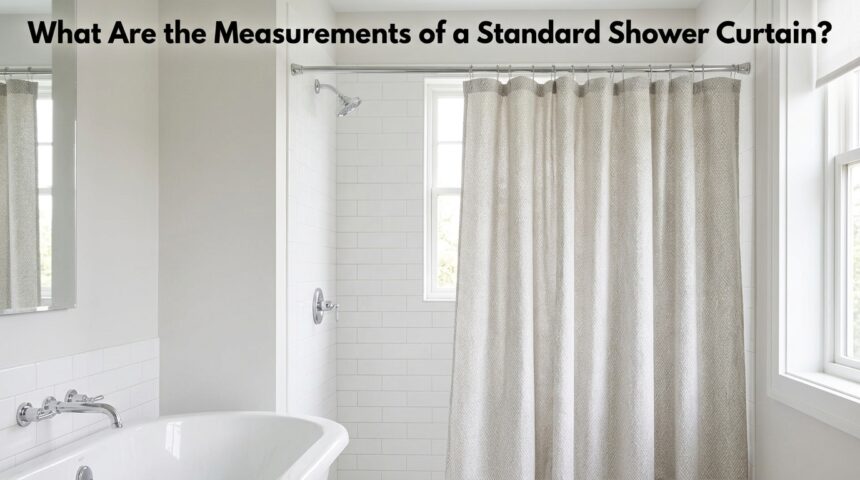
A standard shower curtain measures 70 inches wide by 72 inches long, and this size has become the default option sold in almost every home goods store around the world. This measurement works well for most tub and shower combinations found in average homes, apartments, and rental units.
However, bathrooms are not all built the same way, so curtains also come in extra-long, extra-wide, and stall sizes to fit different layouts. Knowing your exact shower dimensions before buying helps you avoid gaps, water leaks, and a curtain that either drags on the floor or hangs too short.
This guide walks you through every size category, how liners fit into the picture, and how to measure your own bathroom correctly.
Standard Shower Curtain Measurements
The most common size sold worldwide is 70 inches wide by 72 inches long, and this pairing fits a typical alcove tub or shower opening without needing any adjustment. Retailers treat this as the default size because it matches the width of most built-in tubs and standard shower stalls used in residential construction.
Why 70×72 Became the Industry Standard
Home builders in North America settled on tub and shower openings that average around 60 inches wide many decades ago, and curtain manufacturers designed their products to comfortably overlap that width.
The extra ten inches beyond the opening allows the curtain to bunch slightly on the rod, which helps block water splashes from escaping through the sides. Over time, other regions adopted similar dimensions because importers and manufacturers found it easier to standardize production around one widely accepted size rather than creating separate molds and cuts for every market.
Slight Variations Buyers Should Know
Not every “standard” curtain is cut to the exact same number, and shoppers often notice small differences between brands. Some manufacturers sell 68×72 inch curtains, while others offer a nearly square 70×70 inch version, both of which are still marketed under the standard label.
These slight variations rarely cause major fitting problems, but they can matter if your shower rod sits closer to the ceiling than average, since a shorter curtain may leave a visible gap near the floor.
Shower Curtain Sizes by Category
Beyond the standard option, curtains are manufactured in several other size categories to match different bathroom layouts. Choosing the right category prevents the common problems of excess pooling fabric or curtains that barely reach the tub.
Standard or Regular Size
The regular category covers the 70×72 inch curtain discussed earlier, and it remains the best-selling option because it fits the largest share of household bathrooms without any modification. Most people replacing an old curtain with a new one of the same type can simply repurchase this size without remeasuring their shower.
Extra-Long Shower Curtains
Extra-long curtains typically measure 70×84 or 72×84 inches, and they are designed for bathrooms with taller ceilings or shower rods mounted higher than the standard position.
Homeowners who recently switched to a raised rod for a more spacious shower feel often need this length to prevent the curtain from stopping short of the tub rim. These longer curtains also suit walk-in showers where extra coverage helps contain water more effectively.
Extra-Wide Shower Curtains
Extra-wide options range from 108×72 inches up to 180×70 inches, and they serve bathrooms with wider tub openings or two-sided walk-in showers that need broader coverage.
Some homeowners also choose an extra-wide curtain purely for a fuller, more luxurious drape even on a standard-sized tub, since the additional fabric creates soft folds when gathered on the rod. This choice is common in larger primary bathrooms where the shower area doubles as a decorative focal point.
Stall Shower Curtains
Stall shower curtains are smaller, usually cut to around 54×78 inches, and they are made specifically for compact shower enclosures without an attached tub.
Because stall showers have narrower openings than tub combinations, a standard 70-inch curtain would create excess bunching and reduce headroom inside the enclosure. Buyers with a small shower stall should always check their door frame width before assuming the standard size will work.
Kids or Short Curtains
Shorter curtains, often ranging between 63 and 70 inches in length, are marketed for children’s bathrooms or smaller stand-up showers with lower ceilings. These are less commonly stocked in stores but are widely available online, and they help avoid the excess fabric pooling that happens when a full-length curtain is hung in a compact space.
Shower Curtain vs. Shower Liner Sizing
A shower curtain and a shower liner serve different purposes, and understanding this difference is essential before buying replacement pieces. The liner sits closest to the water spray and protects the decorative outer curtain from getting soaked repeatedly.
The Core Difference Explained
The outer curtain is typically the decorative, visible layer made from fabric such as cotton, polyester, or linen blends, while the liner is a thinner, water-resistant layer made from vinyl, PEVA, or similar materials.
The liner hangs on the inside of the tub or shower, closer to the water source, while the curtain hangs on the outside for style and privacy. Together, they form a two-layer system that keeps water contained while still allowing for decorative bathroom design.
How Liner Size Should Relate to Curtain Size
The liner should generally match or sit slightly shorter than the outer curtain so it stays tucked inside the tub without showing below the decorative layer.
A liner that is noticeably longer than the curtain looks mismatched and may drag on the bathroom floor, creating a tripping hazard or mildew risk. Buyers usually pick a liner in the same width category as their curtain to keep the overall look proportional.
Standard Liner Measurements
Most liners are sold at 70×72 inches to match the standard curtain size, though extra-long liners at 70×84 inches are also available for taller installations. Some liners include weighted or magnetic hems along the bottom, which helps them cling closer to the tub wall and resist billowing when water flows.
How to Measure Your Shower for a Curtain
Measuring correctly before buying prevents the frustration of returning a curtain that does not fit properly. This step only takes a few minutes with a basic tape measure.
Measuring Shower or Tub Width
Start by measuring the total width of your tub or shower opening from one side wall to the other, then add roughly ten to fifteen inches to that number for a comfortable, slightly gathered fit. This extra allowance is what prevents water from splashing out through gaps at the edges of the curtain while it hangs on the rod.
Measuring Height From Rod to Floor
Measure from the exact spot where your curtain rings or hooks will sit down to the floor of the tub or shower base, not the bathroom floor outside it. This number tells you whether a standard 72-inch length will comfortably clear the surface or whether you need an extra-long option to avoid a visible gap.
Measuring for Clawfoot Tubs
Clawfoot tubs usually require an oval or curved rod along with a curtain long enough to reach close to the floor on all sides, since these tubs typically stand higher than built-in models. Measuring the full circumference of the curved rod, rather than just the tub width, gives a more accurate picture of how much fabric is actually needed.
Measuring for Walk-In Showers
Walk-in showers often need custom width measurements because their entry points vary widely between homes, ranging from narrow single-panel openings to wide double-entry designs. Taking the measurement at the exact rod height, rather than at floor level, gives the most accurate number since shower walls are not always perfectly straight.
Choosing the Right Size for Your Bathroom
Different bathroom layouts call for different curtain categories, and matching the two correctly makes a noticeable difference in both function and appearance. The table below summarizes common bathroom types and their typical curtain size match.
| Bathroom Type | Typical Curtain Size Needed |
|---|---|
| Standard tub/shower combo | 70 x 72 inches |
| Walk-in shower stall | 54 x 78 inches |
| Clawfoot or freestanding tub | 70 x 84 inches or curved rod set |
| Large or custom bathroom | 108 x 72 inches or wider |
| Raised or high-mounted rod | 70 x 84 inches |
Standard Tub or Shower Combo
Most households with a built-in tub and overhead shower head can rely on the standard 70×72 inch curtain without any special adjustments. This remains the easiest and most widely stocked option across nearly every retailer.
Walk-In Shower Stalls
Walk-in stalls generally need the smaller stall-sized curtain around 54×78 inches, since a full-width curtain would overwhelm the narrower opening and reduce usable space inside. Checking the actual door or entry width beforehand avoids buying a curtain that bunches excessively.
Clawfoot and Freestanding Tubs
These tubs usually sit higher off the ground and often use a curved or oval rod system, so an extra-long curtain paired with the correct rod shape gives the best coverage. Skipping this step often results in water escaping around the tub’s curved edges.
Large or Custom Bathrooms
Bathrooms with wide soaking tubs or open shower areas benefit from extra-wide curtains that can stretch beyond 100 inches, giving full coverage without stretching a standard curtain too thin across the rod. This size choice also tends to suit bathrooms designed with a more spacious, hotel-style layout.
Shower Curtain Rod Considerations
The rod you install directly affects how well any curtain size performs, since even a perfectly sized curtain can look wrong on a mismatched rod. Choosing the right rod length and shape works hand in hand with selecting curtain dimensions.
Standard Rod Length vs. Curtain Width
A standard rod typically spans slightly less than the curtain’s full width so the fabric gathers naturally when hung, rather than stretching flat against the wall. If the rod is too long for the curtain, gaps appear at both ends, allowing water to escape onto the bathroom floor.
Curved vs. Straight Rods
Curved rods bow outward from the wall, creating extra interior space and headroom inside the shower, which pairs well with slightly wider curtains to maintain full coverage. Straight rods are simpler and more common, working fine with standard-width curtains in most conventional bathrooms.
How Rod Placement Affects Curtain Drop
Mounting the rod higher than the standard position increases the visual drop needed from the curtain, meaning a regular 72-inch curtain may no longer reach the tub rim. This is one of the main reasons homeowners end up needing an extra-long curtain after upgrading their rod height for a more open shower feel.
Fabric and Material Impact on Fit
The material a curtain is made from can subtly affect how it fits and drapes, even when the printed measurements are identical between two products. Understanding this helps explain why two curtains labeled the same size can look different once installed.
Polyester vs. Cotton vs. Vinyl
Polyester curtains tend to hold their printed size well over time and resist water absorption, making them a reliable choice for consistent fit. Cotton curtains offer a softer, more natural drape but are more prone to shrinking slightly after washing, while vinyl curtains are typically used as liners rather than decorative outer layers.
Shrinkage Considerations
Cotton and cotton-blend curtains can shrink by a small but noticeable margin after their first few washes, which is worth accounting for if you are buying a curtain that already measures close to your minimum required length. Checking the care label before washing, and using cooler water when possible, helps minimize this shrinkage over time.
Weighted Hems for Better Fit
Some curtains and liners include a weighted strip or small magnets sewn into the bottom hem, which keeps the fabric hanging straight and close to the tub instead of billowing inward with water pressure. This feature does not change the overall measurement but does improve how consistently the curtain maintains its intended length in daily use.
Common Sizing Mistakes to Avoid
Even with accurate measurements in hand, a few recurring mistakes cause buyers to end up with a poorly fitting curtain. Being aware of these beforehand saves both money and the hassle of a return.
Buying Too Short
A curtain that stops noticeably above the tub floor allows water to spray directly onto the bathroom floor, which can damage flooring over time and create a slipping hazard. This mistake commonly happens when buyers estimate length instead of actually measuring from the rod down to the tub base.
Wrong Width Causing Water Leakage
Choosing a curtain that is too narrow for the shower opening leaves gaps at the edges where water can escape onto the surrounding floor. This issue is especially common in walk-in showers with irregular or wider-than-average openings.
Ignoring Liner and Curtain Size Mismatch
Pairing a short liner with a much longer decorative curtain, or the reverse, creates an uneven, unfinished look and can also affect how well water is actually contained. Matching both pieces to the same general size category keeps the setup functional and visually consistent.
Where to Buy Different Sizes
Standard-sized curtains are widely available at almost any home goods retailer, department store, or general online marketplace, making them the easiest size to find on short notice.
Extra-long, extra-wide, and stall sizes are less commonly stocked in physical stores but are readily available through online retailers that specialize in bath products. For unusual bathroom dimensions that don’t match any standard category, some manufacturers and specialty fabric shops offer made-to-order or custom-cut curtains, though these typically cost more and take longer to arrive than off-the-shelf options.
FAQs
What are the measurements of a standard shower curtain?
A standard shower curtain measures 70 inches wide by 72 inches long, which fits most conventional tub and shower combinations without needing any adjustment.
Do all shower curtains fit all showers?
No, curtain sizes vary by bathroom type, and stall showers, clawfoot tubs, and walk-in enclosures typically require different dimensions than a standard tub combo.
Should my liner be the same size as my curtain?
Yes, ideally the liner should match or be slightly shorter than the outer curtain so it stays tucked inside the tub without showing below the decorative layer.
How much extra width should I add when measuring?
Adding roughly ten to fifteen inches beyond your exact tub or shower width gives the curtain enough fabric to gather naturally and block water from escaping at the sides.
Conclusion
Understanding what are the measurements of a standard shower curtain, 70 by 72 inches, gives most homeowners a reliable starting point, but bathroom layouts vary enough that measuring your own space remains the safest approach.
Whether you need a stall size for a compact shower, an extra-long option for a raised rod, or an extra-wide curtain for a spacious tub, matching the curtain to your actual dimensions prevents water damage and improves the overall look of your bathroom.
Taking a few minutes to measure the rod height, tub width, and floor clearance before buying will save you from the common hassle of returns and mismatched liners.
Related Articles
How to Measure Window Screens: Complete Guide 2026
Can You Paint Roof Shingles? Pros, Cons, and Best Practices
What Are Casement Windows: Complete Guide 2026
Why Does My Ceiling Fan Click? Causes & Fixes
How to Replace Screening in Window Screens: Complete Guide 2026