

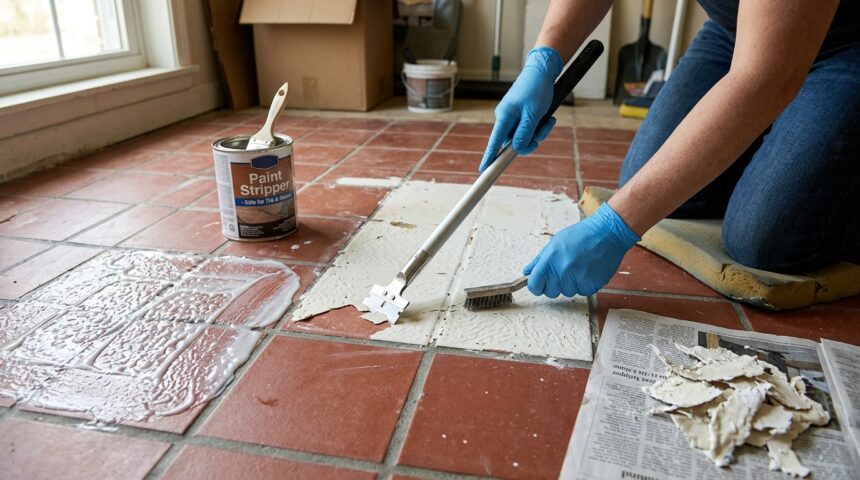
Discovering old, unwanted paint on tile surfaces is a common issue in older homes, especially in bathrooms, kitchens, and around fireplaces. Whether the paint was applied intentionally or splattered accidentally during a previous renovation, removing it without damaging the tile underneath requires the right approach. This guide explains how to strip paint from tiles using safe, effective methods that protect both the tile surface and the surrounding area.
Understanding Why Paint Removal Requires Care
Tile surfaces are often glazed or sealed, which means aggressive scraping or harsh chemicals can scratch or dull the finish if not handled properly. Knowing what you are working with before starting helps prevent accidental damage during the removal process.
Glazed Ceramic Tile Sensitivity
Glazed ceramic tiles have a shiny protective coating that can be scratched by metal scrapers or abrasive tools if too much pressure is applied. This glaze is what gives the tile its color and shine, so damaging it leaves a permanent dull mark. Using softer tools and gentler techniques helps preserve this finish throughout the paint removal process.
Grout Vulnerability
Grout lines between tiles are more porous and absorbent than the tile itself, making them especially vulnerable to staining from paint or damage from harsh chemical strippers. Paint that has seeped into grout often requires a different, more delicate removal approach than the tile surface itself. Ignoring this difference can result in grout that looks worse after cleanup than before.
Natural Stone Tile Porosity
Natural stone tiles such as marble or travertine are porous and can absorb chemical strippers if left on too long, leading to discoloration or surface etching. These materials require gentler, stone-safe products rather than standard paint strippers used on ceramic or porcelain. Testing any product on a hidden section first is especially important with natural stone.
Tools and Materials Needed
Having the right supplies ready before starting makes the paint removal process far more efficient and reduces the risk of accidentally damaging the tile.
Manual Removal Tools
A plastic scraper, a soft-bristle brush, and microfiber cloths are essential for manual paint removal methods that avoid scratching the tile surface. A heat gun can also be useful for softening stubborn paint before scraping it away. These tools work well together for smaller paint spots or splatters.
Chemical Stripping Products
Below is a table outlining common products used for stripping paint from tile surfaces, along with their typical application.
| Product | Best Used For |
| Gel Paint Stripper | Vertical or textured tile surfaces |
| Citrus-Based Stripper | Eco-friendly, mild paint removal |
| Isopropyl Alcohol | Small paint splatters or spots |
| Stone-Safe Stripper | Natural stone tile surfaces |
Protective Equipment
Since paint strippers often contain strong chemicals, wearing rubber gloves, safety goggles, and working in a well-ventilated area is essential throughout the process. A respirator mask is recommended when using stronger chemical products indoors for extended periods. Covering nearby surfaces with plastic sheeting also helps contain any drips or spills.
Step-by-Step Paint Removal Process
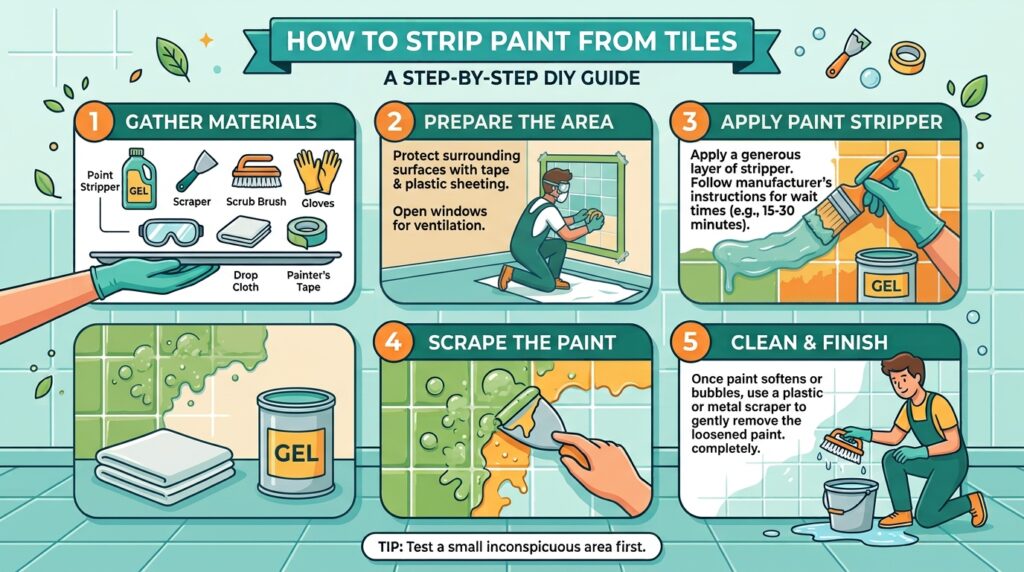
Removing paint from tile requires patience and a methodical approach rather than rushing through the process with excessive force.
Testing in a Hidden Area
Before applying any product to the visible paint, test it on a small, hidden section of tile to confirm it does not cause discoloration or damage. This precaution is especially important for natural stone or antique tile where reactions can vary significantly. Waiting a few minutes after testing helps reveal any adverse effects before committing to the full area.
Applying the Paint Stripper
Apply the chosen stripper evenly over the painted area using a brush or applicator, following the product’s recommended thickness and coverage guidelines. Allow the product to sit for the manufacturer’s suggested time, which typically ranges from fifteen minutes to a few hours depending on the paint’s age and thickness. Avoid letting the stripper dry out completely, as this can make removal more difficult.
Scraping Away Softened Paint
Once the paint has softened, use a plastic scraper held at a low angle to gently lift the paint away from the tile surface without gouging or scratching it. Work in small sections rather than trying to clear the entire area at once, checking progress frequently. Reapply stripper to any stubborn spots that do not lift easily on the first attempt.
Cleaning the Tile Surface
After all the paint has been removed, wash the tile thoroughly with warm water and a mild detergent to eliminate any remaining chemical residue. Dry the surface completely with a clean cloth to check for any missed spots or leftover paint traces. A final polish with a tile-safe cleaner restores shine to the surface once the paint is fully gone.
Removing Paint From Grout Lines
Grout requires a slightly different technique than the tile itself, since its porous texture holds onto paint more stubbornly than a smooth glazed surface.
Using a Soft Brush
A soft-bristle brush, such as an old toothbrush, works well for scrubbing paint out of grout lines without damaging the surrounding material. Combining this with a mild cleaning solution helps loosen paint particles trapped within the porous grout texture. Patience is key here, as grout often requires several rounds of gentle scrubbing.
Applying Grout-Safe Stripper
If a brush alone does not fully remove the paint, a grout-safe chemical stripper applied directly to the lines can help break down more stubborn residue. These products are formulated to be gentler than standard paint strippers to avoid further staining or damage. Always rinse grout thoroughly after using any chemical product to prevent residue buildup.
Re-Sealing Grout After Cleaning
Once grout is clean and completely dry, applying a fresh grout sealer helps protect it from future stains and makes any future cleanup significantly easier. This step is often overlooked but adds a valuable layer of long-term protection. Re-sealing also restores a slightly more uniform appearance to previously stained grout lines.
Common Mistakes to Avoid
Even a straightforward paint removal project can go wrong when a few important precautions are overlooked along the way.
Using Metal Scrapers on Glazed Tile
Metal scrapers might seem like a faster option, but they frequently scratch or dull the glazed finish on ceramic and porcelain tiles. A plastic scraper takes slightly longer but preserves the tile’s original shine and surface integrity. This small adjustment makes a significant difference in the final appearance of the tile.
Leaving Stripper on Too Long
Allowing chemical stripper to sit far longer than the recommended time can cause it to dry out and harden, making removal considerably more difficult. It can also increase the risk of the chemical seeping into porous grout or stone surfaces. Following the product’s timing instructions closely produces better and safer results.
Ignoring Ventilation Requirements
Working with chemical strippers in a poorly ventilated space can lead to headaches, dizziness, or respiratory irritation from fume buildup. Opening windows, using fans, or working in an outdoor-adjacent space significantly reduces this risk. This precaution is especially important when working in small bathrooms with limited airflow.
Conclusion
Learning how to strip paint from tiles comes down to choosing the right product for your tile type, testing carefully, and using gentle tools to avoid scratching or damaging the surface. Whether dealing with a glazed ceramic backsplash or paint trapped in grout lines, patience and the correct technique make all the difference in achieving a clean result. Taking the time to protect the tile and grout throughout the process ensures the surface looks fresh and undamaged once the paint is fully removed.
FAQs
Can I use a razor blade to remove paint from tile?
Yes, a razor blade held at a low angle can work on flat glazed tile, though plastic scrapers are generally safer to avoid scratches.
Will vinegar remove paint from tiles?
Vinegar can help soften light paint stains on some tile surfaces, but it is not strong enough for thick or old dried paint layers.
Is it safe to use paint stripper on natural stone tile?
Only stone-safe strippers should be used on natural stone, as standard chemical strippers can cause discoloration or surface etching.
How do I remove paint from tile without damaging grout?
Using a soft brush with a mild cleaning solution and avoiding harsh chemicals directly on grout lines helps protect it during paint removal.
Related Articles
Laundry Room Cabinets: The Complete Guide to Storage, Style, and Smart Organization
How to Measure Windows for Curtains (Step-by-Step Guide)
How to Get Urine Smell Out of Bathroom: Complete Guide
How Long Does It Take to Do a Bathroom Renovation? Timelines, Phases & What to Expect
Complete Guide to Roof Ventilation for Metal Roofs: Types, Benefits, Installation & Maintenance